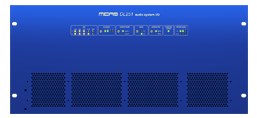

Yamaha Rio3224-D2 Dante Stage Box
Yamaha·Model Rio3224-D2·yamaha-rio3224-d2
Photos
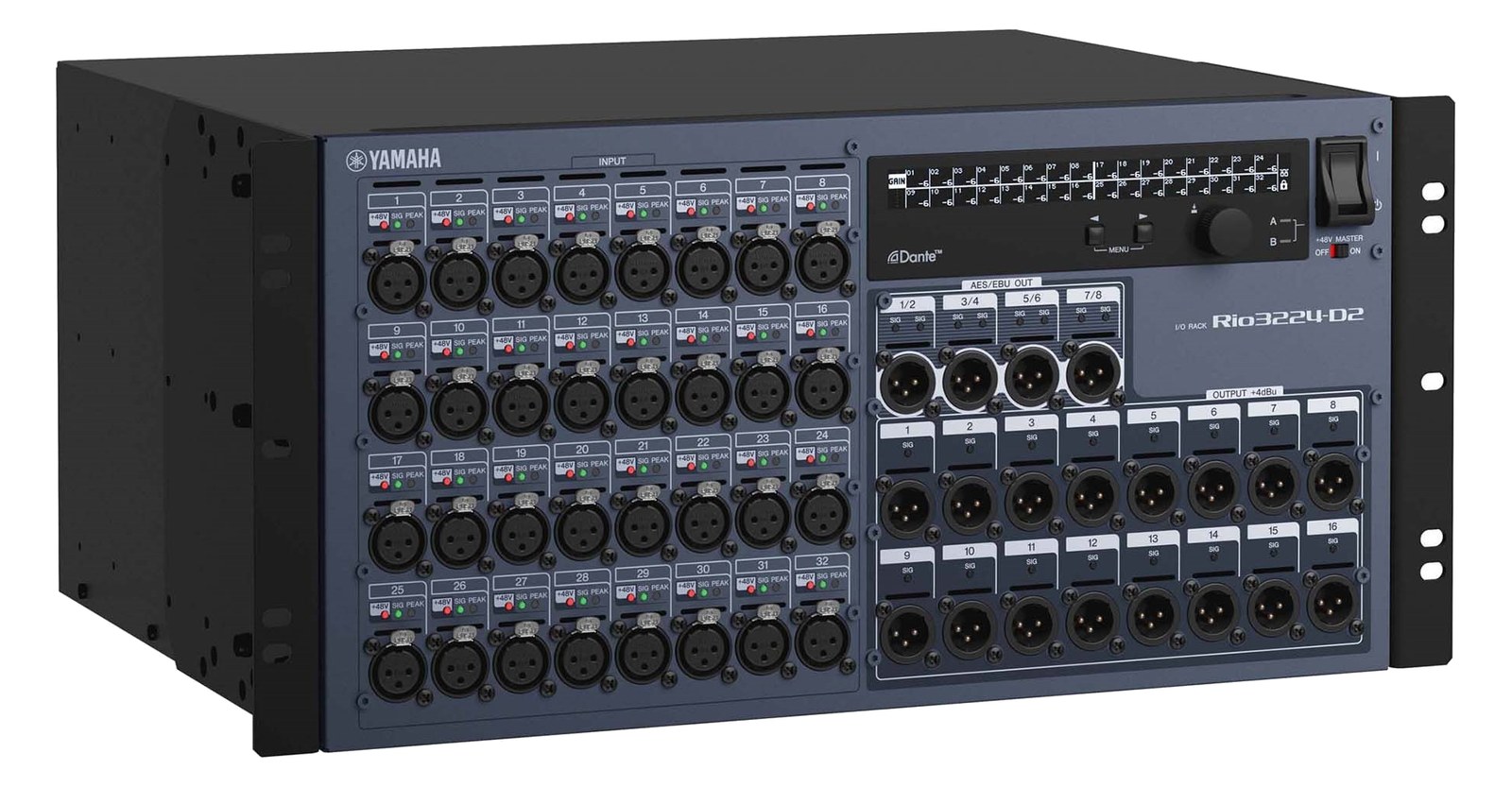
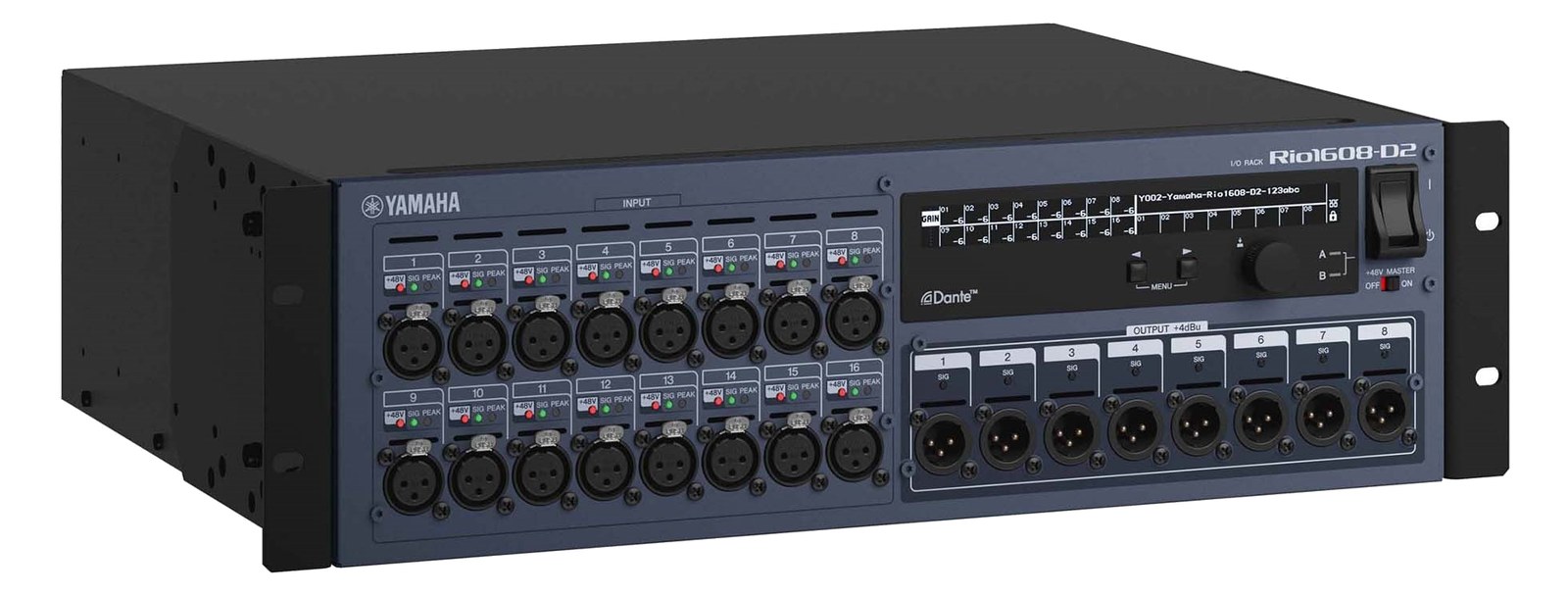
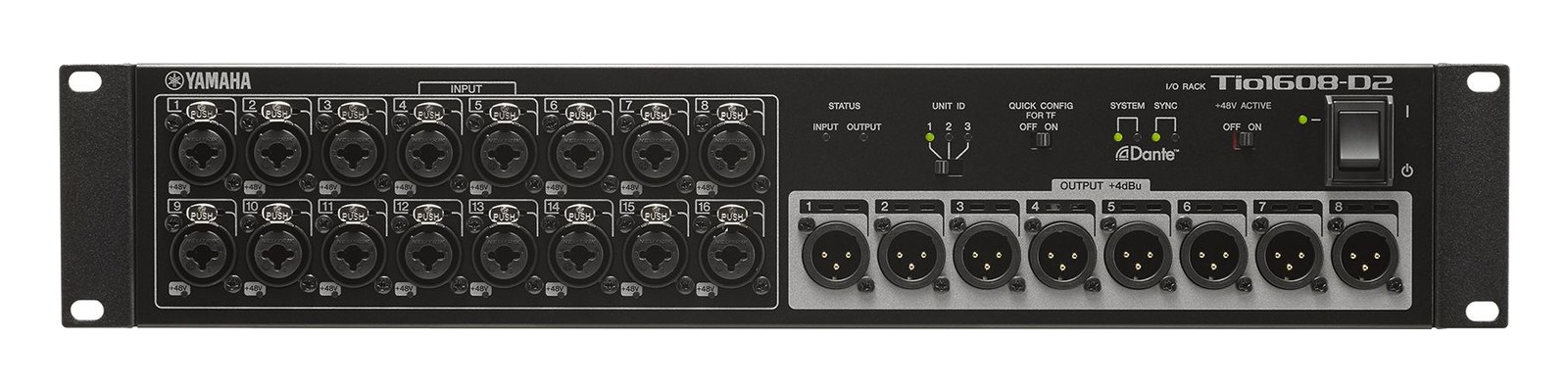
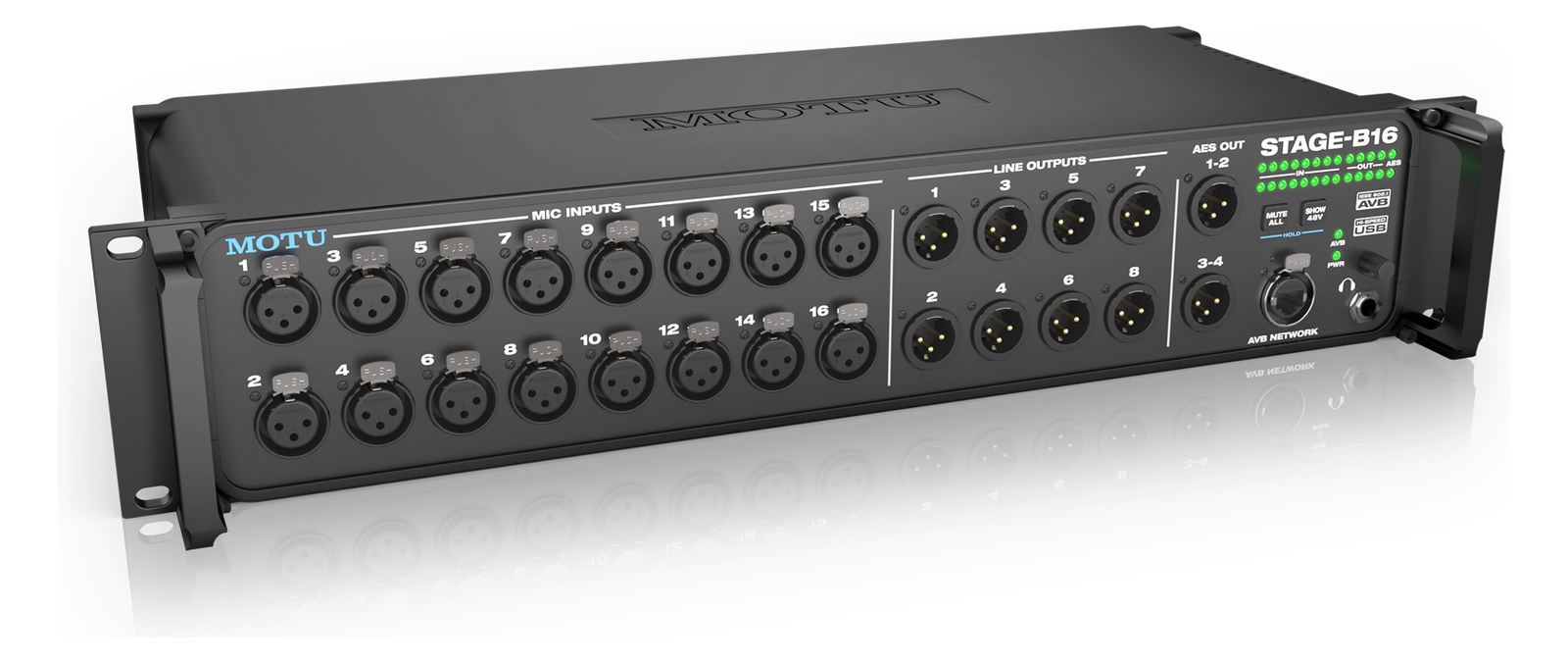
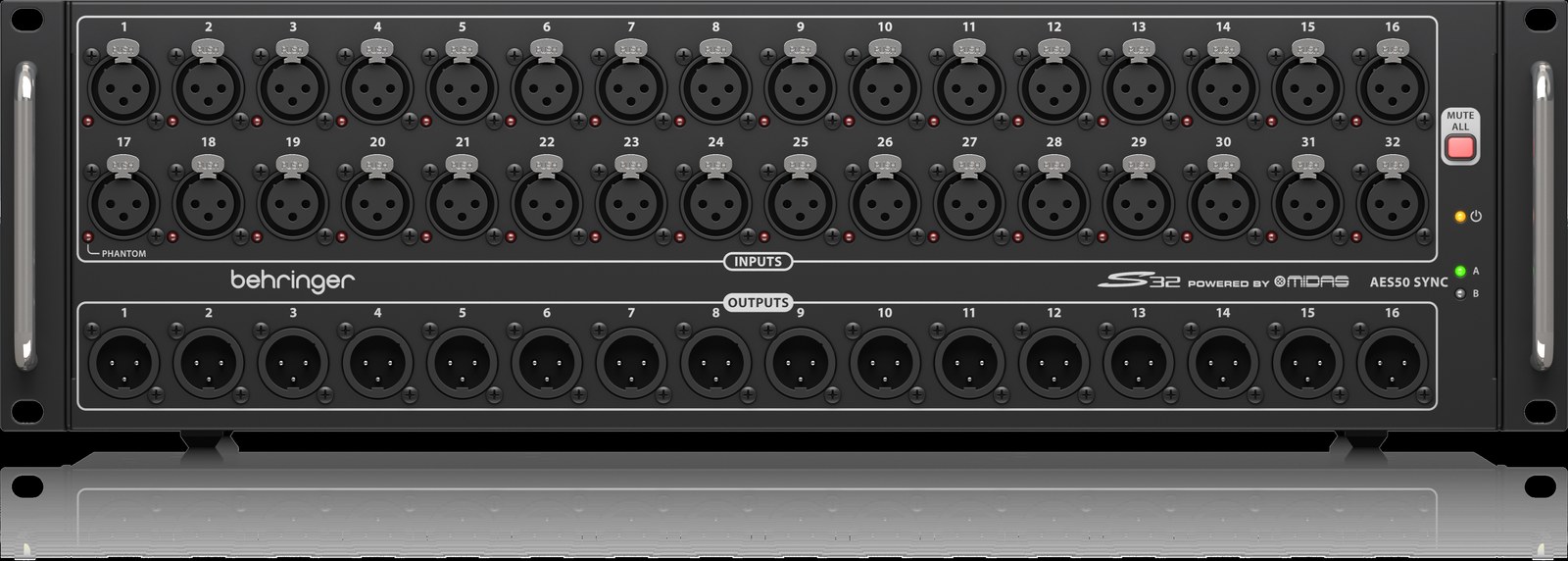
Manufacturer product photography — the drawn faceplate above stays true to panel layout; these show the hardware itself.
About the Yamaha Rio3224-D2
The Rio3224-D2 is the flagship Yamaha DanteThe most common audio-over-network standard: dozens of channels of uncompressed digital audio down one ordinary Ethernet cable between Dante boxes. stage boxThe I/O endpoint on stage: mics plug in there and one digital line (AES50, Dante) carries everything to the console. The snake, digitized. — 32 mic preampsThe gain stage that lifts a mic’s tiny signal up to line level — the first thing a signal hits, and a big part of how a console sounds., 16 analog outs, and 8 AES3The pro standard for stereo digital audio over an XLR cable — balanced, so it runs much farther than consumer S/PDIF. digital outs for clean splits to broadcast or recording. Dual Dante ports carry all 32+16 channels on a single Cat5eStandard network cable grades. In an audio rig one cheap Cat5e run can replace a 48-channel copper snake; AES50 wants it shielded. primary and a redundantA second copy of anything critical — supply, computer, network path — already running so one failure can’t stop the show. secondary. The standard partner for CL3/CL5 / QL5 / Rivage consoles on pro tours and high-end broadcast.
The Rio3224-D2 is Yamaha's full-size DanteThe most common audio-over-network standard: dozens of channels of uncompressed digital audio down one ordinary Ethernet cable between Dante boxes. stage boxThe I/O endpoint on stage: mics plug in there and one digital line (AES50, Dante) carries everything to the console. The snake, digitized. — the piece of the rig that lives at the front of stage and turns 32 microphone lines into network audio. It pairs naturally with CL and QL series consoles, and shows up regularly on Rivage systems as well. What sets it apart from smaller IO boxes is the output side: 16 analog outputs for wedgesA floor monitor speaker angled up at the performer — the thing IEMs replace, and the thing you fall back on when they die., side-fills, or amp feeds, plus four AES3The pro standard for stereo digital audio over an XLR cable — balanced, so it runs much farther than consumer S/PDIF. pairs that hand clean digital splits directly to a broadcast truck or recording interface without touching the analog domain at all.
In practice, 65 watts nominal draw on a 5U frame means it fits comfortably into a standard powered stage rack without crowding your power budget. The 364mm depth is real — this is not a shallow box, so measure your road case before you commit. Dual EtherConAn Ethernet plug inside a rugged XLR-style locking shell — tour-grade network connections that can’t be yanked loose. ports matter: the secondary DanteThe most common audio-over-network standard: dozens of channels of uncompressed digital audio down one ordinary Ethernet cable between Dante boxes. port is a live redundantA second copy of anything critical — supply, computer, network path — already running so one failure can’t stop the show. path, not a daisy-chain tap, so a cable pull on the primary during a show drops to the secondary without an audible interruption. Word clockThe shared heartbeat keeping every digital box sampling in lockstep. One device leads, the rest follow — or you get clicks and pops. I/O keeps everything locked when the Rio is sharing a stage with other digital gear that needs a common reference.
This box is the right call if you're already on a Yamaha digital console and you need the full 32-input complement in a single unit — no stacking two smaller boxes, no patching around limitations. If your show is a 16-input club rig, the Rio1616-D2 covers the ground at lower cost and in fewer rack unitsThe standard slice of rack height: 1U = 1.75″. A 3U box takes three slices; half-rack gear pairs two units side by side in one.. And if your console ecosystem is something other than Yamaha — a DiGiCo, an Avid, or an Allen & Heath — you'll need to verify DanteThe most common audio-over-network standard: dozens of channels of uncompressed digital audio down one ordinary Ethernet cable between Dante boxes. interoperability carefully before spec'ing this rather than a manufacturer-native option, because preampThe gain stage that lifts a mic’s tiny signal up to line level — the first thing a signal hits, and a big part of how a console sounds. remote control typically requires Yamaha's own protocol layer.
In the rack
- Run the secondary DanteThe most common audio-over-network standard: dozens of channels of uncompressed digital audio down one ordinary Ethernet cable between Dante boxes. port back to a separate switch from your primary path — two cables sharing the same switch defeats the redundancyA second copy of anything critical — supply, computer, network path — already running so one failure can’t stop the show. entirely.
- The four AES3The pro standard for stereo digital audio over an XLR cable — balanced, so it runs much farther than consumer S/PDIF. output pairs are a clean way to feed a broadcast truck without giving production control of your mix busA path where multiple channels sum into one signal — mixes, groups, and mains are all buses. A 25-bus console can build 25 blends at once.; patch your broadcast feeds there and keep analog outputs reserved for stage amplification.
- At 10.4 kg, the Rio3224-D2 needs proper rack rails and preferably a front-and-rear support shelf in a rolling case — don't let it cantilever from the ears alone over a tour.
- If you're using word clockThe shared heartbeat keeping every digital box sampling in lockstep. One device leads, the rest follow — or you get clicks and pops. out to sync downstream gear, set the Rio as your network master in DanteThe most common audio-over-network standard: dozens of channels of uncompressed digital audio down one ordinary Ethernet cable between Dante boxes. Controller and clock everything else to it, rather than chasing an external reference through the BNCThe twist-lock coax connector used for word clock and antenna runs — it locks, so it can’t be pulled out mid-show. and then re-distributing via Dante.
32-in / 16-out DanteThe most common audio-over-network standard: dozens of channels of uncompressed digital audio down one ordinary Ethernet cable between Dante boxes. stage boxThe I/O endpoint on stage: mics plug in there and one digital line (AES50, Dante) carries everything to the console. The snake, digitized. with 8 AES3The pro standard for stereo digital audio over an XLR cable — balanced, so it runs much farther than consumer S/PDIF. outs. RedundantA second copy of anything critical — supply, computer, network path — already running so one failure can’t stop the show. Dante primary+secondary.
I/O Ports (56)
| Port | Connector | Direction | Signal | Channels |
|---|---|---|---|---|
| Stage In 1 | XLR FEMALE | input | analog audio | — |
| Stage In 2 | XLR FEMALE | input | analog audio | — |
| Stage In 3 | XLR FEMALE | input | analog audio | — |
| Stage In 4 | XLR FEMALE | input | analog audio | — |
| Stage In 5 | XLR FEMALE | input | analog audio | — |
| Stage In 6 | XLR FEMALE | input | analog audio | — |
| Stage In 7 | XLR FEMALE | input | analog audio | — |
| Stage In 8 | XLR FEMALE | input | analog audio | — |
| Stage In 9 | XLR FEMALE | input | analog audio | — |
| Stage In 10 | XLR FEMALE | input | analog audio | — |
| Stage In 11 | XLR FEMALE | input | analog audio | — |
| Stage In 12 | XLR FEMALE | input | analog audio | — |
| Stage In 13 | XLR FEMALE | input | analog audio | — |
| Stage In 14 | XLR FEMALE | input | analog audio | — |
| Stage In 15 | XLR FEMALE | input | analog audio | — |
| Stage In 16 | XLR FEMALE | input | analog audio | — |
| Stage In 17 | XLR FEMALE | input | analog audio | — |
| Stage In 18 | XLR FEMALE | input | analog audio | — |
| Stage In 19 | XLR FEMALE | input | analog audio | — |
| Stage In 20 | XLR FEMALE | input | analog audio | — |
| Stage In 21 | XLR FEMALE | input | analog audio | — |
| Stage In 22 | XLR FEMALE | input | analog audio | — |
| Stage In 23 | XLR FEMALE | input | analog audio | — |
| Stage In 24 | XLR FEMALE | input | analog audio | — |
| Stage In 25 | XLR FEMALE | input | analog audio | — |
| Stage In 26 | XLR FEMALE | input | analog audio | — |
| Stage In 27 | XLR FEMALE | input | analog audio | — |
| Stage In 28 | XLR FEMALE | input | analog audio | — |
| Stage In 29 | XLR FEMALE | input | analog audio | — |
| Stage In 30 | XLR FEMALE | input | analog audio | — |
| Stage In 31 | XLR FEMALE | input | analog audio | — |
| Stage In 32 | XLR FEMALE | input | analog audio | — |
| Stage Out 1 | XLR MALE | output | analog audio | — |
| Stage Out 2 | XLR MALE | output | analog audio | — |
| Stage Out 3 | XLR MALE | output | analog audio | — |
| Stage Out 4 | XLR MALE | output | analog audio | — |
| Stage Out 5 | XLR MALE | output | analog audio | — |
| Stage Out 6 | XLR MALE | output | analog audio | — |
| Stage Out 7 | XLR MALE | output | analog audio | — |
| Stage Out 8 | XLR MALE | output | analog audio | — |
| Stage Out 9 | XLR MALE | output | analog audio | — |
| Stage Out 10 | XLR MALE | output | analog audio | — |
| Stage Out 11 | XLR MALE | output | analog audio | — |
| Stage Out 12 | XLR MALE | output | analog audio | — |
| Stage Out 13 | XLR MALE | output | analog audio | — |
| Stage Out 14 | XLR MALE | output | analog audio | — |
| Stage Out 15 | XLR MALE | output | analog audio | — |
| Stage Out 16 | XLR MALE | output | analog audio | — |
| AES3 Out 1/2 | AES3 XLR | output | digital audio | — |
| AES3 Out 3/4 | AES3 XLR | output | digital audio | — |
| AES3 Out 5/6 | AES3 XLR | output | digital audio | — |
| AES3 Out 7/8 | AES3 XLR | output | digital audio | — |
| Dante Primary | ETHERCON | bidirectional | digital audio | 64 |
| Dante Secondary | ETHERCON | bidirectional | digital audio | 64 |
| Word Clock | BNC | bidirectional | digital audio | — |
- Power (IEC) (IEC C14)
Deciding between two?
Rack space, watts, weight and every connector, side by side.
Related gear


Related articles
Guides from our library that cover planning around stage box gear.
A walking tour of the signal path from microphone to in-ear monitor, with what every box in the rack actually does to the audio along the way.
A plain-English guide to writing the input list, stage plot, and patch sheet that house engineers want — without the jargon, with examples, and with a free way to generate one.
Step-by-step: linking aux buses into stereo pairs, pre-fader vs post-fader, routing buses to Ultranet vs physical XLRs vs AES50, and adding a bus-level limiter.
A practical comparison of the three audio-over-network protocols you’ll encounter in a rack rig, with guidance on when each one is the right pick.