
Power Amplifier

QSC PLD8.0 Touring Amplifier

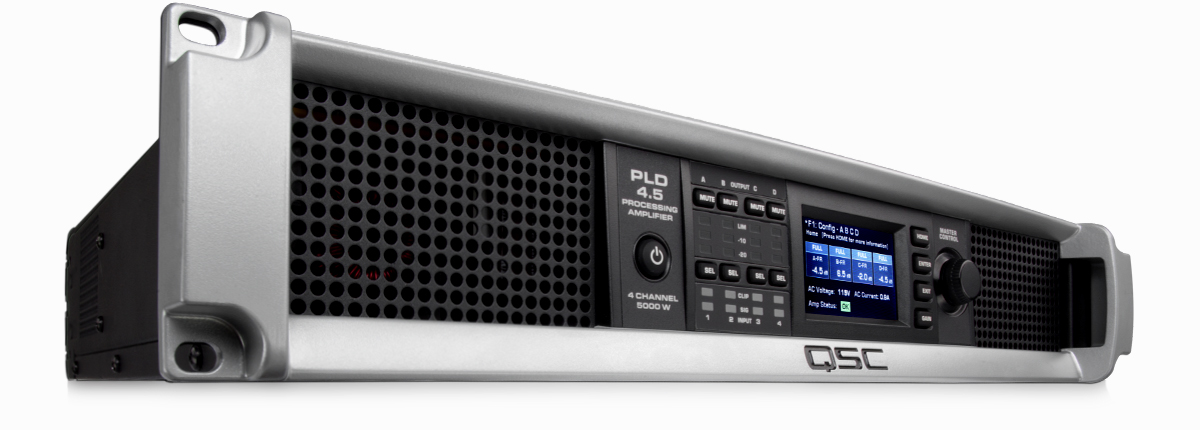
The QSC PLD8.0 is the bigger sibling to the PLD4.5 — same FlexAmp assignable-power architecture, same Intrinsic Correction DSP, but with 8000W of total output for driving heavier sub arrays or large fly-systems. 4 × 2000W or 1 × 8000W bridge-mode are both valid; channels can also be summed in pairs for 2 × 4000W. Common on regional touring, festival monitor world, and corporate AV where one amp drives two pairs of L/R subs.

Compare
QSCPLD8.04 CH · READYPLD8.0POWERED LOUDSPEAKER
Documented outputs
44 destination connections
Documented inputs
5Based on documented inputs
Rack space
2UBuilder checks available rail space
Power draw
700W8000W documented maximum
Catalog estimate
~$4,499Use retailer rows for current price and stock

01 · What it does—and what that changes in your rig.

Product overview

Start with the payoff, then work through how it functions, where it fits, and the details that change a real build.

The payoff

Power Amplifier decisions, organized around the whole rig.

The PLD8.0 is QSC's heavy-hitter in the PLD line — a four-channel, 8000W touring amplifier built around their FlexAmp architecture, which lets you assign that total output across channels rather than locking you into fixed-per-channel wattage. That matters because the way you load this amp changes at every show. Running festival subs tonight, fly-system tops tomorrow? You can bridge to a single 8000W channel, split into two 4000W pairs, or run all four channels independently at 2000W each. The onboard Intrinsic Correction DSP handles speaker alignment, limiting, and EQ, so with the right presets loaded this amp can land in a new venue and be dialed before the first cab check.

Documented outputs
44 destination connections
Documented inputs
5Based on documented inputs
Rack space
2UBuilder checks available rail space
QSCPLD8.04 CH · READYPLD8.0POWERED LOUDSPEAKER
QSC product panel2U · 700W
Function

How it works in the path

At 2RU and 15 kg, the PLD8.0 is manageable but not light — budget the rail space and expect the road case to earn its casters. The PowerCON 32A inlet is the detail that forces planning: this isn't a standard 20A circuit, so you need to confirm venue power or carry a twist-lock adapter before load-in, not during it. Idle draw sits around 700W, but peak demand can hit the full 8000W nameplate, which means this amp alone can claim a 32A leg if you're pushing it hard into low-impedance subs. Ethernet control via the rear RJ45 lets you integrate it into a Q-SYS or third-party network for remote monitoring and preset recall — genuinely useful when the amp is flown or buried in a rolling sub rig.
Best fit

Where it earns its place in the rack

This amp belongs in a rig where you're regularly driving large sub arrays, flying speaker systems, or covering two independent stereo zones from one box. It's a natural fit for a regional touring monitor world running high-power wedges or in-ear transmitter racks with sidefill subs, or a corporate AV shop that needs one amp to handle different room configurations show to show. If your loudest day is a club gig with a modest sub pair, the PLD4.5 or a two-channel amp will do the job without the 32A power requirement and the heavier case weight. The PLD8.0 earns its place when versatility and raw headroom both matter — not just one of them.

In the rack

Details worth deciding before load-in.

  • Pre-load venue-specific Intrinsic Correction presets for your most common speaker cabinets before leaving the shop — switching presets at load-in via Ethernet takes seconds; building them on the fly at noon does not.
  • Verify the PowerCON 32A feed at advancing, not at load-in. If the venue can only provide 20A circuits, you'll need a step-down or a different amp — this is not a negotiation you want to have while the band is doing soundcheck.
  • When bridging to 8000W mono for a sub array, double-check your speaker impedance before the show — bridge mode raises minimum impedance requirements, and a mismatched load will trigger protection and drop your subs mid-set.
  • In a rack with multiple heavy amplifiers, mount the PLD8.0 low — its 15 kg shifts the center of gravity noticeably, and a bottom-loaded case rolls more predictably on uneven stage floors and venue ramps.

02 · Know the whole path before you buy.

Signal path

Learn the route as a block diagram: source, product function, transport, and destination. Select any block to see what enters, what changes, and what leaves.

Interactive block diagramAuto-looping · hover, focus, or tap to hold a stage
Port-type signalProduct functionSystem boundary
Follow one signal from source to destination

Each block answers the same three questions: what arrives, what changes here, and what leaves.

01 · Source · selected
01 · Source

5 documented inputs

XLR female + powerCON

Arrives as
5 documented inputs
Connector
XLR female + powerCON
Signal
analog audio

03 · What this product asks of the rest of the system.

Compatibility

Treat connector names as the start of the check—not the answer. These are the boundaries that determine a complete working path.

Best fit · Power Amplifier

Use it when 2U and 482 mm of depth fit the case.

Plan the companion path

Complete the path with upstream and downstream gear that matches connector, direction, signal type, protocol, and wiring standard.

Connector boundary

Documented connectors: XLR female, RJ45, powerCON. Match connector, direction, and signal type—not shape alone.

04 · Every connector, grouped by job.

I/O ports

Switch the product view and the documented port inventory updates with it—hardware and data stay side by side.

Every connector, grouped by job.

Switch panels to keep the hardware view and the documented port list in sync.

Front panel
QSCPLD8.04 CH · READYPLD8.0POWERED LOUDSPEAKER
Rear panel
QSCPLD8.0
All documented ports for QSC PLD8.0 Touring Amplifier
PortPanelConnectorDirectionSignalChannels
Input A (XLR)rearXLR female inputanalog audio—
Input B (XLR)rearXLR female inputanalog audio—
Input C (XLR)rearXLR female inputanalog audio—
Input D (XLR)rearXLR female inputanalog audio—
Speaker Out A (Speakon NL8)rearXLR female outputanalog audio—
Speaker Out B (Speakon NL8)rearXLR female outputanalog audio—
Speaker Out C (Speakon NL8)rearXLR female outputanalog audio—
Speaker Out D (Speakon NL8)rearXLR female outputanalog audio—
Ethernet (control)rearRJ45 bidirectionaldata—
Power (POWERCON 32A)rearpowerCON inputpower—

Showing 10 of 10 documented physical ports.

05 · Compare the decision, not just the price.

Alternatives

The rows are organized around fit, power, I/O, and system role so a cheaper unit cannot hide a more expensive workflow.

Compare
QSC
Lab.gruppen
Fit📐 2U📐 2U📐 1U
Power⚡ 700W⚡ 800W⚡ 700W
Weight⚖️ 33.1 lb⚖️ 38.8 lb⚖️ 33.1 lb
I/O🔌 10🔌 13🔌 11
Estimate💵 ~$4,499💵 ~$8,499💵 ~$8,999
Deep diveCurrent selectionFull comparison →Full comparison →

06 · Resolve the questions that can change the purchase or build plan.

Planning questions

Short, source-backed answers surface rack fit, power, cabling, and connection details before they become surprises.

How will the QSC PLD8.0 Touring Amplifier affect rack fit and case depth?

It occupies 2U. Its documented depth is 482 mm.

How much power does the QSC PLD8.0 Touring Amplifier draw?

Typical draw is 700W and documented maximum draw is 8000W.

What connections does the QSC PLD8.0 Touring Amplifier have?

10 documented physical ports, including Input A (XLR), Input B (XLR), Input C (XLR), Input D (XLR), Speaker Out A (Speakon NL8), Speaker Out B (Speakon NL8).

07 · See this unit inside a real rack plan.

Builder preview

Placement is only the start. Builder checks space · depth · weight, power headroom, dependencies, and compatible signal paths around this exact catalog item.Open in Builder
PLD8.0 Touring Amplifier positioned in a rack planA simplified plan shows the unit taking 2 rack units, with its documented connection path continuing to a planned destination.QSCPLD8.0CONNECTED GEARnext signal destination2U · 482 mm deep

08 · Related gear, in the order you may need it.

Planning guides for power amplifier systems.