
Lab.gruppen PLM 12K44 Touring Amplifier
Lab.gruppen·Model PLM 12K44·labgruppen-plm-12k44
About the Lab.gruppen PLM 12K44
The Lab.gruppen PLM 12K44 is the apex of touring amplification — 12,000W of total power across four assignable channels, onboard Lake DSPDigital Signal Processing — the number-crunching that does EQ, compression, and effects inside a box. More DSP means more processing at once. for crossoverSplits audio into frequency bands so each speaker only gets what it can handle — lows to the subs, highs to the horns./EQ/limiting, and Lake mesh-network control so an entire amp room is configured from one laptop at FOHFront Of House — the main mix the audience hears, and the console position out in the room where it gets mixed.. You see these on stadium tours, festival main stages, and large touring sound rigs where consistent SPLSound Pressure Level — acoustic loudness in dB. The number that matters for hearing safety inside your ears. and remote control of dozens of amps is non-negotiable. Pricey — but the gold standard for a reason.
The PLM 12K44 is Lab.gruppen's four-channel, 12,000-watt touring amplifier with onboard Lake DSPDigital Signal Processing — the number-crunching that does EQ, compression, and effects inside a box. More DSP means more processing at once. processing built directly into the chassis. That last part is what separates it from a powerful-but-dumb amp: every channel carries full crossoverSplits audio into frequency bands so each speaker only gets what it can handle — lows to the subs, highs to the horns., EQ, alignment delay, and limiting that is configured, recalled, and monitored over a Lake mesh network from a single laptop at FOHFront Of House — the main mix the audience hears, and the console position out in the room where it gets mixed. or system-tech position. You see these filling amp rooms on stadium tours and festival main stages because when you have twenty amplifiers in a rack system, remote control and consistent recall aren't luxuries — they're the only way the show stays manageable.
At load-in, plan your power seriously. Idle draw sits around 800 watts, but the catalog lists a 6,000-watt maximum draw, and the unit requires a 32A PowerCONNeutrik’s locking AC power connector — twist to lock, rated for real current, standard on touring power distros and amps. feed — this is not a unit you can daisy-chain off a standard distroOne pair of antennas feeding many receivers through an amplified splitter — replaces the forest of whips and keeps RF levels consistent. leg with other gear. The 482mm depth and 17.6kg weight mean it wants a deep, well-supported rack; four of these in a single case is a real structural and cabling exercise. The dual Lake network ports let you loop the network through the amp room without a separate switch for smaller systems, which is a genuine time-saver at load-in. Analog inputs on all four channels plus two AES inputs give you routing flexibility when your console's output options are constrained.
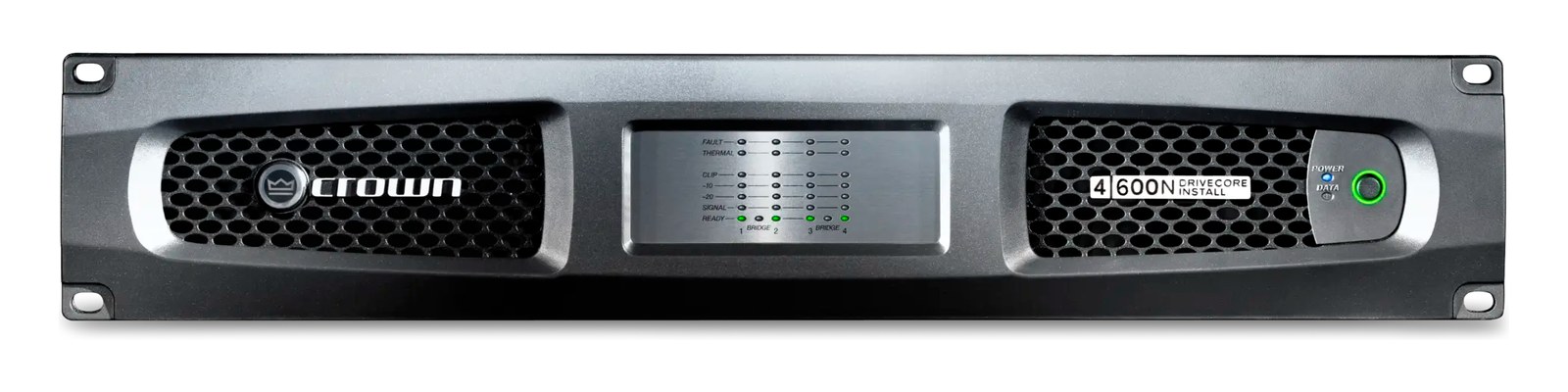
If you're running a large-format touring rig with supported Lake-based loudspeakers — or a system where remote amp monitoring and fault reporting across dozens of channels is operationally necessary — this is the right tool and the price reflects that. If you're building a club install, a theater playback rig, or a compact touring package where you're running two or three amps total and programming them once a season, you're paying for network infrastructure and power headroomThe margin between your normal level and where things clip — headroom is what absorbs the snare hit you didn’t see coming. you won't use. In those contexts, a capable two-channel or four-channel amp with a standalone Lake processor — or a competing platform altogether — will get you to the same sonic result at a fraction of the cost and weight.
In the rack
- Budget a dedicated 32A leg per amplifier in your distroOne pair of antennas feeding many receivers through an amplified splitter — replaces the forest of whips and keeps RF levels consistent. layout before the rig is ever built — retrofitting power at load-in because you underestimated draw is a painful way to start a festival day.
- Use both Lake network ports to daisy-chain through your amp room rather than running star topology back to a switch; it reduces cable runs and keeps the network tidy when you have a full rack of PLMs.
- Label your Speakon NL8 output cables by channel at both ends before the tour starts — all four outputs are physically identical on the rear panel and a mis-patched cabinet in a hurried load-in is a real risk.
- Back up your Lake presets to the laptop and a second location before every tour leg; the amp's onboard DSPDigital Signal Processing — the number-crunching that does EQ, compression, and effects inside a box. More DSP means more processing at once. is only as reliable as the preset that's loaded, and losing configuration on a festival morning is a show-stopping problem.
Four-channel 12000W touring amp with onboard Lake DSPDigital Signal Processing — the number-crunching that does EQ, compression, and effects inside a box. More DSP means more processing at once.. Top of the touring food chain.
I/O Ports (13)
| Port | Connector | Direction | Signal | Channels |
|---|---|---|---|---|
| Analog In A (XLR) | XLR FEMALE | input | analog audio | — |
| Analog In B (XLR) | XLR FEMALE | input | analog audio | — |
| Analog In C (XLR) | XLR FEMALE | input | analog audio | — |
| Analog In D (XLR) | XLR FEMALE | input | analog audio | — |
| AES In 1 | AES3 XLR | input | digital audio | — |
| AES In 2 | AES3 XLR | input | digital audio | — |
| Lake Network A (RJ45) | RJ45 | bidirectional | data | — |
| Lake Network B (RJ45) | RJ45 | bidirectional | data | — |
| Speaker Out A (Speakon NL8) | XLR FEMALE | output | analog audio | — |
| Speaker Out B (Speakon NL8) | XLR FEMALE | output | analog audio | — |
| Speaker Out C (Speakon NL8) | XLR FEMALE | output | analog audio | — |
| Speaker Out D (Speakon NL8) | XLR FEMALE | output | analog audio | — |
- Power (POWERCON 32A) (POWERCON)
Deciding between two?
Rack space, watts, weight and every connector, side by side.
Related gear


Related articles
Guides from our library that cover planning around power amplifier gear.