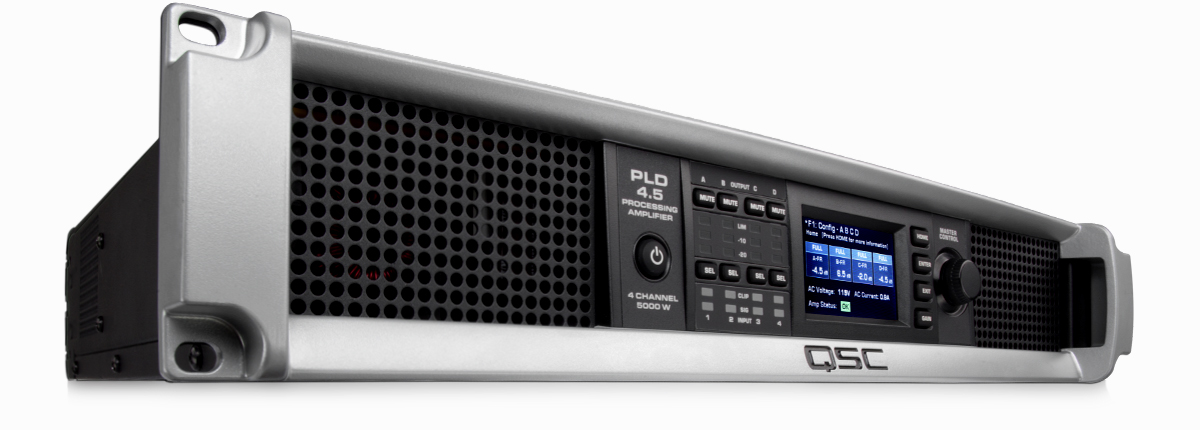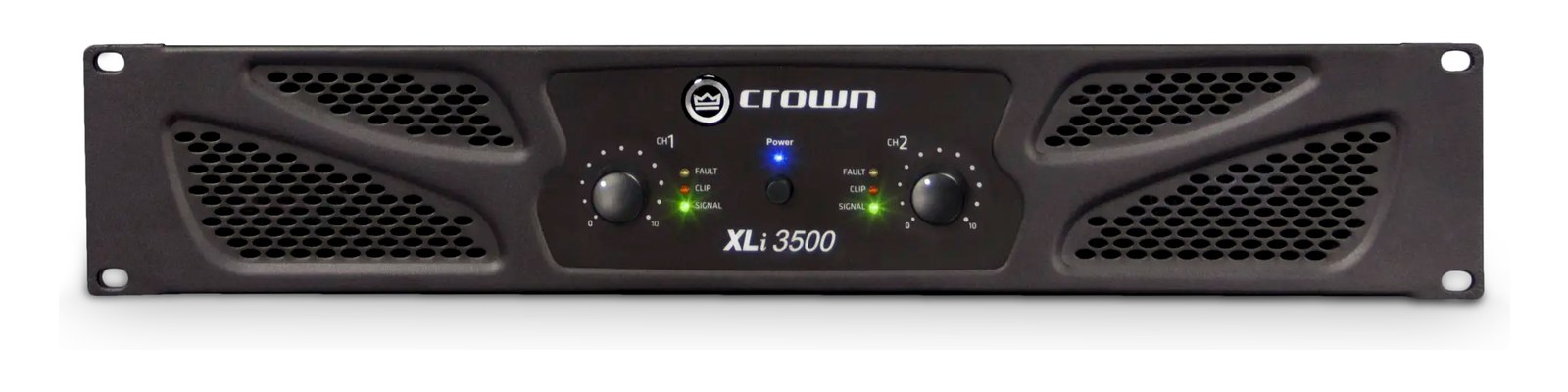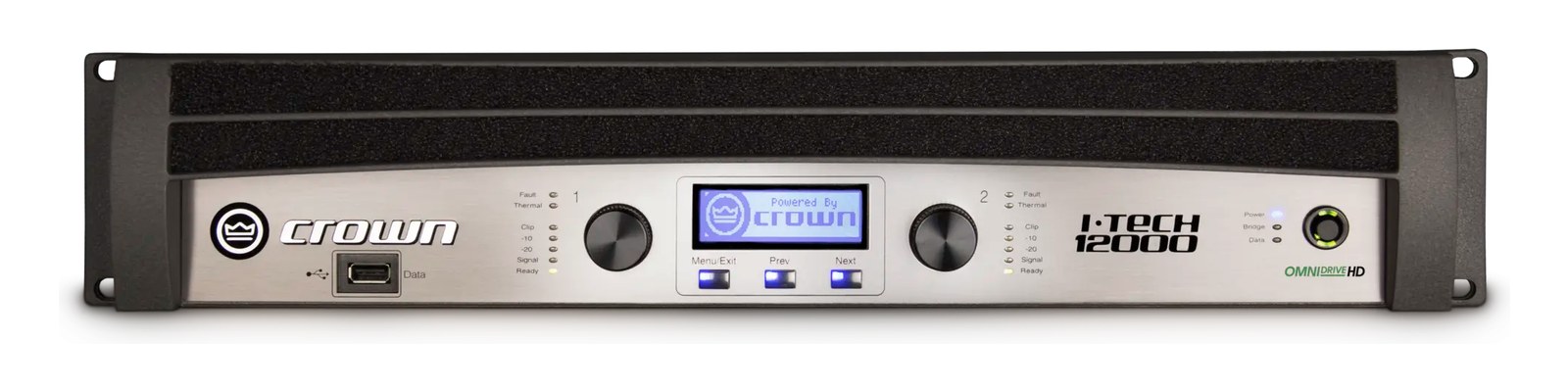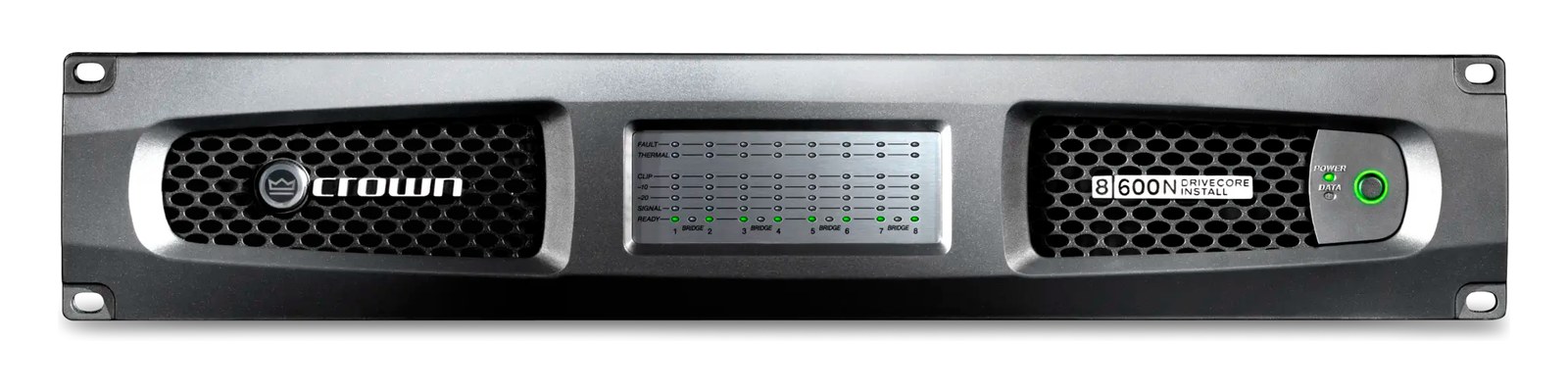

Powersoft X4 Touring Amplifier
Powersoft·Model X4·powersoft-x4
About the Powersoft X4
The Powersoft X4 is a four-channel touring amplifier with 8000W of total output, integrated DanteThe most common audio-over-network standard: dozens of channels of uncompressed digital audio down one ordinary Ethernet cable between Dante boxes. audio networking, and Armonia DSPDigital Signal Processing — the number-crunching that does EQ, compression, and effects inside a box. More DSP means more processing at once. for crossoverSplits audio into frequency bands so each speaker only gets what it can handle — lows to the subs, highs to the horns., alignment, and limiting. Powersoft's power-factor-corrected supplies handle dirty stage power gracefully, and the integrated Dante means the whole amp tier rides on the same Cat6Standard network cable grades. In an audio rig one cheap Cat5e run can replace a 48-channel copper snake; AES50 wants it shielded. as the console + system processors. Heavy in European festival circuits, theatres, and high-end touring where a Dante-first signal flow is preferred.
The Powersoft X4 is what happens when an amp rack gets serious about simplifying itself. Four channels, 8000W total output, integrated DanteThe most common audio-over-network standard: dozens of channels of uncompressed digital audio down one ordinary Ethernet cable between Dante boxes. networking, and a full Armonia DSPDigital Signal Processing — the number-crunching that does EQ, compression, and effects inside a box. More DSP means more processing at once. suite — crossoversSplits audio into frequency bands so each speaker only gets what it can handle — lows to the subs, highs to the horns., alignment delays, and limitersA compressor with a hard ceiling: nothing gets past the level you set. In an IEM rig it’s hearing protection as much as tone. — all sitting in 2UThe standard slice of rack height: 1U = 1.75″. A 3U box takes three slices; half-rack gear pairs two units side by side in one.. In a conventional touring rig you might be looking at a separate DSP processor, a separate network switch, and a passive patch panel just to accomplish what this box handles natively. For a Dante-first signal flow, it occupies the amp tier and the processing tier simultaneously, which is exactly why it shows up in high-end European touring and theatre installs where rack real estate and cable count both matter.
At load-in the 525mm depth and 16.5kg weight are facts of life — budget for a proper deep touring rack and a second person on the lift. The PowerConNeutrik’s locking AC power connector — twist to lock, rated for real current, standard on touring power distros and amps. 32A inlet is your constraint: you need a genuine 32A feed, not a standard 20A stage pocket, so confirm power infrastructure before the amp leaves the truck. Idle draw is a manageable 700W, but the 8000W peak means your distroOne pair of antennas feeding many receivers through an amplified splitter — replaces the forest of whips and keeps RF levels consistent. math needs to account for worst-case transients, not just steady-state consumption. On the signal side, the dual DanteThe most common audio-over-network standard: dozens of channels of uncompressed digital audio down one ordinary Ethernet cable between Dante boxes. ports support primary/secondary redundancyA second copy of anything critical — supply, computer, network path — already running so one failure can’t stop the show. on a single Cat6Standard network cable grades. In an audio rig one cheap Cat5e run can replace a 48-channel copper snake; AES50 wants it shielded. run per port, so a cable fault mid-show doesn't take the amp offline — a meaningful difference from analog-only rigs where a bad XLRThe standard 3-pin locking connector for mics and balanced line signals — pin 1 is the shield, pins 2 and 3 carry the balanced pair. to the processor is an emergency.
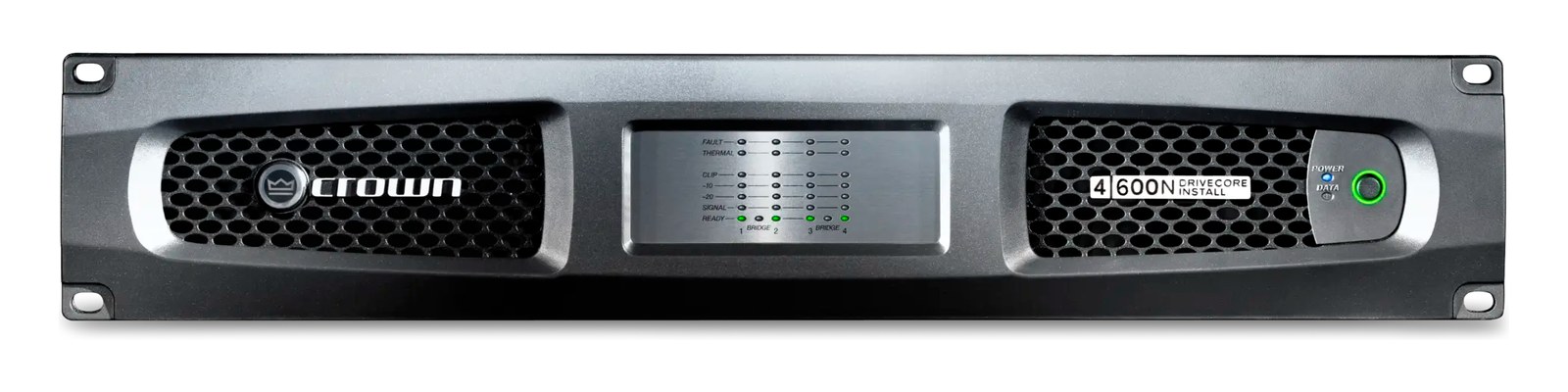
Pick the X4 if your system is already running DanteThe most common audio-over-network standard: dozens of channels of uncompressed digital audio down one ordinary Ethernet cable between Dante boxes., you want DSPDigital Signal Processing — the number-crunching that does EQ, compression, and effects inside a box. More DSP means more processing at once. and amplification consolidated, and you have the power infrastructure to back it up. It earns its $8,999 price point in rigs where the alternative is a standalone DSP unit plus a separate amplifier plus the cabling between them. If you're running a simple two-speaker IEMIn-Ear Monitor — earpieces that replace floor wedges, feeding each player their own mix. The reason this whole rack exists. fill rig or a club install where Dante is nowhere in the picture, this is more amplifier and more complexity than the job demands — a conventional four-channel amp with analog inputs will serve you better for less. The X4 rewards operators who already live in Armonia or a Dante ecosystem; it penalizes those who don't.
In the rack
- Verify your venue or truck distroOne pair of antennas feeding many receivers through an amplified splitter — replaces the forest of whips and keeps RF levels consistent. has a 32A PowerConNeutrik’s locking AC power connector — twist to lock, rated for real current, standard on touring power distros and amps. feed before the advance is done — a standard 20A stage pocket won't cut it, and discovering that at load-in costs everyone time.
- Run the secondary DanteThe most common audio-over-network standard: dozens of channels of uncompressed digital audio down one ordinary Ethernet cable between Dante boxes. port back to a redundantA second copy of anything critical — supply, computer, network path — already running so one failure can’t stop the show. switch leg, not the same switch as the primary. If the switch port fails, your redundancy is meaningless; a separate switch or at minimum a separate VLANVirtual LAN — slicing one physical switch into separate isolated networks, like keeping Dante away from lighting and guest WiFi. path is the point.
- Build your Armonia presets and speaker preset library before the first show day, then lock them. Armonia gives you a lot of rope — crossoverSplits audio into frequency bands so each speaker only gets what it can handle — lows to the subs, highs to the horns. points, limiting thresholds, alignment delays — and an accidental parameter change during soundcheck is hard to diagnose fast under pressure.
- At 525mm deep, confirm your rack's internal depth with the rail-to-rear-panel measurement, not just the nominal rack spec. Add cable bend radius behind the Speakon NL8 outputs and you'll need every millimeter you can get.
Four-channel 8000W touring amp with DanteThe most common audio-over-network standard: dozens of channels of uncompressed digital audio down one ordinary Ethernet cable between Dante boxes. + Armonia DSPDigital Signal Processing — the number-crunching that does EQ, compression, and effects inside a box. More DSP means more processing at once.. Italian engineering favorite of European touring.
I/O Ports (11)
| Port | Connector | Direction | Signal | Channels |
|---|---|---|---|---|
| Analog In A (XLR) | XLR FEMALE | input | analog audio | — |
| Analog In B (XLR) | XLR FEMALE | input | analog audio | — |
| Analog In C (XLR) | XLR FEMALE | input | analog audio | — |
| Analog In D (XLR) | XLR FEMALE | input | analog audio | — |
| Dante Primary (RJ45) | RJ45 | bidirectional | digital audio | 4 |
| Dante Secondary (RJ45) | RJ45 | bidirectional | digital audio | 4 |
| Speaker Out A (Speakon NL8) | XLR FEMALE | output | analog audio | — |
| Speaker Out B (Speakon NL8) | XLR FEMALE | output | analog audio | — |
| Speaker Out C (Speakon NL8) | XLR FEMALE | output | analog audio | — |
| Speaker Out D (Speakon NL8) | XLR FEMALE | output | analog audio | — |
- Power (POWERCON 32A) (POWERCON)
Deciding between two?
Rack space, watts, weight and every connector, side by side.
Related gear


Related articles
Guides from our library that cover planning around power amplifier gear.