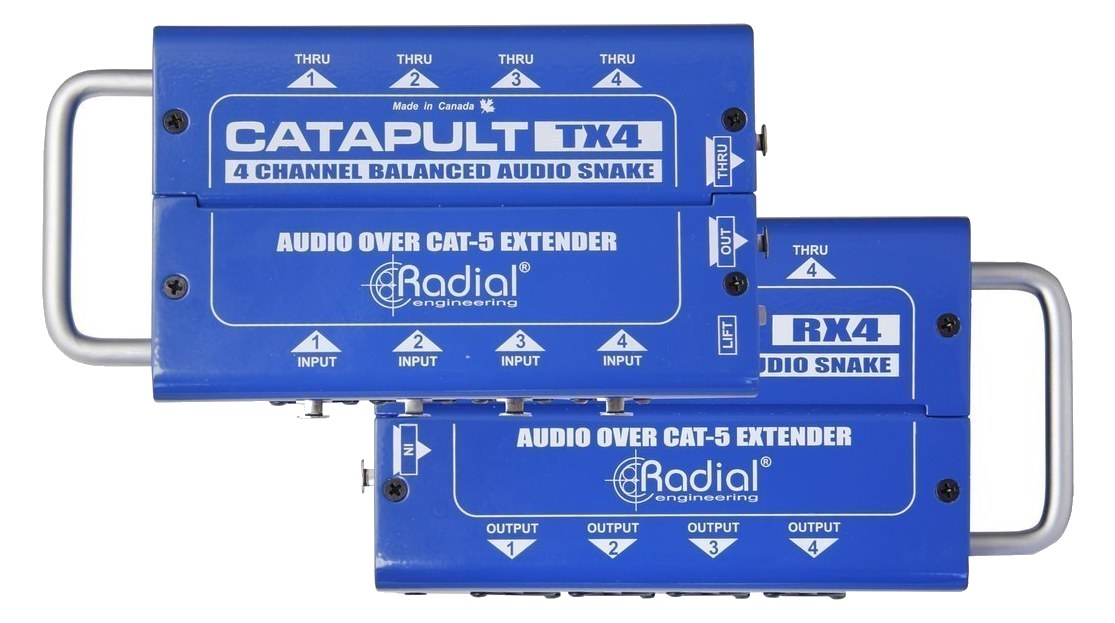

Radial Catapult Rack TX
Radial·Model Catapult Rack TX·radial-catapult-rack-tx
Photos
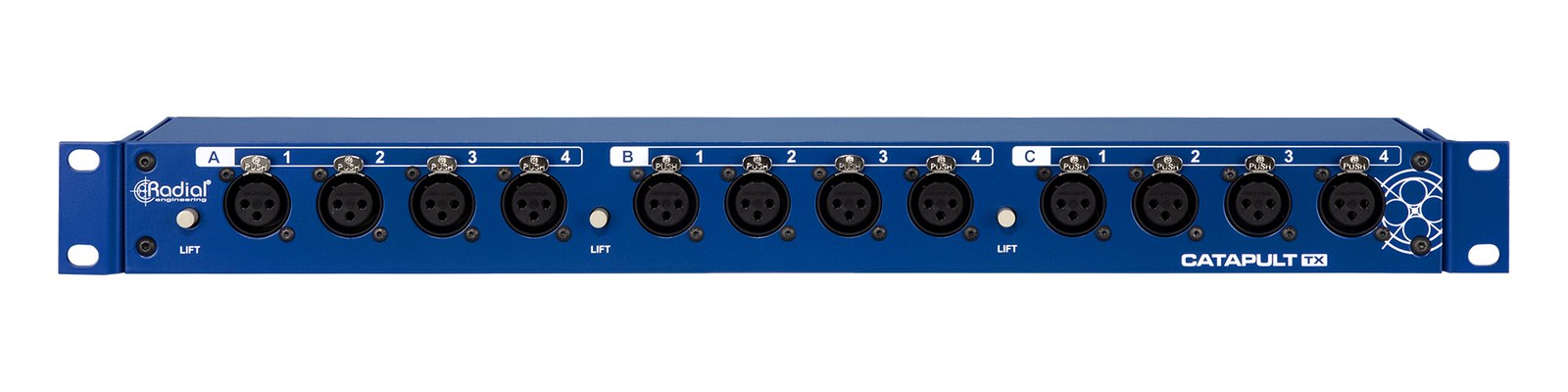
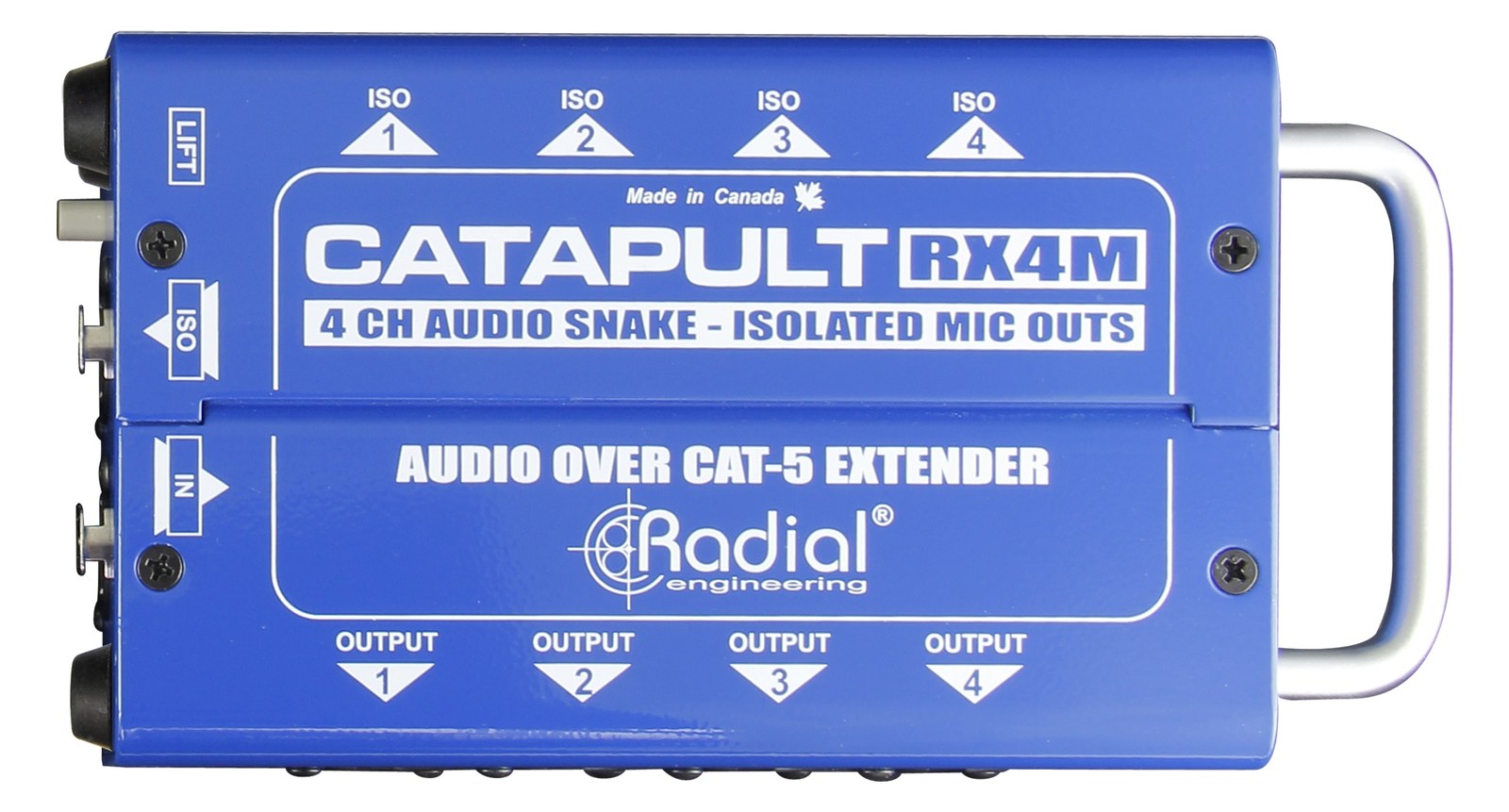
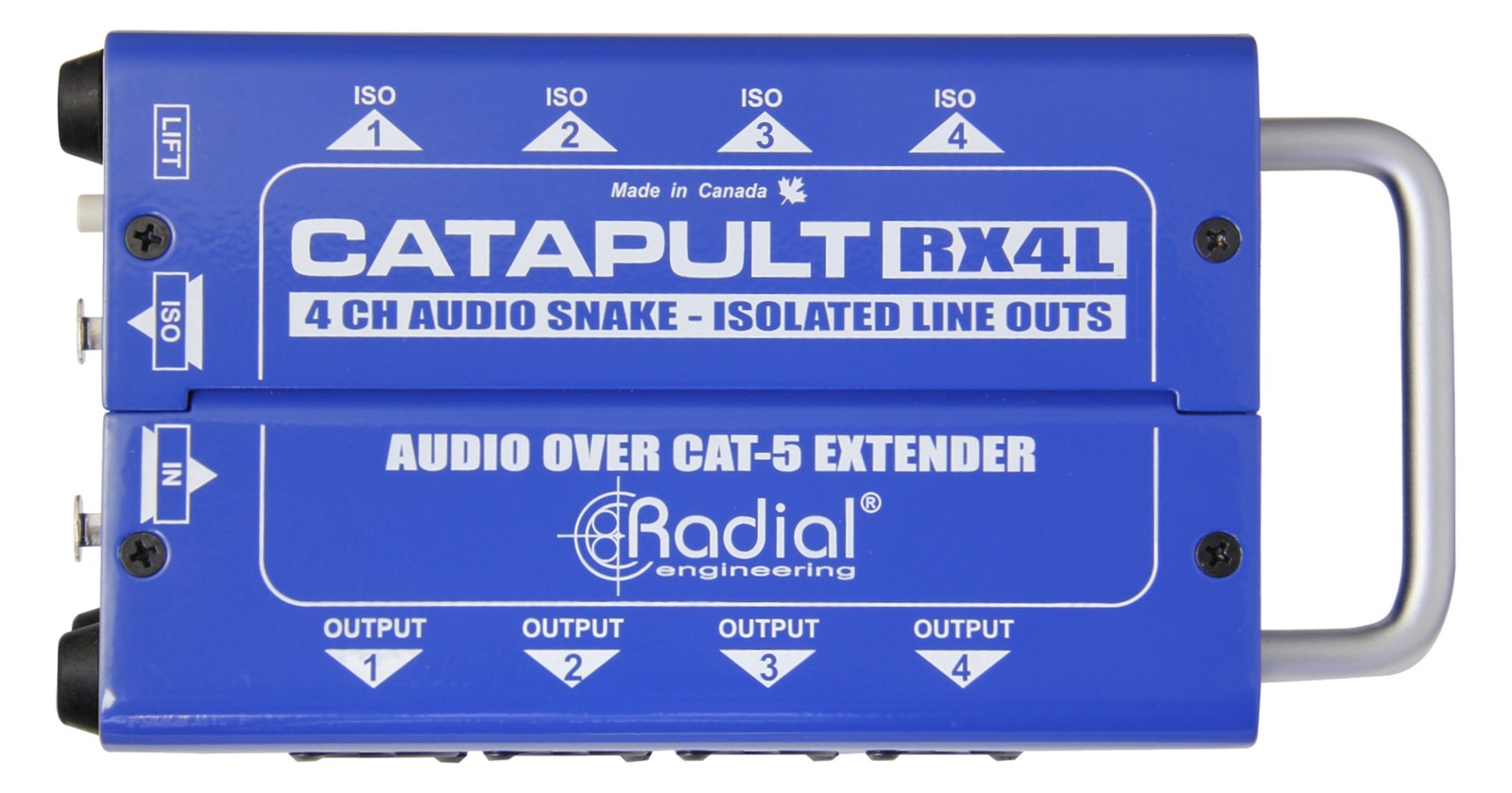
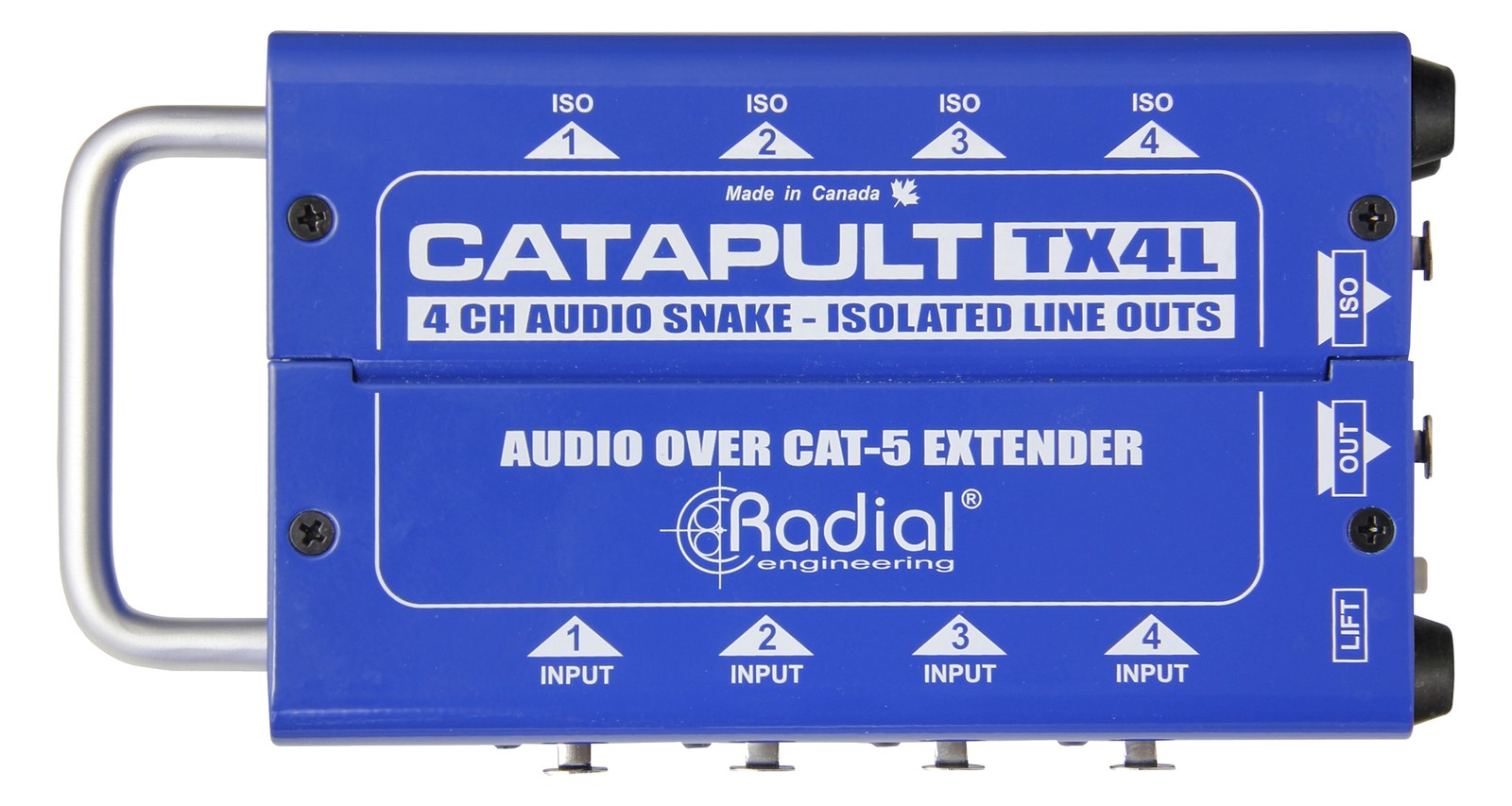
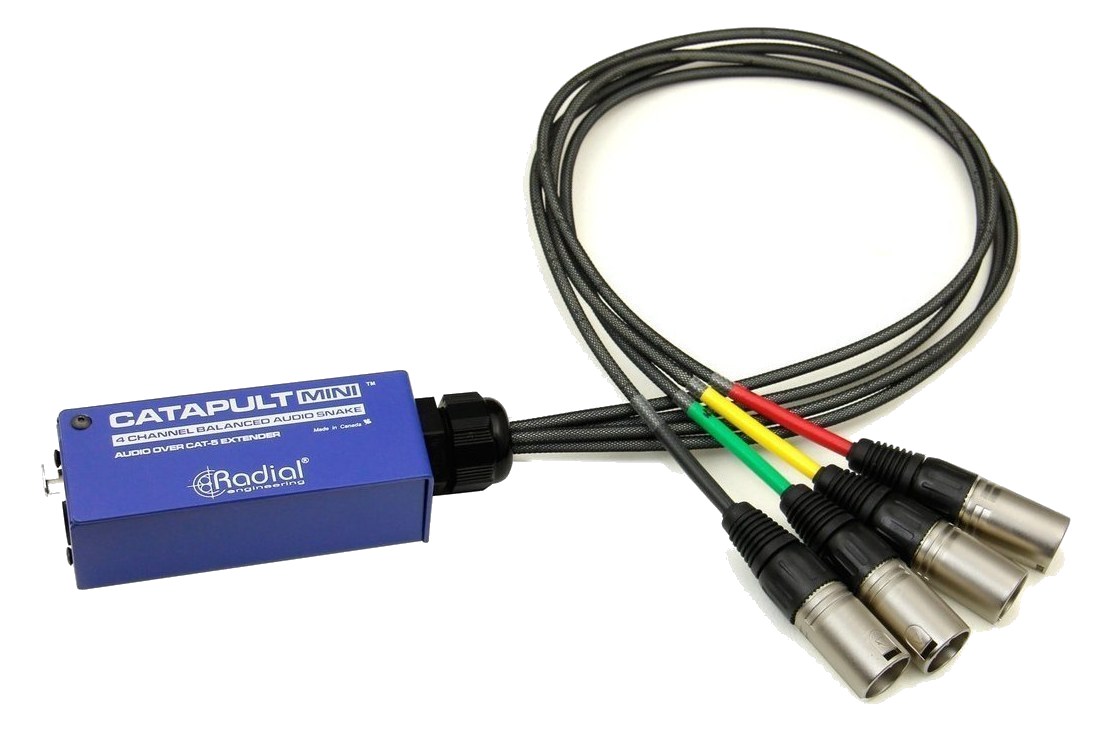
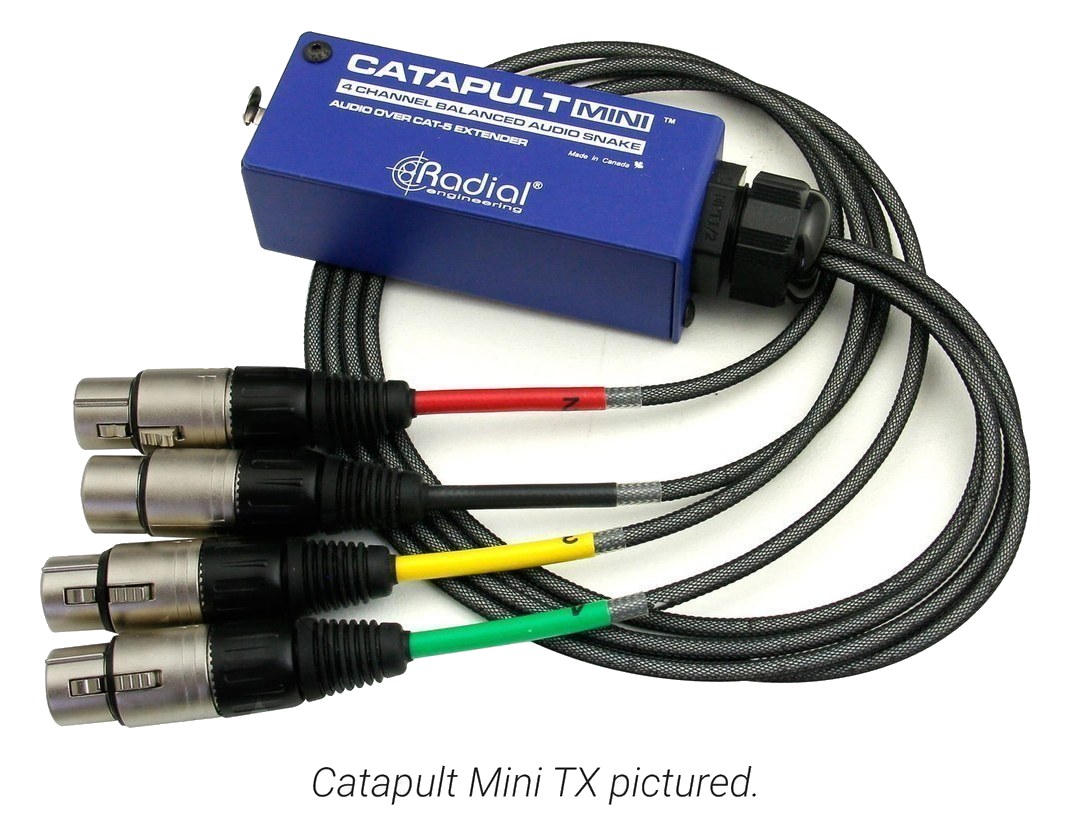
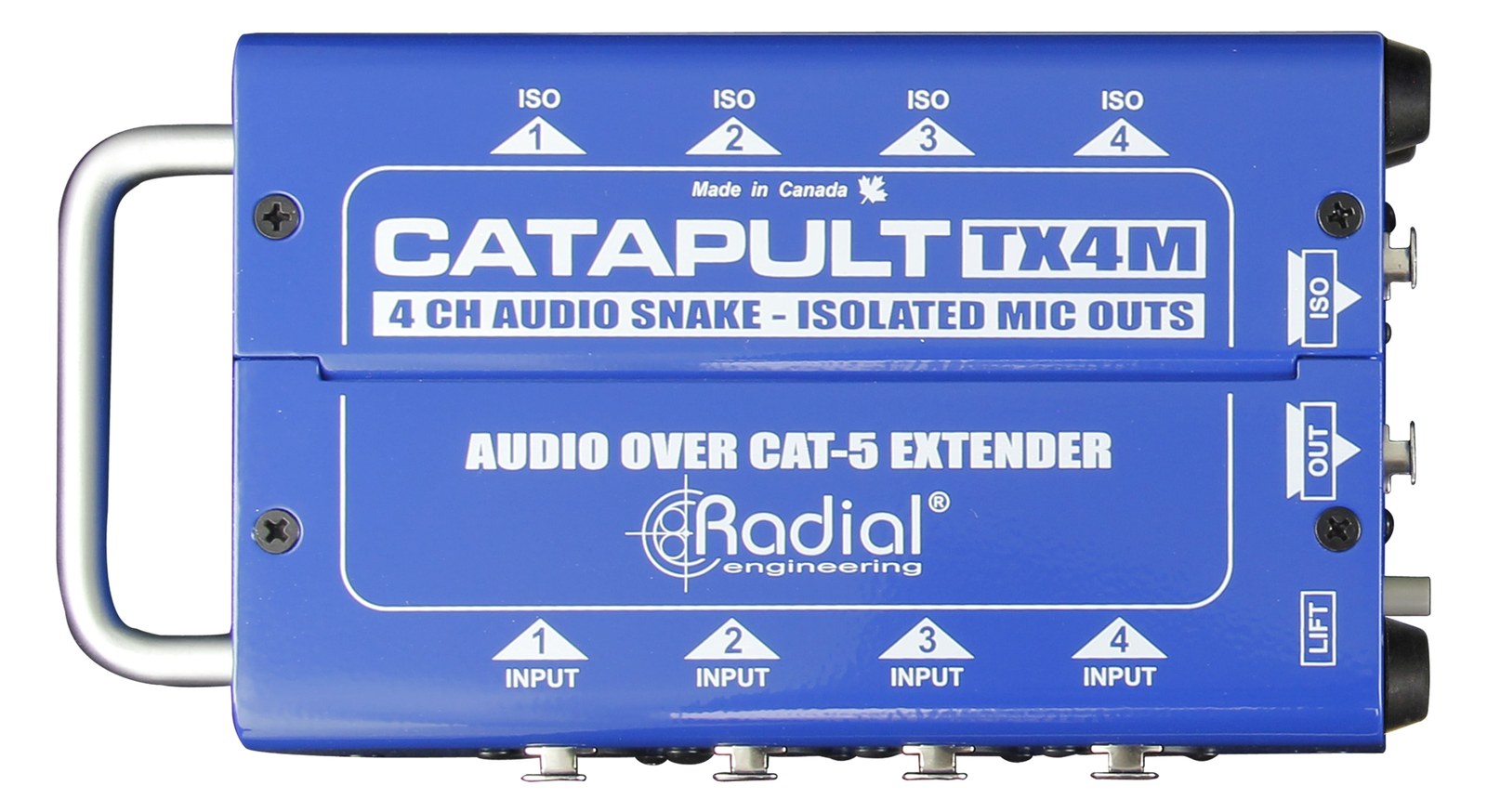
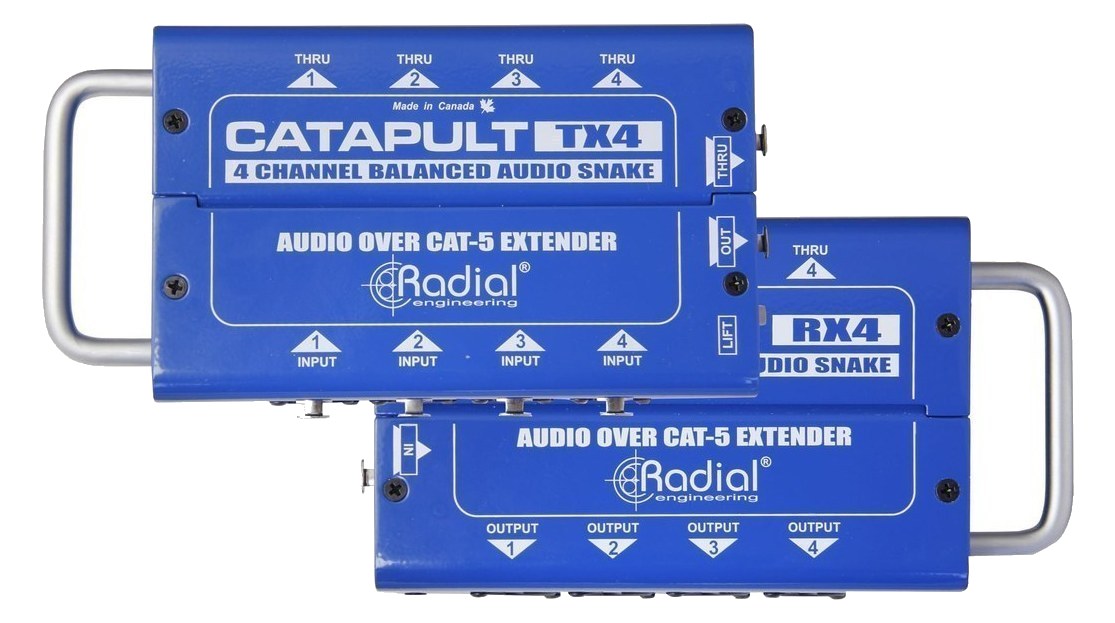
Manufacturer product photography — the drawn faceplate above stays true to panel layout; these show the hardware itself.
About the Radial Catapult Rack TX
The Radial Catapult Rack TX is the send-end partner to the Catapult Rack RX: a 1UThe standard slice of rack height: 1U = 1.75″. A 3U box takes three slices; half-rack gear pairs two units side by side in one. rack-mount transmitter that takes 12 XLRThe standard 3-pin locking connector for mics and balanced line signals — pin 1 is the shield, pins 2 and 3 carry the balanced pair. inputs and sends them over three Cat 5/6 cables (four channels per cable). Drop one in your FOHFront Of House — the main mix the audience hears, and the console position out in the room where it gets mixed., monitor, or playback rack and run Cat 5/6 to the stage end for a complete transformer-isolatedA magnetic coupling that passes audio between two windings with no wire contact — isolates splits and kills ground-loop hum, no power needed. 12-channel analog snakeA multicore cable bundling many channels into one stage-to-console run. A sub-snake collects one corner of the stage into a drop box. — dramatically lighter and cheaper than a traditional copper multicore. Passive, no power required.
The Catapult Rack TX is the send end of Radial's passive Cat 5/6 analog snakeA multicore cable bundling many channels into one stage-to-console run. A sub-snake collects one corner of the stage into a drop box. system — a 1UThe standard slice of rack height: 1U = 1.75″. A 3U box takes three slices; half-rack gear pairs two units side by side in one. box that accepts 12 balancedCarries the signal on two wires and cancels whatever noise both pick up — why mic cables can run hundreds of feet hum-free. XLRThe standard 3-pin locking connector for mics and balanced line signals — pin 1 is the shield, pins 2 and 3 carry the balanced pair. inputs and multiplexes them down to three Cat 5/6 runs, four channels per cable. It lives in your FOHFront Of House — the main mix the audience hears, and the console position out in the room where it gets mixed., monitor, or playback rack and pairs with a Catapult Rack RX at the stage end to complete the link. The pitch is straightforward: instead of hauling a heavy copper multicore from the rack to stage, you're running lightweight Cat 5/6 — cable you can buy at any hardware store, terminate in the field, and stuff into a much thinner conduit.
Passive and drawing zero watts, the TX adds nothing to your power budget and introduces no latencyThe delay between sound entering and leaving a digital system. IEM rigs fight to keep the whole chain down to a few milliseconds. — there's no conversion happening, just clever pin-pairing on the RJ45 connectors with transformer isolationA magnetic coupling that passes audio between two windings with no wire contact — isolates splits and kills ground-loop hum, no power needed. built into the system. At 2.7 kg and 200 mm deep, it's a dense but manageable 1UThe standard slice of rack height: 1U = 1.75″. A 3U box takes three slices; half-rack gear pairs two units side by side in one.. The three Cat 5/6 outputs give you flexibility: run all three to a single RX for the full 12 channels, or split them to different destinations if your rig calls for it. Because it's analog the whole way through, what you plug in is exactly what comes out — no driver installation, no danteThe most common audio-over-network standard: dozens of channels of uncompressed digital audio down one ordinary Ethernet cable between Dante boxes. config, no network switch required.
This belongs in a rig where you need a clean, reliable analog snakeA multicore cable bundling many channels into one stage-to-console run. A sub-snake collects one corner of the stage into a drop box. without the weight and bulk of a traditional multicore, and where you're already committed to the Catapult ecosystem on both ends. It's a strong fit for touring IEMIn-Ear Monitor — earpieces that replace floor wedges, feeding each player their own mix. The reason this whole rack exists. rigs and playback setups that travel frequently and need a fast, repeatable cable run to stage. It's not the right call if you need more than 12 channels, if you're working in an environment where Cat 5/6 runs might get confused with actual network cable, or if your stage end doesn't have a Catapult RX waiting for it — this unit does nothing without its receive-side partner.
In the rack
- Label your Cat 5/6 cables at both ends before the first show — 'CAT 1 / CH 1-4,' 'CAT 2 / CH 5-8,' 'CAT 3 / CH 9-12' — because on a dark stage they are completely identical and a mis-patch is a silent, maddening fault.
- Keep a tested spare Cat 5/6 run for each cable in your case; a single damaged cable costs you four channels, and Cat 5/6 is far easier to carry a spare of than a 12-channel copper snakeA multicore cable bundling many channels into one stage-to-console run. A sub-snake collects one corner of the stage into a drop box..
- Mount it at the back of the rack if your rack has rear-mount capability — the XLRThe standard 3-pin locking connector for mics and balanced line signals — pin 1 is the shield, pins 2 and 3 carry the balanced pair. inputs face the back of the truck, not the walkway, which protects the connectors during transit and keeps your front panel clean.
- If you're splitting the three Cat 5/6 outputs to different destinations rather than a single RX, verify cable length and quality before show day — all three runs should be properly terminated Cat 5/6, not grabbed-from-the-networking-bag mystery cable.
12-channel Cat 5/6 rack-mount transmit — 12x XLRThe standard 3-pin locking connector for mics and balanced line signals — pin 1 is the shield, pins 2 and 3 carry the balanced pair. to 3x Cat 5/6.
I/O Ports (18)
| Port | Connector | Direction | Signal | Channels |
|---|---|---|---|---|
| XLR In 1 | XLR FEMALE | input | analog audio | — |
| XLR In 2 | XLR FEMALE | input | analog audio | — |
| XLR In 3 | XLR FEMALE | input | analog audio | — |
| XLR In 4 | XLR FEMALE | input | analog audio | — |
| XLR In 5 | XLR FEMALE | input | analog audio | — |
| XLR In 6 | XLR FEMALE | input | analog audio | — |
| XLR In 7 | XLR FEMALE | input | analog audio | — |
| XLR In 8 | XLR FEMALE | input | analog audio | — |
| XLR In 9 | XLR FEMALE | input | analog audio | — |
| XLR In 10 | XLR FEMALE | input | analog audio | — |
| XLR In 11 | XLR FEMALE | input | analog audio | — |
| XLR In 12 | XLR FEMALE | input | analog audio | — |
| Bank A Out (etherCON) | ETHERCON | output | analog audio | — |
| Bank B Out (etherCON) | ETHERCON | output | analog audio | — |
| Bank C Out (etherCON) | ETHERCON | output | analog audio | — |
| Bank A Thru (etherCON) | ETHERCON | output | analog audio | — |
| Bank B Thru (etherCON) | ETHERCON | output | analog audio | — |
| Bank C Thru (etherCON) | ETHERCON | output | analog audio | — |
Deciding between two?
Rack space, watts, weight and every connector, side by side.
Related gear


Related articles
Guides from our library that cover planning around analog snake gear.
A plain-English guide to writing the input list, stage plot, and patch sheet that house engineers want — without the jargon, with examples, and with a free way to generate one.
How to split mic signals between FOH and your IEM rack: transformer-isolated splitters, phantom power rules, and where to place the split in the chain.