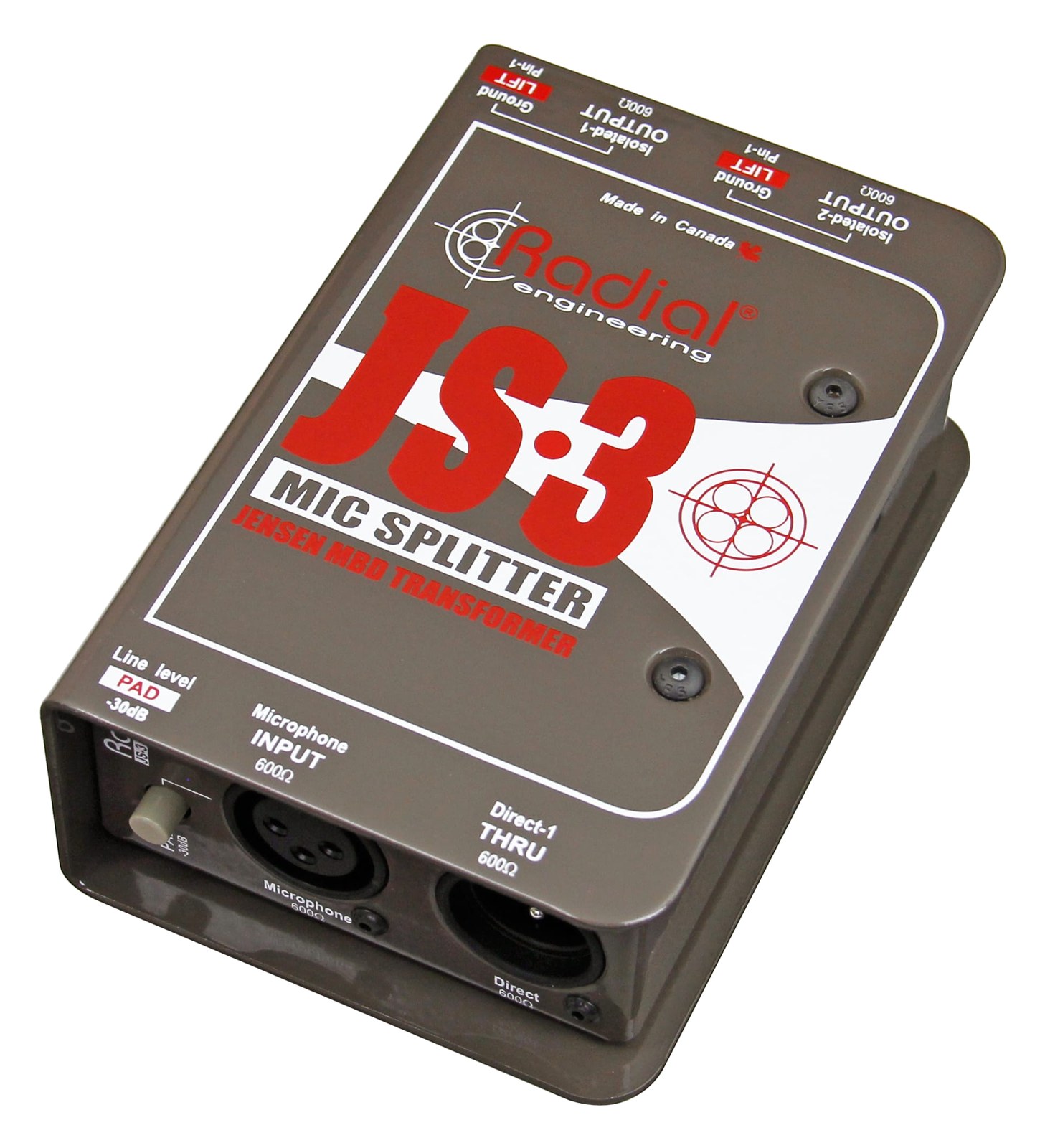

DI Box

Radial J48 Active DI

Radial·Model J48·radial-j48

Photos

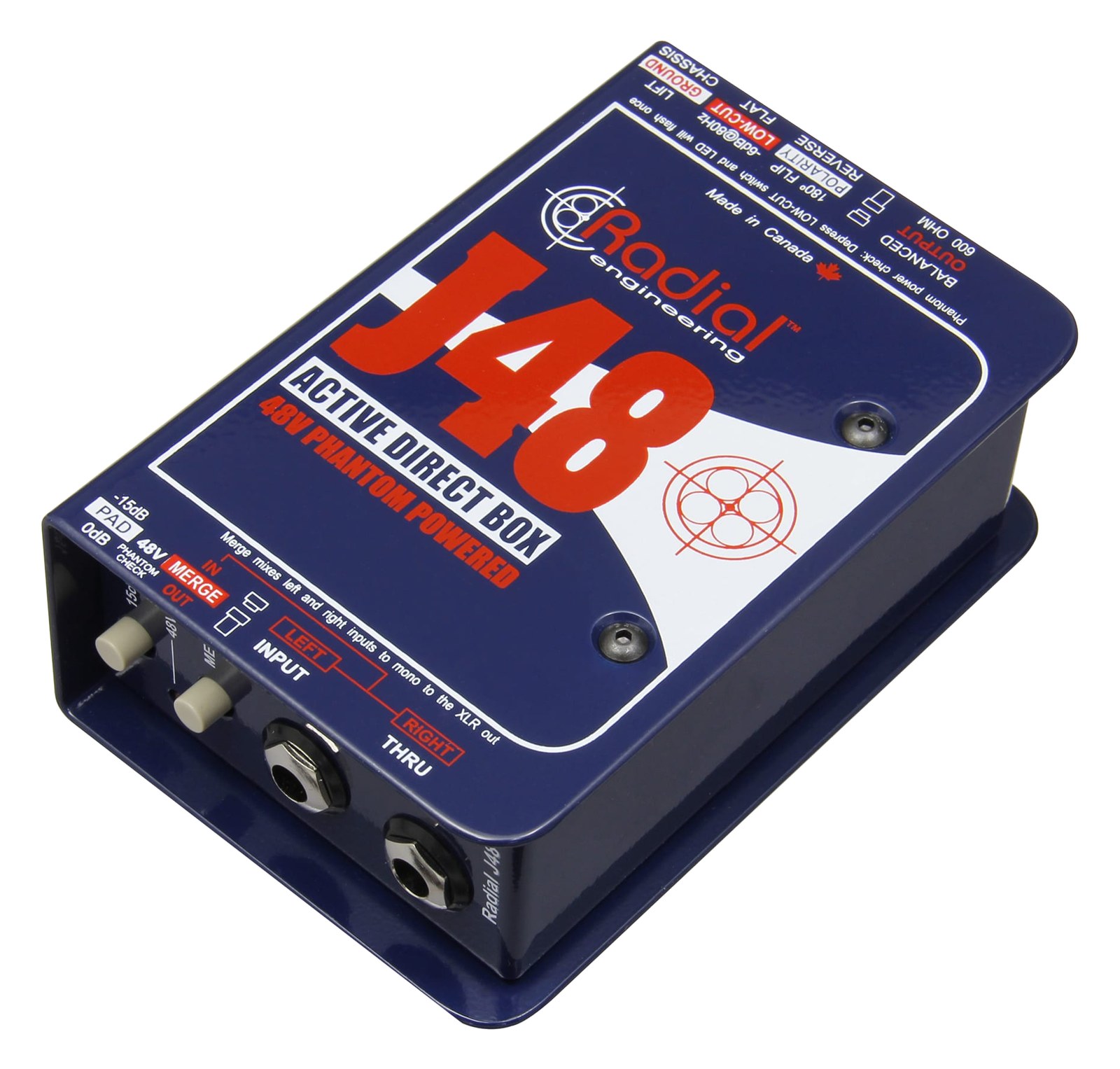
Manufacturer product photography — the drawn faceplate above stays true to panel layout; these show the hardware itself.

Photo: Radial Engineering1 / 2

About the Radial J48

The Radial J48 is a phantom-powered active DI that excels with piezo pickups and other high-impedance sources that passive DIs struggle with. The built-in pad and polarity reverse give you troubleshooting options right at the source, which can save time during soundcheck. Powered entirely by 48V phantom from your mixer, it requires no batteries, making it maintenance-free for touring use.

The Radial J48 is a phantom-powered active DI box built for sources that passive DIs handle poorly — piezo acoustic pickups, keyboards with high-impedance outputs, and anything that sounds thin or harsh through a standard passive box. It lives at the instrument end of the signal chain, converting an unbalanced instrument-level signal to a balanced, low-impedance mic-level XLR feed that can run long cable distances to your stage box or rack without picking up noise. The thru output lets you split to a local amp or tuner without interrupting the signal to front-of-house or monitors.

Phantom power is the key operational detail here. The J48 draws its operating voltage entirely from the 48V phantom your console or stage box already supplies, which means no batteries to swap mid-tour and no wall-wart to lose. The onboard pad gives you headroom headroom for hot keyboard outputs, and the polarity reverse is a practical tool during soundcheck when you're chasing phase issues between a DI and a mic on the same source — you can flip it at the box rather than diving into a console menu. At 0.5 kg it adds almost nothing to a gig bag.
If your rig regularly handles acoustic guitars with piezo pickups, keys, or synthesizers, the J48 is a reliable, maintenance-free choice that will outlast cheaper alternatives. Where it's not the right call: fully passive rigs where no phantom is available, or situations where you need stereo capture from a single unit and don't want to run two boxes. Engineers who prefer battery-backed active DIs for redundancy against phantom supply failures should look elsewhere — the J48 has no backup power path. For the majority of live touring applications with phantom-capable systems, it's a proven workhorse.

In the rack

  • Confirm phantom is enabled on the specific input channel before soundcheck — a silent J48 almost always means phantom is off or the XLR cable has a broken pin 2 or 3.
  • Use the polarity reverse during line check when a DI'd acoustic guitar is combined with a mic on the body: flip it and pick the position where the low-mids fill in rather than cancel.
  • If you're running the thru output to a stage amp, make sure that amp's input is unbalanced TRS or use an appropriate adapter — the thru is not a balanced output.
  • Label the unit with the artist or instrument name using gaff tape on the top panel; when you have multiple J48s on a busy stage plot, source identification at the box saves real time during changeovers.

Phantom-powered active DI with pad and polarity reverse.

I/O Ports (3)

PortConnectorDirectionSignalChannels
Input (TRS)TRS QUARTERinputanalog audio
Thru (TRS)TRS QUARTERoutputanalog audio
Output (XLR)XLR MALEoutputanalog audio

Deciding between two?

Rack space, watts, weight and every connector, side by side.

Related gear

Related articles

Guides from our library that cover planning around di box gear.