
DI Box

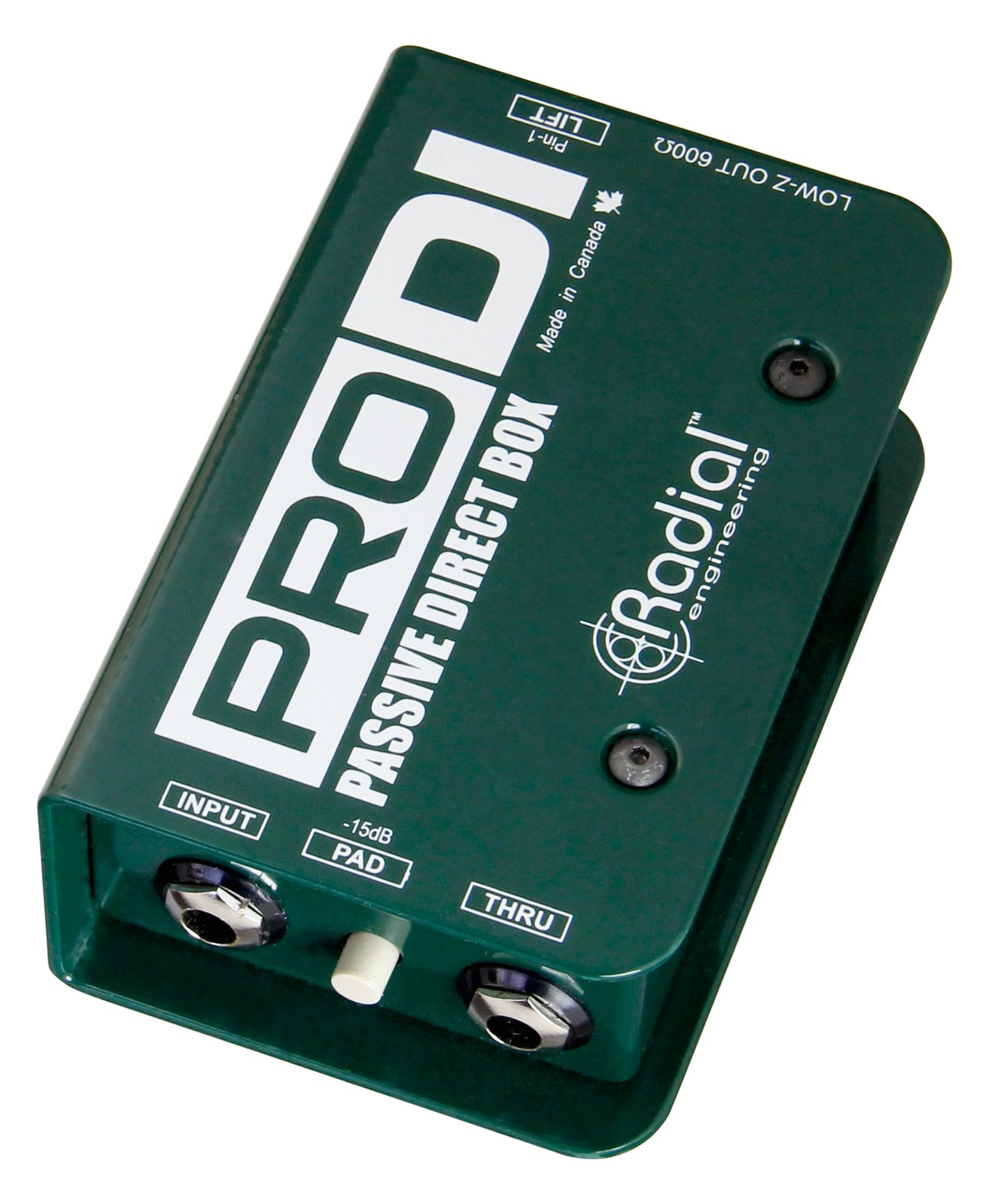
Radial ProDI Passive DI

Radial·Model ProDI·radial-prodi

Photos

Manufacturer product photography — the drawn faceplate above stays true to panel layout; these show the hardware itself.

Photo: Radial Engineering1 / 3

About the Radial ProDI

The Radial ProDI is a reliable passive DI box that delivers clean signal conversion at a more accessible price point than the JDI. It uses a custom Radial transformer that handles a wide frequency range and high signal levels without coloring the sound. A practical choice when you need multiple DI boxes for a stage setup without the per-unit cost of premium Jensen-equipped models.

The ProDI is Radial's workhorse passive DI — the unit you reach for when you need reliable instrument-level-to-mic-level conversion without active circuitry or phantom power in the signal path. It sits on stage, not in the rack, converting a keyboard, acoustic guitar preamp, or playback output to a balanced XLR signal that can travel clean cable runs back to your console or snake. The thru output lets the source also feed a stage amp, so one box covers both directions without splitting anything upstream. At 0.4 kg and no rack footprint, it lives in your DI pouch or tape to the stage.

Passive means zero power draw, zero battery anxiety, and no active failure mode at show time — the transformer either works or it doesn't, and Radial transformers don't quit quietly. The custom transformer handles the wide signal range keyboards and line-level sources throw at it, including hot outputs from digital pianos and playback systems that would clip a cheap passive box. The ground lift, standard on Radial DIs, is your first call when a buzz appears at line check. No phantom required means it's safe to leave on a snake feed where phantom state is uncertain.

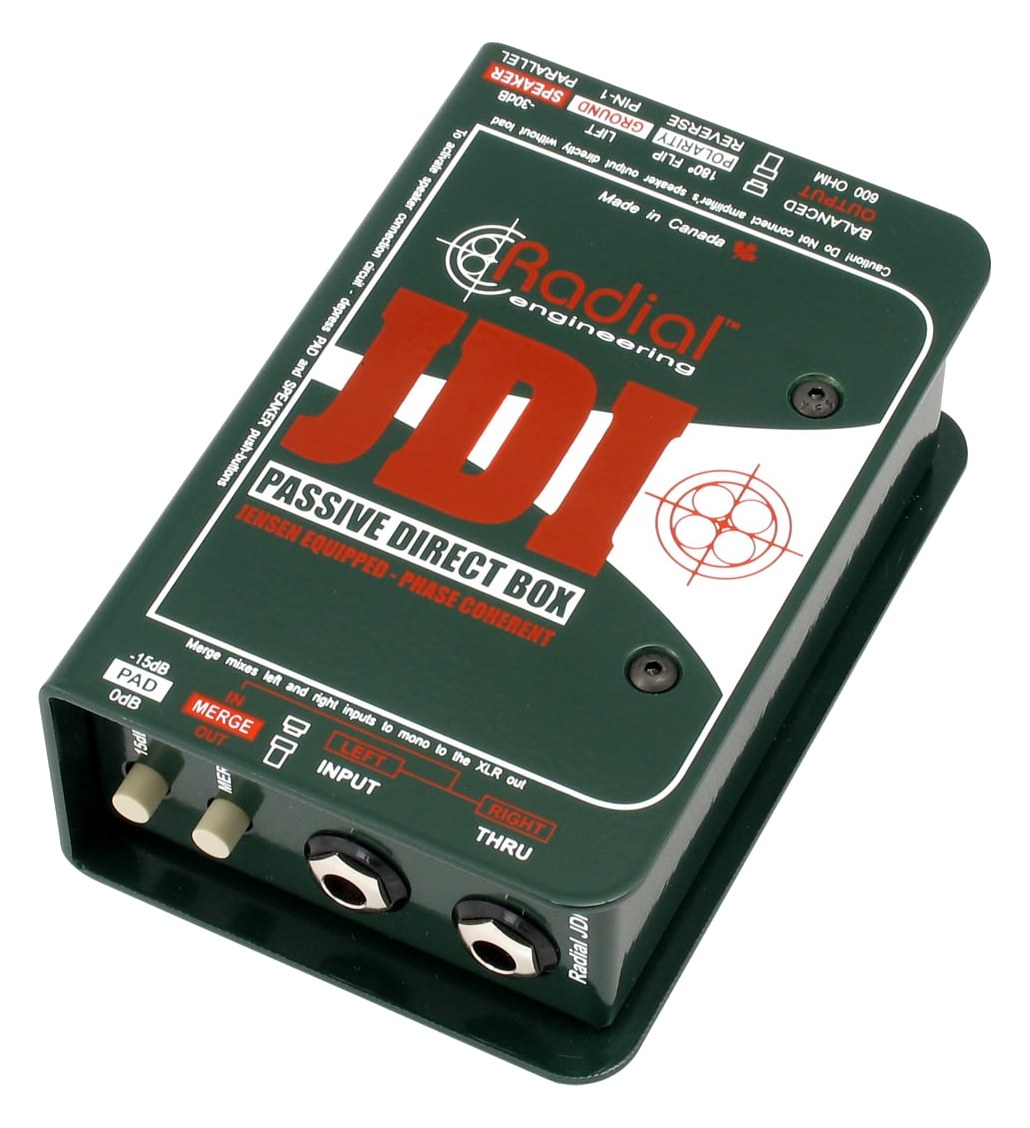
The ProDI earns its place when you're stocking multiples — keys rig, acoustic, click feed to the drum sub, spare on the truck — and per-unit cost matters across a five- or six-box buy. If you're running a single critical source, particularly an upright bass or passive guitar where transformer character genuinely matters, the Jensen-equipped JDI is worth the premium. The ProDI is not an active DI and won't fix a weak or high-impedance passive guitar pickup the way an active unit would. Know your source impedances before you commit.

In the rack

  • Keep one ProDI velcro'd inside your monitor rack lid as a spare — no power required means it's ready regardless of what rack position you pull it from.
  • For keyboard or playback line-level sources, engage the pad if the source output is hitting the transformer hard; driving a passive transformer into saturation adds low-end bloom that sounds like a problem, not a feature.
  • Label the thru output clearly with a strip of gaffers tape — at load-in under stage lighting, a TRS thru and a TRS input look identical, and a mispatched thru will confuse the signal flow fast.
  • When deploying multiples, test the ground lift on each unit at soundcheck before doors, not during — ground loops on keyboard submixes with several DIs in series can be subtle until a synth pad fills the room.

Full-range passive DI box.

I/O Ports (3)

PortConnectorDirectionSignalChannels
Input (TRS)TRS QUARTERinputanalog audio
Thru (TRS)TRS QUARTERoutputanalog audio
Output (XLR)XLR MALEoutputanalog audio

Deciding between two?

Rack space, watts, weight and every connector, side by side.

Related gear

Related articles

Guides from our library that cover planning around di box gear.