
Radial JDI Passive DI
Radial·Model JDI·radial-jdi
Photos
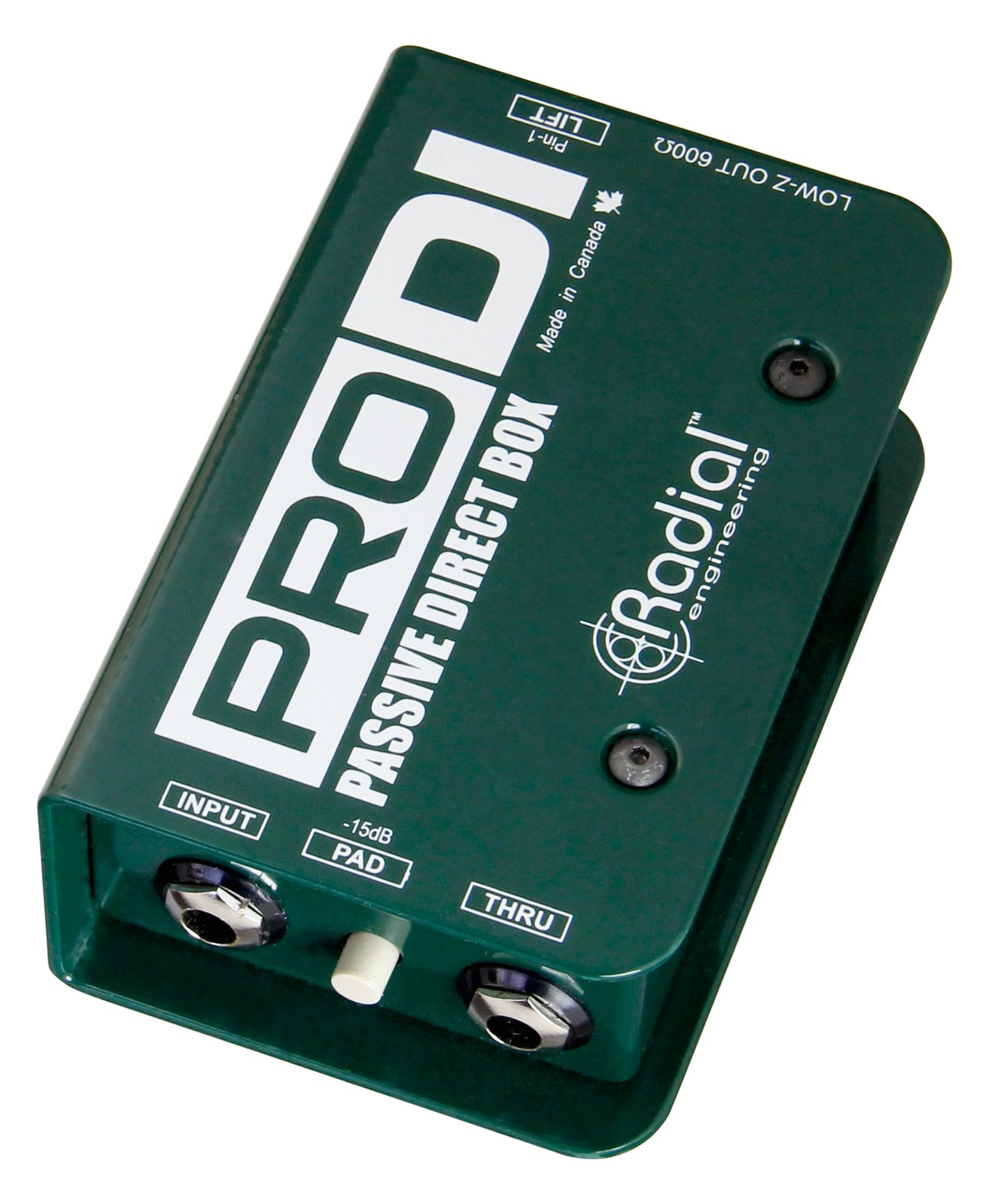
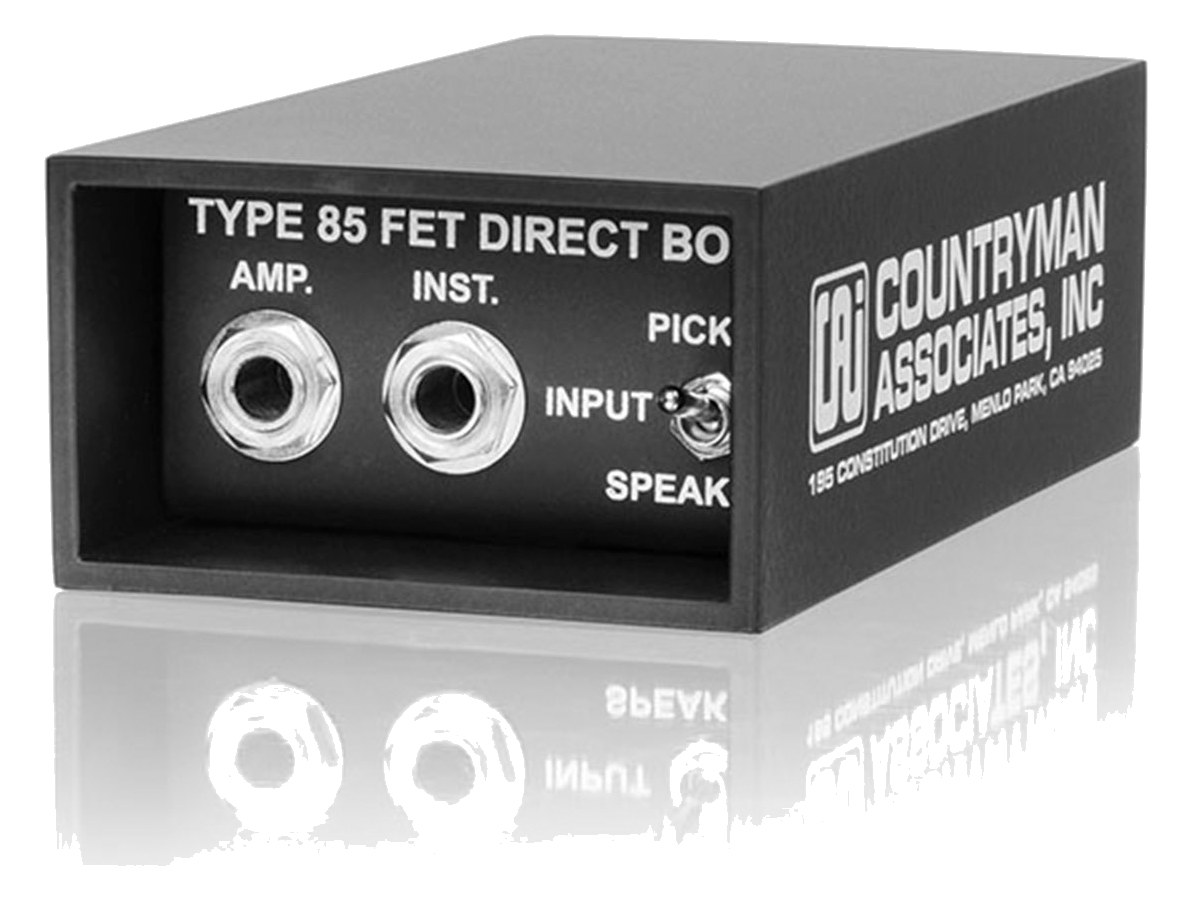
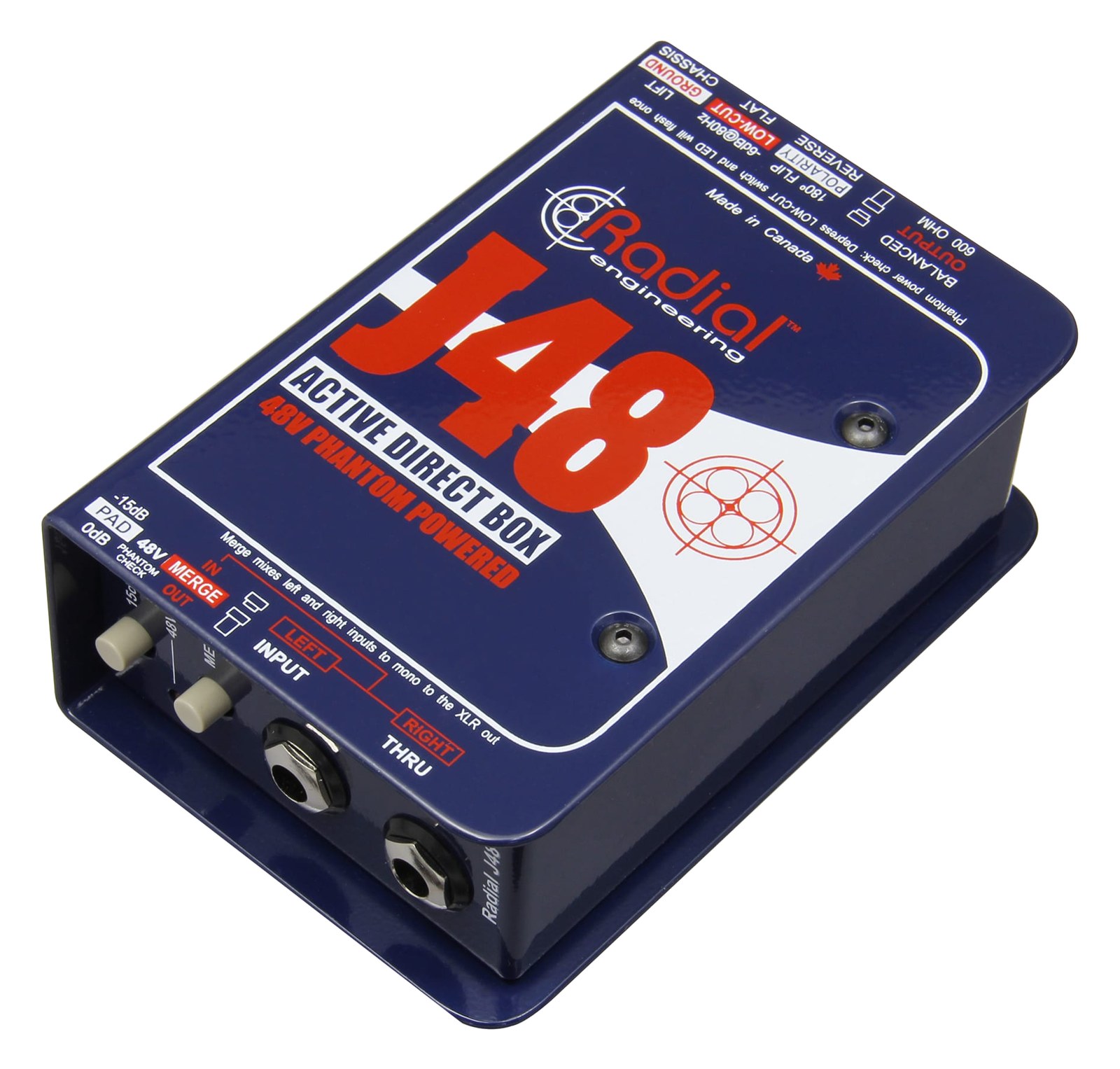
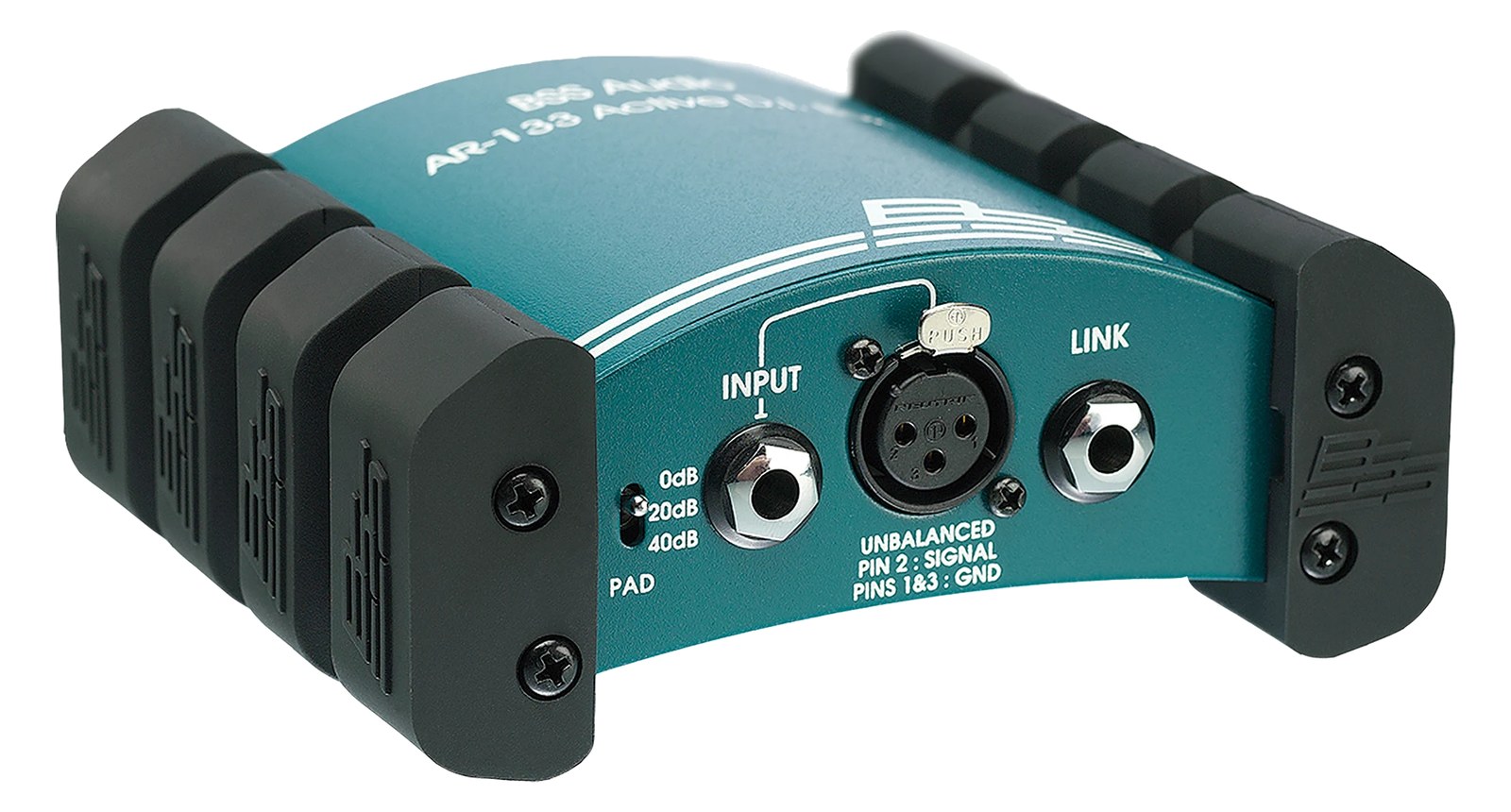
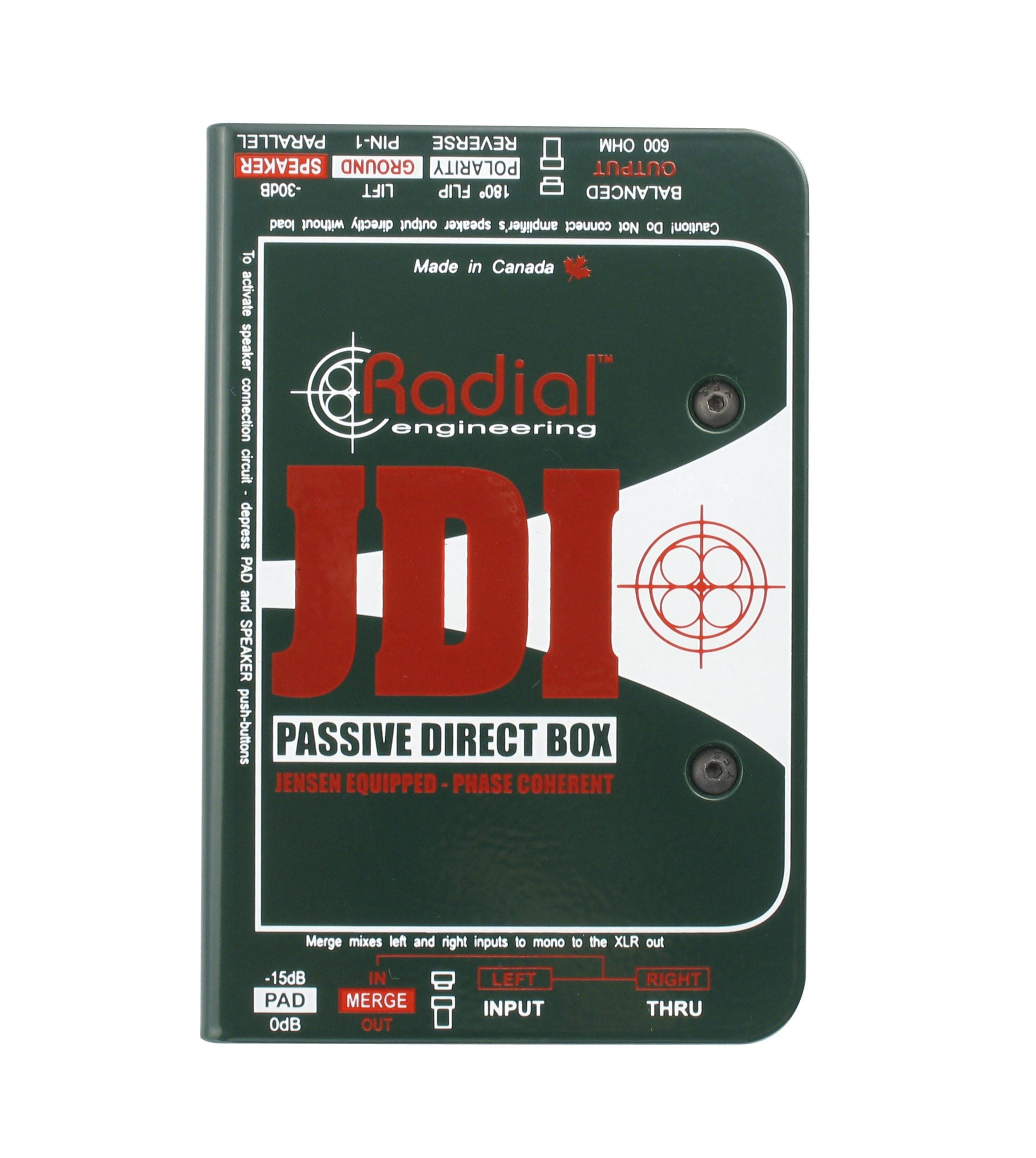
Manufacturer product photography — the drawn faceplate above stays true to panel layout; these show the hardware itself.
About the Radial JDI
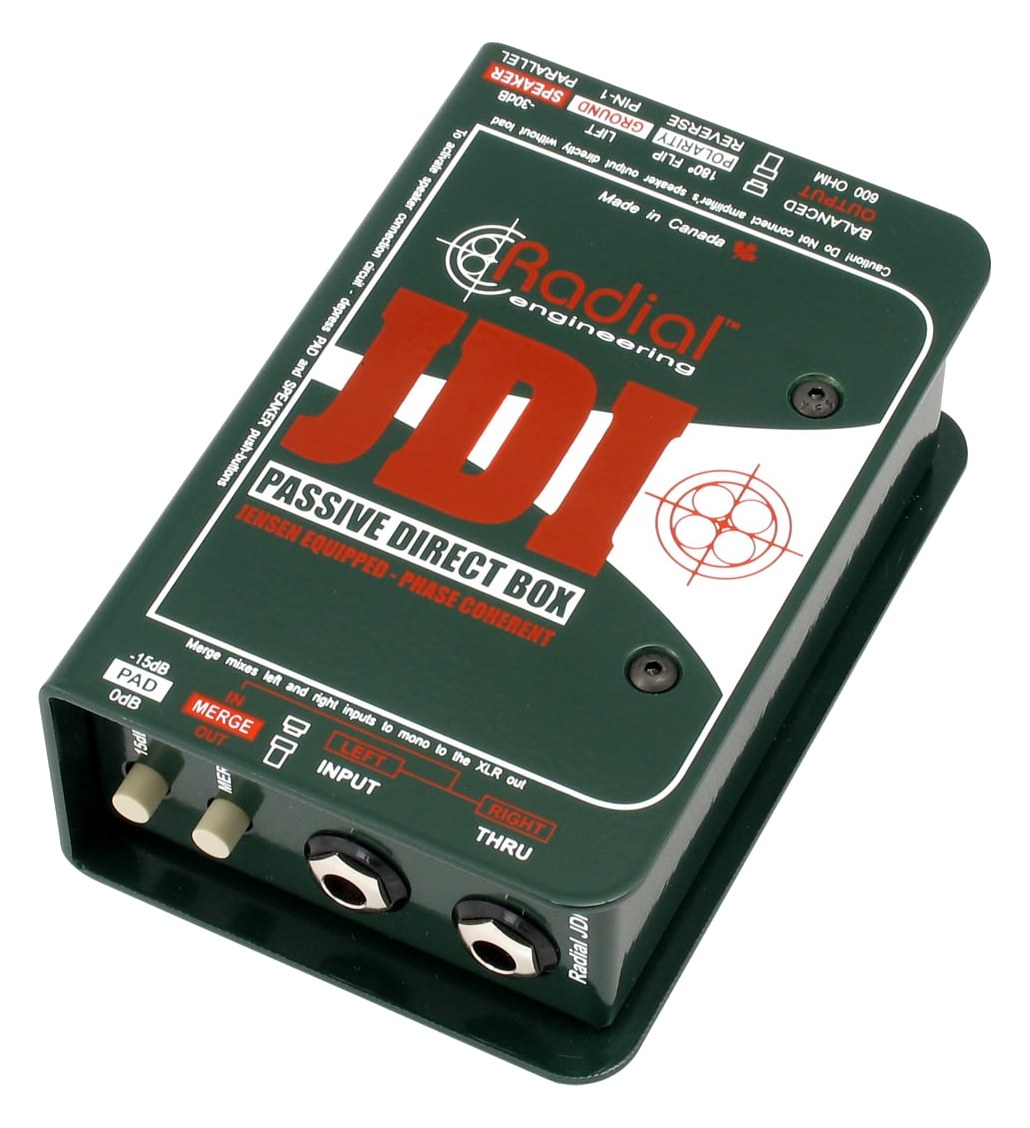
The Radial JDI is a reference-grade passive DIDirect Injection box — converts an instrument’s unbalanced signal to a balanced mic-level XLR so it can run long cables without noise. box with a Jensen JT-DB-E transformerA magnetic coupling that passes audio between two windings with no wire contact — isolates splits and kills ground-loop hum, no power needed. that delivers transparent, noise-free signal conversion from unbalancedA single signal wire plus ground (guitar cables, RCA) — collects noise with length, so keep the runs short. instrument levelThe in-between signal from a passive guitar or bass pickup — hotter than a mic, quieter than line, and high-impedance. Hence DI boxes. to balancedCarries the signal on two wires and cancels whatever noise both pick up — why mic cables can run hundreds of feet hum-free. mic levelThe tiny signal straight out of a microphone — roughly a thousandth of line level. It needs a preamp before anything else touches it.. It handles high-output sources like keyboards and active basses without distortion, and the passive design means no batteries or phantom powerThe +48 V a console sends up the mic cable to power condenser mics and active DI boxes — invisible to gear that doesn’t need it. needed. A must-have in any professional kit for connecting instruments to your IEMIn-Ear Monitor — earpieces that replace floor wedges, feeding each player their own mix. The reason this whole rack exists. rig's mixer or interface.
The Radial JDI is a passive direct box built around a Jensen JT-DB-E transformerA magnetic coupling that passes audio between two windings with no wire contact — isolates splits and kills ground-loop hum, no power needed., and that transformer is the whole story. Its job in a rig is straightforward: take an unbalancedA single signal wire plus ground (guitar cables, RCA) — collects noise with length, so keep the runs short. instrument-levelThe in-between signal from a passive guitar or bass pickup — hotter than a mic, quieter than line, and high-impedance. Hence DI boxes. signal — a keyboard, an active bass, a playback device — and convert it to a balancedCarries the signal on two wires and cancels whatever noise both pick up — why mic cables can run hundreds of feet hum-free. mic-levelThe tiny signal straight out of a microphone — roughly a thousandth of line level. It needs a preamp before anything else touches it. output that your mixer or interface can receive cleanly over a long cable run without picking up hum or interference along the way. It does this without batteries, without phantom powerThe +48 V a console sends up the mic cable to power condenser mics and active DI boxes — invisible to gear that doesn’t need it., and without adding any coloration you'll need to correct later at the board.
Passive means no gainHow much the preamp amplifies the incoming signal. Too low and you’re hunting through hiss; too high and peaks clip. stage, which also means no clipping from a hot keyboard output slamming into an active circuit. The Jensen transformerA magnetic coupling that passes audio between two windings with no wire contact — isolates splits and kills ground-loop hum, no power needed. handles high-output sources gracefully, and the thru output lets you feed the instrument's local amp simultaneously without interrupting signal flow — useful when a keys player wants stage wedgesA floor monitor speaker angled up at the performer — the thing IEMs replace, and the thing you fall back on when they die. or a personal amp alongside your IEMIn-Ear Monitor — earpieces that replace floor wedges, feeding each player their own mix. The reason this whole rack exists. feed. At 0.6 kg it drops into a bag pocket or clips to a pedalboard, and because there's zero power draw it creates no dependency on your rack's power budget or a phantomThe +48 V a console sends up the mic cable to power condenser mics and active DI boxes — invisible to gear that doesn’t need it.-capable channel.
Pick the JDI if you're after a DIDirect Injection box — converts an instrument’s unbalanced signal to a balanced mic-level XLR so it can run long cables without noise. you'll use on sessions, tours, and fly datesA gig you fly to instead of driving — the whole rig has to shrink into checkable cases and carry-ons. for the next decade without questioning it. It's overkill for a weekend rehearsal rig running short cable runs, and if you need two channels you're buying two boxes — there's no stereo version here. Engineers running primarily active sources like synths and keyboards where transformerA magnetic coupling that passes audio between two windings with no wire contact — isolates splits and kills ground-loop hum, no power needed. character matters will love it; if most of your sources are acoustic instruments needing a high-impedanceOpposition to signal flow, in ohms. Low-impedance IEMs are easier to drive loud; mismatches shift level and tone. input, an active DI designed for that load may serve you better.
In the rack
- When feeding stereo keyboards into a mono IEMIn-Ear Monitor — earpieces that replace floor wedges, feeding each player their own mix. The reason this whole rack exists. mix, use two JDIs summed at the mixer rather than a splitter cable — you'll preserve isolation between channels and keep hum out of both sides.
- The thru output is passive and instrument-levelThe in-between signal from a passive guitar or bass pickup — hotter than a mic, quieter than line, and high-impedance. Hence DI boxes., not buffered, so keep the cable to the stage amp short; long runs on the thru side can load the source and affect tone.
- No phantom powerThe +48 V a console sends up the mic cable to power condenser mics and active DI boxes — invisible to gear that doesn’t need it. is required, but the JDI is not harmed by it — leave phantom on globally without worrying about this box in the chain.
- Because it has no rack earsThe flanges that bolt gear to the rack rails. Desktop boxes without them need a shelf, tray, or drawer to live in the case. and is not rack-mountable in the traditional sense, secure it with hook-and-loop to the inside of your rack lid or a utility shelf so it doesn't rattle loose during transit.
Premium passive DIDirect Injection box — converts an instrument’s unbalanced signal to a balanced mic-level XLR so it can run long cables without noise. with Jensen transformerA magnetic coupling that passes audio between two windings with no wire contact — isolates splits and kills ground-loop hum, no power needed..
I/O Ports (3)
| Port | Connector | Direction | Signal | Channels |
|---|---|---|---|---|
| Input (TRS) | TRS QUARTER | input | analog audio | — |
| Thru (TRS) | TRS QUARTER | output | analog audio | — |
| Output (XLR) | XLR MALE | output | analog audio | — |
Related gear
Related articles
Guides from our library that cover planning around di box gear.
How to build a live-performance playback rig that runs click + backing tracks reliably — interface sizing, routing rules, software comparison, and what to do when the laptop crashes.
Hum in an IEM mix hits harder than in wedges. How to design ground loops out of your rack — power, DIs, wireless transmitters, and laptop playback.