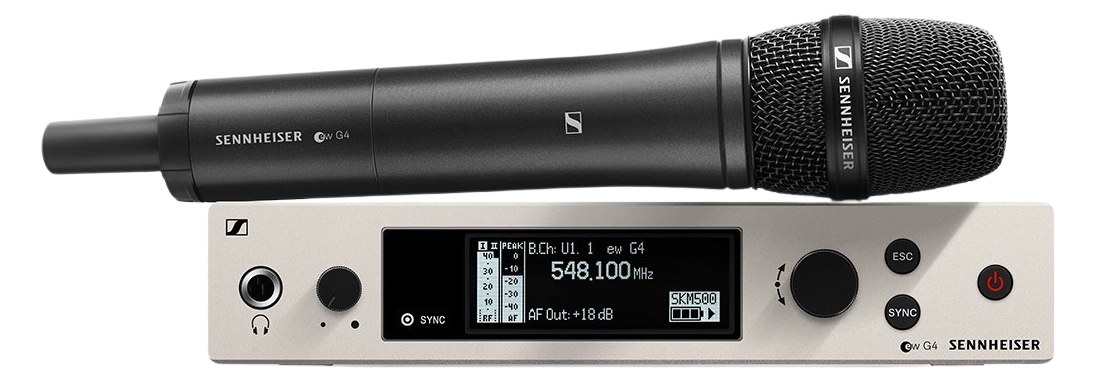
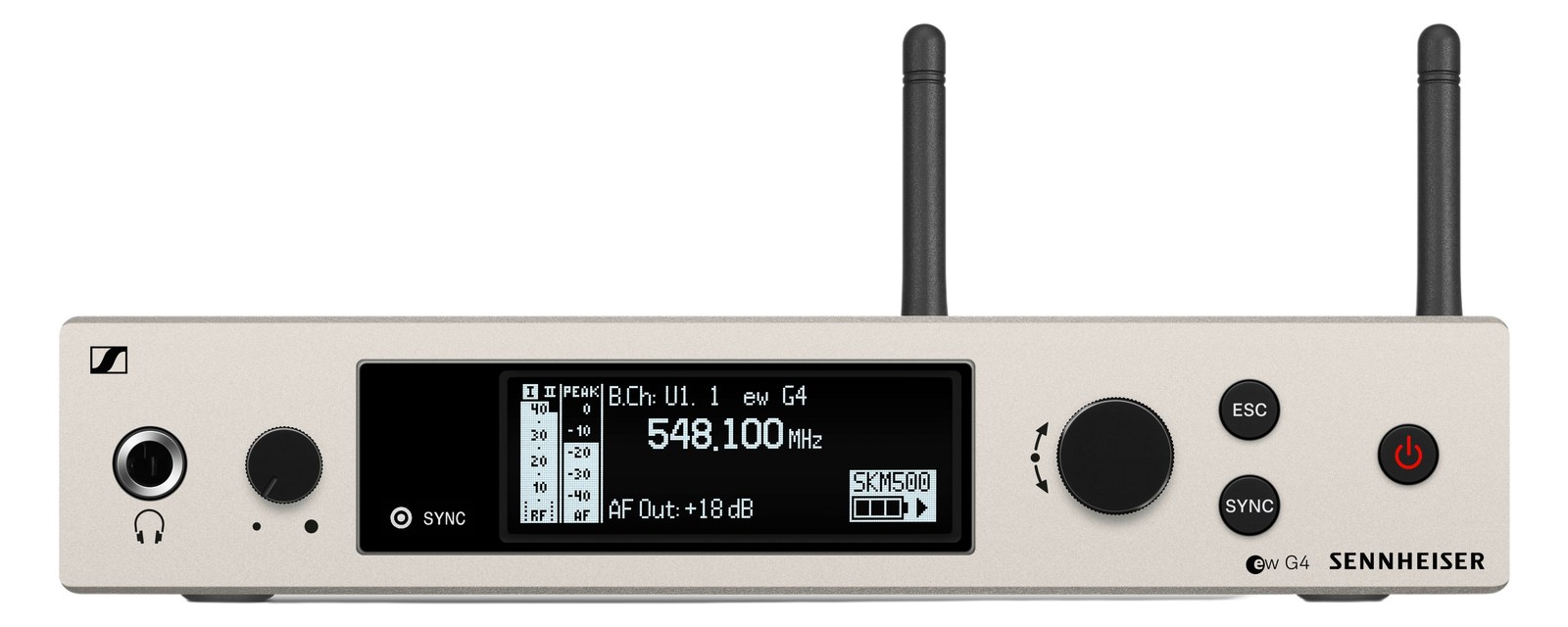
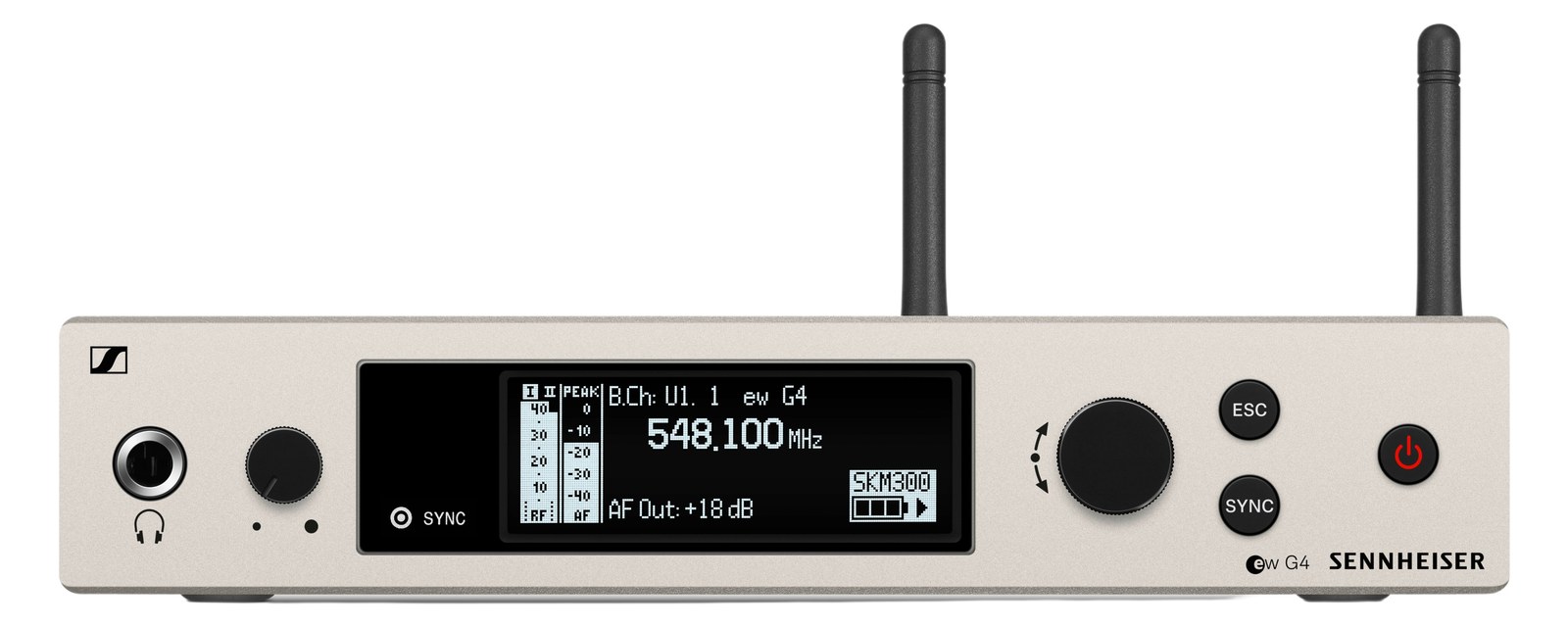
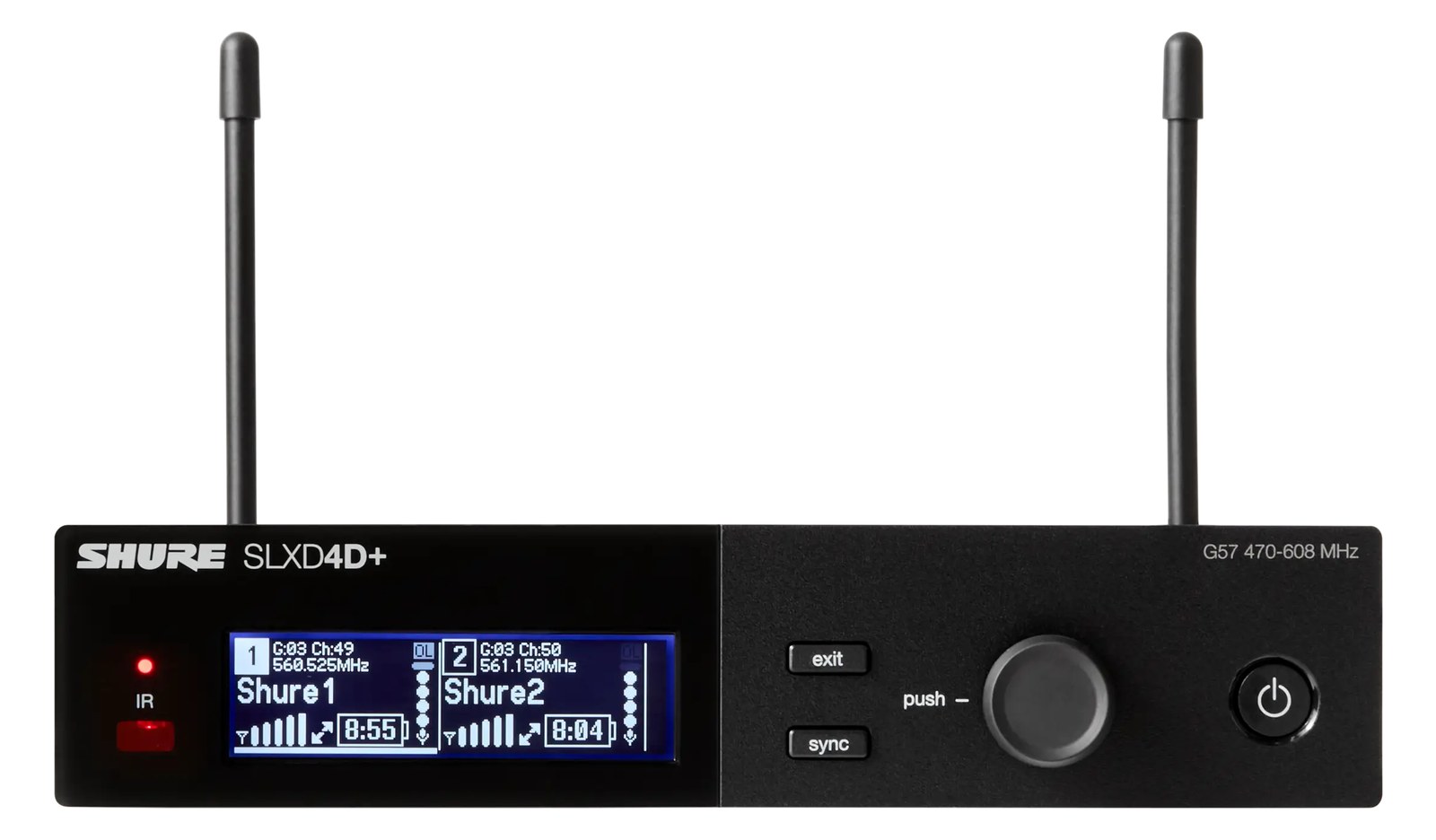
The EW 500 G4-935 is Sennheiser's professional-tier wireless vocal system with the dynamic e935 capsule, known for its warm and natural sound that works well across a range of vocal styles. The 500 series receiver provides enhanced RF performance and extended range compared to the 300 series, making it more suitable for larger stages. A reliable and well-respected wireless mic system for touring vocalists in the Sennheiser ecosystem.
~$899Use retailer rows for current price and stock
01 · What it does—and what that changes in your rig.
Product overview
Start with the payoff, then work through how it functions, where it fits, and the details that change a real build.
The payoff
Wireless Mic decisions, organized around the whole rig.
The EW 500 G4-935 is Sennheiser's answer to the working touring vocalist who needs a wireless system that can be trusted night after night without babysitting. It pairs the 500 series true-diversityA receiver with two antennas and two radio sections that continuously picks the stronger one — the difference between a dropout and a show.UHFThe TV-band radio range (roughly 470–608 MHz in the US) where serious wireless mics and IEMs live — better behaved than crowded 2.4 GHz. receiver with a handheld built around the e935 dynamic capsule — a combination that sits comfortably above entry-level club gear and below the stratospheric price of the flagship Digital 6000 territory. In a rack context, the receiver occupies a half-rackThe standard slice of rack height: 1U = 1.75″. A 3U box takes three slices; half-rack gear pairs two units side by side in one. 1U slot, which means you're pairing it with another half-rack unit or a panel filler, and its XLRThe standard 3-pin locking connector for mics and balanced line signals — pin 1 is the shield, pins 2 and 3 carry the balanced pair. output feeds straight into your console or stage boxThe I/O endpoint on stage: mics plug in there and one digital line (AES50, Dante) carries everything to the console. The snake, digitized. like any wired mic would.
Documented outputs
22 destination connections
Documented inputs
3Based on documented inputs
Rack space
1U · half-rackBuilder checks available rail space
Photo: Sennheiser1U · half-rack · 6W
Function
How it works in the path
At load-in, the 500 series RFRadio Frequency — the wireless part of wireless. RF planning is why big rigs scan, coordinate, and combine antennas instead of hoping. performance gives you meaningfully more headroomThe margin between your normal level and where things clip — headroom is what absorbs the snare hit you didn’t see coming. than the 300 series when a venue is congested — more transmit power, better sensitivity, and the kind of antenna input flexibility via BNCThe twist-lock coax connector used for word clock and antenna runs — it locks, so it can’t be pulled out mid-show. that makes running remote antenna distrosOne pair of antennas feeding many receivers through an amplified splitter — replaces the forest of whips and keeps RF levels consistent. practical. The e935 capsule is a cardioid dynamic, so it handles bleed and stage wash reasonably well without demanding the careful gainHow much the preamp amplifies the incoming signal. Too low and you’re hunting through hiss; too high and peaks clip.-structure attention a condenser would. Power draw sits at 6–8 watts, essentially negligible in any conditioned rack. At 210mm depth, it fits in a standard shallow rack without concern.
Best fit
Where it earns its place in the rack
This system makes sense for a touring vocalist or production company that wants a professional UHFThe TV-band radio range (roughly 470–608 MHz in the US) where serious wireless mics and IEMs live — better behaved than crowded 2.4 GHz. rig without committing to a digital wireless budget, and for anyone already in the Sennheiser G4 ecosystem where frequency coordinationCalculating a set of wireless frequencies that won’t interfere with each other or local TV — the homework behind a clean RF night. and spare transmitters are already part of the workflow. If you're running a dense RFRadio Frequency — the wireless part of wireless. RF planning is why big rigs scan, coordinate, and combine antennas instead of hoping. environment with eight or more channels on a festival stage, you may want to look at systems with deeper coordination software and finer frequency agility. And if your application is instruments rather than vocals, the e935 capsule is voice-optimized — you'd want a different capsule variant or system category entirely.
In the rack
Details worth deciding before load-in.
Pair it with a second half-rackThe standard slice of rack height: 1U = 1.75″. A 3U box takes three slices; half-rack gear pairs two units side by side in one. unit — another receiver, a headphone amp, or a rack panel with USB charging — so the 1U slot is used efficiently and nothing rattles loose in an open bay.
Use the BNCThe twist-lock coax connector used for word clock and antenna runs — it locks, so it can’t be pulled out mid-show. antenna inputs to run remote antennas to the front of the rack or an antenna distroOne pair of antennas feeding many receivers through an amplified splitter — replaces the forest of whips and keeps RF levels consistent.; keeping the receiver itself buried mid-rack while the antennas have clear line-of-sight to the stage is how you get the range the 500 series promises.
Coordinate frequencies before the show using Sennheiser's Wireless Systems Manager software if you have multiple G4 units in the rack — the 500 series supports it, and manually scanning on a busy festival compound is how you end up with drop-outsA brief audio gap when the radio link fails — the thing diversity, distros, and coordination all exist to prevent. during the first song.
Label the XLRThe standard 3-pin locking connector for mics and balanced line signals — pin 1 is the shield, pins 2 and 3 carry the balanced pair. output clearly on your snakeA multicore cable bundling many channels into one stage-to-console run. A sub-snake collects one corner of the stage into a drop box. or patch bayA panel of front-facing jacks wired to everything behind it — re-route any signal with a short cable instead of climbing behind the rack. with the capsule type (dynamic, cardioid) so whoever is mixing has the right gainHow much the preamp amplifies the incoming signal. Too low and you’re hunting through hiss; too high and peaks clip. and EQ starting point without asking.
02 · Know the whole path before you buy.
Signal path
Learn the route as a block diagram: source, product function, transport, and destination. Select any block to see what enters, what changes, and what leaves.
Interactive block diagramAuto-looping · hover, focus, or tap to hold a stage
Port-type signalProduct functionSystem boundary
Follow one signal from source to destination
Each block answers the same three questions: what arrives, what changes here, and what leaves.
01 · Source · selected
bnc + dc barrel
RJ45
XLR male + ¼-inch TRS
01 · Source
3 documented inputs
bnc + dc barrel
Arrives as
3 documented inputs
Connector
bnc + dc barrel
Signal
antenna
03 · What this product asks of the rest of the system.
Compatibility
Treat connector names as the start of the check—not the answer. These are the boundaries that determine a complete working path.
Best fit · Wireless Mic
Use it when 1U · half-rack and 210 mm of depth fit the case.
Plan the companion path
Complete the path with upstream and downstream gear that matches connector, direction, signal type, protocol, and wiring standard.
Connector boundary
Documented connectors: XLR male, ¼-inch TRS, bnc, RJ45. Match connector, direction, and signal type—not shape alone.
04 · Every connector, grouped by job.
I/O ports
Switch the product view and the documented port inventory updates with it—hardware and data stay side by side.
Every connector, grouped by job.
Switch panels to keep the hardware view and the documented port list in sync.
Front panelRear panel
All documented ports for Sennheiser EW 500 G4-935 Wireless Mic
Port
Panel
Connector
Direction
Signal
Channels
XLR Out
rear
XLR male
output
analog audio
—
1/4" Out
rear
¼-inch TRS
output
analog audio
—
Antenna A
rear
bnc
input
antenna
—
Antenna B
rear
bnc
input
antenna
—
Ethernet (RJ-45)
rear
RJ45
bidirectional
data
—
DC In (12V)
rear
dc barrel
input
power
—
Showing 6 of 6 documented physical ports.
05 · Compare the decision, not just the price.
Alternatives
The rows are organized around fit, power, I/O, and system role so a cheaper unit cannot hide a more expensive workflow.
EW 500 G4-935The EW 500 G4-935 is Sennheiser's professional-tier wireless vocal system with the dynamic e935 capsule, known for its warm and natural sound that works well across a range of vocal styles. The 500 series receiver provides enhanced RF performance and extended range compared to the 300 series, making it more suitable for larger stages. A reliable and well-respected wireless mic system for touring vocalists in the Sennheiser ecosystem.View gear →
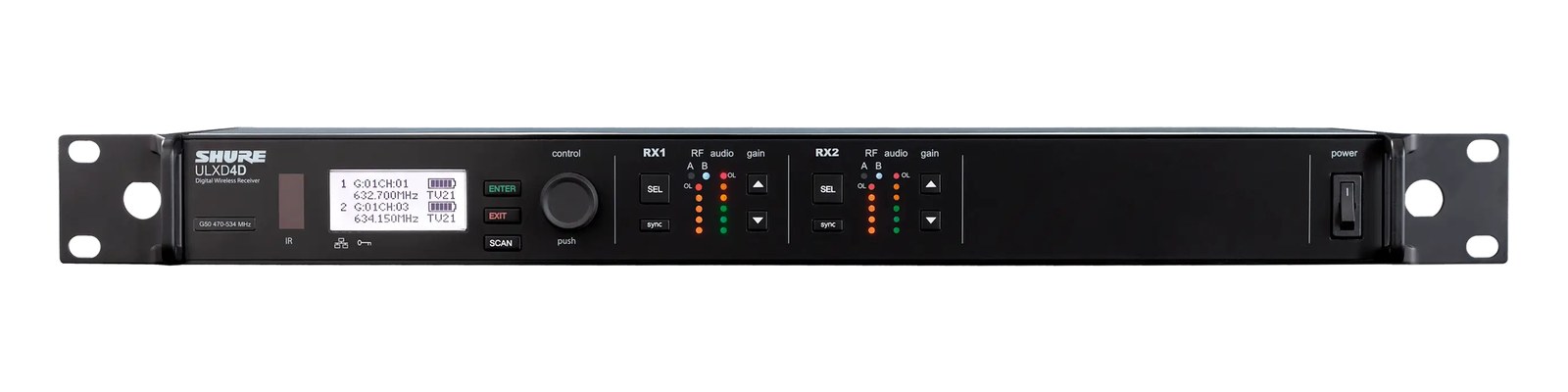
EM 500 G4The EM 500 G4 is the upgrade path from EM 300 G4: same half-rack form factor but doubled switching bandwidth (88 MHz) and broader-range tuning ideal for rigs that move between venues with shifting RF spectrum. Same ports — XLR + 1/4" out, BNC antenna in A/B — so it drops into any Distro4-fed receiver rack without changing the wiring plan.View gear →
EW-DX 835-SThe EW-DX 835-S set pairs Sennheiser's EM 2 half-rack dual-channel digital receiver with two SKM-S handhelds carrying the workhorse MMD 835 capsule, covering two vocalists from a single rack slot. The equidistant frequency grid packs up to 146 channels in standard mode, and the rear RJ45 takes PoE power and Control Cockpit remote management while audio leaves on two balanced XLRs (+18 dBu) or two unbalanced 1/4" outs (+12 dBu). Note this standard set has no Dante — Sennheiser sells a separate EM 2 DANTE receiver variant (three RJ45 network ports) for networked audio. Scales cleanly into multi-channel racks with BNC antenna distribution.View gear →
EW-DX EM 4 DanteThe Sennheiser EW-DX EM 4 Dante is a four-channel digital wireless receiver with full Dante integration, the higher-end of the EW-DX line. Wide tuning bandwidth, AES-256 encryption, and tight integration with Sennheiser's WSM control software make it a workhorse on broadcast and corporate rigs.View gear →
06 · Resolve the questions that can change the purchase or build plan.
Planning questions
Short, source-backed answers surface rack fit, power, cabling, and connection details before they become surprises.
How will the Sennheiser EW 500 G4-935 Wireless Mic affect rack fit and case depth?
It occupies 1U · half-rack. Its documented depth is 210 mm.
How much power does the Sennheiser EW 500 G4-935 Wireless Mic draw?
Typical draw is 6W and documented maximum draw is 8W.
What connections does the Sennheiser EW 500 G4-935 Wireless Mic have?
6 documented physical ports, including XLR Out, 1/4" Out, Antenna A, Antenna B, Ethernet (RJ-45), DC In (12V).
Is the Sennheiser EW 500 G4-935 Wireless Mic discontinued?
evolution wireless G4 300/500 series discontinued June 2024 — succeeded by EW-DX. Kept for owners (large installed base).
07 · See this unit inside a real rack plan.
Builder preview
Placement is only the start. Builder checks space · depth · weight, power headroom, dependencies, and compatible signal paths around this exact catalog item.Open in Builder