
Wireless Mic

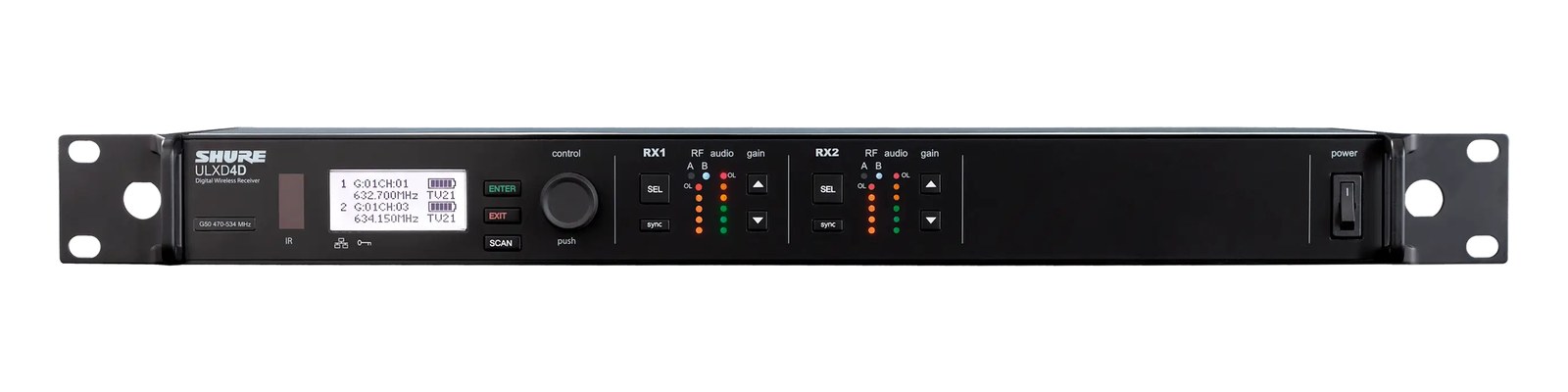
Shure SLXD4D Dual Wireless Mic Receiver

Shure·Model SLXD4D·shure-slxd4d-g58

Photos

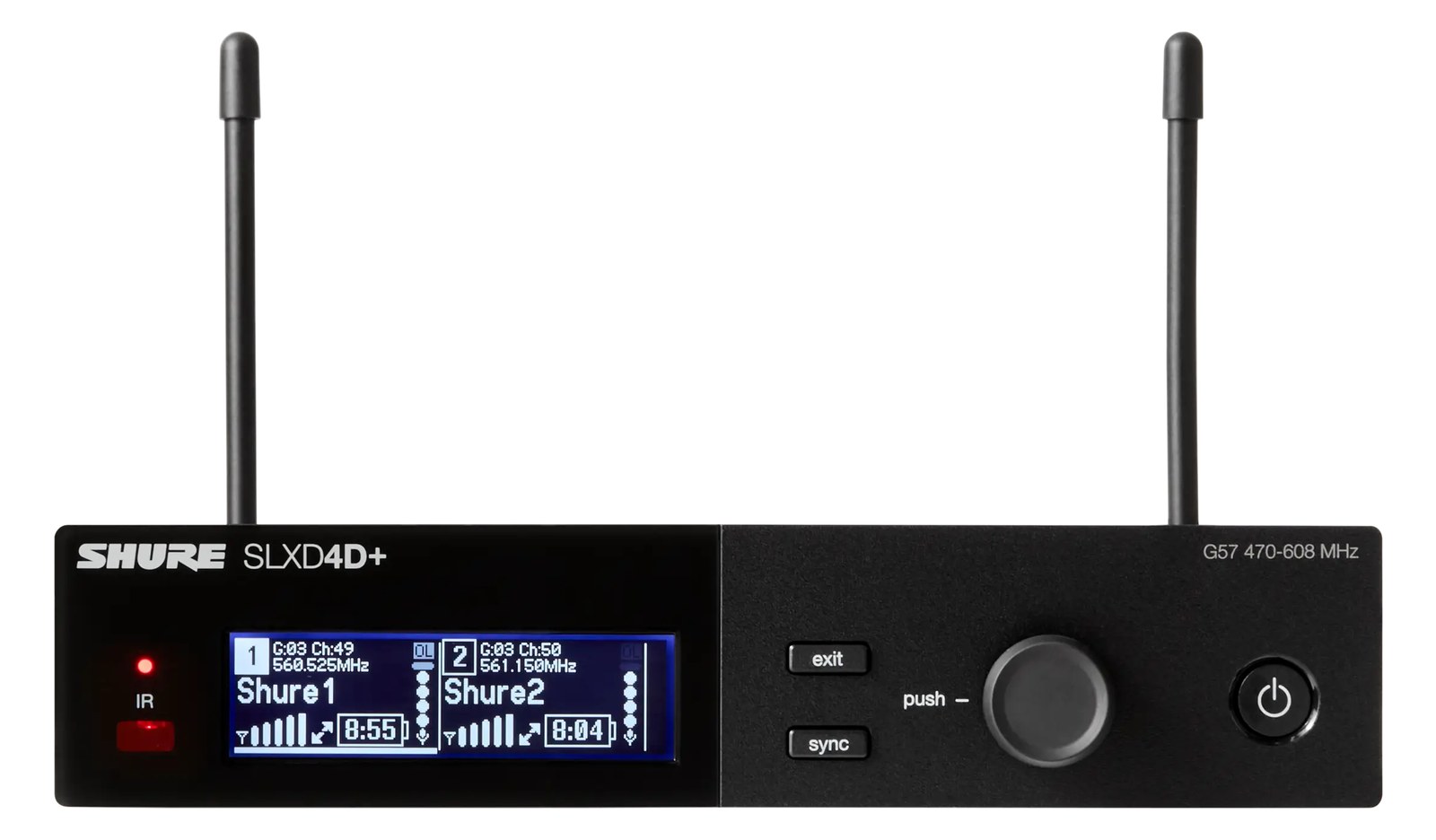
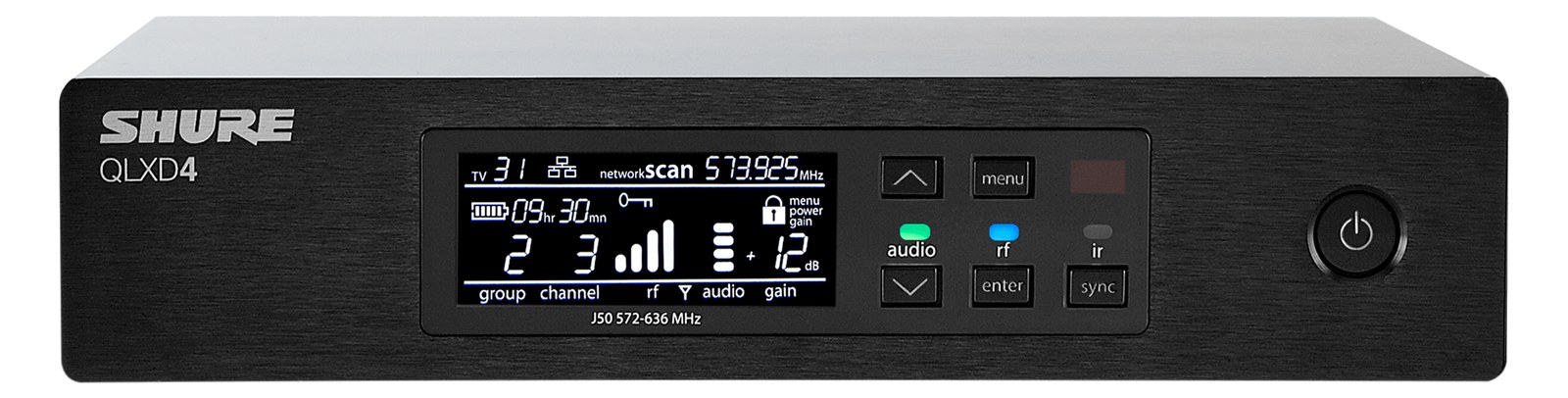
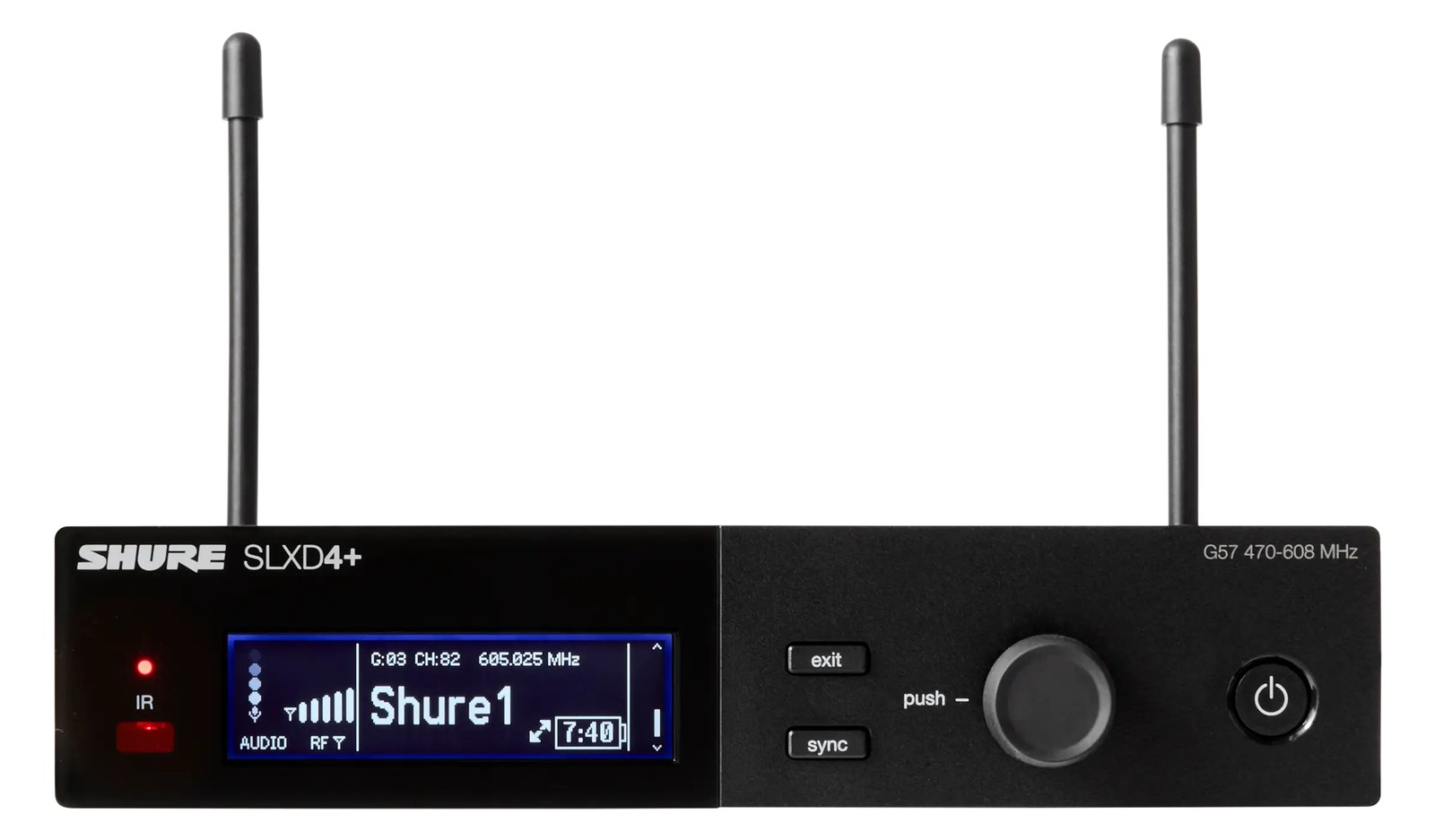
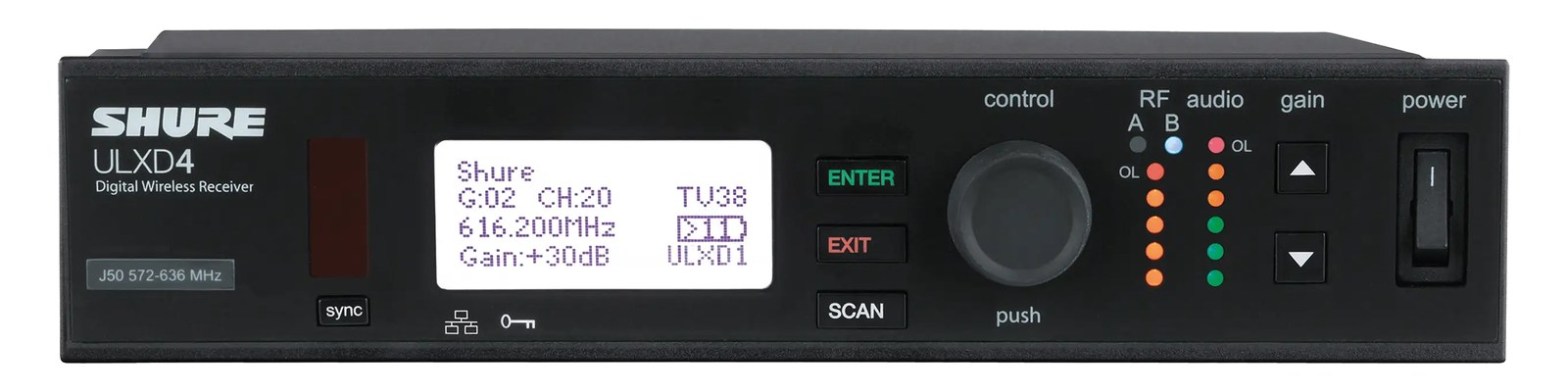
Manufacturer product photography — the drawn faceplate above stays true to panel layout; these show the hardware itself.

Photo: Shure1 / 3

About the Shure SLXD4D

The Shure SLXD4D puts two SLX-D receivers in a single full-rack unit, providing an efficient and cost-effective way to deploy two wireless mic channels. The digital audio quality and RF performance punch above the price class, making it popular for corporate events, worship, and smaller touring acts. Shared antenna connections between the two channels simplify your antenna distribution setup.

The SLXD4D is Shure's answer to a very common rack-math problem: you need two wireless mic channels, you have one rack unit, and you don't want to spend touring-system money to get there. It fits the G58 band (470–514 MHz), sits in a full 1U chassis, and ships with both XLR and quarter-inch outputs for each channel — so it will talk to a console's mic input or a direct instrument channel without an adapter conversation at load-in. At $899 for two channels in one unit, it occupies a price tier that makes sense for corporate work, worship installs, and club-level touring.

The shared BNC antenna inputs are the most practically important detail on this unit. Both receivers pull from the same Antenna A and Antenna B connections, which means a single run of coax to your active antenna distribution feeds both channels simultaneously — you're not running four cables to the back of the rack to cover two mics. At 12 watts nominal draw and a shallow 190mm depth, it won't bully a tight rack for space or power budget. The digital RF architecture gives you a fixed 24-bit signal path and predictable, hard-set latency, which matters if your vocalist is also on IEM and you're managing total system delay.

This receiver belongs in rigs where two channels covers the need and the budget is real but not unlimited — a pastor and a worship leader, a presenter and a handheld, a duo act with two vocals. If you're regularly running six or more channels, look at purpose-built multichannel frames like the Shure AD4D or an Axient rack, where antenna distribution and frequency coordination scale more gracefully. The SLXD4D doesn't have dante or AES digital outputs, so if your console workflow depends on networked audio, this isn't your unit. But for analog-in consoles and straightforward two-mic deployments, it's a clean, reliable choice.

In the rack

  • Both channels share the two BNC antenna inputs, so plug your distribution amplifier outputs into Antenna A and B once — you're done for both channels, not twice.
  • Label your XLR outputs at the rear before the unit goes in the rack. Channel 1 and Channel 2 look identical on the back panel; a piece of colored tape saves a frantic re-patch at soundcheck.
  • At 190mm deep, it's shallow enough to live behind a stagebox or a Dante interface in a half-depth touring rack — just confirm your rack ears can mount it at the right position to clear whatever's behind it.
  • If you're running multiple SLXD4D units in the same rig, use the front-panel frequency coordination tools before load-in and assign channels to non-adjacent frequency blocks to reduce intermodulation risk in dense RF environments.

SLX-D dual-channel digital wireless receiver.

I/O Ports (8)

PortConnectorDirectionSignalChannels
XLR Out 1XLR MALEoutputanalog audio
XLR Out 2XLR MALEoutputanalog audio
1/4" Out 1TRS QUARTERoutputanalog audio
1/4" Out 2TRS QUARTERoutputanalog audio
Antenna ABNCinputantenna
Antenna BBNCinputantenna
Network (RJ45)RJ45bidirectionaldata
Power
  • Power (15V DC) (DC BARREL)

Deciding between two?

Rack space, watts, weight and every connector, side by side.

Related gear

Related articles

Guides from our library that cover planning around wireless mic gear.