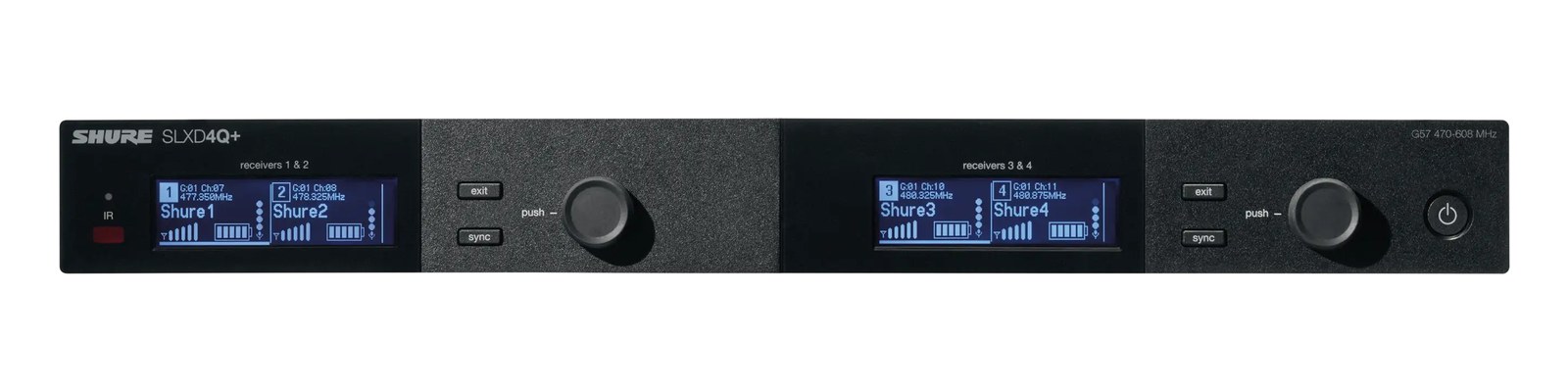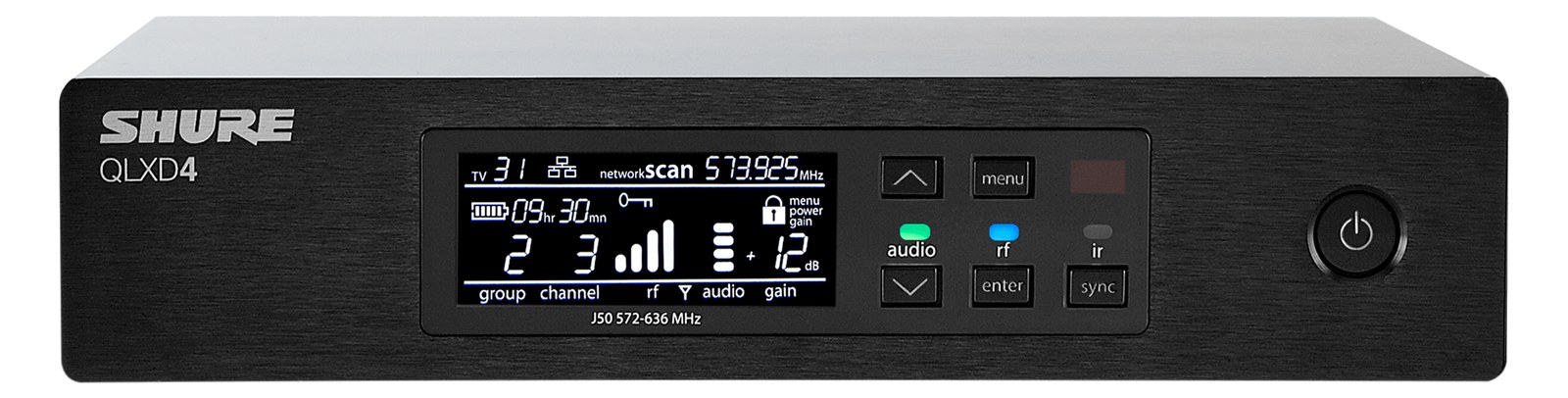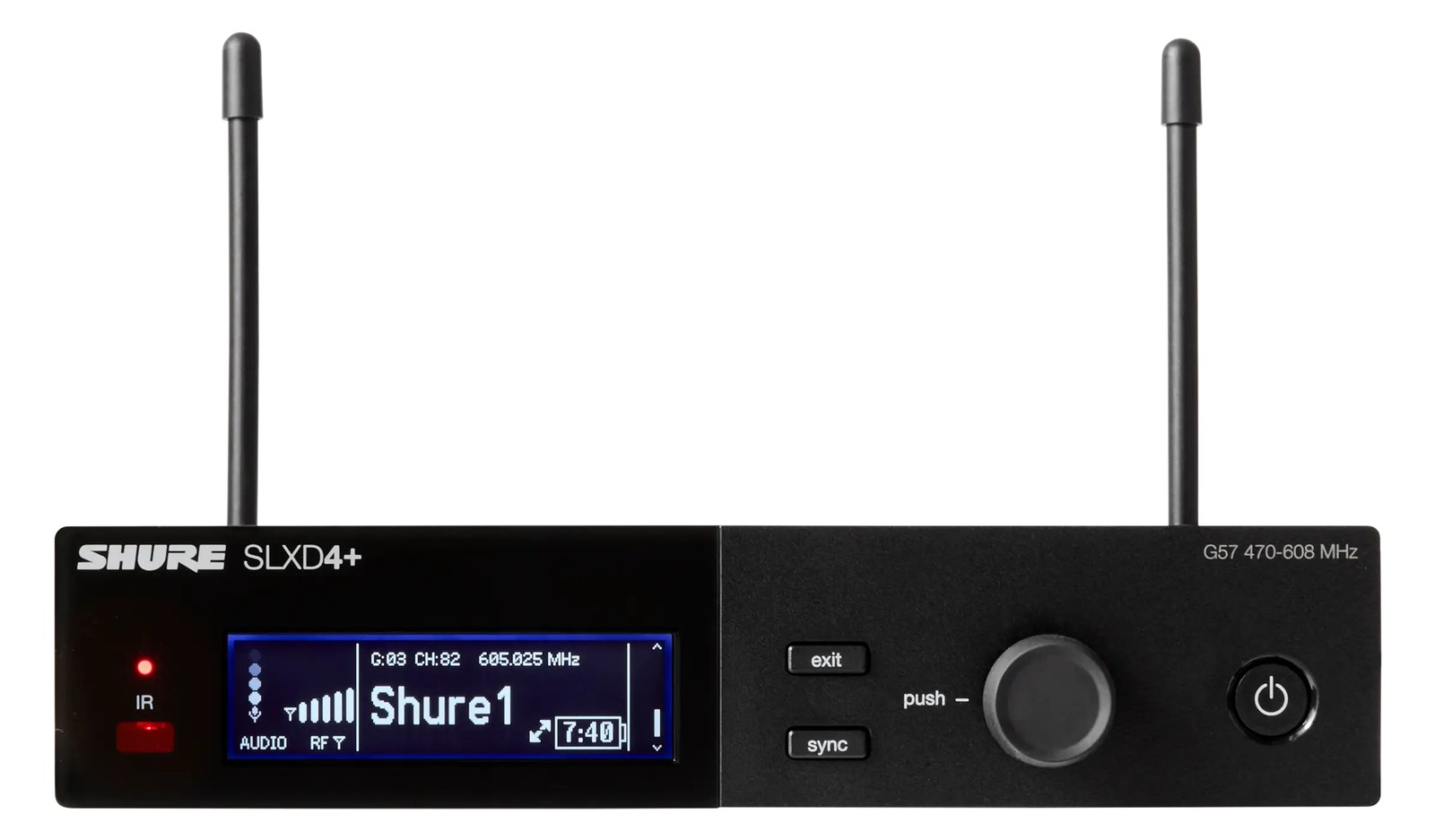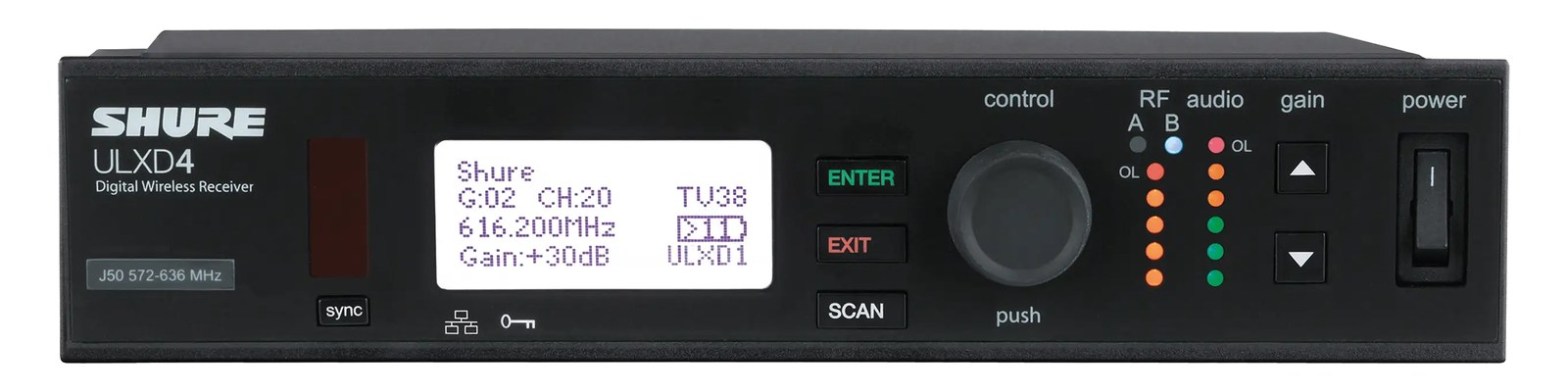


How it works in the path
Twenty watts nominal draw, 28 at max — that's light, and at 2.5 kg it won't upset a road case's balance. The 240 mm depth is standard enough to fit most standard rack drawers without shimming. Four XLRThe standard 3-pin locking connector for mics and balanced line signals — pin 1 is the shield, pins 2 and 3 carry the balanced pair. male outputs go directly to console inputs or a stageboxThe I/O endpoint on stage: mics plug in there and one digital line (AES50, Dante) carries everything to the console. The snake, digitized.; no breakoutA cable that splits one multichannel connector (like a DB25) into individual plugs — the octopus that turns 8 channels into 8 XLRs. cables, no sub-snakesA multicore cable bundling many channels into one stage-to-console run. A sub-snake collects one corner of the stage into a drop box., just four balancedCarries the signal on two wires and cancels whatever noise both pick up — why mic cables can run hundreds of feet hum-free. lines. The internal antenna distroOne pair of antennas feeding many receivers through an amplified splitter — replaces the forest of whips and keeps RF levels consistent. means one good pair of active paddlesA directional antenna (paddle, LPDA, helical) aimed at the stage — focuses coverage where the performers are and rejects RF from elsewhere. covers the full quad without a passive splitter eating headroomThe margin between your normal level and where things clip — headroom is what absorbs the snare hit you didn’t see coming.. What it doesn't give you is the deeper RFRadio Frequency — the wireless part of wireless. RF planning is why big rigs scan, coordinate, and combine antennas instead of hoping. toolset — no Wireless WorkbenchShure’s free RF-management software — scans the airwaves, calculates compatible frequencies, and monitors every receiver from a laptop. network control, no danteThe most common audio-over-network standard: dozens of channels of uncompressed digital audio down one ordinary Ethernet cable between Dante boxes., no per-channel output trim over network — so what you see on the front panel is largely what you get.