
Wireless Mic

Shure ULXD4D Dual Digital Wireless Receiver

Shure·Model ULXD4D·shure-ulxd4d

Photos

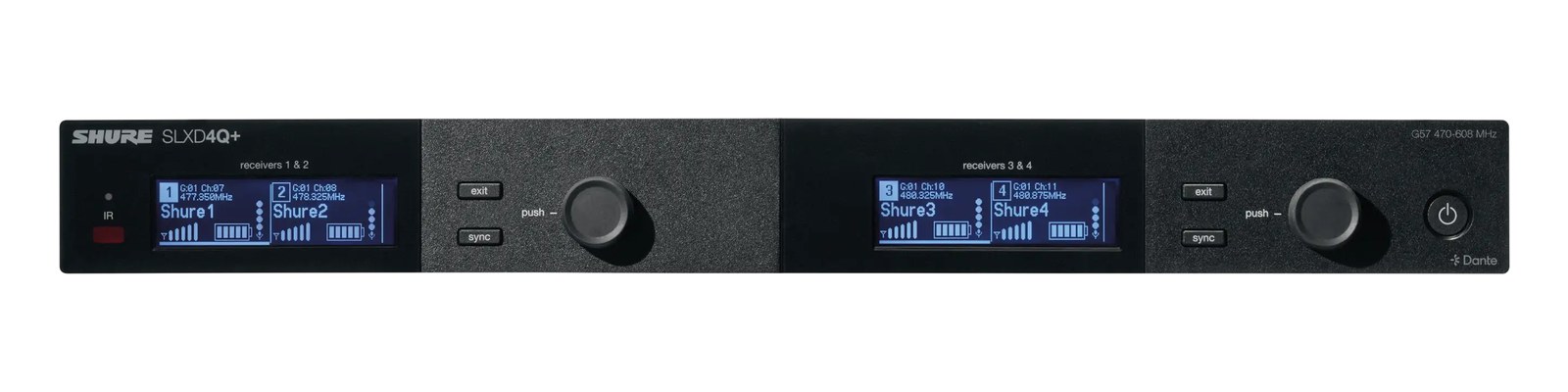
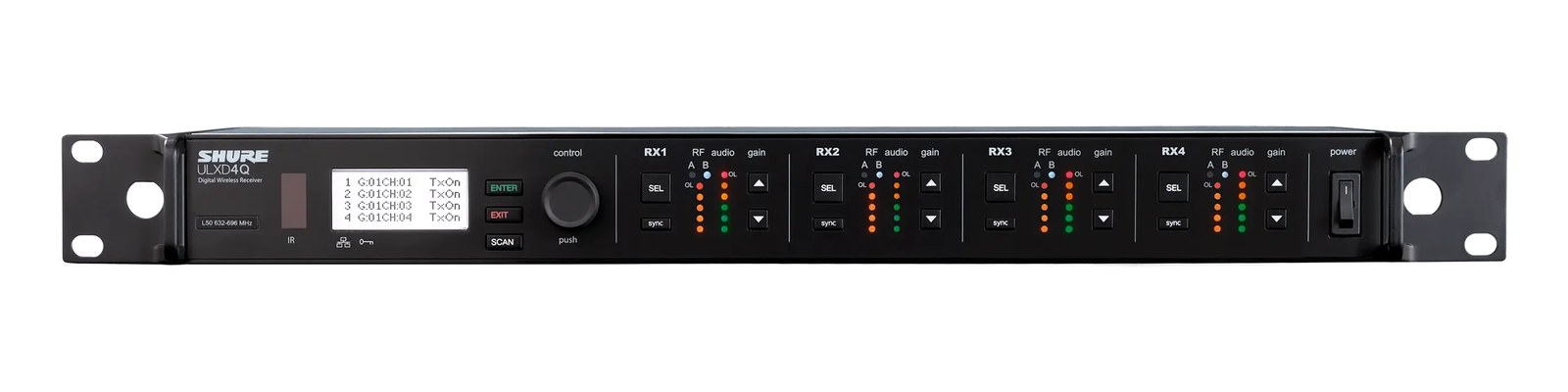
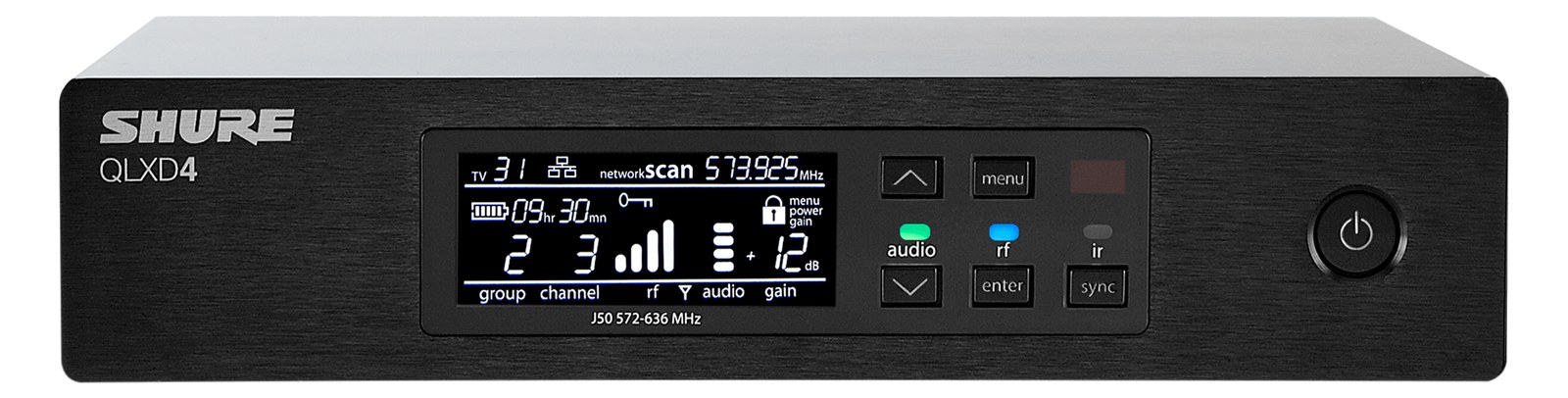
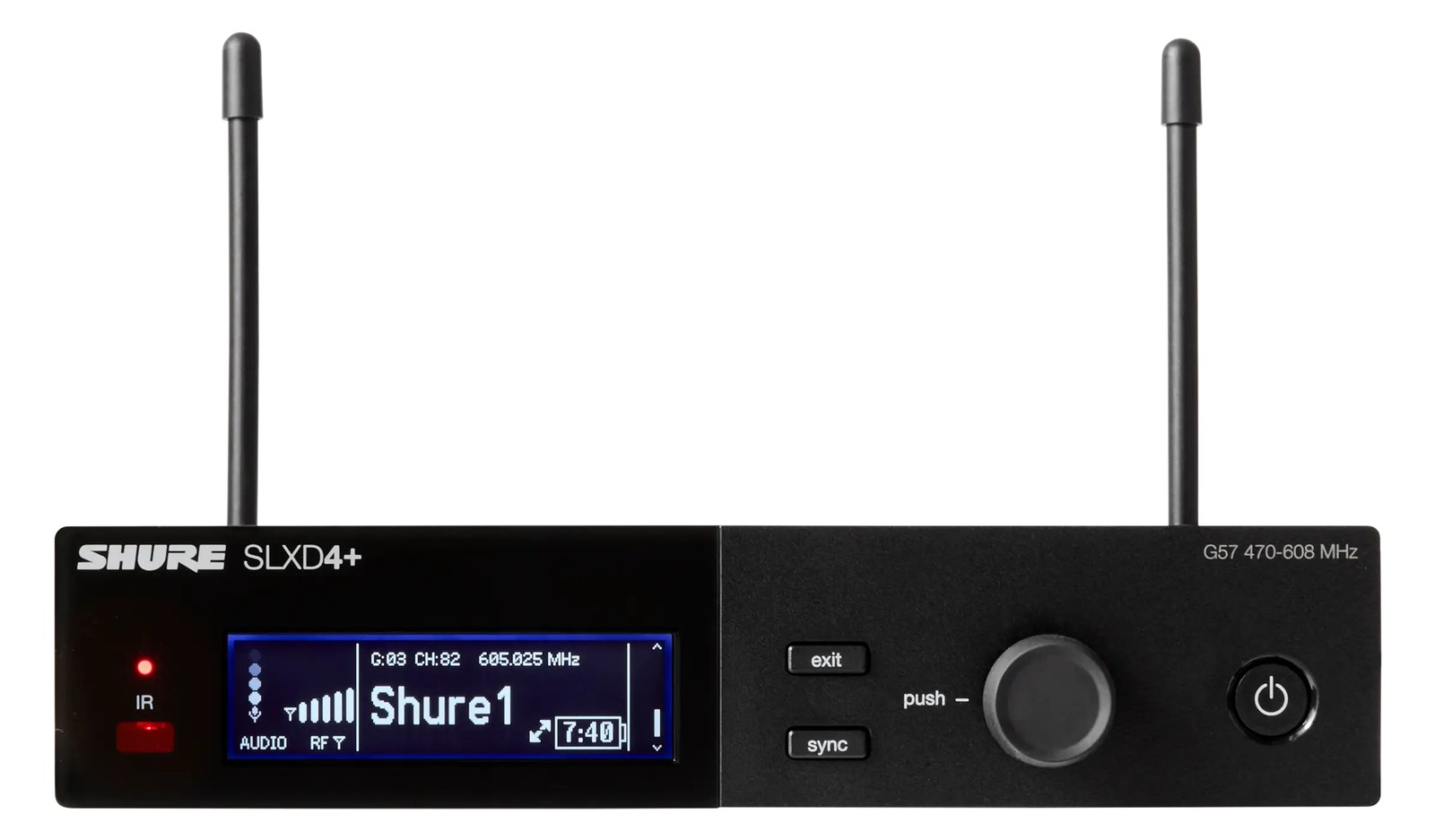
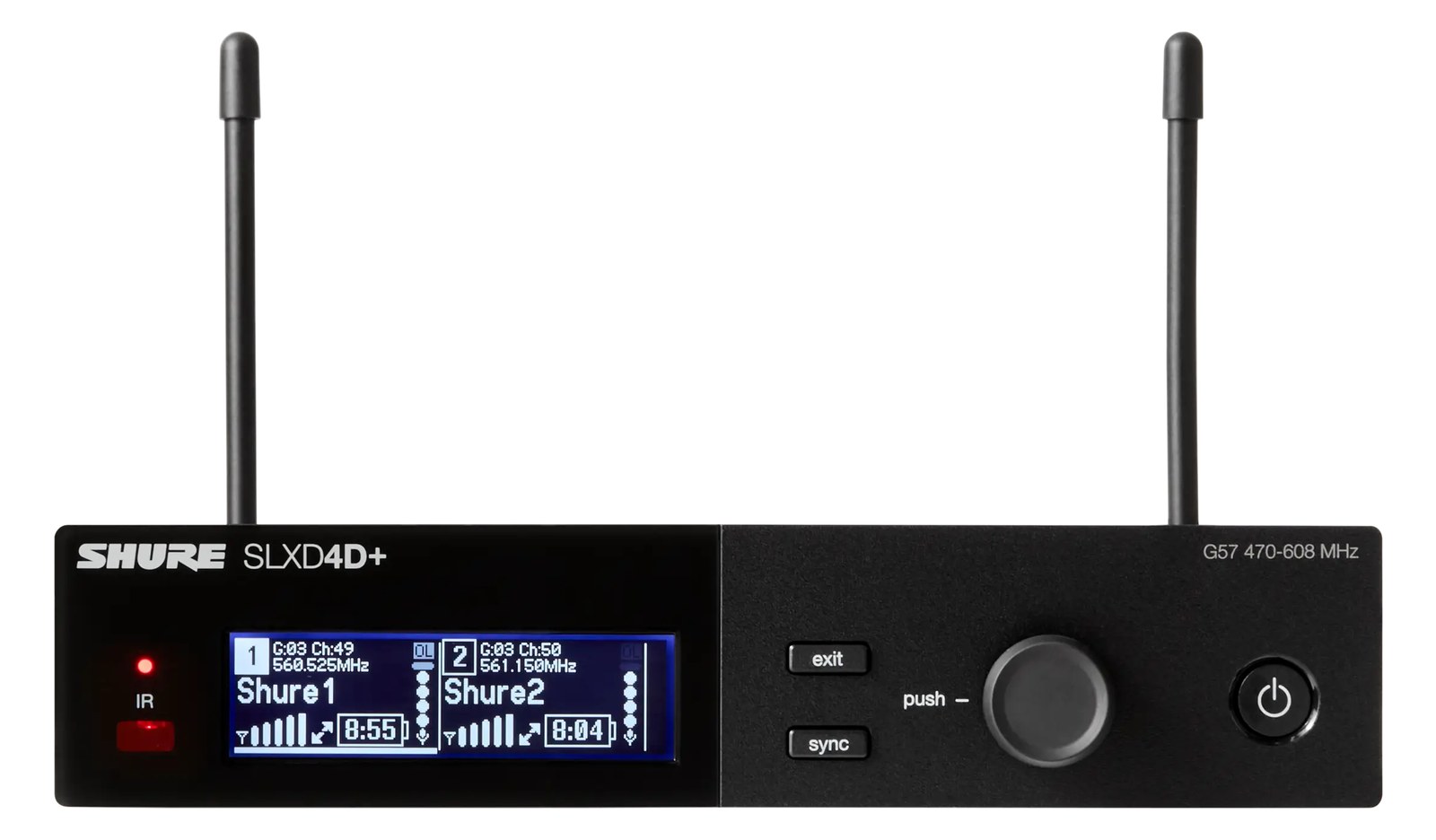
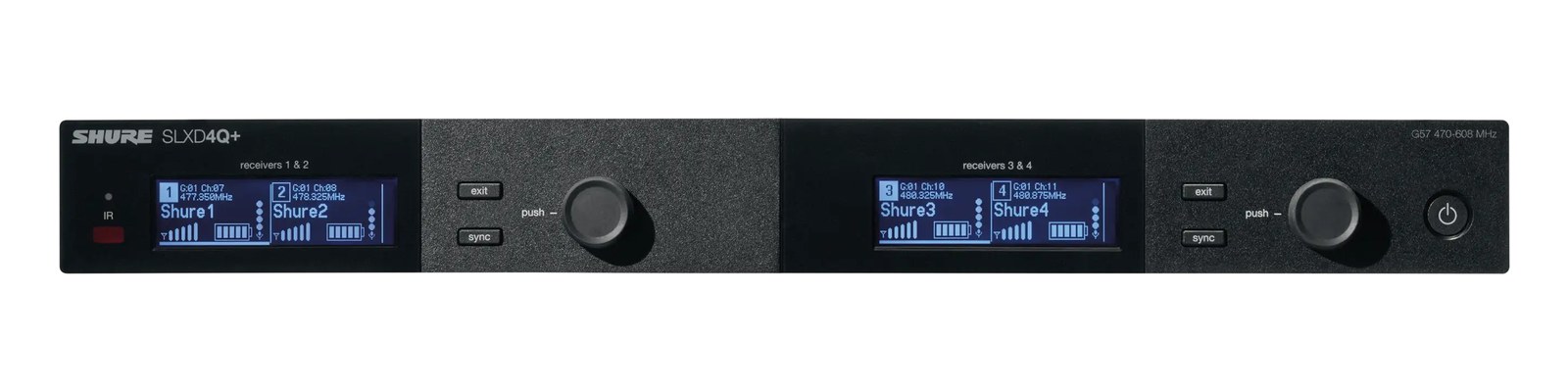
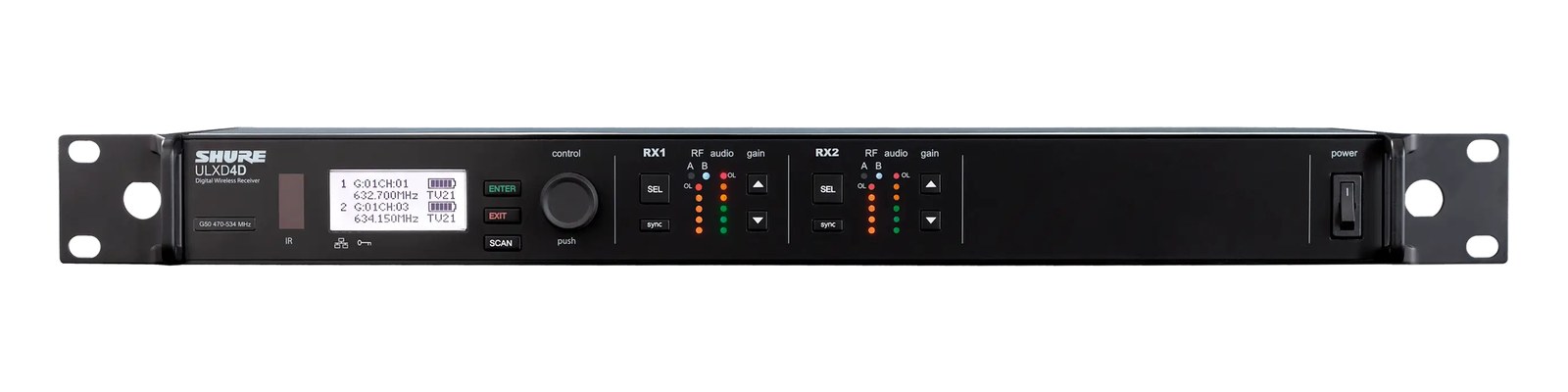
Manufacturer product photography — the drawn faceplate above stays true to panel layout; these show the hardware itself.

Photo: Shure1 / 2

About the Shure ULXD4D

The Shure ULXD4D packs two full digital wireless channels into 1U, with Dante-networked outputs in addition to analog XLR and 1/4" — rack two and you have four wireless channels in 2U with a single Cat5e back to the console. The industry standard for mid-to-top-tier corporate, theatre, and touring rigs, edged out only by the Axient Digital line at the highest end.

The ULXD4D is Shure's answer to the question every production manager eventually asks: how do you get two professional wireless channels into 1U without compromising the RF performance you actually need on a real show? It lands squarely in the ULX-D line, which sits between the workmanlike SLX-D and the top-tier Axient Digital family — which is exactly where most corporate, theatrical, and club-level touring rigs live. Two discrete channels, full digital audio path, Dante networking baked in, and analog XLR outputs for rigs that haven't made the network jump yet. It's the pro workhorse that's earned that label by showing up night after night.

At 1U and 14 watts typical draw, the space and power math is straightforward — two channels cost you one rack unit and comfortably fit on a single 20-amp circuit alongside your other gear. The real operational story is in the outputs: both XLR channels are always live, and the primary and secondary Dante EtherCon ports carry both channels simultaneously, so you can run analog as a fallback without touching a cable during the show. The 370mm depth means it needs a full-depth rack, not a shallow road case shelf. At 3.5 kg, two stacked units add 7 kg to your rack weight — worth noting when you're calculating caster load.
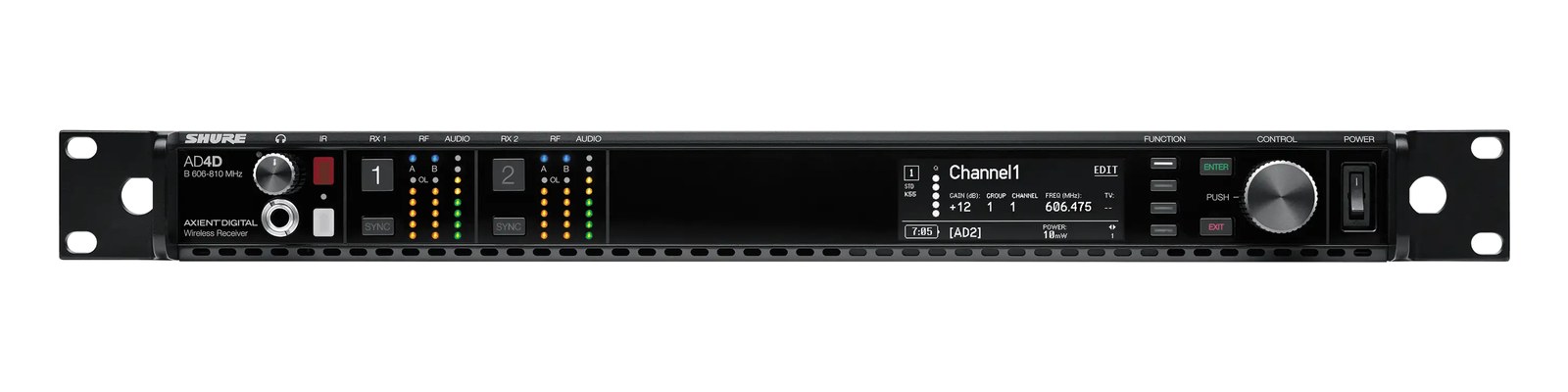
This receiver belongs in rigs where RF reliability and clean digital gain structure matter more than saving $500. If you're running a single vocal channel at a small club, the investment doesn't scale. If you're running four to eight channels for theatre, corporate general sessions, or a touring support act, two ULXD4Ds in 2U with a single Cat5e run to a Dante-capable console is a genuinely elegant solution. Engineers who need frequency agility, encrypted transmission, or automatic frequency management across a large RF environment should be looking one step up at Axient Digital instead — the ULXD4D doesn't offer ShowLink remote control or the same interference avoidance depth.

In the rack

  • If you're running two ULXD4Ds for four wireless channels, connect both units to the same Dante Primary network switch and assign them consecutive channel numbers in Shure Wireless Workbench — scanning and coordination across all four channels becomes a single operation rather than two separate sessions.
  • Use the Dante Secondary port as a redundant network path to a second switch or directly back to a redundant NIC on your playback or console computer — it's there precisely for no-dropout scenarios, and leaving it unplugged on a high-stakes show is leaving insurance on the table.
  • The analog XLR outputs are summed from the digital path, not a separate analog stage, so there's no gain to be had by preferring analog on a Dante rig — use Dante as your primary and leave XLR patched to a nearby analog input as a hot standby, not as a parallel feed to the same console channel.
  • Plan for the 370mm depth before you build the rack — if your road case interior is shallower than about 400mm with connector clearance, the ULXD4D and its BNC antenna cables will not close the lid.

Two-channel digital wireless receiver with Dante + analog outs. Pro workhorse.

I/O Ports (9)

PortConnectorDirectionSignalChannels
XLR Out 1XLR MALEoutputanalog audio
XLR Out 2XLR MALEoutputanalog audio
Dante PrimaryDANTE RJ45bidirectionaldigital audio2
Dante SecondaryDANTE RJ45bidirectionaldigital audio2
Antenna A (BNC)BNCinputantenna
Antenna B (BNC)BNCinputantenna
Antenna A Cascade OutBNCoutputantenna
Antenna B Cascade OutBNCoutputantenna
Power
  • Power (IEC) (IEC C14)

Deciding between two?

Rack space, watts, weight and every connector, side by side.

Related gear

Community rigs using this gear (1)

Browse all rigs →

Related articles

Guides from our library that cover planning around wireless mic gear.