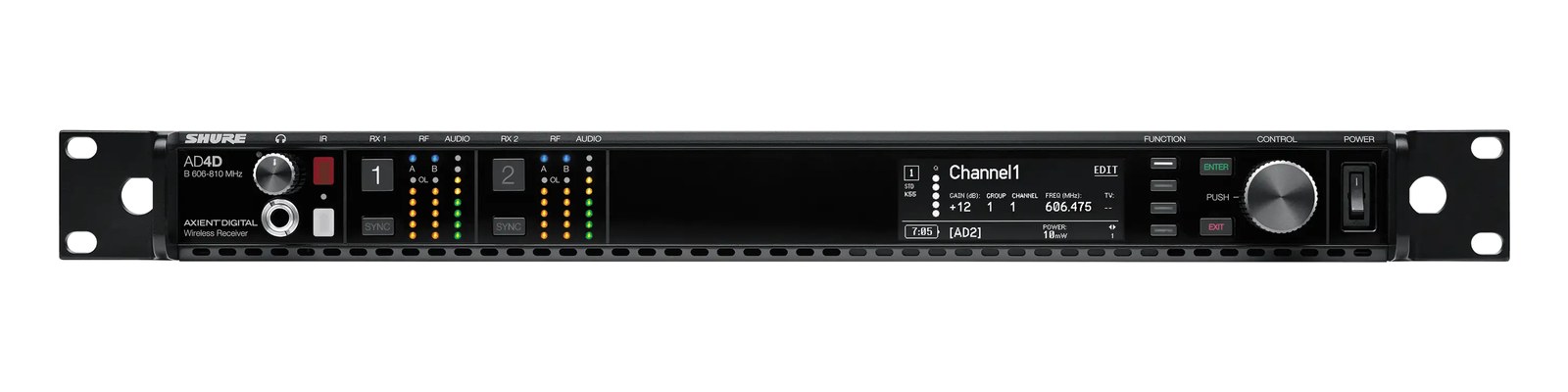
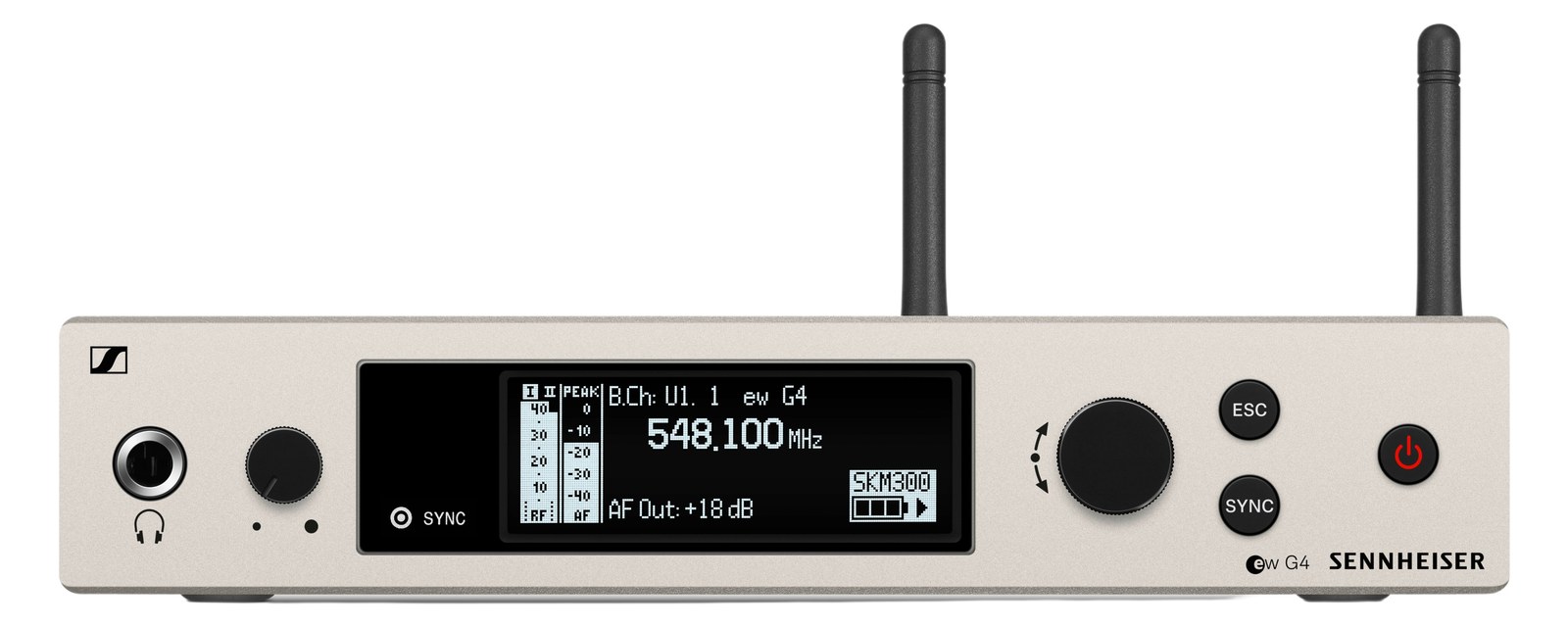
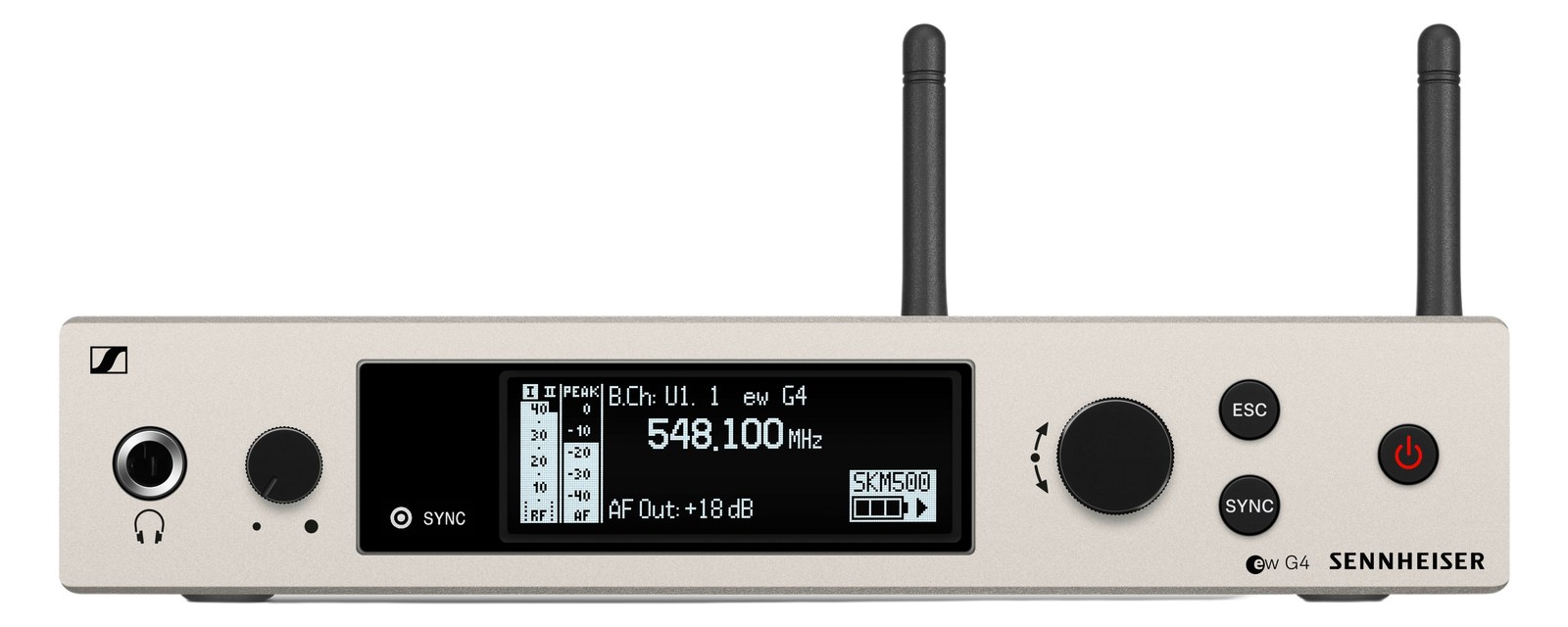
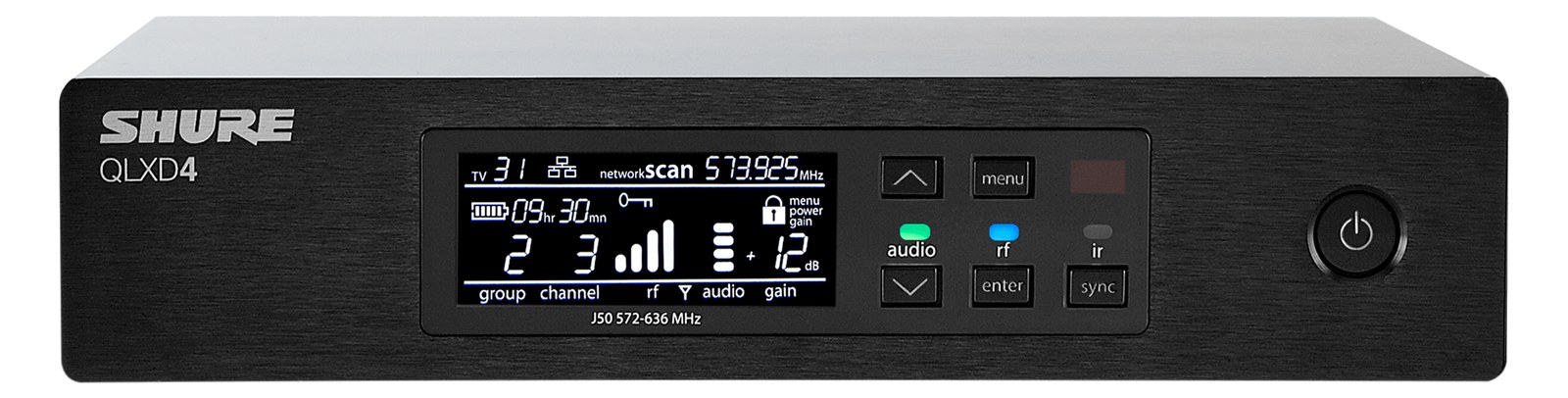
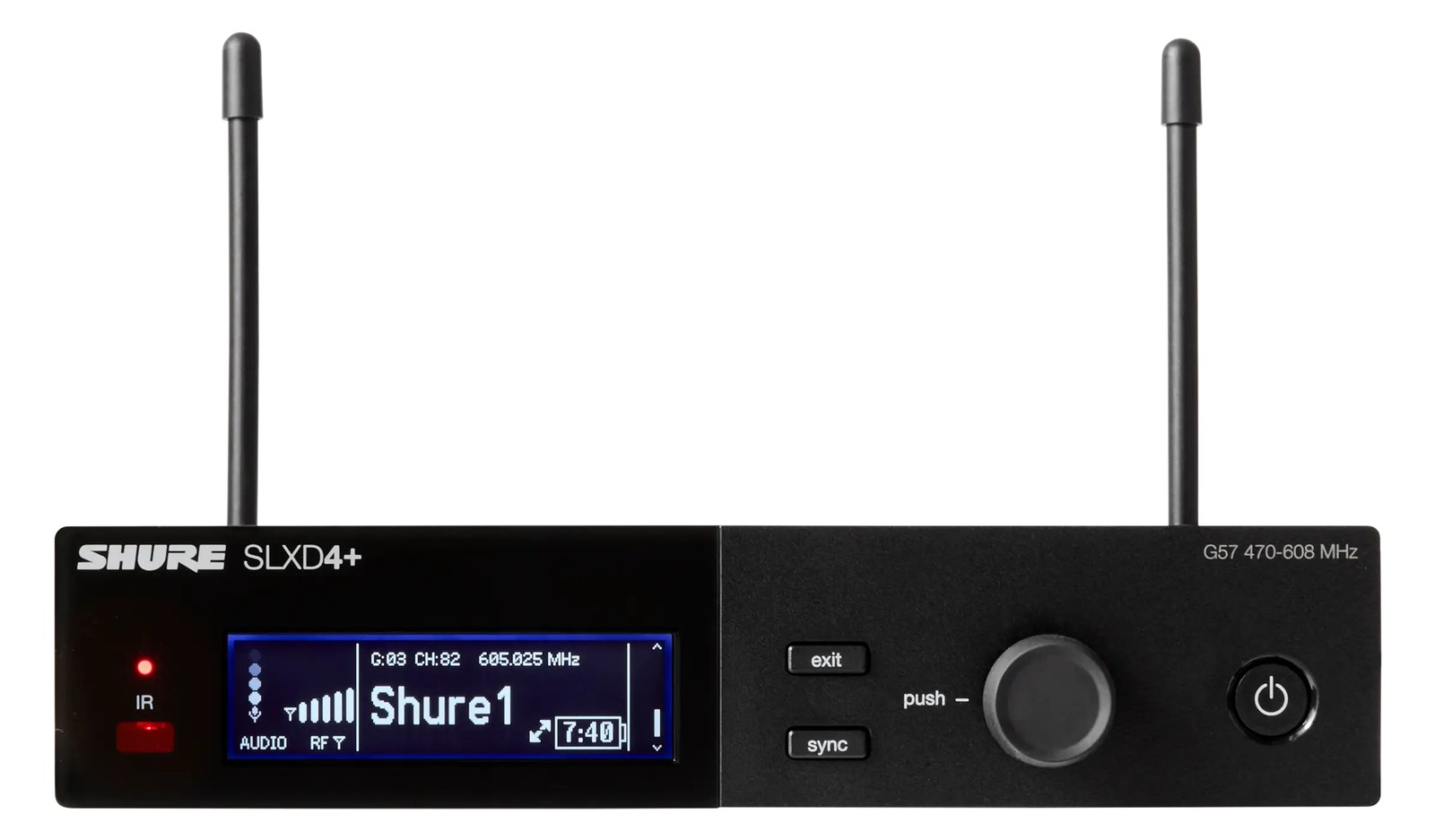
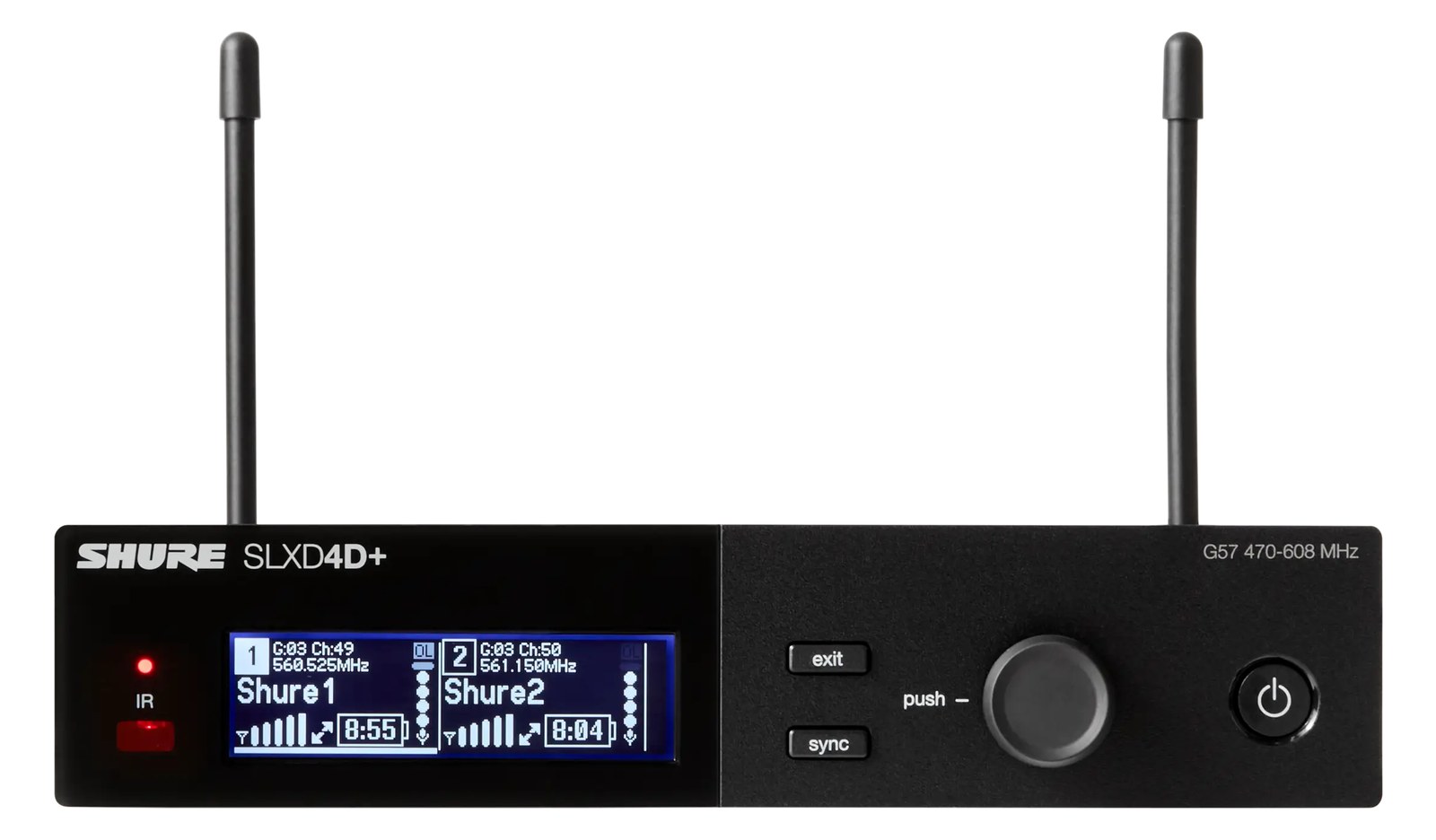
The AD4D for wireless microphones provides the same flagship Axient Digital platform used for instruments, with Quadversity antenna combining for maximum dropout resistance and ShowLink for real-time remote control of transmitter parameters. This is the receiver that major tours and Broadway productions rely on for vocalist microphones where any wireless dropout is unacceptable. Dual Dante outputs with redundant networking ensure the audio gets to your console reliably.
~$6,499Use retailer rows for current price and stock
01 · What it does—and what that changes in your rig.
Product overview
Start with the payoff, then work through how it functions, where it fits, and the details that change a real build.
The payoff
Wireless Mic decisions, organized around the whole rig.
The AD4D is Shure's flagship dual-channel wireless mic receiver, sitting at the top of the Axient Digital platform. Two channels in 1UThe standard slice of rack height: 1U = 1.75″. A 3U box takes three slices; half-rack gear pairs two units side by side in one. is the obvious headline, but the real story is what those channels come with: Quadversity antenna combining, ShowLink remote transmitter control, and dual DanteThe most common audio-over-network standard: dozens of channels of uncompressed digital audio down one ordinary Ethernet cable between Dante boxes. outputs with redundantA second copy of anything critical — supply, computer, network path — already running so one failure can’t stop the show. networking. This is the receiver built for situations where a dropoutA brief audio gap when the radio link fails — the thing diversity, distros, and coordination all exist to prevent. isn't an inconvenience — it's a career moment. Major touring productions and Broadway houses use it precisely because the platform was engineered around that zero-tolerance standard.
Documented outputs
1010 destination connections
Documented inputs
4Based on documented inputs
Rack space
1UBuilder checks available rail space
Photo: Shure1U · 15W
Function
How it works in the path
At load-in, the 340mm depth is the first thing to plan around — this unit runs deep, so verify your rack has the clearance before the truck rolls. The two BNCThe twist-lock coax connector used for word clock and antenna runs — it locks, so it can’t be pulled out mid-show. antenna inputs feed Quadversity combining, which means you can run four antennas per receiver and let the system pick the best signal in real time, a meaningful edge in RFRadio Frequency — the wireless part of wireless. RF planning is why big rigs scan, coordinate, and combine antennas instead of hoping.-dense festival or theater environments. ShowLink's SMAThe small threaded RF connector on bodypacks and half-rack wireless — hand-tight antenna connections that survive a gig bag. port lets you adjust transmitter gainHow much the preamp amplifies the incoming signal. Too low and you’re hunting through hiss; too high and peaks clip., mute, or frequency from your receiver position without touching the pack, which matters when a singer's pack is in a costume and intermission is two minutes. DanteThe most common audio-over-network standard: dozens of channels of uncompressed digital audio down one ordinary Ethernet cable between Dante boxes. primary and secondary outputs give you a redundantA second copy of anything critical — supply, computer, network path — already running so one failure can’t stop the show. digital path to the console, so a single network switch failure won't kill a vocal.
Best fit
Where it earns its place in the rack
If you're specifying a touring vocal rig, a theatrical production, or any high-stakes corporate event where the wireless budget reflects the consequence of failure, the AD4D makes sense at $6,499 per unit. If you're running a small regional venue, a rehearsal studio, or a rig where the wireless channels stay mostly static and nobody is monitoring RFRadio Frequency — the wireless part of wireless. RF planning is why big rigs scan, coordinate, and combine antennas instead of hoping. in real time, the cost is hard to justify — a well-set-up QLX-D or ULX-D system will cover most of those needs for considerably less. The AD4D earns its rack space when the full Axient ecosystem — ShowLink, Quadversity, DanteThe most common audio-over-network standard: dozens of channels of uncompressed digital audio down one ordinary Ethernet cable between Dante boxes.redundancyA second copy of anything critical — supply, computer, network path — already running so one failure can’t stop the show. — is actually in use, not as a prestige buy.
Shure AD4D Axient Digital Dual Mic Receiver — three-quarter viewPhoto: Shure
In the rack
Details worth deciding before load-in.
Plan your rack depth before committing: at 340mm this unit needs a proper touring rack or a deep credenza-style case — shallow utility racks won't close cleanly.
Run all four antenna inputs for Quadversity combining; parking only two BNCsThe twist-lock coax connector used for word clock and antenna runs — it locks, so it can’t be pulled out mid-show. leaves the receiver's primary dropoutA brief audio gap when the radio link fails — the thing diversity, distros, and coordination all exist to prevent.-resistance feature half-deployed.
Wire both DanteThe most common audio-over-network standard: dozens of channels of uncompressed digital audio down one ordinary Ethernet cable between Dante boxes. ports to separate network switches from day one — redundantA second copy of anything critical — supply, computer, network path — already running so one failure can’t stop the show. networking only protects you if the two paths are genuinely independent.
Use ShowLink to set a conservative RFRadio Frequency — the wireless part of wireless. RF planning is why big rigs scan, coordinate, and combine antennas instead of hoping. power floor on transmitters before doors open; if you need to bump gainHow much the preamp amplifies the incoming signal. Too low and you’re hunting through hiss; too high and peaks clip. during the show when a pack shifts in a costume, you can do it from the rack without going on stage.
02 · Know the whole path before you buy.
Signal path
Learn the route as a block diagram: source, product function, transport, and destination. Select any block to see what enters, what changes, and what leaves.
Interactive block diagramAuto-looping · hover, focus, or tap to hold a stage
Port-type signalProduct functionSystem boundary
Follow one signal from source to destination
Each block answers the same three questions: what arrives, what changes here, and what leaves.
01 · Source · selected
bnc + IEC C14
aes3 xlr + Dante RJ45
XLR male + ¼-inch TRS
01 · Source
4 documented inputs
bnc + IEC C14
Arrives as
4 documented inputs
Connector
bnc + IEC C14
Signal
antenna
03 · What this product asks of the rest of the system.
Compatibility
Treat connector names as the start of the check—not the answer. These are the boundaries that determine a complete working path.
Best fit · Wireless Mic
Use it when 1U and 333 mm of depth fit the case.
Plan the companion path
Complete the path with upstream and downstream gear that matches connector, direction, signal type, protocol, and wiring standard.
Protocol boundary
This product declares DANTE; matching plugs alone do not make other protocols compatible.
04 · Every connector, grouped by job.
I/O ports
Switch the product view and the documented port inventory updates with it—hardware and data stay side by side.
Every connector, grouped by job.
Switch panels to keep the hardware view and the documented port list in sync.
Front panelRear panel
All documented ports for Shure AD4D Axient Digital Dual Mic Receiver
Port
Panel
Connector
Direction
Signal
Channels
OUTPUT 1 XLR
rear
XLR male
output
analog audio
—
OUTPUT 2 XLR
rear
XLR male
output
analog audio
—
OUTPUT 1 TRS
rear
¼-inch TRS
output
analog audio
—
OUTPUT 2 TRS
rear
¼-inch TRS
output
analog audio
—
AES3 OUTPUT
rear
aes3 xlr
output
digital audio
—
ANTENNA A
rear
bnc
input
antenna
—
ANTENNA B
rear
bnc
input
antenna
—
CASCADE C
rear
bnc
output
antenna
—
CASCADE D
rear
bnc
output
antenna
—
Dante 1
rear
Dante RJ45
bidirectional
digital audio
2
Dante 2
rear
Dante RJ45
bidirectional
digital audio
2
ctrl 1
rear
RJ45
bidirectional
data
—
ctrl 2
rear
RJ45
bidirectional
data
—
WORD CLOCK IN
rear
bnc
input
digital audio
—
WORD CLOCK THRU
rear
bnc
output
digital audio
—
AC POWER INPUT
rear
IEC C14
input
power
—
AC POWER CASCADE
rear
IEC C14
output
power
—
MONITOR
front
¼-inch TRS
output
analog audio
—
Showing 18 of 18 documented physical ports. Scroll to review the remaining rows.
05 · Compare the decision, not just the price.
Alternatives
The rows are organized around fit, power, I/O, and system role so a cheaper unit cannot hide a more expensive workflow.
AD4DThe AD4D for wireless microphones provides the same flagship Axient Digital platform used for instruments, with Quadversity antenna combining for maximum dropout resistance and ShowLink for real-time remote control of transmitter parameters. This is the receiver that major tours and Broadway productions rely on for vocalist microphones where any wireless dropout is unacceptable. Dual Dante outputs with redundant networking ensure the audio gets to your console reliably.View gear →
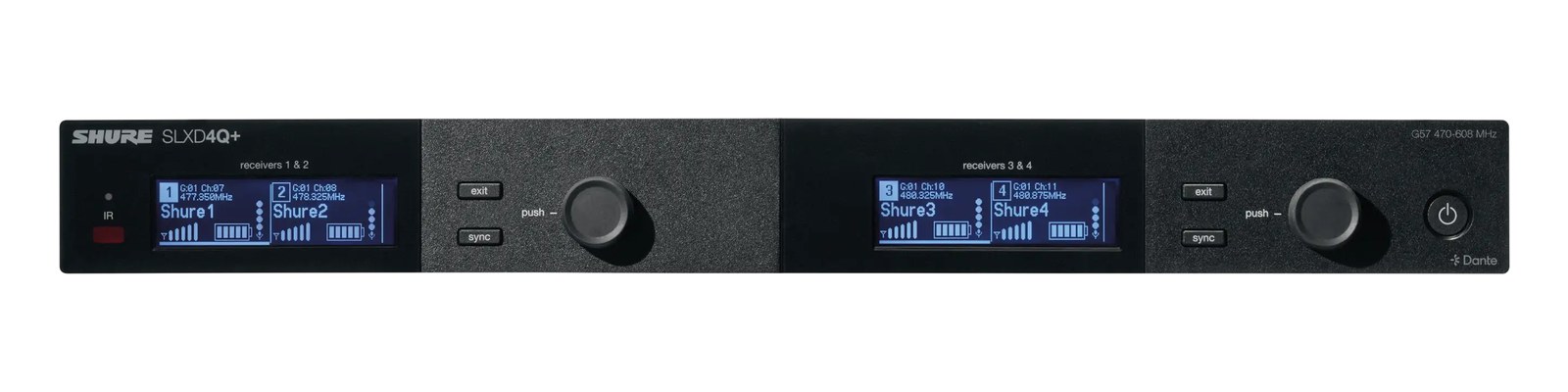
SLXD4QDANThe Shure SLXD4QDAN adds Dante networking to the quad SLX-D receiver, putting four wireless mic channels directly on the audio network alongside the analog outs. For Dante-backbone rigs it removes four cable runs and a stage-box crossing in one box. The most affordable Dante-native wireless rack Shure makes.View gear →
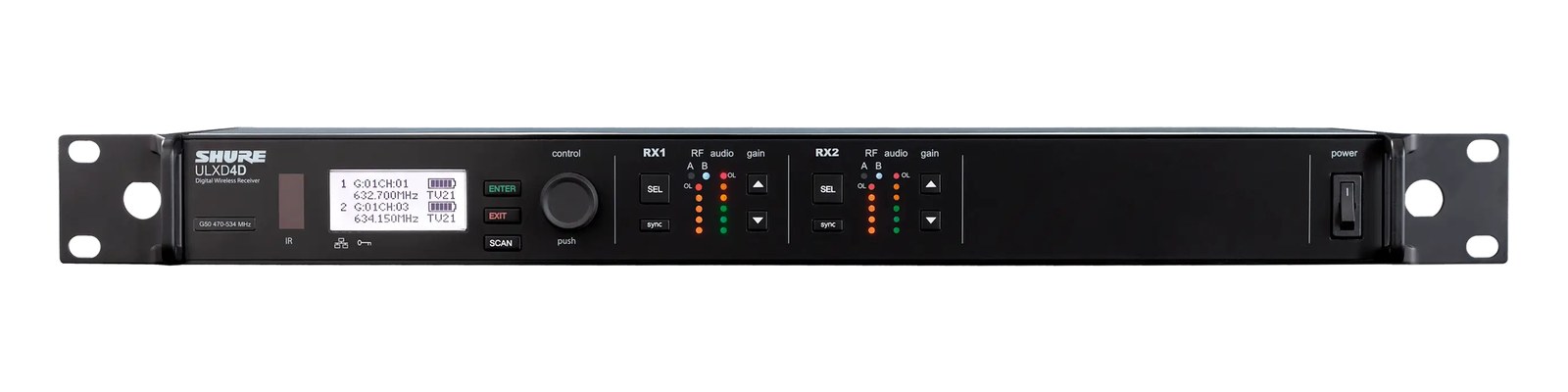
ULXD4DThe Shure ULXD4D packs two full digital wireless channels into 1U, with Dante-networked outputs in addition to analog XLR and 1/4" — rack two and you have four wireless channels in 2U with a single Cat5e back to the console. The industry standard for mid-to-top-tier corporate, theatre, and touring rigs, edged out only by the Axient Digital line at the highest end.View gear →
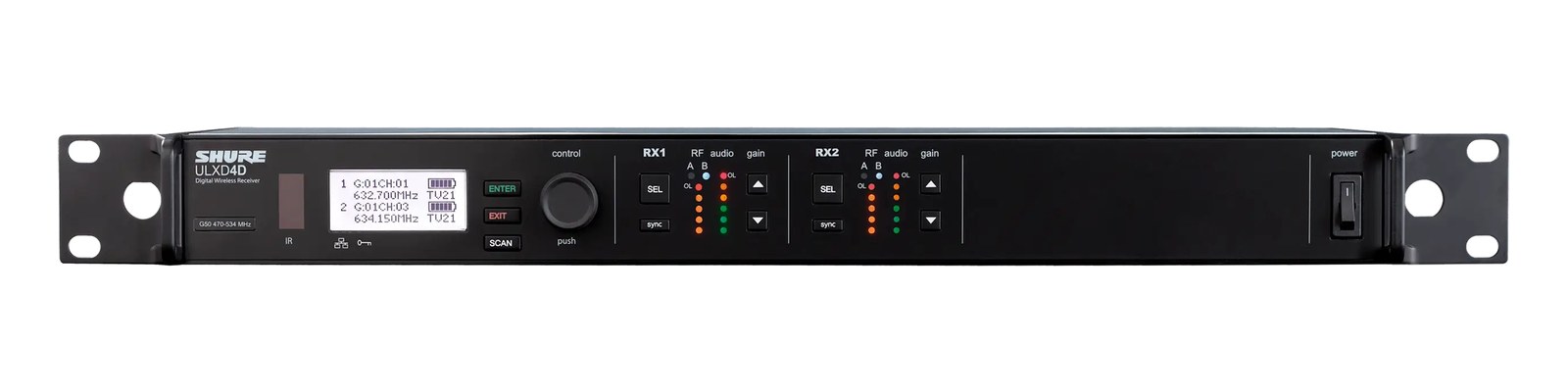
ULXD4DThe ULXD4D dual-channel mic receiver packs two ULX-D channels into a single rack unit with native Dante output, streamlining integration into networked audio systems. Having two channels in one unit halves your rack space requirements compared to single-channel receivers, which matters in dense multi-mic deployments. The Dante output feeds directly onto your audio network, eliminating the need for separate analog-to-digital conversion.View gear →
Placement is only the start. Builder checks space · depth · weight, power headroom, dependencies, and compatible signal paths around this exact catalog item.Open in Builder