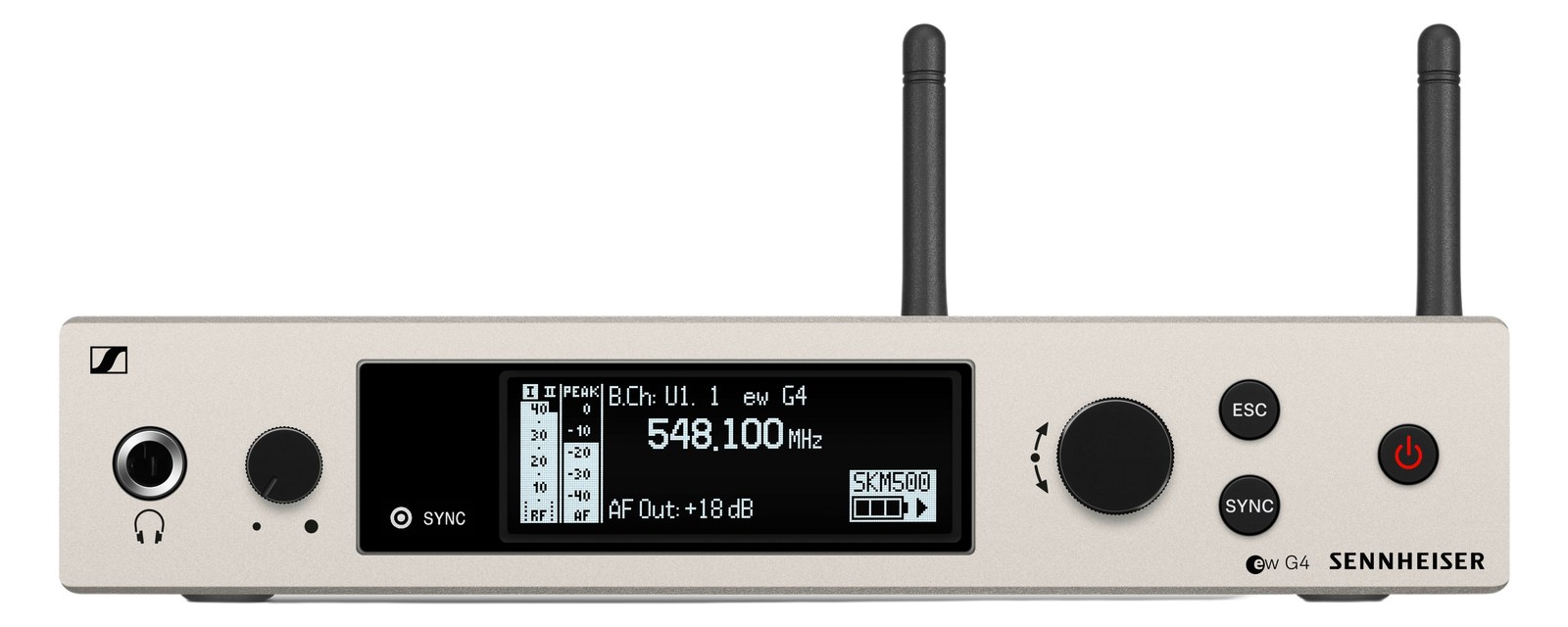
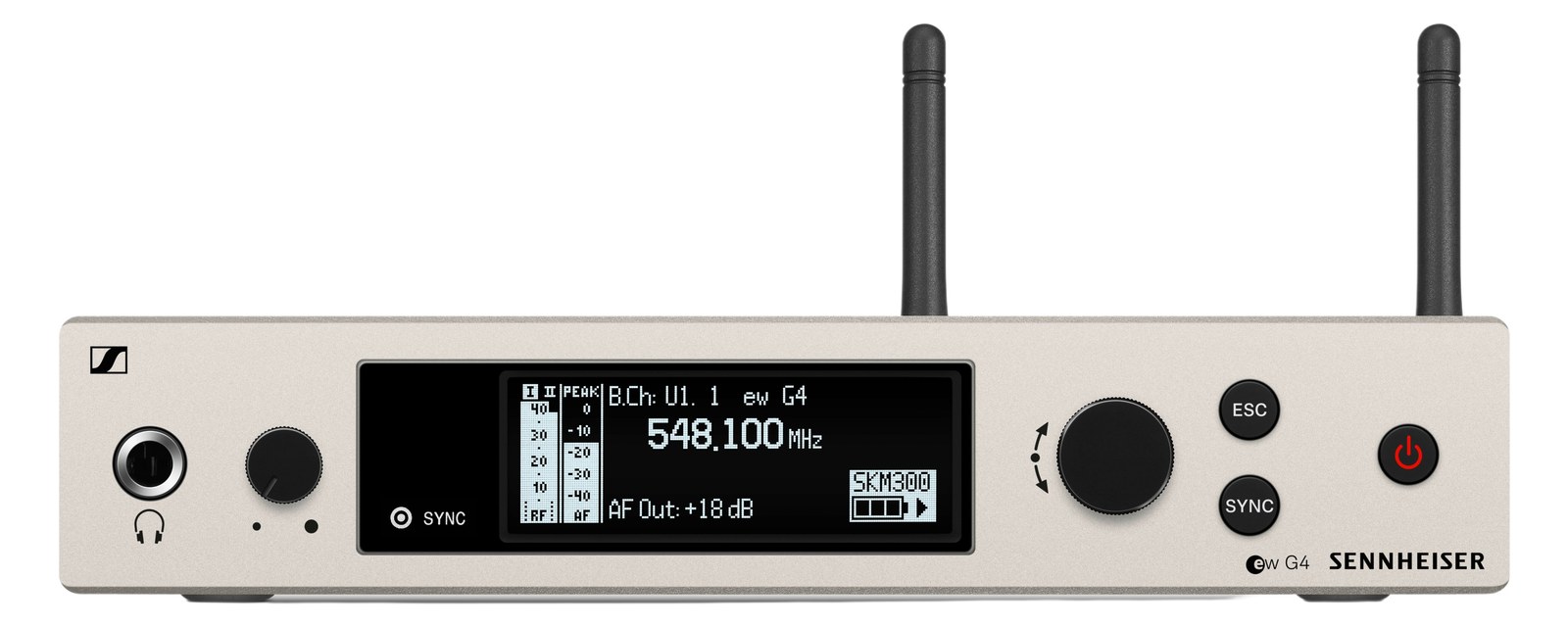
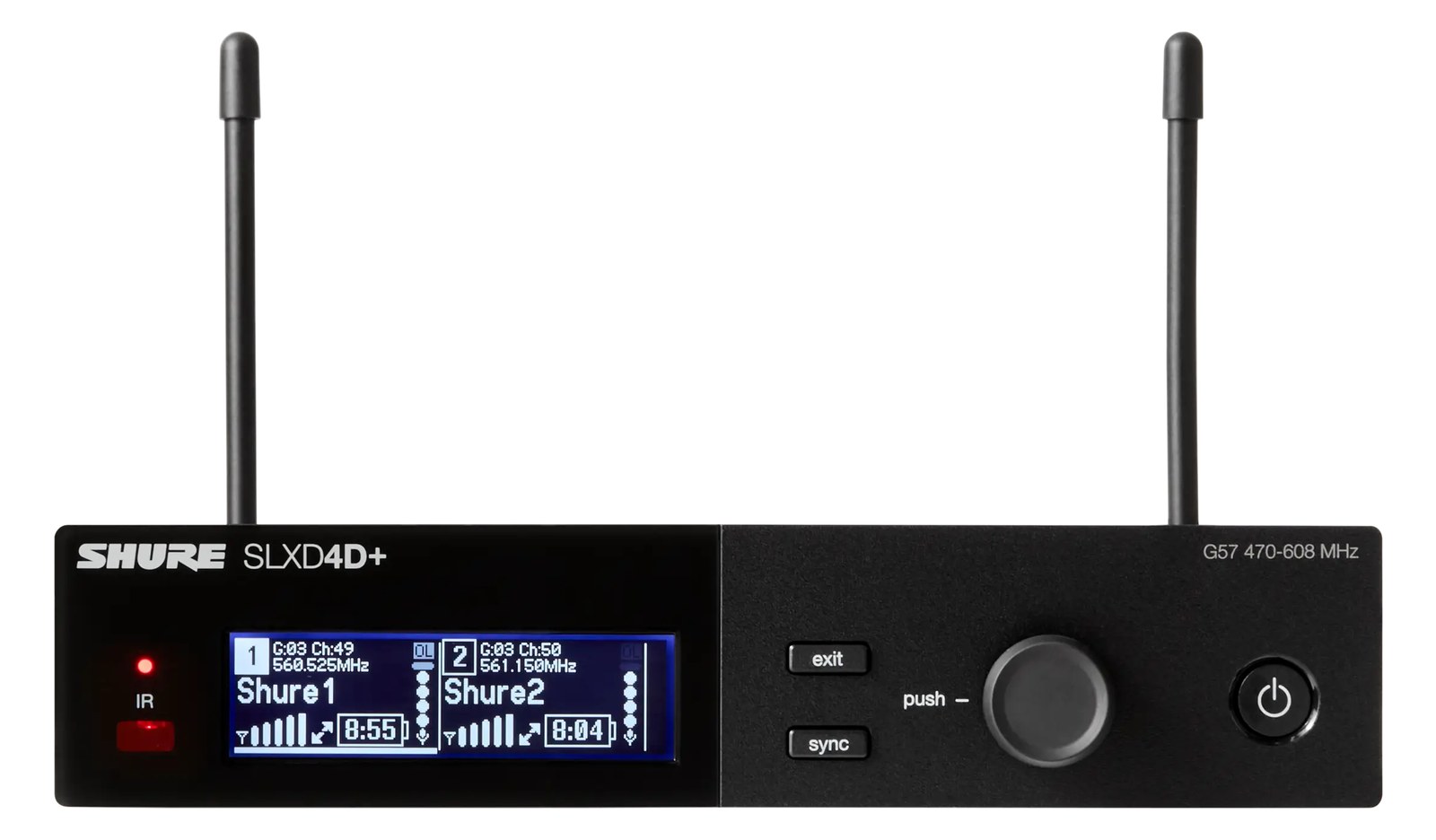
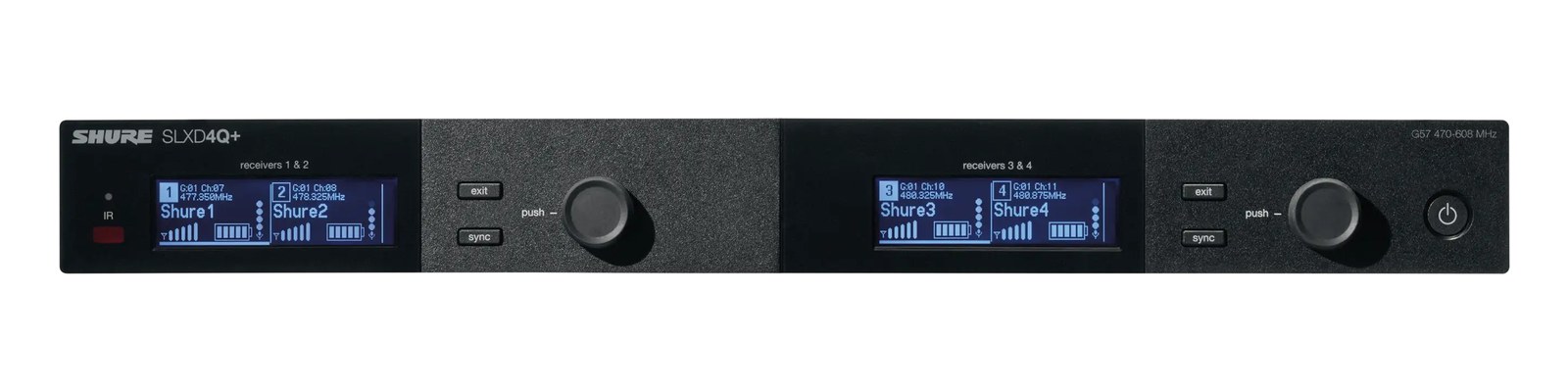
The EM 500 G4 is the upgrade path from EM 300 G4: same half-rack form factor but doubled switching bandwidth (88 MHz) and broader-range tuning ideal for rigs that move between venues with shifting RF spectrum. Same ports — XLR + 1/4" out, BNC antenna in A/B — so it drops into any Distro4-fed receiver rack without changing the wiring plan.
~$999Use retailer rows for current price and stock
01 · What it does—and what that changes in your rig.
Product overview
Start with the payoff, then work through how it functions, where it fits, and the details that change a real build.
The payoff
Wireless Mic decisions, organized around the whole rig.
The EM 500 G4 is Sennheiser's mid-tier wireless receiver in the Evolution Wireless G4 line — a half-rackThe standard slice of rack height: 1U = 1.75″. A 3U box takes three slices; half-rack gear pairs two units side by side in one., single-channel unit that slots into the same physical space and wiring plan as its sibling, the EM 300 G4. The meaningful upgrade here is bandwidth: 88 MHz of switching range versus the 300's 42 MHz, which matters the moment your rig starts moving between cities or into markets where the RFRadio Frequency — the wireless part of wireless. RF planning is why big rigs scan, coordinate, and combine antennas instead of hoping. landscape changes night to night. For a touring monitor rig or a production company running the same hardware across multiple clients and venues, that extra tuning headroomThe margin between your normal level and where things clip — headroom is what absorbs the snare hit you didn’t see coming. is the whole reason this receiver exists.
Documented outputs
33 destination connections
Documented inputs
3Based on documented inputs
Rack space
1U · half-rackBuilder checks available rail space
Photo: Sennheiser1U · half-rack · 6W
Function
How it works in the path
At 1UThe standard slice of rack height: 1U = 1.75″. A 3U box takes three slices; half-rack gear pairs two units side by side in one. shared between two units and only 200 mm deep, the 500 G4 fits comfortably in a dense receiver rack fed by an antenna distroOne pair of antennas feeding many receivers through an amplified splitter — replaces the forest of whips and keeps RF levels consistent.. Both BNCThe twist-lock coax connector used for word clock and antenna runs — it locks, so it can’t be pulled out mid-show. inputs are there for true diversityA receiver with two antennas and two radio sections that continuously picks the stronger one — the difference between a dropout and a show., and the XLRThe standard 3-pin locking connector for mics and balanced line signals — pin 1 is the shield, pins 2 and 3 carry the balanced pair. output means you're going straight to a splitter, combinerThe transmit-side twin of a distro: merges several IEM transmitters into one antenna without letting them intermodulate., or console input without adapters at show time. Power draw sits at 6 W typical, topping out at 10 W — low enough that eight of these on a single distro isn't a thermal concern. The G4 platform's on-board RFRadio Frequency — the wireless part of wireless. RF planning is why big rigs scan, coordinate, and combine antennas instead of hoping. scanning and easy frequency coordinationCalculating a set of wireless frequencies that won’t interfere with each other or local TV — the homework behind a clean RF night. are well established; the 500 just gives you a wider canvas to work within when the scan comes back crowded.
Best fit
Where it earns its place in the rack
Pick the 500 G4 if your work takes you into major metro venues, festival sites, or any situation where you can't guarantee clean spectrum in the 300's narrower window. If you're staff at a single fixed venue with a stable, well-mapped RFRadio Frequency — the wireless part of wireless. RF planning is why big rigs scan, coordinate, and combine antennas instead of hoping. environment, the 300 G4 will save you real money per channel with no practical penalty. Conversely, if you're running a large channel count on a dense touring rig and need maximum coordination headroomThe margin between your normal level and where things clip — headroom is what absorbs the snare hit you didn’t see coming., look at the G4 1000 or 2000 series before committing — the 500 is excellent, but its feature set stops short of the advanced networking and intermodulationIntermodulation — ghost frequencies created when transmitters mix in each other’s electronics. Why multi-channel wireless is calculated, not guessed. tools on the upper tier.
Sennheiser EM 500 G4 Wireless Mic Receiver — front and rear panels togetherPhoto: Sennheiser
In the rack
Details worth deciding before load-in.
Pair two EM 500 G4 units in a single 1UThe standard slice of rack height: 1U = 1.75″. A 3U box takes three slices; half-rack gear pairs two units side by side in one. rack slot using Sennheiser's GA 3 rack tray — they're designed for it, and it keeps your channel-per-rack-unit math clean when building out a 16- or 24-channel IEMIn-Ear Monitor — earpieces that replace floor wedges, feeding each player their own mix. The reason this whole rack exists. and wireless rack.
The wider 88 MHz bandwidth only pays off if you actually scan and coordinate before doors. Build frequency coordinationCalculating a set of wireless frequencies that won’t interfere with each other or local TV — the homework behind a clean RF night. into your load-in checklist and run the scan with PA and lighting on — the 500 gives you room to find clean frequencies, but you still have to look.
BNCThe twist-lock coax connector used for word clock and antenna runs — it locks, so it can’t be pulled out mid-show. antenna cables are where people cut corners and then chase phantomThe +48 V a console sends up the mic cable to power condenser mics and active DI boxes — invisible to gear that doesn’t need it.dropoutsA brief audio gap when the radio link fails — the thing diversity, distros, and coordination all exist to prevent. for an hour. Use low-loss coax appropriate to your distroOne pair of antennas feeding many receivers through an amplified splitter — replaces the forest of whips and keeps RF levels consistent. run length; the receiver is doing its job, but a degraded antenna signal erases the diversityA receiver with two antennas and two radio sections that continuously picks the stronger one — the difference between a dropout and a show. advantage entirely.
Both XLRThe standard 3-pin locking connector for mics and balanced line signals — pin 1 is the shield, pins 2 and 3 carry the balanced pair. and 1/4" outputs are active simultaneously, so if your distroOne pair of antennas feeding many receivers through an amplified splitter — replaces the forest of whips and keeps RF levels consistent. or split sends the XLR to console and you need a local feed to a hop transmitter or a record feed, the 1/4" output is already there — no splitter required.
02 · Know the whole path before you buy.
Signal path
Learn the route as a block diagram: source, product function, transport, and destination. Select any block to see what enters, what changes, and what leaves.
Interactive block diagramAuto-looping · hover, focus, or tap to hold a stage
Port-type signalProduct functionSystem boundary
Follow one signal from source to destination
Each block answers the same three questions: what arrives, what changes here, and what leaves.
01 · Source · selected
bnc + dc barrel
RJ45
XLR male + ¼-inch TS
01 · Source
3 documented inputs
bnc + dc barrel
Arrives as
3 documented inputs
Connector
bnc + dc barrel
Signal
antenna
03 · What this product asks of the rest of the system.
Compatibility
Treat connector names as the start of the check—not the answer. These are the boundaries that determine a complete working path.
Best fit · Wireless Mic
Use it when 1U · half-rack and 202 mm of depth fit the case.
Plan the companion path
Complete the path with upstream and downstream gear that matches connector, direction, signal type, protocol, and wiring standard.
Connector boundary
Documented connectors: XLR male, ¼-inch TS, bnc, RJ45. Match connector, direction, and signal type—not shape alone.
04 · Every connector, grouped by job.
I/O ports
Switch the product view and the documented port inventory updates with it—hardware and data stay side by side.
Every connector, grouped by job.
Switch panels to keep the hardware view and the documented port list in sync.
Front panelRear panel
All documented ports for Sennheiser EM 500 G4 Wireless Mic Receiver
Port
Panel
Connector
Direction
Signal
Channels
AF OUT BAL
rear
XLR male
output
analog audio
—
AF OUT UNBAL
rear
¼-inch TS
output
analog audio
—
ANT I
rear
bnc
input
antenna
—
ANT II
rear
bnc
input
antenna
—
ETHERNET
rear
RJ45
bidirectional
data
—
DC IN
rear
dc barrel
input
power
—
HEADPHONES
front
¼-inch TRS
output
analog audio
—
Showing 7 of 7 documented physical ports.
05 · Compare the decision, not just the price.
Alternatives
The rows are organized around fit, power, I/O, and system role so a cheaper unit cannot hide a more expensive workflow.
EM 500 G4The EM 500 G4 is the upgrade path from EM 300 G4: same half-rack form factor but doubled switching bandwidth (88 MHz) and broader-range tuning ideal for rigs that move between venues with shifting RF spectrum. Same ports — XLR + 1/4" out, BNC antenna in A/B — so it drops into any Distro4-fed receiver rack without changing the wiring plan.View gear →
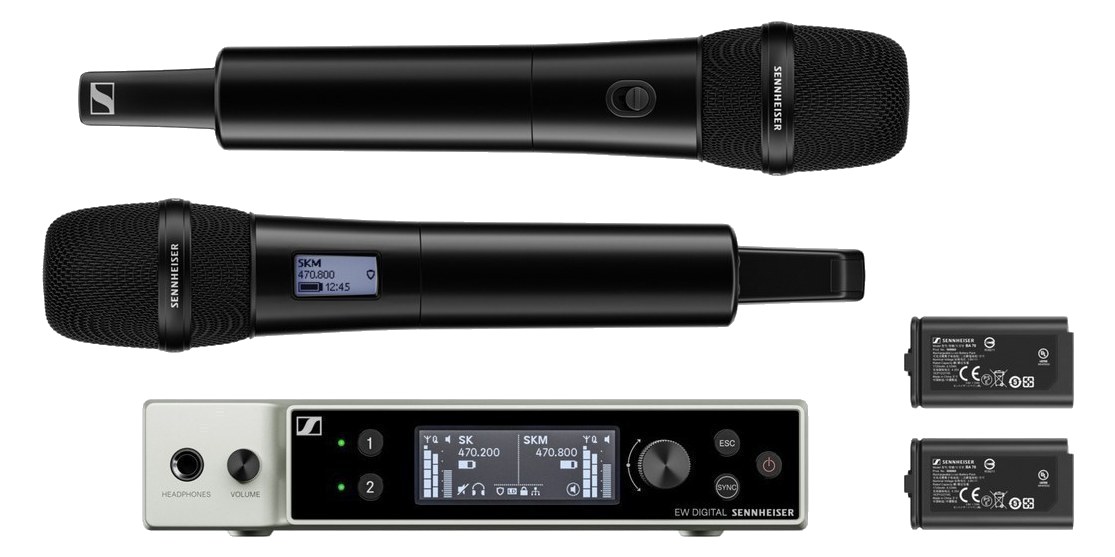
EW-DX 835-SThe EW-DX 835-S set pairs Sennheiser's EM 2 half-rack dual-channel digital receiver with two SKM-S handhelds carrying the workhorse MMD 835 capsule, covering two vocalists from a single rack slot. The equidistant frequency grid packs up to 146 channels in standard mode, and the rear RJ45 takes PoE power and Control Cockpit remote management while audio leaves on two balanced XLRs (+18 dBu) or two unbalanced 1/4" outs (+12 dBu). Note this standard set has no Dante — Sennheiser sells a separate EM 2 DANTE receiver variant (three RJ45 network ports) for networked audio. Scales cleanly into multi-channel racks with BNC antenna distribution.View gear →
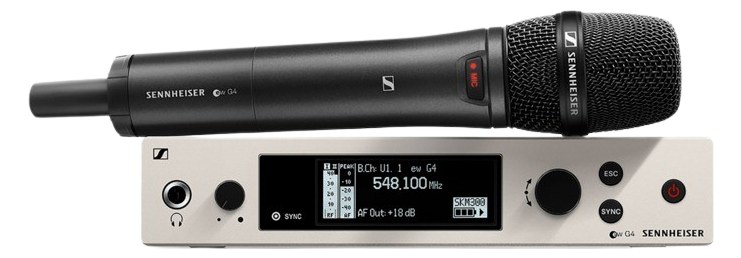
EW 300 G4-865-SThe EW 300 G4-865-S pairs a condenser capsule handheld transmitter with the G4 receiver platform, delivering the brighter and more detailed sound of a condenser microphone in a wireless package. Condenser capsules excel at capturing vocal clarity and presence, making this system well-suited for vocalists who want a more studio-like sound on stage. The G4 platform provides reliable UHF performance with straightforward setup.View gear →
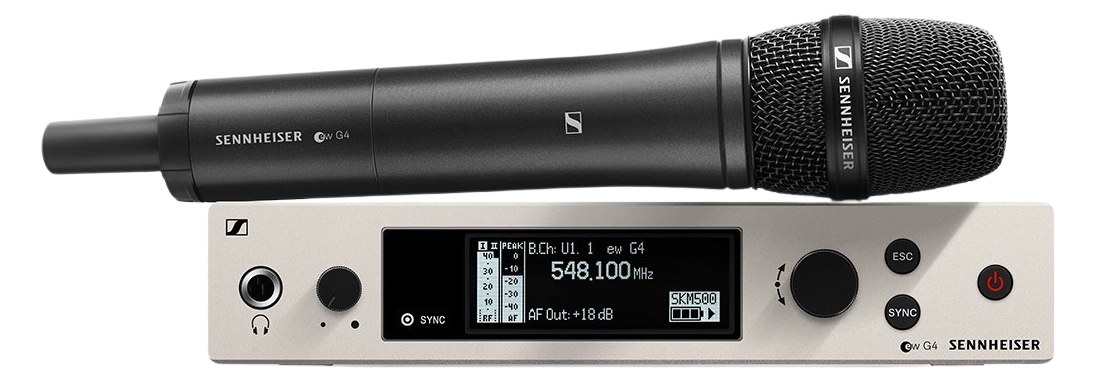
EW 500 G4-935The EW 500 G4-935 is Sennheiser's professional-tier wireless vocal system with the dynamic e935 capsule, known for its warm and natural sound that works well across a range of vocal styles. The 500 series receiver provides enhanced RF performance and extended range compared to the 300 series, making it more suitable for larger stages. A reliable and well-respected wireless mic system for touring vocalists in the Sennheiser ecosystem.View gear →
06 · Resolve the questions that can change the purchase or build plan.
Planning questions
Short, source-backed answers surface rack fit, power, cabling, and connection details before they become surprises.
How will the Sennheiser EM 500 G4 Wireless Mic Receiver affect rack fit and case depth?
It occupies 1U · half-rack. Its documented depth is 202 mm.
How much power does the Sennheiser EM 500 G4 Wireless Mic Receiver draw?
Typical draw is 6W and documented maximum draw is 3.6W.
What connections does the Sennheiser EM 500 G4 Wireless Mic Receiver have?
7 documented physical ports, including AF OUT BAL, AF OUT UNBAL, ANT I, ANT II, ETHERNET, DC IN.
Is the Sennheiser EM 500 G4 Wireless Mic Receiver discontinued?
evolution wireless G4 300/500 series discontinued June 2024 — succeeded by EW-DX. Kept for owners (large installed base).
07 · See this unit inside a real rack plan.
Builder preview
Placement is only the start. Builder checks space · depth · weight, power headroom, dependencies, and compatible signal paths around this exact catalog item.Open in Builder