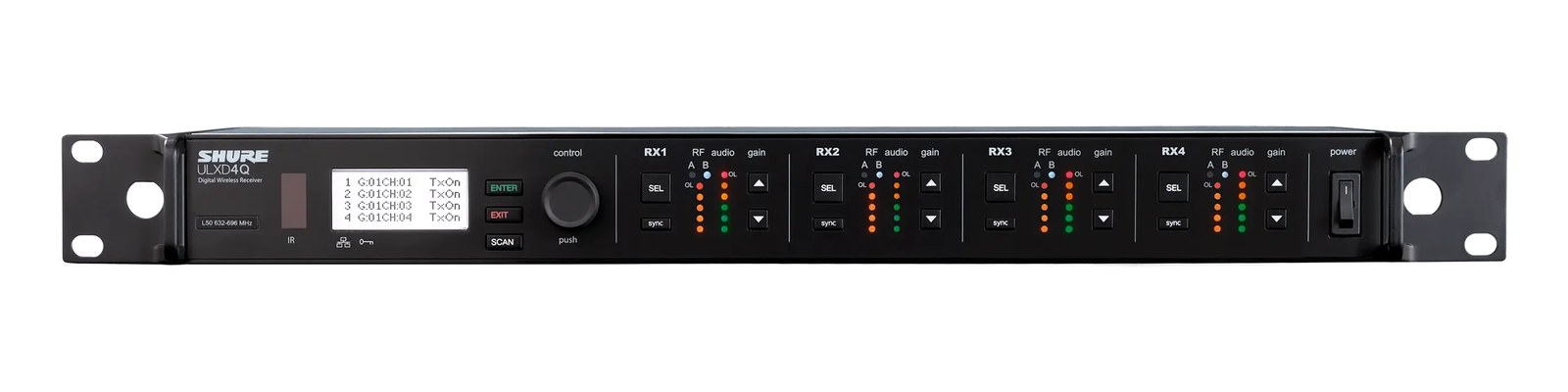
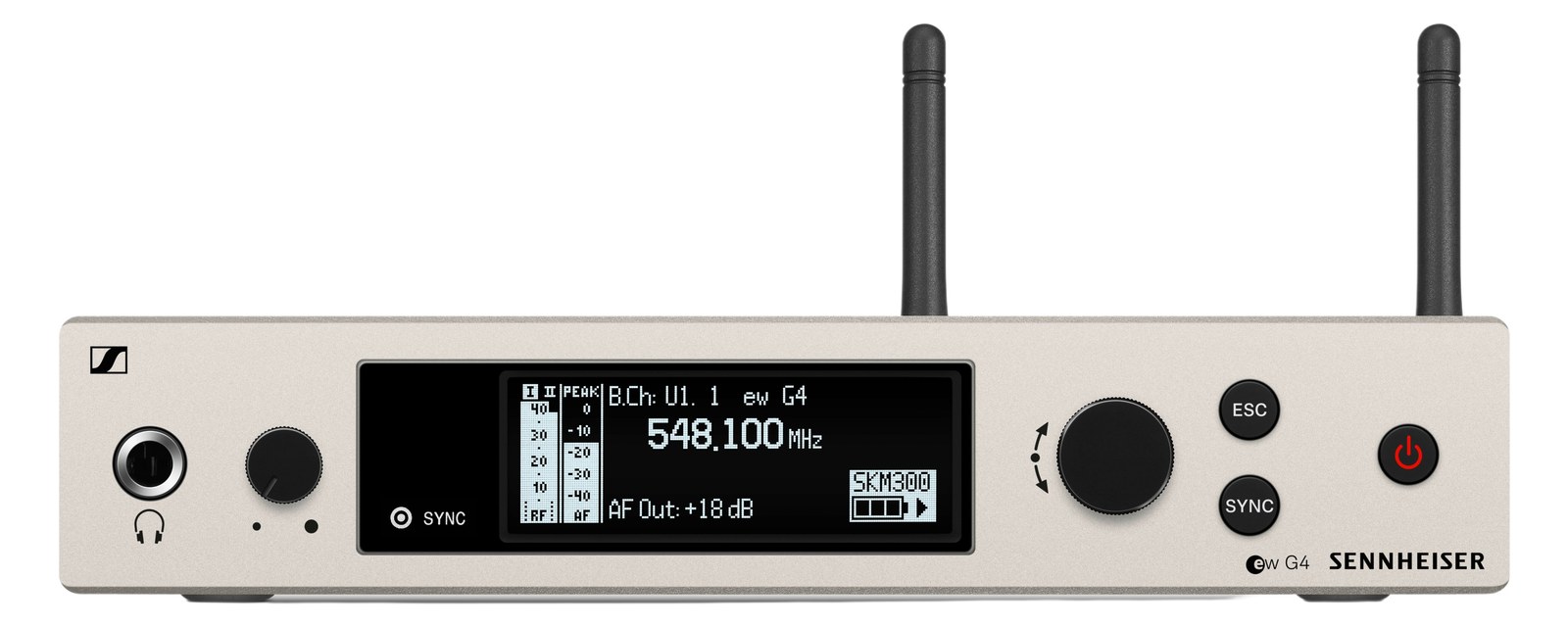
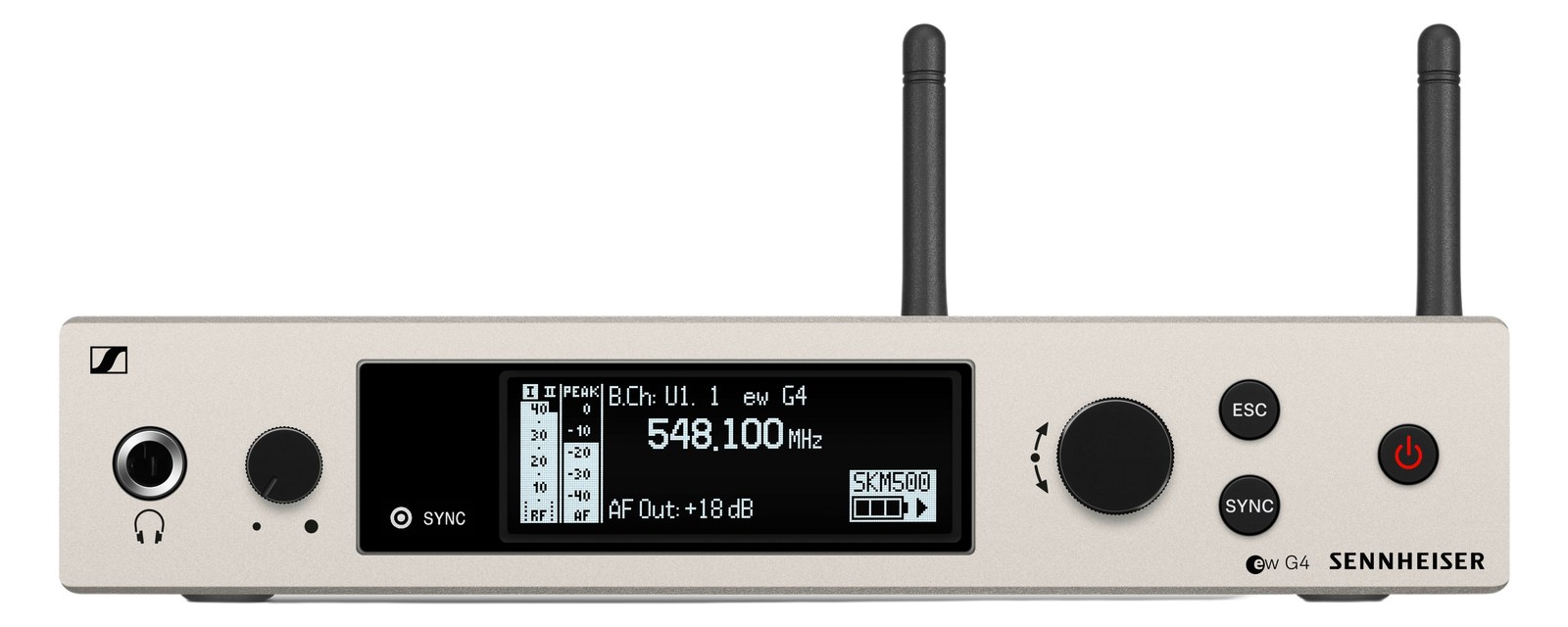
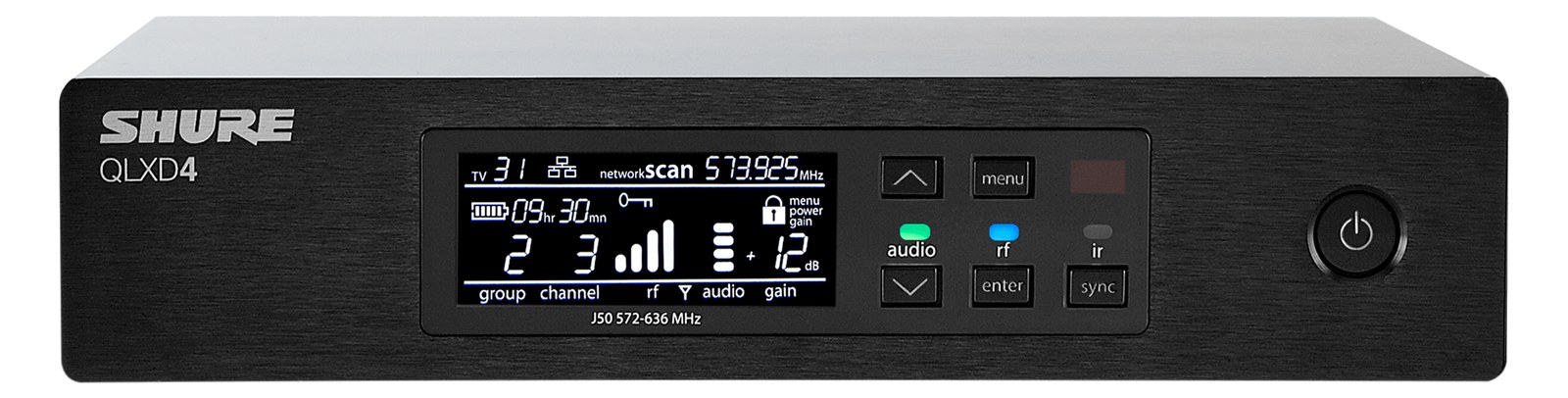
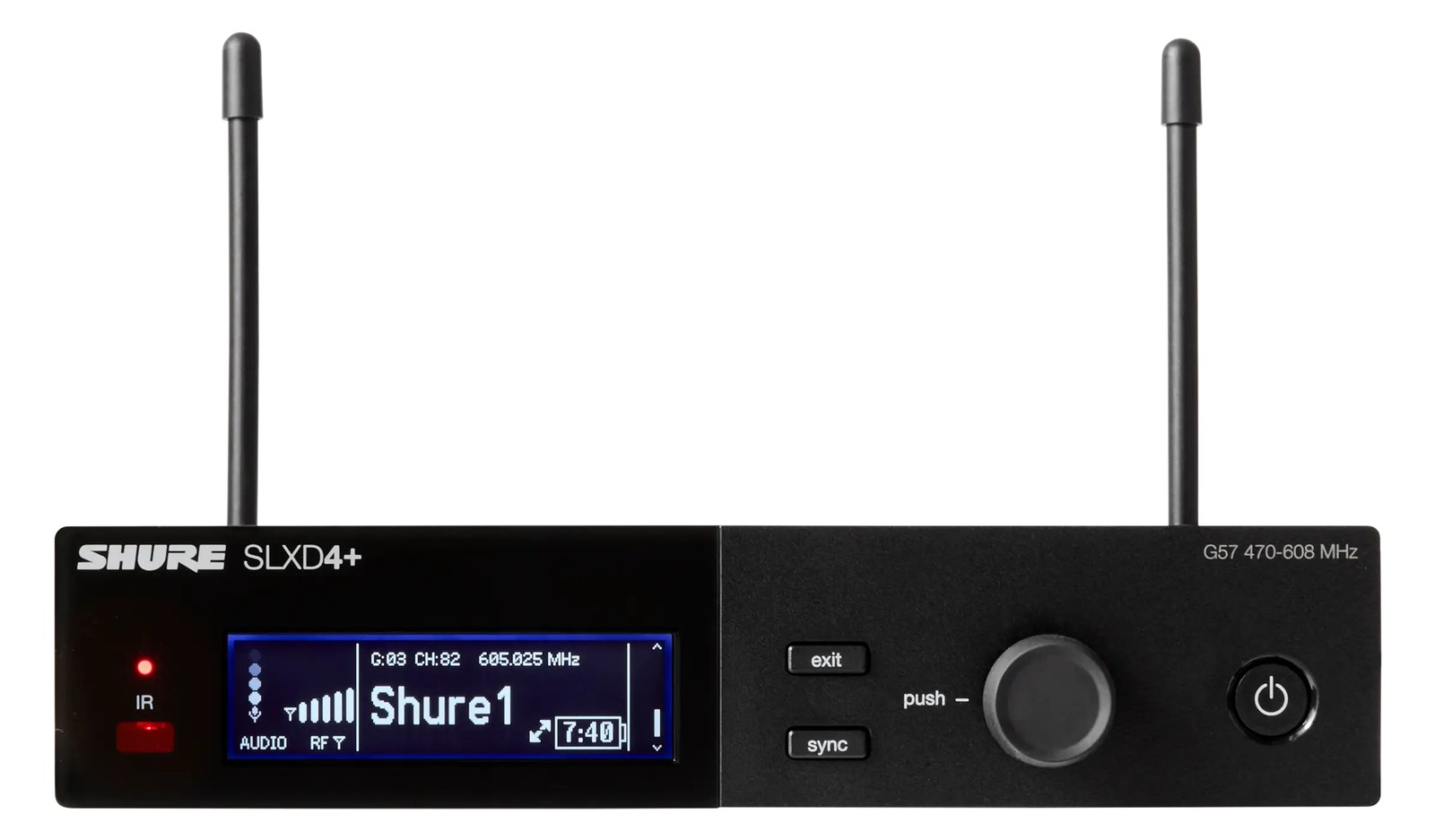
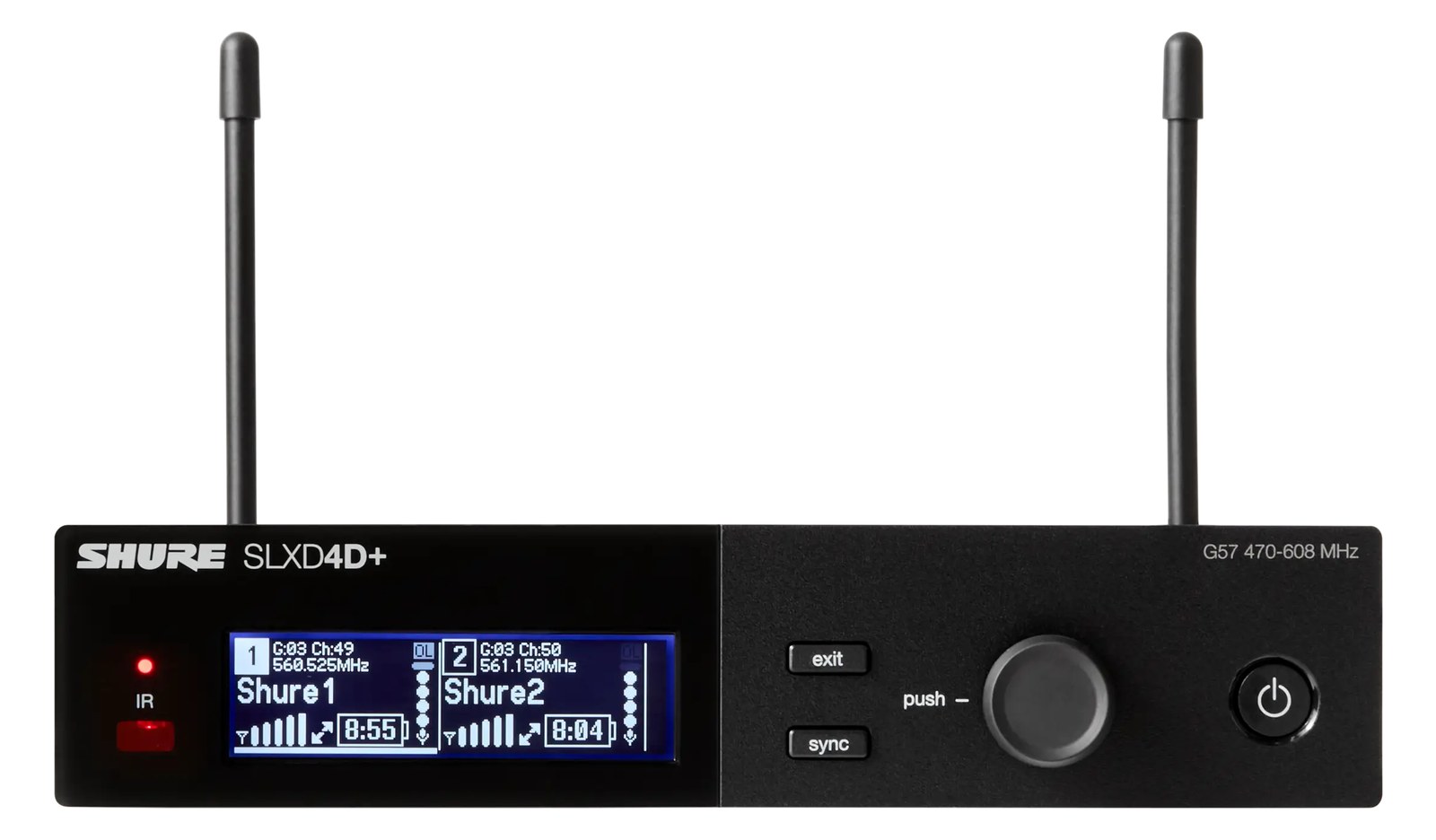
The Shure ULXD4Q is a four-channel digital wireless receiver in a single rack space, doubling the channel density of the dual-channel ULXD4D. AES-256 encryption, 24-bit / 48 kHz uncompressed audio, and Dante optional output make it a touring-grade option that's become a default on broadcast and rental shop riders.
~$6,950Use retailer rows for current price and stock
01 · What it does—and what that changes in your rig.
Product overview
Start with the payoff, then work through how it functions, where it fits, and the details that change a real build.
The payoff
Wireless Mic decisions, organized around the whole rig.
The ULXD4Q is Shure's answer to channel density in a single rack space: four independent digital wireless receivers, each accepting a bodypack or handheld transmitter, all packed into 1UThe standard slice of rack height: 1U = 1.75″. A 3U box takes three slices; half-rack gear pairs two units side by side in one. at 305mm deep. It doubles the channel count of the dual-channel ULXD4D and has become a standard line item on broadcast and touring ridersThe document attached to a booking that lists what the band needs — inputs, monitors, power, backline (and the green-room snacks). precisely because it stops you from burning rack space on separate single-channel receivers. If your show has a band plus presenters, or a theater production with multiple cast mics, this is the unit that lets you build a complete wireless solution without the rack growing out of control.
Documented outputs
66 destination connections
Documented inputs
3Based on documented inputs
Rack space
1UBuilder checks available rail space
Photo: Shure1U · 30W
Function
How it works in the path
At load-in, the cascade antenna ports are what save you time. A single pair of paddleA directional antenna (paddle, LPDA, helical) aimed at the stage — focuses coverage where the performers are and rejects RF from elsewhere. antennas can feed multiple ULXD4Q units chained together, so you're not running separate antenna distributionsOne pair of antennas feeding many receivers through an amplified splitter — replaces the forest of whips and keeps RF levels consistent. for every box — though you'll still want to respect the cascade limits and signal levels when you start stacking more than a few units. The DanteThe most common audio-over-network standard: dozens of channels of uncompressed digital audio down one ordinary Ethernet cable between Dante boxes. output is genuinely useful: all four channels appear on the network simultaneously, giving you a clean, labelable digital feed to your console or stageboxThe I/O endpoint on stage: mics plug in there and one digital line (AES50, Dante) carries everything to the console. The snake, digitized. without touching the XLRThe standard 3-pin locking connector for mics and balanced line signals — pin 1 is the shield, pins 2 and 3 carry the balanced pair. outputs. At 30W typical and 40W maximum draw, four channels for roughly one amp on a standard circuit is reasonable overhead. AES-256 encryption is there if you're working corporate or broadcast and someone on the production side asks about RFRadio Frequency — the wireless part of wireless. RF planning is why big rigs scan, coordinate, and combine antennas instead of hoping. security.
Best fit
Where it earns its place in the rack
This unit belongs in a rack that already has ULXD transmitters or is committing to that ecosystem — it does not pair with ULX or QLX series gear. If you only need two wireless channels and budget is a real constraint, the ULXD4D is the honest alternative. If you're running eight or more channels regularly, two ULXD4Q units with cascaded antennas is a cleaner build than mixing receiver form factors. The $6,950 price positions this firmly in the touring and rental tier; a regional theater or house-of-worship rig with occasional wireless needs should weigh that honestly against total channel demand before committing.
In the rack
Details worth deciding before load-in.
Use the Antenna Cascade Out to feed a second ULXD4Q rather than splitting your antenna feed passively — you preserve signal integrity and keep the chain organized at load-in.
Assign all four DanteThe most common audio-over-network standard: dozens of channels of uncompressed digital audio down one ordinary Ethernet cable between Dante boxes. channels at the start of the day and label them in your Dante Controller session before soundcheck; if you also run the XLRThe standard 3-pin locking connector for mics and balanced line signals — pin 1 is the shield, pins 2 and 3 carry the balanced pair. outputs to an analog split, you'll have a fallback path without any rewiring mid-show.
At 305mm deep, the ULXD4Q sits flush in a standard shallow tour rack — verify your rack depth before assuming you can fit it in a shallow utility case with cable management behind it.
Use Shure Wireless WorkbenchShure’s free RF-management software — scans the airwaves, calculates compatible frequencies, and monitors every receiver from a laptop. over the control Ethernet port to scan and coordinate frequencies before you touch a transmitter; doing RF coordinationCalculating a set of wireless frequencies that won’t interfere with each other or local TV — the homework behind a clean RF night. on the unit's front panel alone across multiple boxes wastes time and invites mistakes.
02 · Know the whole path before you buy.
Signal path
Learn the route as a block diagram: source, product function, transport, and destination. Select any block to see what enters, what changes, and what leaves.
Interactive block diagramAuto-looping · hover, focus, or tap to hold a stage
Port-type signalProduct functionSystem boundary
Follow one signal from source to destination
Each block answers the same three questions: what arrives, what changes here, and what leaves.
01 · Source · selected
bnc + IEC C14
RJ45
bnc + XLR male
01 · Source
3 documented inputs
bnc + IEC C14
Arrives as
3 documented inputs
Connector
bnc + IEC C14
Signal
antenna
03 · What this product asks of the rest of the system.
Compatibility
Treat connector names as the start of the check—not the answer. These are the boundaries that determine a complete working path.
Best fit · Wireless Mic
Use it when 1U and 274 mm of depth fit the case.
Plan the companion path
Complete the path with upstream and downstream gear that matches connector, direction, signal type, protocol, and wiring standard.
Protocol boundary
This product declares DANTE; matching plugs alone do not make other protocols compatible.
04 · Every connector, grouped by job.
I/O ports
Switch the product view and the documented port inventory updates with it—hardware and data stay side by side.
Every connector, grouped by job.
Switch panels to keep the hardware view and the documented port list in sync.
Front panelRear panel
All documented ports for Shure ULXD4Q Quad Receiver
Port
Panel
Connector
Direction
Signal
Channels
ANTENNA A
rear
bnc
input
antenna
—
ANTENNA B
rear
bnc
input
antenna
—
CASCADE A
rear
bnc
output
antenna
—
CASCADE B
rear
bnc
output
antenna
—
OUTPUT 1
rear
XLR male
output
analog audio
—
OUTPUT 2
rear
XLR male
output
analog audio
—
OUTPUT 3
rear
XLR male
output
analog audio
—
OUTPUT 4
rear
XLR male
output
analog audio
—
PRIMARY
rear
RJ45
bidirectional
data
4
SECONDARY
rear
RJ45
bidirectional
digital audio
4
AC POWER
rear
IEC C14
input
power
—
Showing 11 of 11 documented physical ports. Scroll to review the remaining rows.
05 · Compare the decision, not just the price.
Alternatives
The rows are organized around fit, power, I/O, and system role so a cheaper unit cannot hide a more expensive workflow.
ULXD4QThe Shure ULXD4Q is a four-channel digital wireless receiver in a single rack space, doubling the channel density of the dual-channel ULXD4D. AES-256 encryption, 24-bit / 48 kHz uncompressed audio, and Dante optional output make it a touring-grade option that's become a default on broadcast and rental shop riders.View gear →
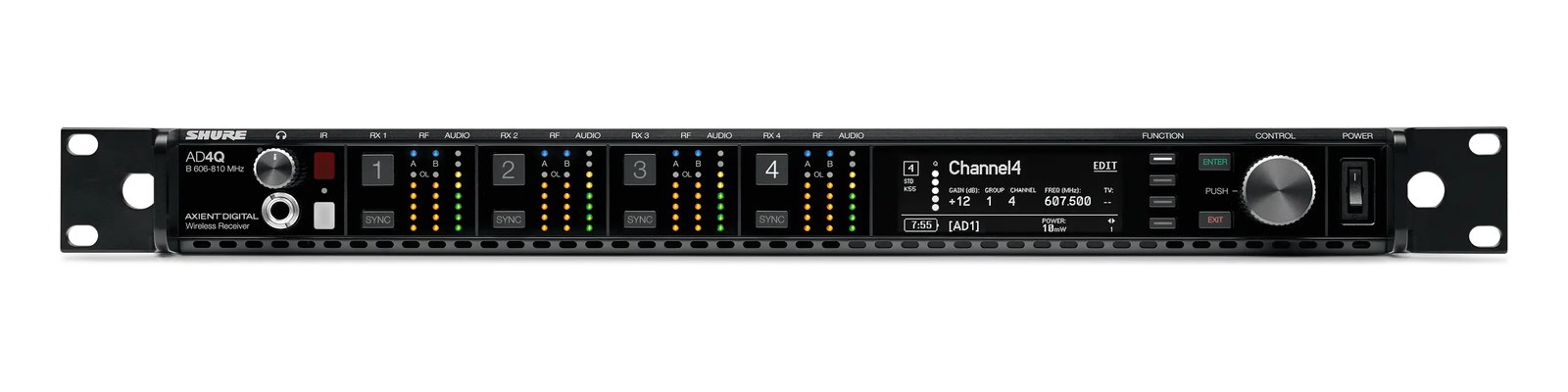
AD4QThe AD4Q packs four Axient Digital receiver channels into a single 1U rack space with full Dante, ShowLink, and Quadversity support, making it the ultimate high-density wireless mic solution. For large touring productions and broadcast events with many wireless channels, this dramatically reduces the rack space and antenna infrastructure needed. The price per channel is significant, but the reliability and feature set are unmatched in professional wireless.View gear →
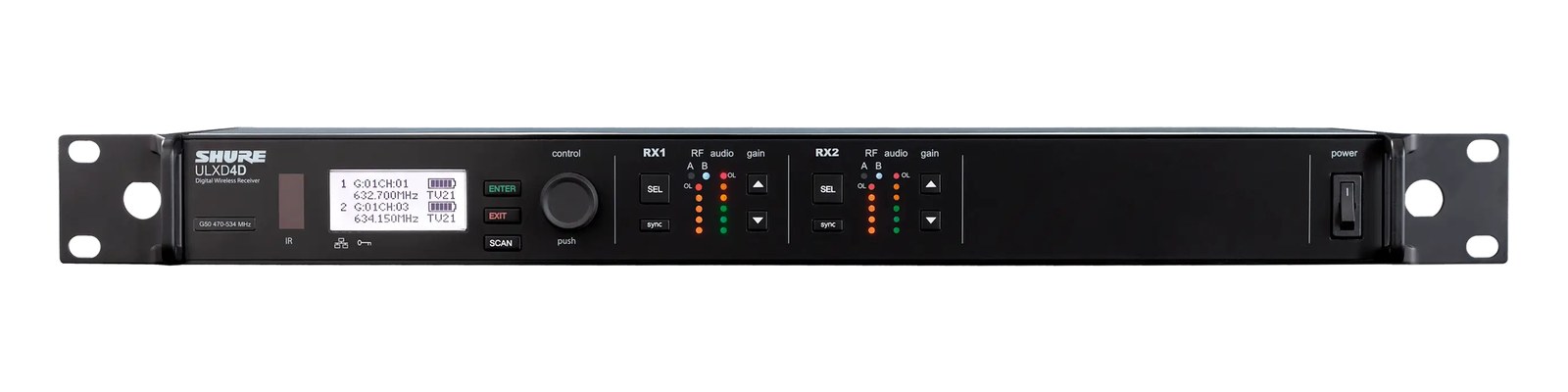
ULXD4DThe Shure ULXD4D packs two full digital wireless channels into 1U, with Dante-networked outputs in addition to analog XLR and 1/4" — rack two and you have four wireless channels in 2U with a single Cat5e back to the console. The industry standard for mid-to-top-tier corporate, theatre, and touring rigs, edged out only by the Axient Digital line at the highest end.View gear →
ULXD4DThe ULXD4D dual-channel mic receiver packs two ULX-D channels into a single rack unit with native Dante output, streamlining integration into networked audio systems. Having two channels in one unit halves your rack space requirements compared to single-channel receivers, which matters in dense multi-mic deployments. The Dante output feeds directly onto your audio network, eliminating the need for separate analog-to-digital conversion.View gear →
06 · Resolve the questions that can change the purchase or build plan.
Planning questions
Short, source-backed answers surface rack fit, power, cabling, and connection details before they become surprises.
How will the Shure ULXD4Q Quad Receiver affect rack fit and case depth?
It occupies 1U. Its documented depth is 274 mm.
How much power does the Shure ULXD4Q Quad Receiver draw?
Typical draw is 30W and documented maximum draw is 38.4W.
What connections does the Shure ULXD4Q Quad Receiver have?
11 documented physical ports, including ANTENNA A, ANTENNA B, CASCADE A, CASCADE B, OUTPUT 1, OUTPUT 2.
07 · See this unit inside a real rack plan.
Builder preview
Placement is only the start. Builder checks space · depth · weight, power headroom, dependencies, and compatible signal paths around this exact catalog item.Open in Builder