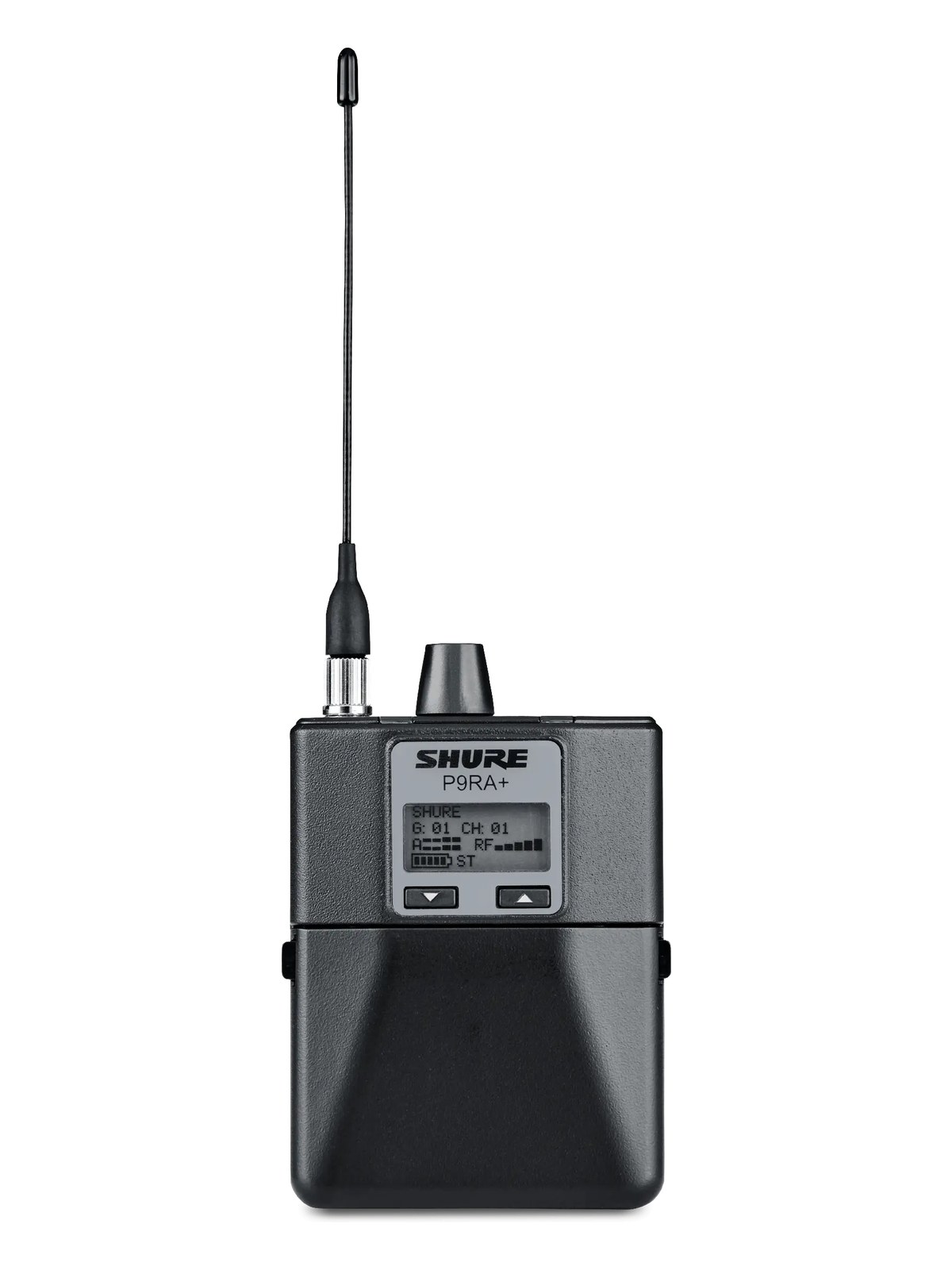
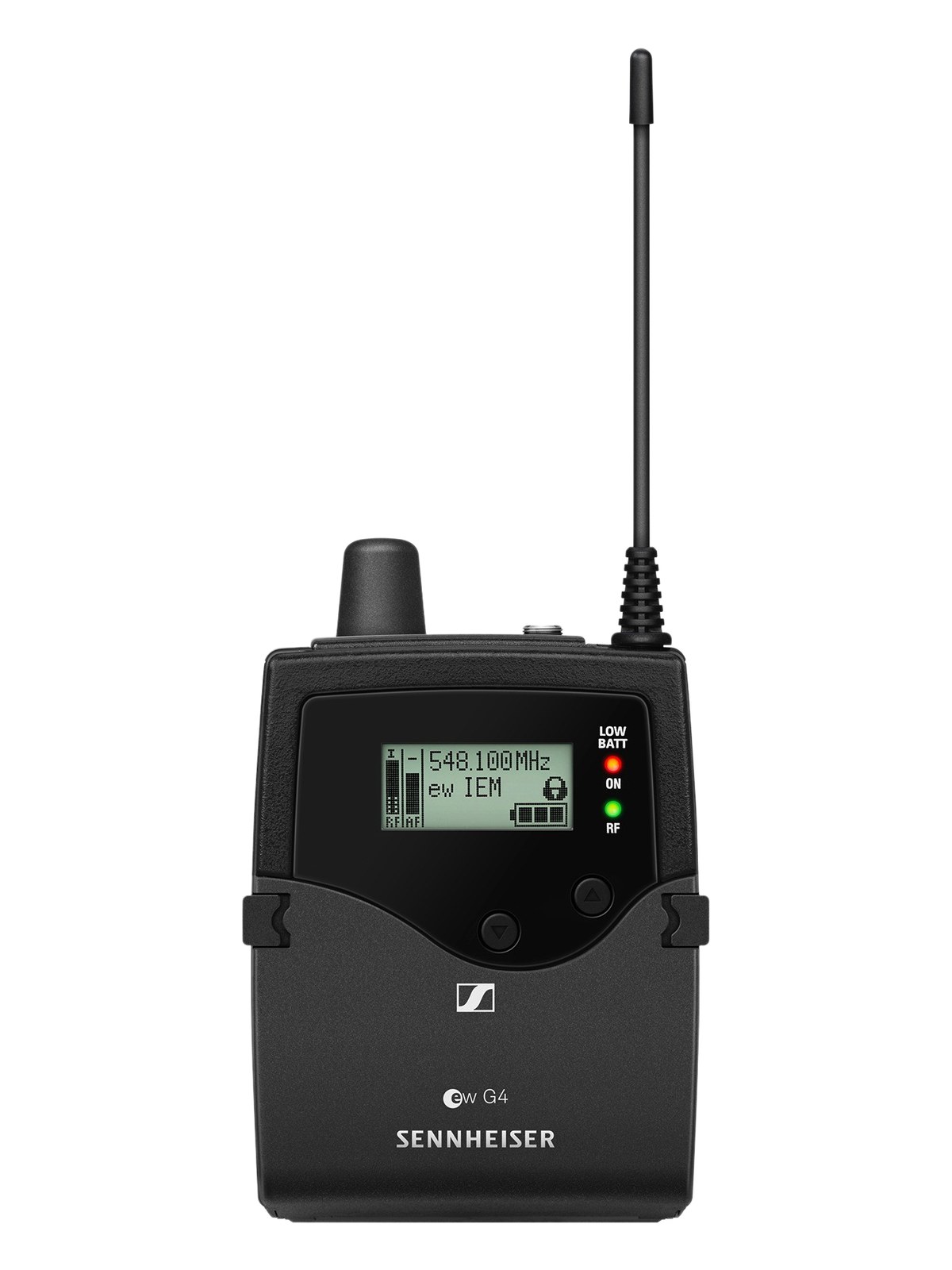
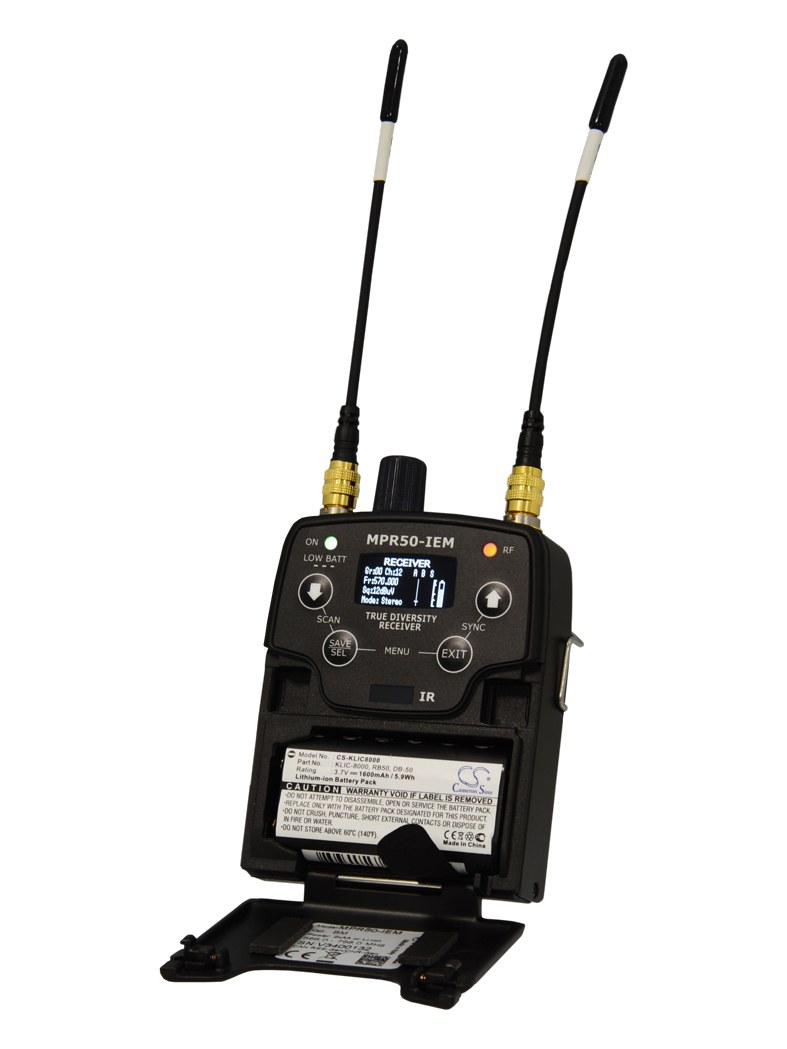
The P9RA is the diversity bodypack receiver paired with the PSM900 transmitter. It uses Shure's Audio Reference Companding to deliver 24-bit-quality audio over an analog wireless link, and the dual-antenna diversity design helps maintain a stable signal as the performer moves around the stage. One per performer on a PSM900 system.
UnverifiedPower requirement is not verified in the catalog
Catalog estimate
~$725Use retailer rows for current price and stock
01 · What it does—and what that changes in your rig.
Product overview
Start with the payoff, then work through how it functions, where it fits, and the details that change a real build.
The payoff
IEM Receiver decisions, organized around the whole rig.
The P9RA+ is the performer's end of a PSM900 wireless IEMIn-Ear Monitor — earpieces that replace floor wedges, feeding each player their own mix. The reason this whole rack exists. system — it lives on the body, not in the rack, which is exactly why it appears here as a BOM line item rather than a rack unitThe standard slice of rack height: 1U = 1.75″. A 3U box takes three slices; half-rack gear pairs two units side by side in one.. Every PSM900 transmitter you're running needs a corresponding P9RA+ for each performer receiving that mix. It's a diversityA receiver with two antennas and two radio sections that continuously picks the stronger one — the difference between a dropout and a show. bodypack, meaning it carries dual antennas to maintain a clean signal lock as performers move across a stage, crouch behind a drum kit, or wander into the wings. The 3.5mm TRSTip-Ring-Sleeve — a 1/4″ jack with three contacts carrying a balanced signal or a stereo pair. A guitar plug with one extra ring. output feeds whatever earphones the performer prefers.
Documented outputs
1One destination connection
Documented inputs
0Based on documented inputs
Rack space
Outside rackPlan a shelf, tray, or stage position
Photo: ShureOutside rack · Unverified
Function
How it works in the path
Shure's Audio Reference CompandingCOMpressing-exPANDing: analog wireless squeezes audio’s dynamics to fit the radio link, then mirrors them back out. Done badly, it breathes. is the key spec to understand here. It's a proprietary encode-decode scheme that lets the PSM900 system approach 24-bit audio quality over an analog RFRadio Frequency — the wireless part of wireless. RF planning is why big rigs scan, coordinate, and combine antennas instead of hoping. link — in practice, that means the dynamic rangeThe span between a device’s noise floor and its clipping point — the room between the quietest and loudest sounds it can pass. and high-frequency detail that in-ear performers actually notice when they're trying to hear a snare crack or a vocal breath. At load-in, the bodypack pairs quickly with a PSM900 transmitter via the front-panel scan-and-sync workflow. Battery life on two AA cells is rated generously enough for a full festival day with headroomThe margin between your normal level and where things clip — headroom is what absorbs the snare hit you didn’t see coming., but you should still establish a battery swap protocol for back-to-back shows.
Best fit
Where it earns its place in the system
If your system is PSM900, this is the only bodypack that belongs with it — there's no cross-compatibility shortcut worth chasing. If you're building a new IEMIn-Ear Monitor — earpieces that replace floor wedges, feeding each player their own mix. The reason this whole rack exists. rig and the PSM900 price point is a stretch, the PSM300 ecosystem uses a different bodypack and a different transmitter, so plan the whole system together rather than mixing tiers. The P9RA+ makes most sense for touring or residency situations where performers demand low-latencyThe delay between sound entering and leaving a digital system. IEM rigs fight to keep the whole chain down to a few milliseconds., high-fidelity monitoring and RFRadio Frequency — the wireless part of wireless. RF planning is why big rigs scan, coordinate, and combine antennas instead of hoping. stability in a congested spectrum environment. For a fly dateA gig you fly to instead of driving — the whole rig has to shrink into checkable cases and carry-ons. with a tight kit list, the weight and cost are harder to justify than in a full production carry.
Shure P9RA+ Bodypack Receiver — battery door openPhoto: Shure
In the rack
Details worth deciding before load-in.
Log every P9RA+ unit's serial number against the performer it's assigned to — swapping bodypacks mid-tour without re-pairing to the correct transmitter channel is a common and avoidable show-day headache.
Store bodypacks with batteries removed during transit; even low-drain discharge over a long truck run adds up across a rack season and accelerates battery compartment corrosion.
When building your BOM in IEMIn-Ear Monitor — earpieces that replace floor wedges, feeding each player their own mix. The reason this whole rack exists. Rig, add one P9RA+ line item per performer per PSM900 transmitter — the rack plan won't account for body-worn units automatically, but the cost and quantity need to be visible for accurate budgeting.
Establish a consistent belt-pack placement and antenna orientation for each performer during soundcheck; body-worn antenna position affects diversityA receiver with two antennas and two radio sections that continuously picks the stronger one — the difference between a dropout and a show. performance more than most engineers expect, and repeatable placement means repeatable RFRadio Frequency — the wireless part of wireless. RF planning is why big rigs scan, coordinate, and combine antennas instead of hoping. behavior night to night.
02 · Know the whole path before you buy.
Signal path
Learn the route as a block diagram: source, product function, transport, and destination. Select any block to see what enters, what changes, and what leaves.
Interactive block diagramAuto-looping · hover, focus, or tap to hold a stage
Port-type signalProduct functionSystem boundary
Follow one signal from source to destination
Each block answers the same three questions: what arrives, what changes here, and what leaves.
01 · This unit · selected
trs eighth
01 · This unit
Shure P9RA+ Bodypack Receiver
Power requirements are not yet verified in the catalog.
Arrives through
No documented input
This stage
Performs the documented product role
Power
Unverified
03 · What this product asks of the rest of the system.
Compatibility
Treat connector names as the start of the check—not the answer. These are the boundaries that determine a complete working path.
Best fit · IEM Receiver
Use it as iem receiver tracked outside rack rails; follow the manufacturer’s mounting and form-factor guidance.
Plan the companion path
Complete the path with upstream and downstream gear that matches connector, direction, signal type, protocol, and wiring standard.
Connector boundary
Documented connectors: trs eighth. Match connector, direction, and signal type—not shape alone.
04 · Every connector, grouped by job.
I/O ports
Switch the product view and the documented port inventory updates with it—hardware and data stay side by side.
Every connector, grouped by job.
Switch panels to keep the hardware view and the documented port list in sync.
Front panelRear panel
All documented ports for Shure P9RA+ Bodypack Receiver
Port
Panel
Connector
Direction
Signal
Channels
Headphone Out (3.5mm)
rear
trs eighth
output
analog audio
—
Showing 1 of 1 documented physical ports.
05 · Compare the decision, not just the price.
Alternatives
The rows are organized around fit, power, I/O, and system role so a cheaper unit cannot hide a more expensive workflow.
P9RA+The P9RA is the diversity bodypack receiver paired with the PSM900 transmitter. It uses Shure's Audio Reference Companding to deliver 24-bit-quality audio over an analog wireless link, and the dual-antenna diversity design helps maintain a stable signal as the performer moves around the stage. One per performer on a PSM900 system.View gear →
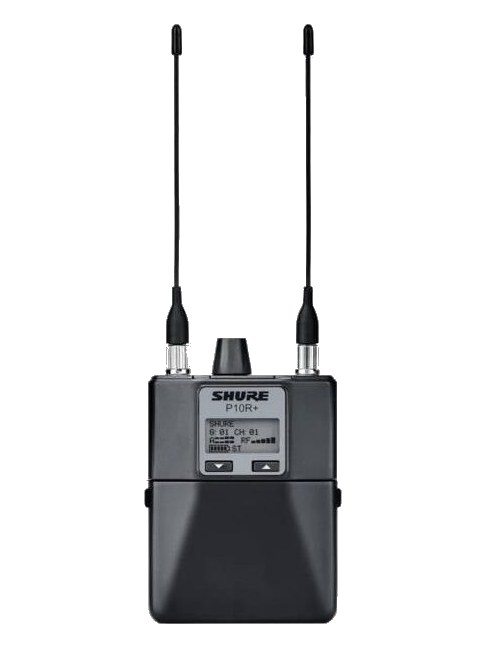
P10R+The P10R+ is the bodypack receiver that pairs with the PSM1000 transmitter, worn by performers to receive their monitor mix wirelessly. It features an ultra-wide tuning range and supports both stereo and MixMode operation, giving musicians fine control over their in-ear blend. You will need one per performer on the PSM1000 system.View gear →
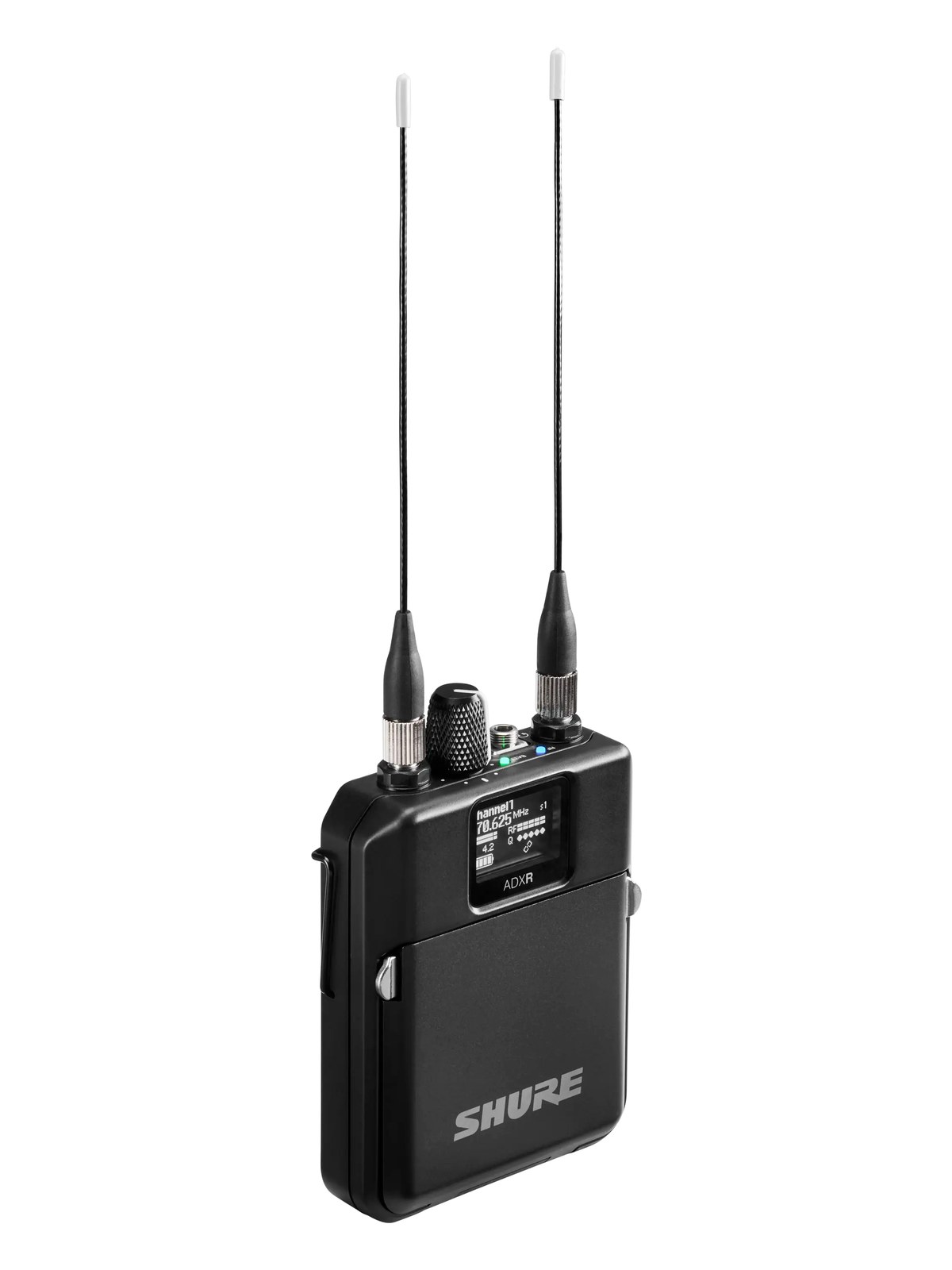
ADXRThe Shure ADXR is the bodypack half of Axient Digital PSM: true digital diversity reception across a huge 166 MHz window, with the audio quality and RF density that finally moved flagship ears past analog. It pairs with the ADTD and ADTQ transmitters added alongside it, completing the requested ADPSM ecosystem in the catalog. Rechargeable Shure battery workflow included.View gear →
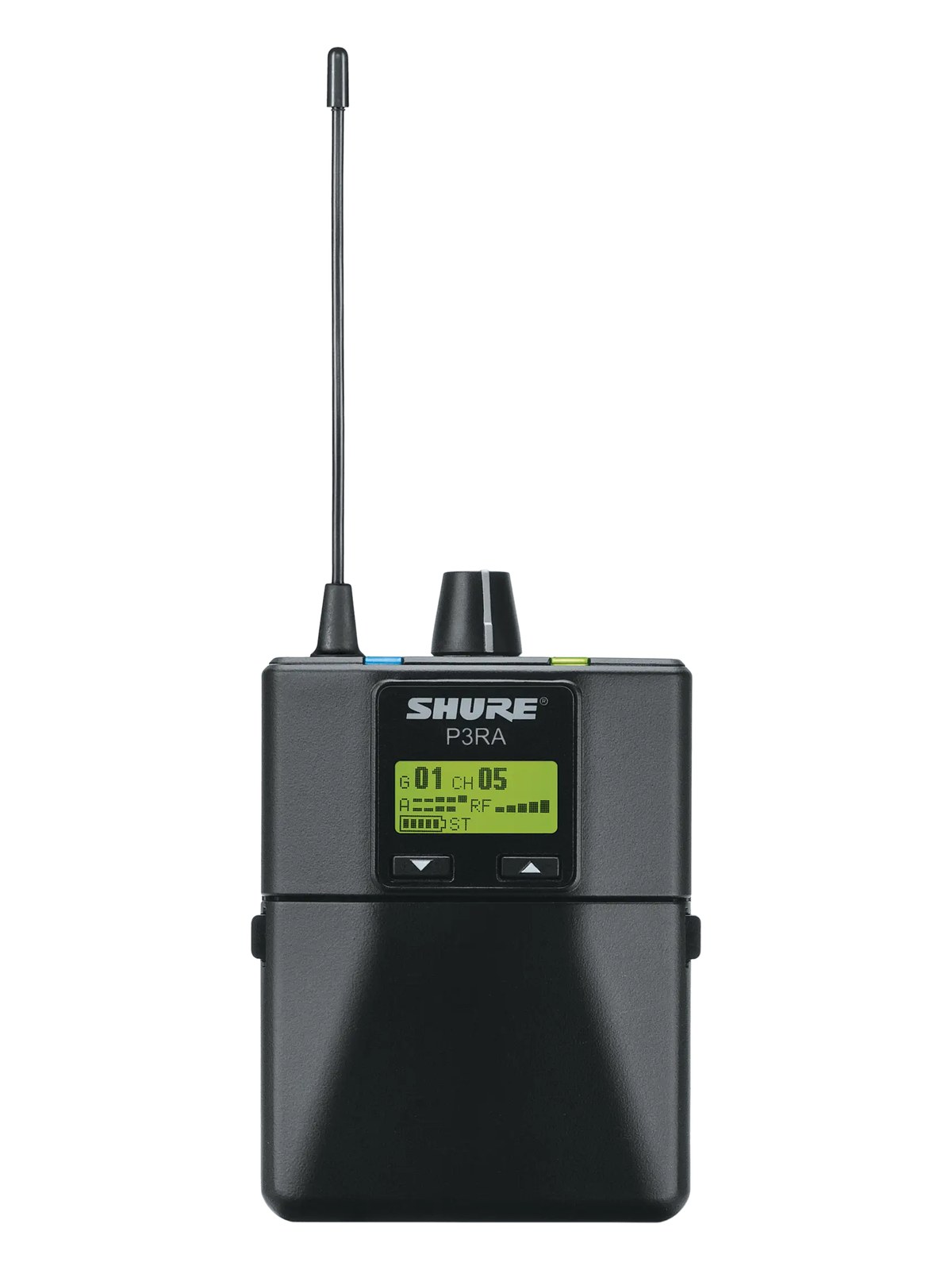
P3RAThe P3RA is the metal-bodied bodypack receiver for the PSM300 system. It strikes a useful balance for working musicians who need solid wireless monitoring without the premium price of the higher-end Shure systems. A common choice for B-rigs, smaller venues, and bands building out IEMs for the first time. One per performer.View gear →
06 · Resolve the questions that can change the purchase or build plan.
Planning questions
Short, source-backed answers surface rack fit, power, cabling, and connection details before they become surprises.
Where does the Shure P9RA+ Bodypack Receiver live in a complete rig?
The catalog assigns it no rack units. Builder tracks it as non-rack gear; follow the manufacturer’s mounting, case, and form-factor guidance.
How much power does the Shure P9RA+ Bodypack Receiver draw?
Its power requirement is not yet verified in the catalog.
What connections does the Shure P9RA+ Bodypack Receiver have?
1 documented physical ports, including Headphone Out (3.5mm).
07 · See this gear inside a complete system plan.
Builder preview
Builder keeps non-rack gear in the same bill of materials, budget, dependency, and connection plan as the rack-mounted system around it.Open in Builder