
01 · Source
54 documented inputs
XLR female + db25
- Arrives as
- 54 documented inputs
- Connector
- XLR female + db25
- Signal
- analog audio

Digital Mixer
A 32-channel analog in-line console that sits on a desk or stand, not in a rack. The rear panel carries a mic input XLR for each channel, 41 DB25 multipin connectors and an IEC mains inlet.
01 · What it does—and what that changes in your rig.
Start with the payoff, then work through how it functions, where it fits, and the details that change a real build.
A 32-channel analog in-line console that sits on a desk or stand, not in a rack. The rear panel carries a mic input XLRThe standard 3-pin locking connector for mics and balanced line signals — pin 1 is the shield, pins 2 and 3 carry the balanced pair. for each channel, 41 DB25A 25-pin D-shaped connector carrying 8 channels of analog or AES audio in one multicore — the Tascam pinout is the de-facto standard. multipin connectors and an IECThe standard three-prong appliance power inlet on rack gear — the kettle lead. C13/C14 in spec-sheet speak. mains inlet.
02 · Know the whole path before you buy.
Learn the route as a block diagram: source, product function, transport, and destination. Select any block to see what enters, what changes, and what leaves.
Each block answers the same three questions: what arrives, what changes here, and what leaves.
XLR female + db25
03 · What this product asks of the rest of the system.
Treat connector names as the start of the check—not the answer. These are the boundaries that determine a complete working path.
Use it as digital mixer tracked outside rack rails; follow the manufacturer’s mounting and form-factor guidance.
Complete the path with upstream and downstream gear that matches connector, direction, signal type, protocol, and wiring standard.
Documented connectors: XLR female, db25, IEC C14. Match connector, direction, and signal type—not shape alone.
04 · Every connector, grouped by job.
Switch the product view and the documented port inventory updates with it—hardware and data stay side by side.
Switch panels to keep the hardware view and the documented port list in sync.
| Port | Panel | Connector | Direction | Signal | Channels |
|---|---|---|---|---|---|
| MIC 1 | rear | XLR female | input | analog audio | — |
| MIC 2 | rear | XLR female | input | analog audio | — |
| MIC 3 | rear | XLR female | input | analog audio | — |
| MIC 4 | rear | XLR female | input | analog audio | — |
| MIC 5 | rear | XLR female | input | analog audio | — |
| MIC 6 | rear | XLR female | input | analog audio | — |
| MIC 7 | rear | XLR female | input | analog audio | — |
| MIC 8 | rear | XLR female | input | analog audio | — |
| MIC 9 | rear | XLR female | input | analog audio | — |
| MIC 10 | rear | XLR female | input | analog audio | — |
| MIC 11 | rear | XLR female | input | analog audio | — |
| MIC 12 | rear | XLR female | input | analog audio | — |
| MIC 13 | rear | XLR female | input | analog audio | — |
| MIC 14 | rear | XLR female | input | analog audio | — |
| MIC 15 | rear | XLR female | input | analog audio | — |
| MIC 16 | rear | XLR female | input | analog audio | — |
| MIC 17 | rear | XLR female | input | analog audio | — |
| MIC 18 | rear | XLR female | input | analog audio | — |
| MIC 19 | rear | XLR female | input | analog audio | — |
| MIC 20 | rear | XLR female | input | analog audio | — |
| MIC 21 | rear | XLR female | input | analog audio | — |
| MIC 22 | rear | XLR female | input | analog audio | — |
| MIC 23 | rear | XLR female | input | analog audio | — |
| MIC 24 | rear | XLR female | input | analog audio | — |
| MIC 25 | rear | XLR female | input | analog audio | — |
| MIC 26 | rear | XLR female | input | analog audio | — |
| MIC 27 | rear | XLR female | input | analog audio | — |
| MIC 28 | rear | XLR female | input | analog audio | — |
| MIC 29 | rear | XLR female | input | analog audio | — |
| MIC 30 | rear | XLR female | input | analog audio | — |
| MIC 31 | rear | XLR female | input | analog audio | — |
| MIC 32 | rear | XLR female | input | analog audio | — |
| DIRECT OUT 25-32 | rear | db25 | output | analog audio | — |
| LF INS RTN 25-32 | rear | db25 | input | analog audio | — |
| LF INS SND 25-32 | rear | db25 | output | analog audio | — |
| SF INS RTN 25-32 | rear | db25 | input | analog audio | — |
| SF INS SND 25-32 | rear | db25 | output | analog audio | — |
| MON LINE IN 25-32 | rear | db25 | input | analog audio | — |
| CHAN LINE IN 25-32 | rear | db25 | input | analog audio | — |
| DIRECT OUT 17-24 | rear | db25 | output | analog audio | — |
| LF INS RTN 17-24 | rear | db25 | input | analog audio | — |
| LF INS SND 17-24 | rear | db25 | output | analog audio | — |
| SF INS RTN 17-24 | rear | db25 | input | analog audio | — |
| SF INS SND 17-24 | rear | db25 | output | analog audio | — |
| MON LINE IN 17-24 | rear | db25 | input | analog audio | — |
| CHAN LINE IN 17-24 | rear | db25 | input | analog audio | — |
| DIRECT OUT 9-16 | rear | db25 | output | analog audio | — |
| LF INS RTN 9-16 | rear | db25 | input | analog audio | — |
| LF INS SND 9-16 | rear | db25 | output | analog audio | — |
| SF INS RTN 9-16 | rear | db25 | input | analog audio | — |
| SF INS SND 9-16 | rear | db25 | output | analog audio | — |
| MON LINE IN 9-16 | rear | db25 | input | analog audio | — |
| CHAN LINE IN 9-16 | rear | db25 | input | analog audio | — |
| DIRECT OUT 1-8 | rear | db25 | output | analog audio | — |
| LF INS RTN 1-8 | rear | db25 | input | analog audio | — |
| LF INS SND 1-8 | rear | db25 | output | analog audio | — |
| SF INS RTN 1-8 | rear | db25 | input | analog audio | — |
| SF INS SND 1-8 | rear | db25 | output | analog audio | — |
| MON LINE IN 1-8 | rear | db25 | input | analog audio | — |
| CHAN LINE IN 1-8 | rear | db25 | input | analog audio | — |
| MAIN MIX OP & INS SND | rear | db25 | output | analog audio | — |
| ST RETURN INPUTS | rear | db25 | input | analog audio | — |
| CUES, AUX OUTPUTS | rear | db25 | output | analog audio | — |
| MONITOR OUTPUTS | rear | db25 | output | analog audio | — |
| BUS O/P 1-8 | rear | db25 | output | analog audio | — |
| BUS O/P 9-16 | rear | db25 | output | analog audio | — |
| F/B, MISC OUT | rear | db25 | output | analog audio | — |
| MAIN MIX INS RTN & TB/LM IN | rear | db25 | input | analog audio | — |
| EXTERNAL INPUTS | rear | db25 | input | analog audio | — |
| ST GRP OP 1-4 | rear | db25 | output | analog audio | — |
| ST GRP OP 5-8 | rear | db25 | output | analog audio | — |
| ST GRP IP 1-4 | rear | db25 | input | analog audio | — |
| ST GRP IP 5-8 | rear | db25 | input | analog audio | — |
| MAINS | rear | IEC C14 | input | power | — |
Showing 74 of 74 documented physical ports. Scroll to review the remaining rows.
05 · Compare the decision, not just the price.
The rows are organized around fit, power, I/O, and system role so a cheaper unit cannot hide a more expensive workflow.
| Compare | External unit | 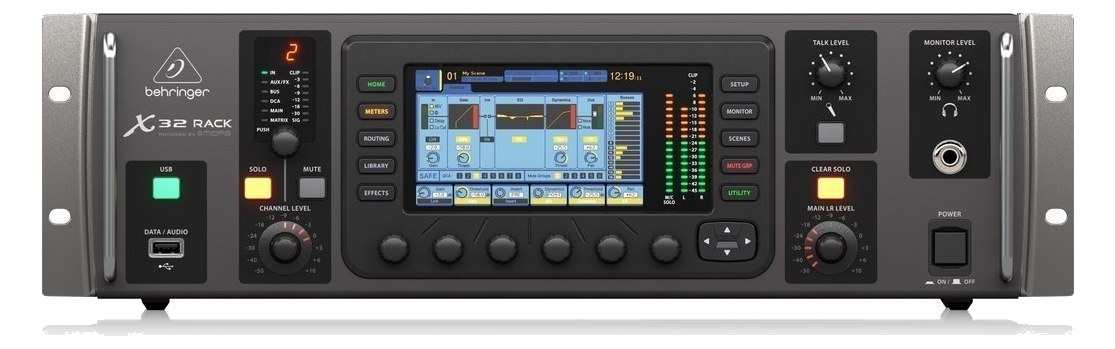 |  |  |
|---|---|---|---|---|
| Fit | 📐 Outside rack | 📐 3U | 📐 Outside rack | 📐 5U |
| Power | ⚡ 900W | ⚡ 80W | ⚡ 100W | ⚡ 100W |
| Weight | ⚖️ 330.7 lb | ⚖️ 14.8 lb | ⚖️ 45.2 lb | ⚖️ 31.5 lb |
| I/O | 🔌 74 | 🔌 53 | 🔌 57 | 🔌 30 |
| Estimate | 💵 ~$59,999 | 💵 ~$989 | 💵 ~$2,799 | 💵 ~$2,999 |
| Deep dive | Current selection | Full comparison → | Full comparison → | Full comparison → |
06 · Resolve the questions that can change the purchase or build plan.
Short, source-backed answers surface rack fit, power, cabling, and connection details before they become surprises.
The catalog assigns it no rack units. Builder tracks it as non-rack gear; follow the manufacturer’s mounting, case, and form-factor guidance.
Typical draw is 900W and documented maximum draw is 1200W.
74 documented physical ports, including MIC 1, MIC 2, MIC 3, MIC 4, MIC 5, MIC 6.
07 · See this gear inside a complete system plan.
08 · Related gear, in the order you may need it.
Digital Mixer
Digital Mixer
Digital Mixer
Digital Mixer
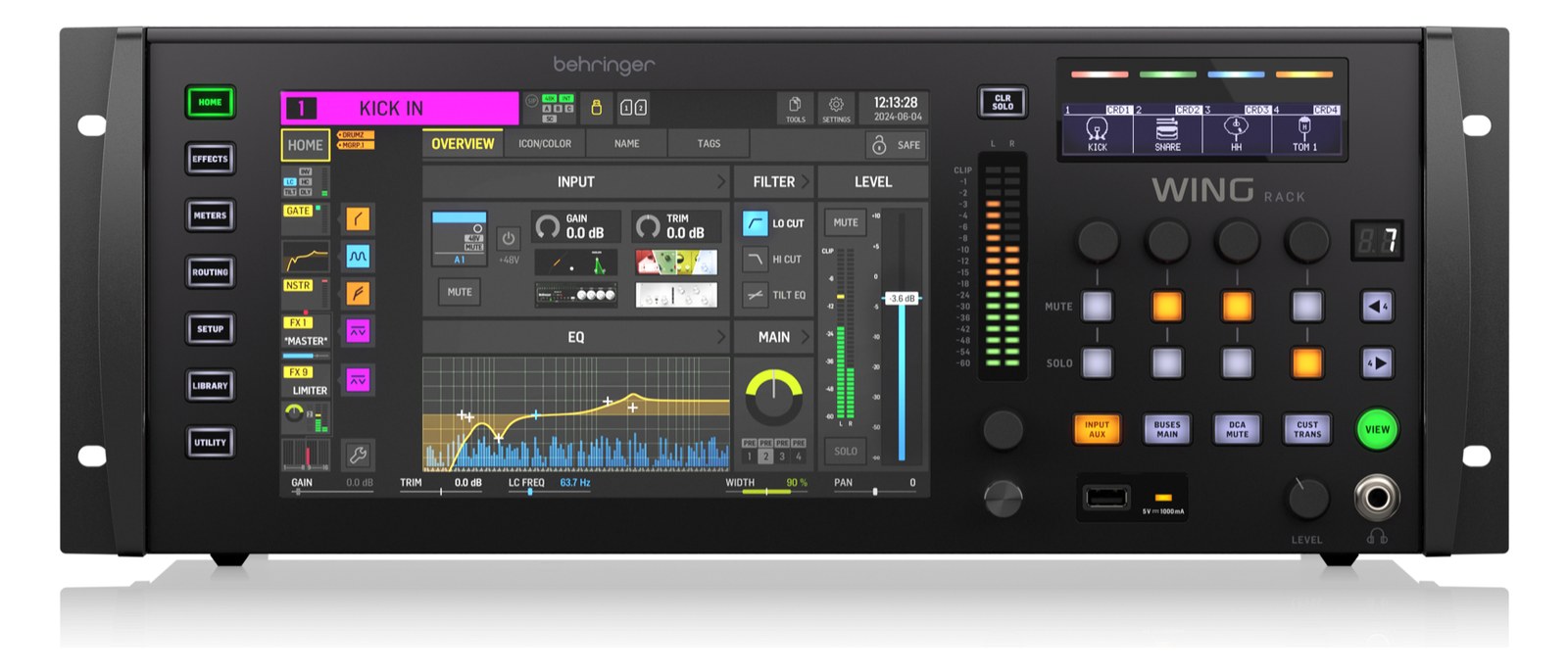
Digital Mixer
Digital Mixer
Planning guides for digital mixer systems.
Fundamentals · 6 min
A walking tour of the signal path from microphone to in-ear monitor, with what every box in the rack actually does to the audio along the way.
Fundamentals · 8 min
Why sealed IEMs make you feel disconnected from the room — and exactly how to put the audience back into your mix with one or two well-placed mics.
Workflow · 10 min
Step-by-step: linking aux buses into stereo pairs, pre-fader vs post-fader, routing buses to Ultranet vs physical XLRs vs AES50, and adding a bus-level limiter.
Networking · 9 min
A practical comparison of the three audio-over-network protocols you’ll encounter in a rack rig, with guidance on when each one is the right pick.


