
Yamaha Rivage PM CSD-R7
Yamaha·Model CSD-R7·yamaha-rivage-csd-r7
Photos
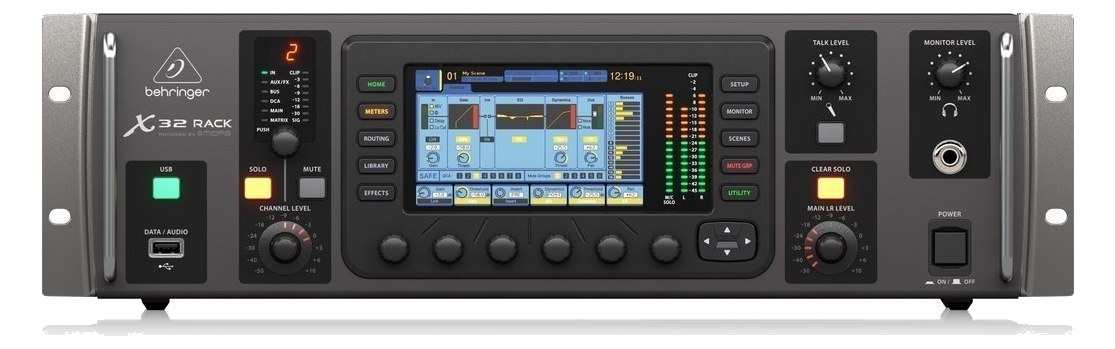
Manufacturer product photography — the drawn faceplate above stays true to panel layout; these show the hardware itself.
About the Yamaha CSD-R7
The Yamaha CSD-R7 is the integrated, all-in-one version of Yamaha's Rivage PM flagship console — 144 inputs, 72 outputs, and the DSPDigital Signal Processing — the number-crunching that does EQ, compression, and effects inside a box. More DSP means more processing at once. engine built into the surface itself (no separate rack required, unlike the PM10/PM7 split). Three 15" touchscreens, hybrid microphone preampsThe gain stage that lifts a mic’s tiny signal up to line level — the first thing a signal hits, and a big part of how a console sounds. with selectable Yamaha-style or Rupert Neve SILK character per channel. Lives on stadium tours, festival main stages, and the highest-end broadcast facilities. Pricey, heavy, and arguably the apex of integrated-engine live mixing.
The CSD-R7 is Yamaha's answer to the question of what happens when you stop splitting the console surface from its DSPDigital Signal Processing — the number-crunching that does EQ, compression, and effects inside a box. More DSP means more processing at once. rack and commit everything into one chassis. Unlike the PM10 or PM7, which require a separate engine rack, the CSD-R7 integrates its processing directly into the surface — 144 inputs, 72 outputs, three 15-inch touchscreens, and those hybrid preampsThe gain stage that lifts a mic’s tiny signal up to line level — the first thing a signal hits, and a big part of how a console sounds. with switchable Rupert Neve SILK character sitting right there on every channel. This is a flagship festival and stadium console, full stop, and it knows it.
At 56 kilograms and 793mm deep, this console demands serious advance planning — it is not something you roll into a club or a fly-date shed without a genuine freight conversation first. The dual IECThe standard three-prong appliance power inlet on rack gear — the kettle lead. C13/C14 in spec-sheet speak. power inputs mean a redundantA second copy of anything critical — supply, computer, network path — already running so one failure can’t stop the show. feed from two separate distrosOne pair of antennas feeding many receivers through an amplified splitter — replaces the forest of whips and keeps RF levels consistent. is the expected configuration, not a luxury. TWINLANe runs primary and secondary optical rings carrying up to 400 channels each, which means your stage boxesThe I/O endpoint on stage: mics plug in there and one digital line (AES50, Dante) carries everything to the console. The snake, digitized. and I/O racks should be Yamaha TWINLANe-native. The onboard DanteThe most common audio-over-network standard: dozens of channels of uncompressed digital audio down one ordinary Ethernet cable between Dante boxes. at 144 channels bidirectional with redundant secondary gives you a credible fallback fabric and easy integration with broadcast or broadcast-adjacent workflows. The eight local analog ins and outs plus AES/EBUThe pro standard for stereo digital audio over an XLR cable — balanced, so it runs much farther than consumer S/PDIF. DB25A 25-pin D-shaped connector carrying 8 channels of analog or AES audio in one multicore — the Tascam pinout is the de-facto standard. pairs handle local I/O, talkbackThe engineer’s mic into the performers’ ears or monitors — talk to the band without leaving the console. engineering, and outboard inserts without touching your network.
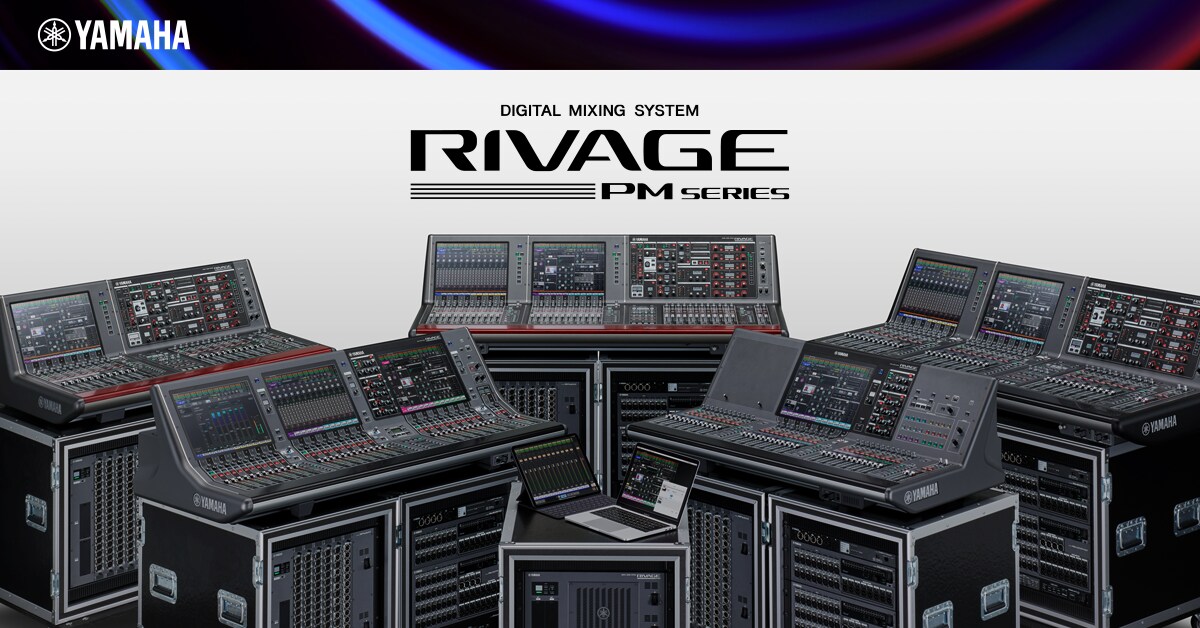
If you are a systems engineer or a production company outfitting a touring A-rig or a fixed install at a major arena, the CSD-R7 is a serious contender precisely because eliminating the separate engine rack simplifies cabling and reduces single-point failure surfaces in transport. But if your work lives in 500- to 2000-capacity venues, the size, weight, price, and ecosystem lock-in will likely work against you — a PM7 with a separate engine, or a competitor console in that tier, will cover the actual channel counts you need with considerably less freight overhead. This console is for engineers whose riderThe document attached to a booking that lists what the band needs — inputs, monitors, power, backline (and the green-room snacks). and budget already reach this altitude.
In the rack
- Plan for two independent 20A circuits from separate distrosOne pair of antennas feeding many receivers through an amplified splitter — replaces the forest of whips and keeps RF levels consistent. feeding Power A and Power B — the console draws up to 500W at peak and redundantA second copy of anything critical — supply, computer, network path — already running so one failure can’t stop the show. power is a first-class design goal here, not an afterthought.
- TWINLANe optical runs should be looped ring-topology between the CSD-R7 and each RIO stage boxThe I/O endpoint on stage: mics plug in there and one digital line (AES50, Dante) carries everything to the console. The snake, digitized.; a broken fiber in a ring survives the show, a broken fiber on a point-to-point star does not — confirm your fiber runs and spares before load-in day.
- Keep a formatted USB drive in the show-file storage port with the current session plus the previous show as a fallback; the CSD-R7 has no spinning disk to fail, but a corrupted USB at downbeat is the same outcome.
- If you are integrating broadcast feeds, route them via the redundantA second copy of anything critical — supply, computer, network path — already running so one failure can’t stop the show. DanteThe most common audio-over-network standard: dozens of channels of uncompressed digital audio down one ordinary Ethernet cable between Dante boxes. secondary port rather than sharing the primary Dante network with stage I/O — it keeps broadcast traffic isolated and gives you a cleaner troubleshooting path if latencyThe delay between sound entering and leaving a digital system. IEM rigs fight to keep the whole chain down to a few milliseconds. issues appear mid-show.
Flagship 144 input / 72 output console with integrated DSPDigital Signal Processing — the number-crunching that does EQ, compression, and effects inside a box. More DSP means more processing at once. engine. Top of the touring food chain.
I/O Ports (33)
| Port | Connector | Direction | Signal | Channels |
|---|---|---|---|---|
| Local Mic In 1 | XLR FEMALE | input | analog audio | — |
| Local Mic In 2 | XLR FEMALE | input | analog audio | — |
| Local Mic In 3 | XLR FEMALE | input | analog audio | — |
| Local Mic In 4 | XLR FEMALE | input | analog audio | — |
| Local Mic In 5 | XLR FEMALE | input | analog audio | — |
| Local Mic In 6 | XLR FEMALE | input | analog audio | — |
| Local Mic In 7 | XLR FEMALE | input | analog audio | — |
| Local Mic In 8 | XLR FEMALE | input | analog audio | — |
| Local Out 1 | XLR MALE | output | analog audio | — |
| Local Out 2 | XLR MALE | output | analog audio | — |
| Local Out 3 | XLR MALE | output | analog audio | — |
| Local Out 4 | XLR MALE | output | analog audio | — |
| Local Out 5 | XLR MALE | output | analog audio | — |
| Local Out 6 | XLR MALE | output | analog audio | — |
| Local Out 7 | XLR MALE | output | analog audio | — |
| Local Out 8 | XLR MALE | output | analog audio | — |
| TWINLANe A (Optical) [primary] | MADI BNC | bidirectional | digital audio | 400 |
| TWINLANe B (Optical) [secondary] | MADI BNC | bidirectional | digital audio | 400 |
| Dante Primary (RJ45) | RJ45 | bidirectional | digital audio | 144 |
| Dante Secondary (RJ45) [redundant] | RJ45 | bidirectional | digital audio | 144 |
| AES/EBU In 1-4 (DB25) | DB25 | input | digital audio | 8 |
| AES/EBU Out 1-4 (DB25) | DB25 | output | digital audio | 8 |
| Word Clock In (BNC) | BNC | input | digital audio | — |
| Word Clock Out (BNC) | BNC | output | digital audio | — |
| Network A (RJ45) [primary] | RJ45 | bidirectional | data | — |
| Network B (RJ45) [redundant] | RJ45 | bidirectional | data | — |
| USB (show file storage) | USB A | bidirectional | data | — |
| Headphones 1 (1/4") | TRS QUARTER | output | analog audio | — |
| Headphones 2 (1/4") | TRS QUARTER | output | analog audio | — |
- Console Lamp 1 (XLR-4) (XLR FEMALE)
- Console Lamp 2 (XLR-4) (XLR FEMALE)
- Power A (IEC) (IEC C14)
- Power B (IEC) [redundant] (IEC C14)
Related gear


Related articles
Guides from our library that cover planning around digital mixer gear.
A walking tour of the signal path from microphone to in-ear monitor, with what every box in the rack actually does to the audio along the way.
Why sealed IEMs make you feel disconnected from the room — and exactly how to put the audience back into your mix with one or two well-placed mics.
Step-by-step: linking aux buses into stereo pairs, pre-fader vs post-fader, routing buses to Ultranet vs physical XLRs vs AES50, and adding a bus-level limiter.
A practical comparison of the three audio-over-network protocols you’ll encounter in a rack rig, with guidance on when each one is the right pick.