
RF Venue COMBINE8 Antenna Combiner
RF Venue·Model COMBINE8·rf-venue-combine8
Photos
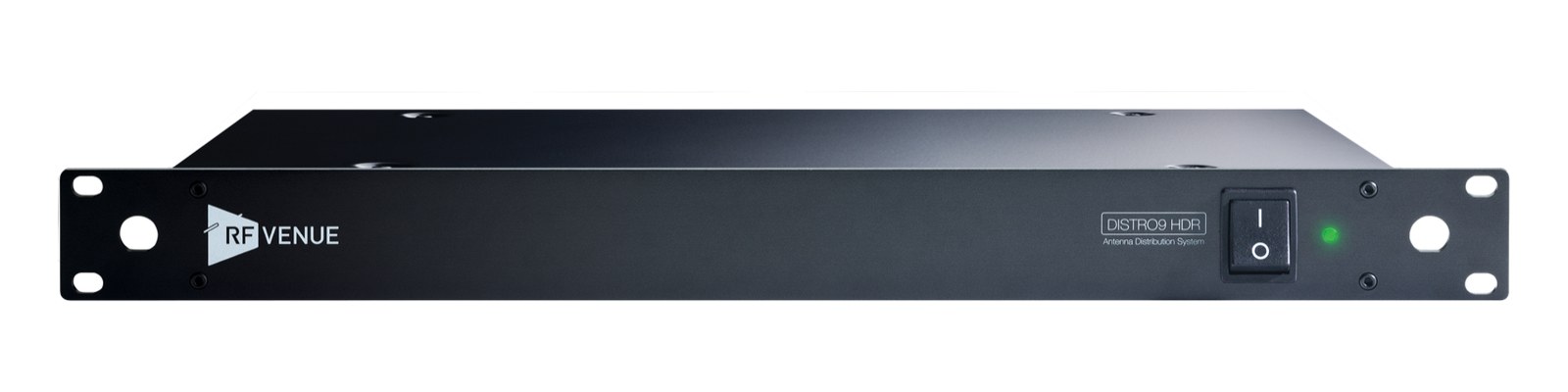
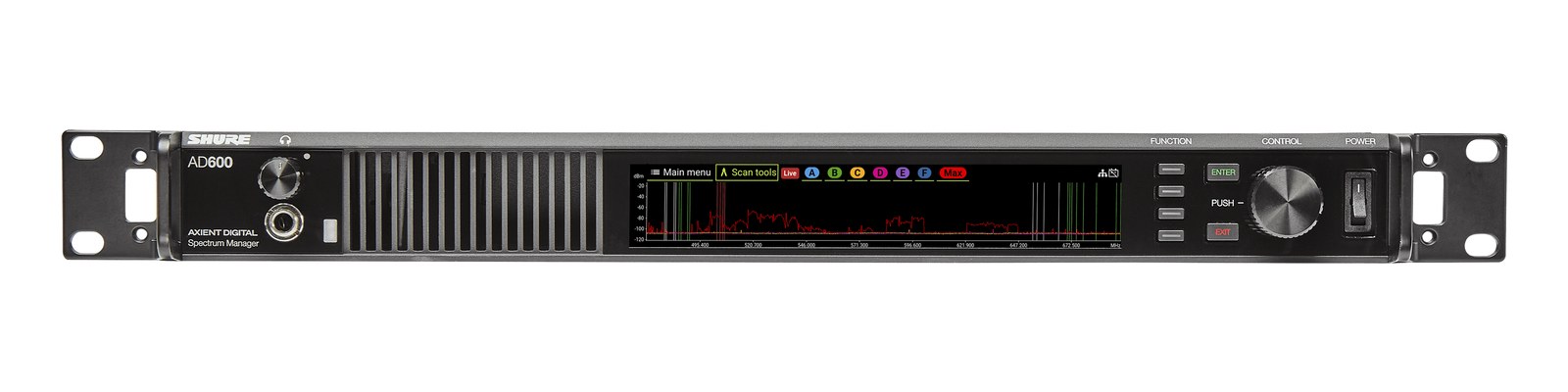
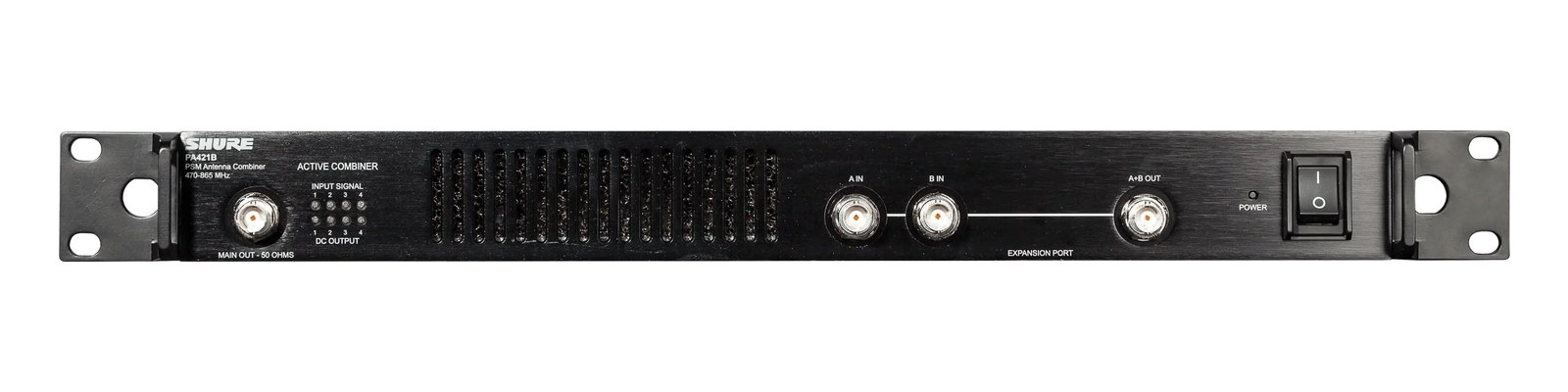
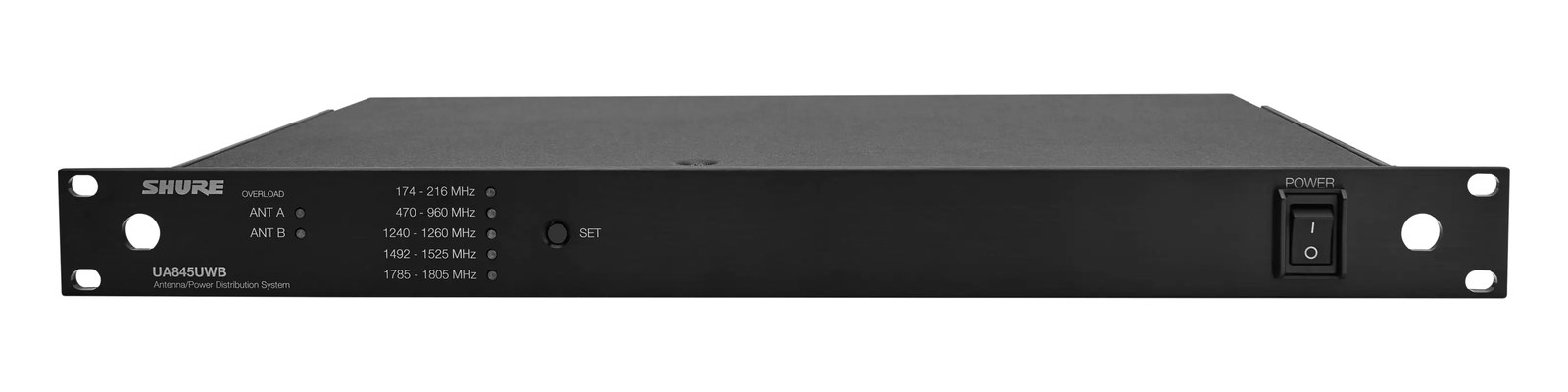
Manufacturer product photography — the drawn faceplate above stays true to panel layout; these show the hardware itself.
About the RF Venue COMBINE8
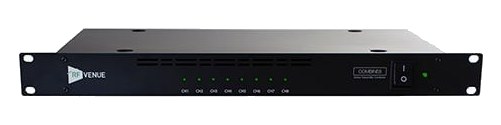
The COMBINE8 scales up RFRadio Frequency — the wireless part of wireless. RF planning is why big rigs scan, coordinate, and combine antennas instead of hoping. Venue's passive combinerThe transmit-side twin of a distro: merges several IEM transmitters into one antenna without letting them intermodulate. design to handle eight transmitter inputs, making it suitable for larger IEMIn-Ear Monitor — earpieces that replace floor wedges, feeding each player their own mix. The reason this whole rack exists. rigs. Being brand-agnostic, it works with any wireless IEM system using BNCThe twist-lock coax connector used for word clock and antenna runs — it locks, so it can’t be pulled out mid-show. antenna connections. The full-rack form factor accommodates the eight-port layout while keeping wiring clean and organized.
The COMBINE8 solves a specific and real problem in large IEMIn-Ear Monitor — earpieces that replace floor wedges, feeding each player their own mix. The reason this whole rack exists. rigs: you have a pile of transmitters, each wanting its own antenna run to the stage, and running eight separate coax drops is neither tidy nor practical. RFRadio Frequency — the wireless part of wireless. RF planning is why big rigs scan, coordinate, and combine antennas instead of hoping. Venue's answer is a passive 8-to-1 combinerThe transmit-side twin of a distro: merges several IEM transmitters into one antenna without letting them intermodulate. — eight BNCThe twist-lock coax connector used for word clock and antenna runs — it locks, so it can’t be pulled out mid-show. antenna inputs collapse into a single combined output, so one run of coax and a quality remote antenna placement covers all eight transmitters at once. It's brand-agnostic, meaning Shure, Sennheiser, Wisycom, L-Acoustics P1 — if the transmitter has a BNC antenna port, it plugs in here.
Passive means no power draw, which is genuinely useful: nothing to power, nothing to fail electrically, no rack space lost to a power entry point. The tradeoff is insertion loss — combining eight signals passively introduces attenuation on the antenna path, so your antenna placement and cable quality matter more here than in a single-transmitter setup. Keep coax runs to the remote antenna as short as is practical and use a low-loss cable. At 1UThe standard slice of rack height: 1U = 1.75″. A 3U box takes three slices; half-rack gear pairs two units side by side in one. and only 200mm deep, the COMBINE8 sits cleanly in a shallow rack without fighting for depth. The 1.4 kg weight means it won't stress a shallow road case.
This unit belongs in a rig running six to eight IEMIn-Ear Monitor — earpieces that replace floor wedges, feeding each player their own mix. The reason this whole rack exists. transmitters where clean RFRadio Frequency — the wireless part of wireless. RF planning is why big rigs scan, coordinate, and combine antennas instead of hoping. infrastructure is a priority — touring monitor rigs, festival backlineThe band’s on-stage instrument gear — amps, drums, keys. What a venue or festival sometimes supplies so you can travel light. packages, or a busy theatrical production where the antenna farm needs to be centralized and manageable. If you're running four transmitters or fewer, RF Venue's smaller COMBINE4 is the more proportionate choice and costs less. If your system demands active distribution with gainHow much the preamp amplifies the incoming signal. Too low and you’re hunting through hiss; too high and peaks clip. to compensate for long antenna runs or splitting to multiple zones, a passive combinerThe transmit-side twin of a distro: merges several IEM transmitters into one antenna without letting them intermodulate. isn't the right tool — look at an active antenna distroOne pair of antennas feeding many receivers through an amplified splitter — replaces the forest of whips and keeps RF levels consistent. instead. But for a straightforward large IEM rack that needs one clean antenna path, the COMBINE8 is purpose-built.
In the rack
- Place the COMBINE8 as close as possible to the transmitters in the rack — shorter individual BNCThe twist-lock coax connector used for word clock and antenna runs — it locks, so it can’t be pulled out mid-show. jumpers from each transmitter mean less signal degradation before the combine point.
- Label each BNCThe twist-lock coax connector used for word clock and antenna runs — it locks, so it can’t be pulled out mid-show. input at the unit with the artist or channel it serves; at a festival changeover with eight identical BNC connectors, unlabeled ports will cost you time.
- Run the single combined output to your remote antenna location using the lowest-loss 50-ohm coax you have — RG8X or better — since passive combining means you have no gainHow much the preamp amplifies the incoming signal. Too low and you’re hunting through hiss; too high and peaks clip. stage to recover any cable loss.
- If you're also using RFRadio Frequency — the wireless part of wireless. RF planning is why big rigs scan, coordinate, and combine antennas instead of hoping. Venue remote antennas that supply DC bias voltage up the coax, confirm that voltage is compatible with your transmitters' antenna ports before connecting — the COMBINE8 itself passes DC, so whatever is on the combined output line reaches all eight transmitter ports.
8-to-1 passive antenna combinerThe transmit-side twin of a distro: merges several IEM transmitters into one antenna without letting them intermodulate. for IEMIn-Ear Monitor — earpieces that replace floor wedges, feeding each player their own mix. The reason this whole rack exists./wireless transmitters.
I/O Ports (10)
| Port | Connector | Direction | Signal | Channels |
|---|---|---|---|---|
| Input 1 | BNC | input | antenna | — |
| Input 2 | BNC | input | antenna | — |
| Input 3 | BNC | input | antenna | — |
| Input 4 | BNC | input | antenna | — |
| Input 5 | BNC | input | antenna | — |
| Input 6 | BNC | input | antenna | — |
| Input 7 | BNC | input | antenna | — |
| Input 8 | BNC | input | antenna | — |
| Combined Out | BNC | output | antenna | — |
- Power (IEC) (IEC C14)
Deciding between two?
Rack space, watts, weight and every connector, side by side.
Related gear


Community rigs using this gear (1)
Browse all rigs →Related articles
Guides from our library that cover planning around antenna distro gear.
What an IEM rig actually is, the components that go into one, and how to plan your first one without overspending or blowing a circuit.
Why your wireless mics and IEMs need a frequency plan, what intermodulation means in practice, and how to coordinate channels for a clean show.
When you need a combiner vs a distro, active vs passive, cable choice and length math, and how to scale a 4-pack rig into an 8 or 12-pack without intermod nightmares.
How to build an IEM rack: choosing case size and depth, ordering gear by weight and heat, power sequencing rules, wiring practice, and a pre-show checklist.