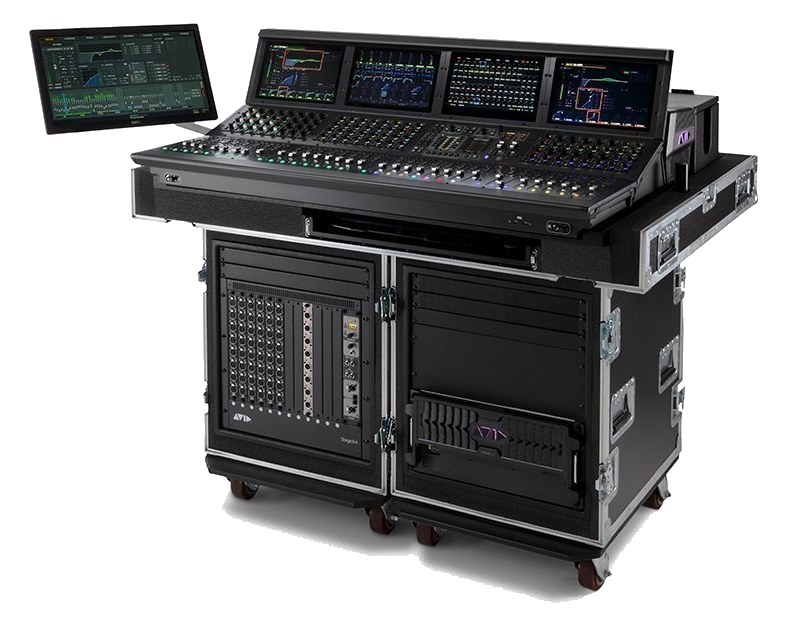
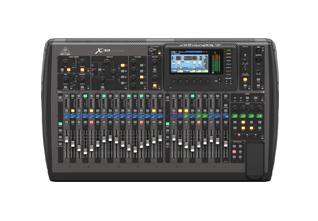
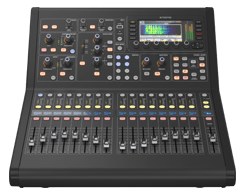
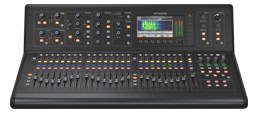
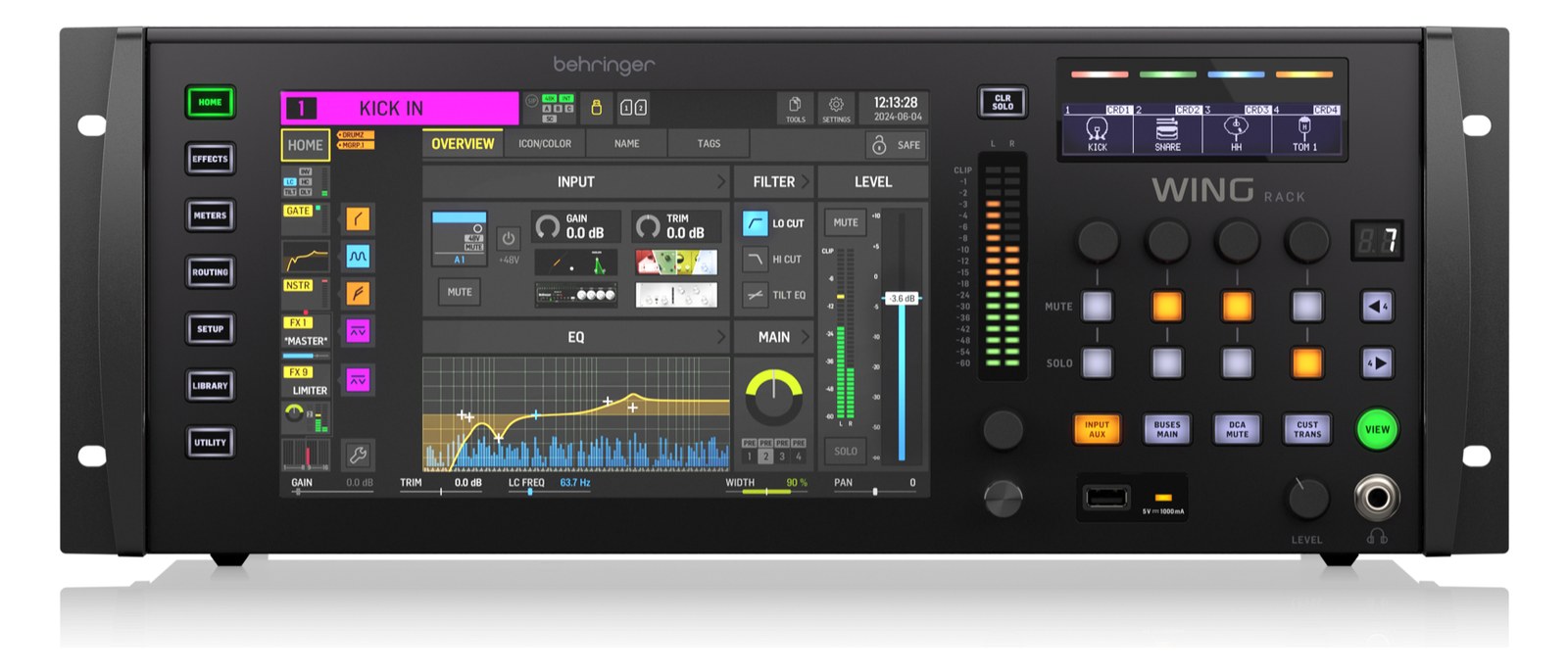
The Avid VENUE S6L-32D is a 32-fader live console surface, the control layer for an Avid VENUE | S6L system. Pair it with an E6L engine and Stage 64/Stage 16 boxes for a full system that the touring world has come to expect on rock and pop riders. Pro Tools integration is the standout feature for live recording rigs.
~$49,999Use retailer rows for current price and stock
01 · What it does—and what that changes in your rig.
Product overview
Start with the payoff, then work through how it functions, where it fits, and the details that change a real build.
The payoff
Digital Mixer decisions, organized around the whole rig.
The S6L-32D is the control surface half of Avid's VENUE S6L system — the 32-fader desk you see at front-of-houseFront Of House — the main mix the audience hears, and the console position out in the room where it gets mixed. on major rock and pop tours. It is not a standalone mixer; it is the hands-on layer that talks to an E6L engine, which in turn connects to Stage 64 or Stage 16 I/O boxes at the stage end. That architecture matters: the surface itself carries no audio. What you're buying here is the console workflow — the faders, the touchscreen, the control real estate — while the actual processing and routing lives in the engine rack. If you don't already own or budget an E6L engine and stageboxesThe I/O endpoint on stage: mics plug in there and one digital line (AES50, Dante) carries everything to the console. The snake, digitized., this surface does nothing on its own.
Documented outputs
00 destination connections
Documented inputs
2Based on documented inputs
Rack space
Outside rackPlan a shelf, tray, or stage position
Avid product panelOutside rack · 400W
Function
How it works in the path
At 50 kg and 640 mm deep, the S6L-32D is a serious physical commitment. It draws up to 500 W and carries dual IECThe standard three-prong appliance power inlet on rack gear — the kettle lead. C13/C14 in spec-sheet speak. power inputs, which means you should feed Power A and Power B from independent circuits or a UPSUninterruptible Power Supply — a battery that rides the rig through brownouts and generator hiccups so computers never reboot mid-song.-backed distribution unit if the gig demands it. The two EtherConAn Ethernet plug inside a rugged XLR-style locking shell — tour-grade network connections that can’t be yanked loose. ports connect to the E6L engine — one primary, one redundantA second copy of anything critical — supply, computer, network path — already running so one failure can’t stop the show. — so a cable fault mid-show doesn't kill the system. The 32-fader format is the sweet spot for a single engineer running a large input count without expanding to the 48-fader surface; it fits more load-in situations without sacrificing meaningful control real estate.
Best fit
Where it earns its place in the system
Pick the S6L-32D if you're running a touring system where Pro Tools integration for multitrack recording is non-negotiable, or if your ridersThe document attached to a booking that lists what the band needs — inputs, monitors, power, backline (and the green-room snacks). already specify VENUE and you need to own rather than rent. It also makes sense as a resident system for a large theatre or arena venue that wants a consistent platform. If your budget doesn't extend to the engine and stageboxesThe I/O endpoint on stage: mics plug in there and one digital line (AES50, Dante) carries everything to the console. The snake, digitized. on top of this $49,999 surface, or if you're mixing club-level shows where a compact digital desk would do the job, the total system cost will be hard to justify. This is a top-tier touring tool, not a workhorse for every application.
In the rack
Details worth deciding before load-in.
Plan the engine rack separately: the E6L engine needs its own rack space, power drops, and EtherConAn Ethernet plug inside a rugged XLR-style locking shell — tour-grade network connections that can’t be yanked loose. home runs — build both line items into your advance before load-in.
Feed Power A and Power B from independent legs of your power distribution; if one circuit clips a breaker during a loud moment, the redundantA second copy of anything critical — supply, computer, network path — already running so one failure can’t stop the show. feed keeps the surface alive.
Run redundantA second copy of anything critical — supply, computer, network path — already running so one failure can’t stop the show.EtherConAn Ethernet plug inside a rugged XLR-style locking shell — tour-grade network connections that can’t be yanked loose. to the E6L engine — the second port is there specifically for failoverThe automatic switch to the backup when the primary dies — good failover is seamless enough that the audience never knows., so patch both and confirm the backup path switches cleanly during soundcheck, not during the show.
When using Pro Tools integration for a live record, confirm your recording rig and its clock source are resolved before doors; the S6L system's internal clock should be the master and your Pro Tools interface should follow it, not the other way around.
02 · Know the whole path before you buy.
Signal path
Learn the route as a block diagram: source, product function, transport, and destination. Select any block to see what enters, what changes, and what leaves.
Interactive block diagramAuto-looping · hover, focus, or tap to hold a stage
Port-type signalProduct functionSystem boundary
Follow one signal from source to destination
Each block answers the same three questions: what arrives, what changes here, and what leaves.
01 · Source · selected
IEC C14
etherCON
01 · Source
2 documented inputs
IEC C14
Arrives as
2 documented inputs
Connector
IEC C14
Signal
power
03 · What this product asks of the rest of the system.
Compatibility
Treat connector names as the start of the check—not the answer. These are the boundaries that determine a complete working path.
Best fit · Digital Mixer
Use it as digital mixer tracked outside rack rails; follow the manufacturer’s mounting and form-factor guidance.
Plan the companion path
Complete the path with upstream and downstream gear that matches connector, direction, signal type, protocol, and wiring standard.
Connector boundary
Documented connectors: etherCON, IEC C14. Match connector, direction, and signal type—not shape alone.
04 · Every connector, grouped by job.
I/O ports
Switch the product view and the documented port inventory updates with it—hardware and data stay side by side.
Every connector, grouped by job.
Switch panels to keep the hardware view and the documented port list in sync.
Front panelRear panel
All documented ports for Avid VENUE S6L-32D Digital Mixer
Port
Panel
Connector
Direction
Signal
Channels
Engine A
rear
etherCON
bidirectional
data
—
Engine B
rear
etherCON
bidirectional
data
—
Power A (IEC)
rear
IEC C14
input
power
—
Power B (IEC)
rear
IEC C14
input
power
—
Showing 4 of 4 documented physical ports.
05 · Compare the decision, not just the price.
Alternatives
The rows are organized around fit, power, I/O, and system role so a cheaper unit cannot hide a more expensive workflow.
S6L-32DThe Avid VENUE S6L-32D is a 32-fader live console surface, the control layer for an Avid VENUE | S6L system. Pair it with an E6L engine and Stage 64/Stage 16 boxes for a full system that the touring world has come to expect on rock and pop riders. Pro Tools integration is the standout feature for live recording rigs.View gear →
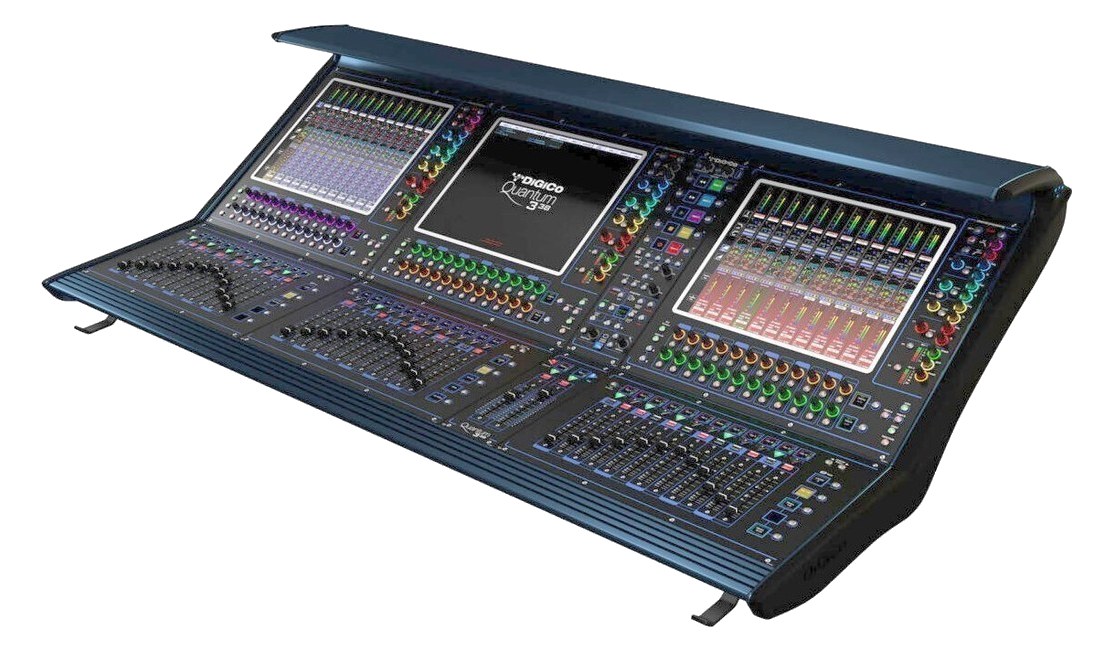
Quantum 338The DiGiCo Quantum 338 is a flagship-class digital console built for the largest touring productions. The Quantum FPGA platform delivers extremely low latency and DiGiCo's legendary signal path, paired with three large multi-touch displays and 38 faders. When the rider asks for a Quantum, this is what they mean.View gear →
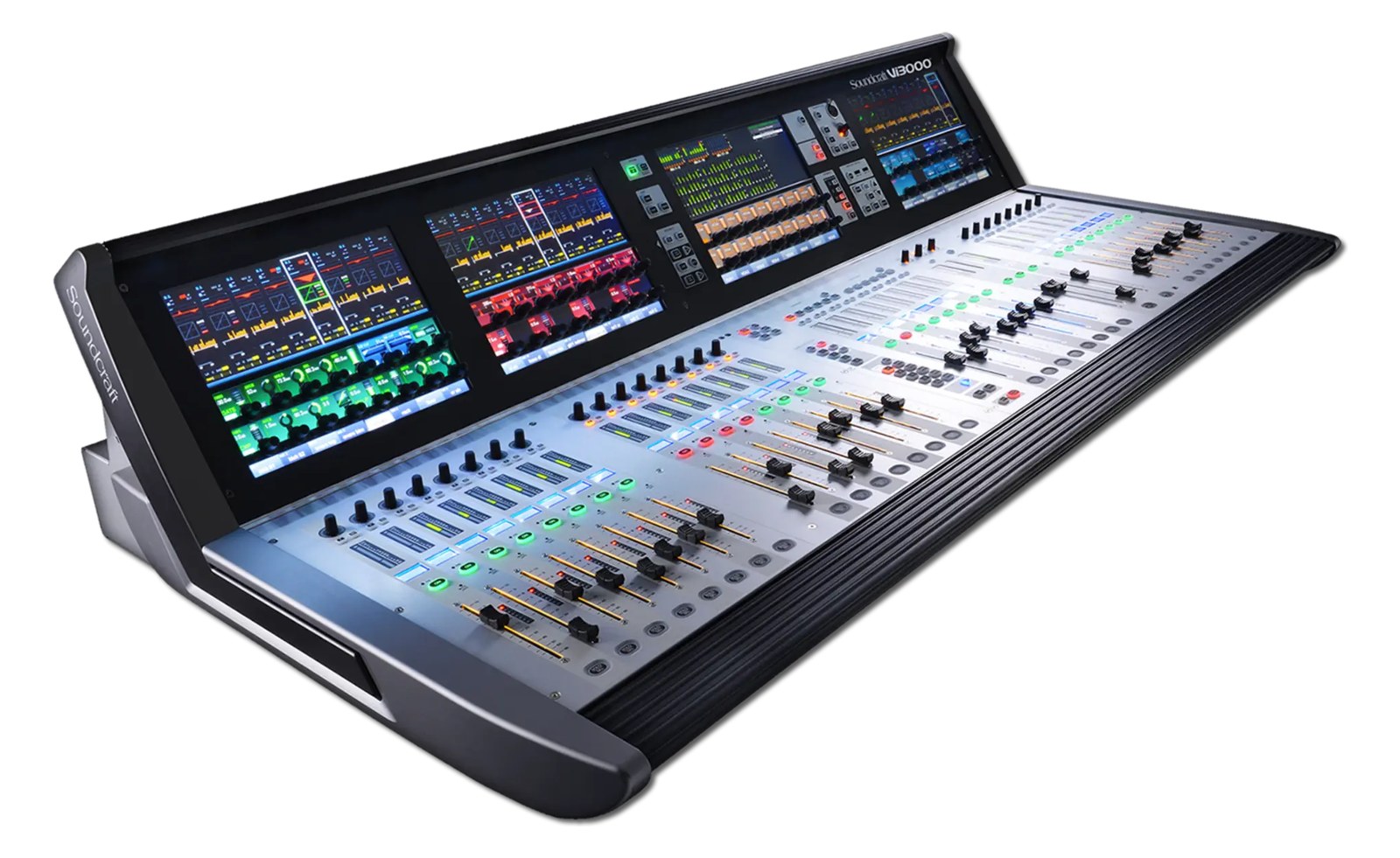
Vi3000The Soundcraft Vi3000 is a touring-grade console with the Vistonics II rotary-knob-on-screen surface that's become signature to the Vi line. Strong dynamics processing and a workflow that's familiar to engineers who came up on the Vi6 and Vi7000. Common on broadcast and corporate gigs.View gear →
06 · Resolve the questions that can change the purchase or build plan.
Planning questions
Short, source-backed answers surface rack fit, power, cabling, and connection details before they become surprises.
Where does the Avid VENUE S6L-32D Digital Mixer live in a complete rig?
The catalog assigns it no rack units. Builder tracks it as non-rack gear; follow the manufacturer’s mounting, case, and form-factor guidance.
How much power does the Avid VENUE S6L-32D Digital Mixer draw?
Typical draw is 400W and documented maximum draw is 500W.
What connections does the Avid VENUE S6L-32D Digital Mixer have?
4 documented physical ports, including Engine A, Engine B, Power A (IEC), Power B (IEC).
07 · See this gear inside a complete system plan.
Builder preview
Builder keeps non-rack gear in the same bill of materials, budget, dependency, and connection plan as the rack-mounted system around it.Open in Builder