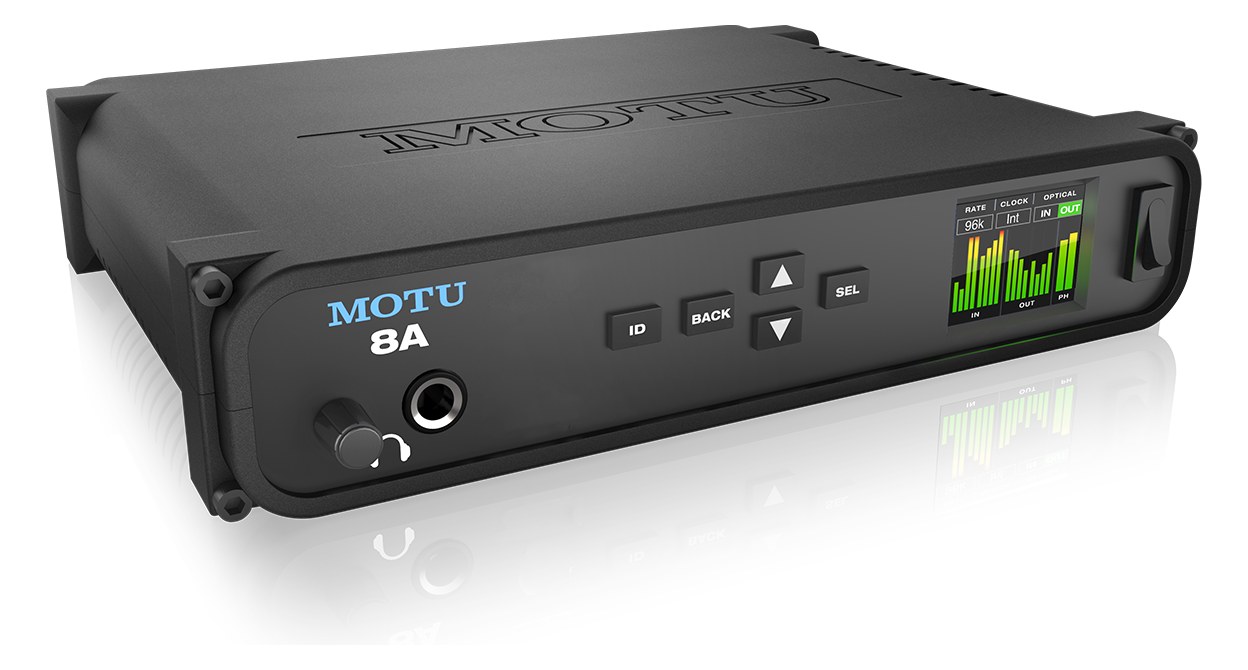
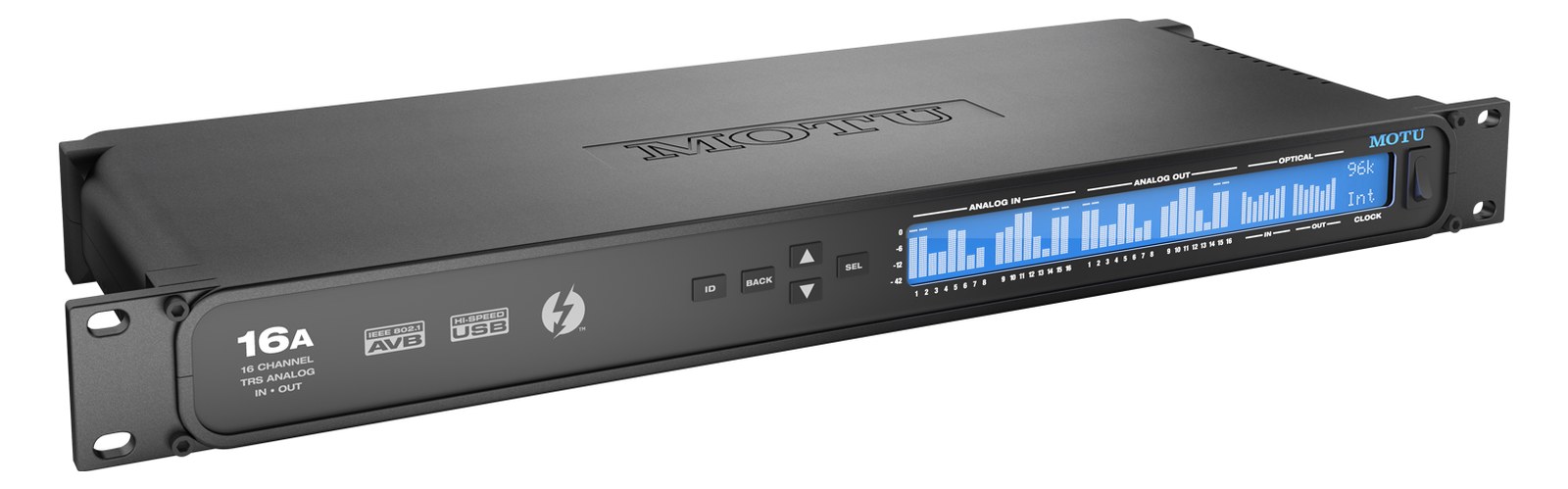
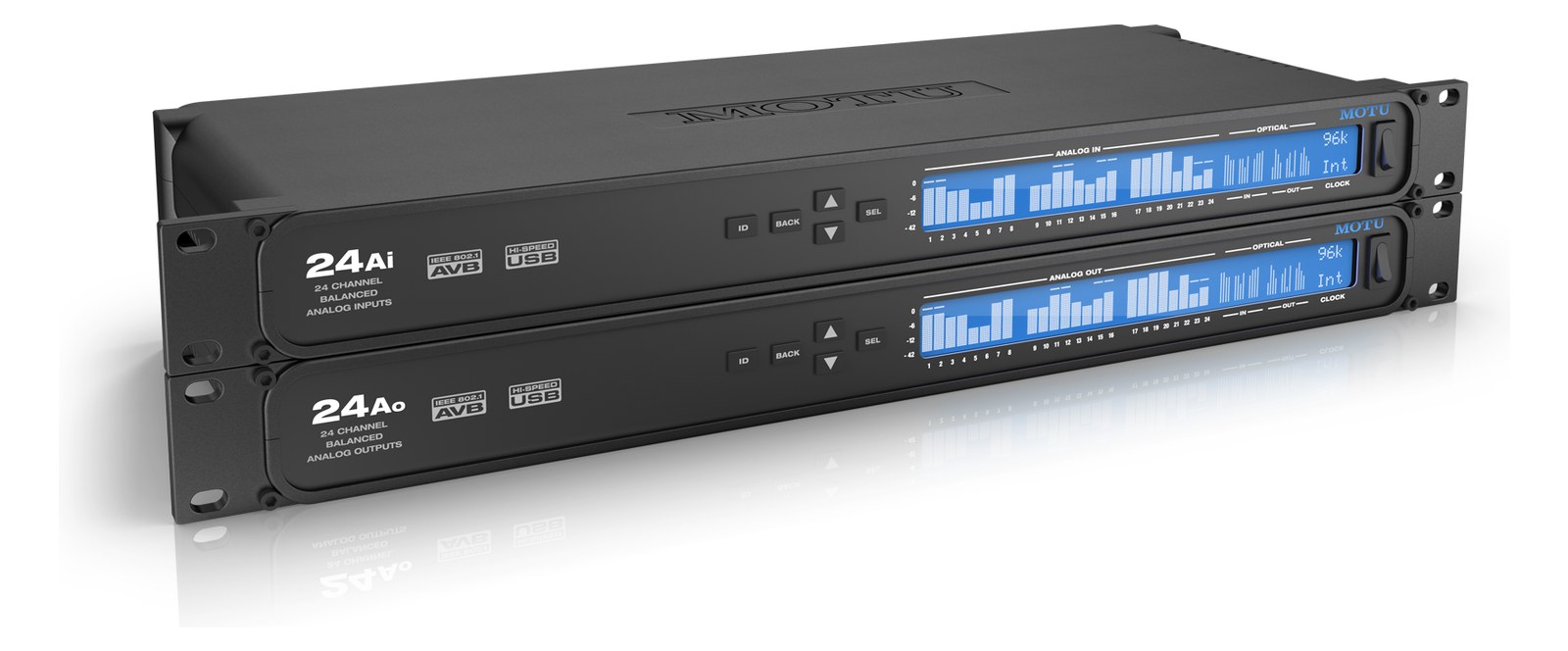
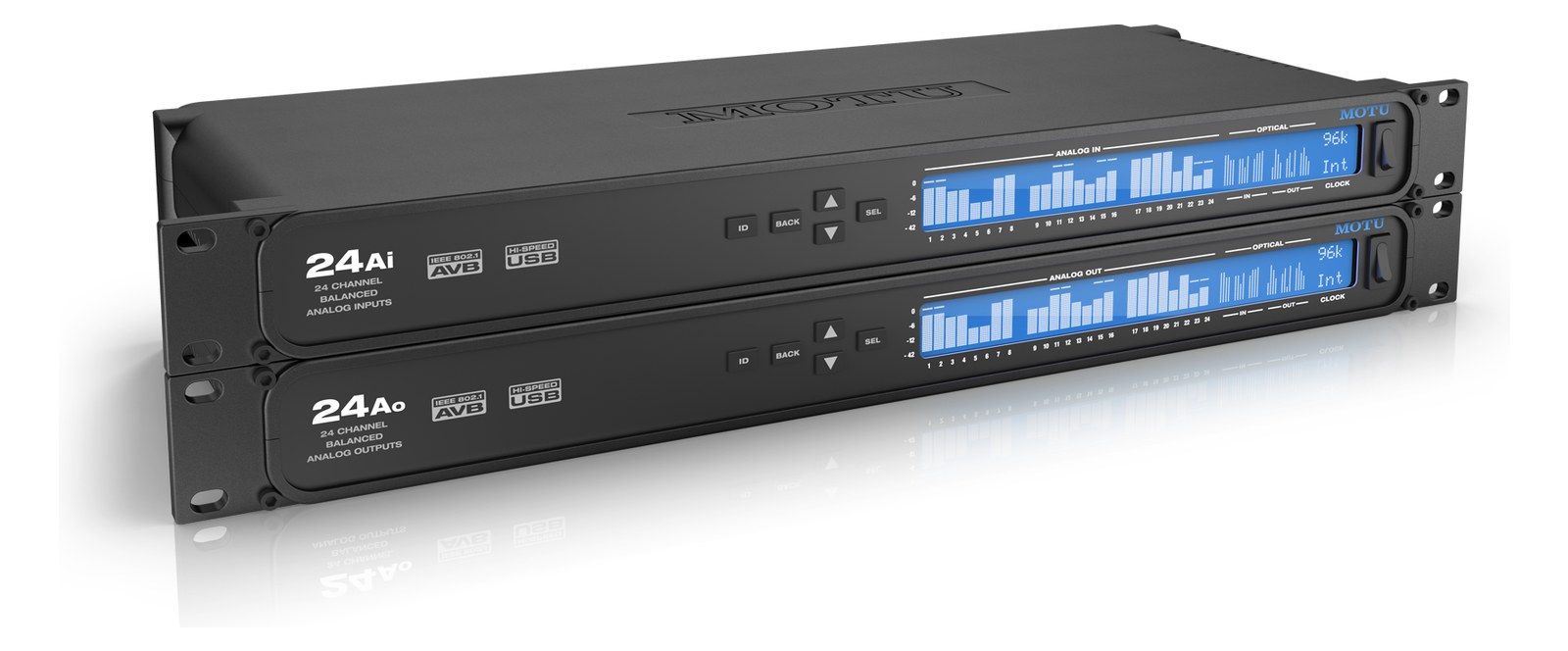
The MOTU 8A provides eight balanced TRS analog inputs and eight balanced TRS analog outputs in a half-rack enclosure. Thunderbolt, USB 3, AVB/TSN and ADAT optical connect it to hosts and networked rigs, while the front headphone output and color LCD provide local monitoring and metering.
Discontinued. MOTU AVB-era interface gone from major retail 2026-07 — superseded by the 2024+ line (828/16A TB4/848). Kept for owners; used-market staple.
Photos
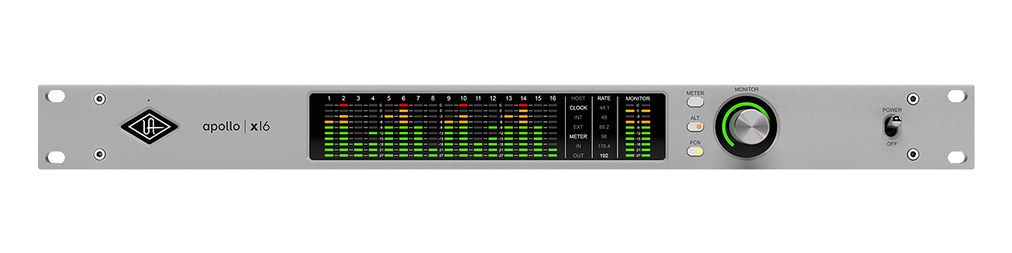
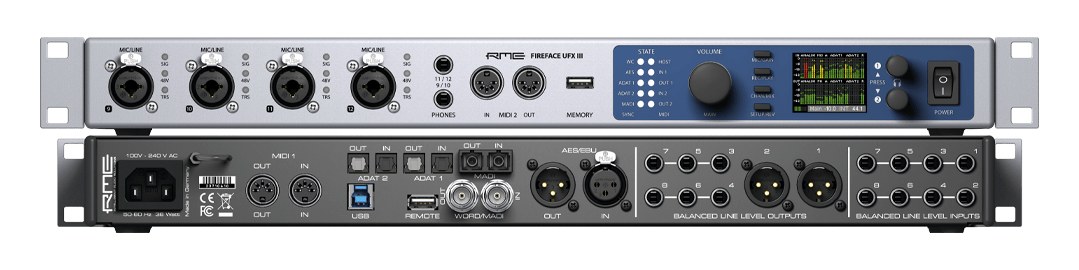
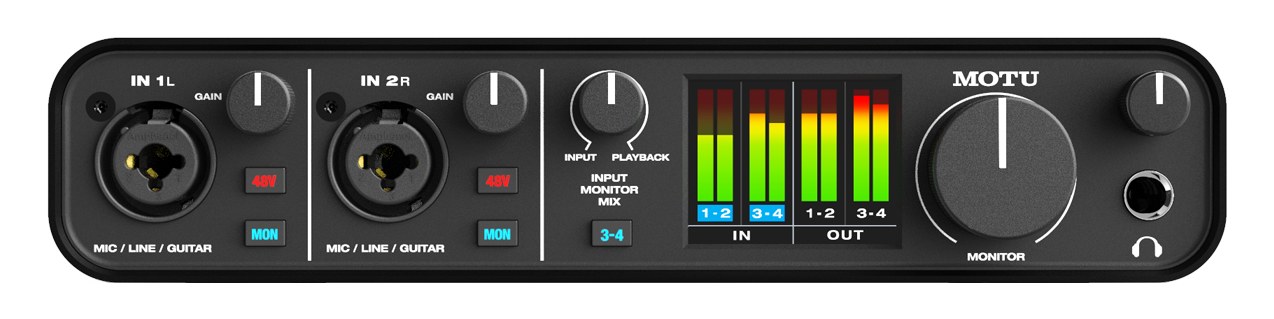
Manufacturer product photography — the drawn faceplate stays true to panel layout; these show the hardware itself.
~$1,495Use retailer rows for current price and stock
01 · What it does—and what that changes in your rig.
Product overview
Start with the payoff, then work through how it functions, where it fits, and the details that change a real build.
The payoff
Audio Interface decisions, organized around the whole rig.
The MOTU 8A is a 1UThe standard slice of rack height: 1U = 1.75″. A 3U box takes three slices; half-rack gear pairs two units side by side in one. audio interface that earns its rack space by doing three things at once: it gets analog signals in and out via DB25A 25-pin D-shaped connector carrying 8 channels of analog or AES audio in one multicore — the Tascam pinout is the de-facto standard., connects to a host computer over Thunderbolt or USB-C, and participates in an AVBAudio Video Bridging — open network audio (MOTU, PreSonus) where the switch reserves bandwidth so streams can’t glitch. Milan is its pro profile. network through either of its two RJ45 ports. That last part is what separates it from a generic eight-channel interface. In a playback rig or IEMIn-Ear Monitor — earpieces that replace floor wedges, feeding each player their own mix. The reason this whole rack exists. rack built around AVB — whether that's a multi-unit MOTU ecosystem or a more complex networked show — the 8A is the piece that bridges your analog world to the network and back, with real clocking discipline enforced through its BNCThe twist-lock coax connector used for word clock and antenna runs — it locks, so it can’t be pulled out mid-show.word clockThe shared heartbeat keeping every digital box sampling in lockstep. One device leads, the rest follow — or you get clicks and pops. in and out.
Documented outputs
1010 destination connections
Documented inputs
10Based on documented inputs
Rack space
1U · half-rackBuilder checks available rail space
Photo: MOTU1U · half-rack · 25W
Function
How it works in the path
In practice, DB25A 25-pin D-shaped connector carrying 8 channels of analog or AES audio in one multicore — the Tascam pinout is the de-facto standard. means you're committing to a loomSeveral cables bundled and run as one — keeps rack interconnects tidy and makes load-in one grab instead of eight.-based patchbayA panel of front-facing jacks wired to everything behind it — re-route any signal with a short cable instead of climbing behind the rack. approach, which is a good thing at load-in — one connector lands eight balancedCarries the signal on two wires and cancels whatever noise both pick up — why mic cables can run hundreds of feet hum-free. lines with no individual XLRThe standard 3-pin locking connector for mics and balanced line signals — pin 1 is the shield, pins 2 and 3 carry the balanced pair. fumbling. At 25 watts typical draw and 35 at peak, it's light on power, easy to budget in a conditioner. The shallow 229 mm depth fits most touring racks without fighting the rear lacing bar. The dual AVBAudio Video Bridging — open network audio (MOTU, PreSonus) where the switch reserves bandwidth so streams can’t glitch. Milan is its pro profile. ports let you daisy-chain additional MOTU units without a dedicated switch in simpler setups, keeping rack real estate honest. The onboard 48-input DSPDigital Signal Processing — the number-crunching that does EQ, compression, and effects inside a box. More DSP means more processing at once. mixer means basic routing decisions don't have to round-trip through the host CPU, which matters when you're working at low latencyThe delay between sound entering and leaving a digital system. IEM rigs fight to keep the whole chain down to a few milliseconds. under show conditions.
Best fit
Where it earns its place in the rack
Pick the 8A if you're already in the MOTU AVBAudio Video Bridging — open network audio (MOTU, PreSonus) where the switch reserves bandwidth so streams can’t glitch. Milan is its pro profile. ecosystem or deliberately building into it — it's a natural expansion unit when you need eight more analog channels without adding a second computer interface in the traditional sense. It also works cleanly as a standalone Thunderbolt or USB interface for a smaller playback rig. Skip it if your show runs on DanteThe most common audio-over-network standard: dozens of channels of uncompressed digital audio down one ordinary Ethernet cable between Dante boxes. or MADIA pro digital format carrying 64 channels on one coax or optical cable. Point-to-point — one sender, one receiver, no network required.; the AVB networking is a feature, not a format translator, and you won't get value from it if the rest of your system speaks a different protocol. If you need more than eight analog channels from a single box, you'll want to look elsewhere or plan to stack units via AVB from the start.
In the rack
Details worth deciding before load-in.
Build your DB25A 25-pin D-shaped connector carrying 8 channels of analog or AES audio in one multicore — the Tascam pinout is the de-facto standard.loomsSeveral cables bundled and run as one — keeps rack interconnects tidy and makes load-in one grab instead of eight. before the gig — pre-labeled breakoutA cable that splits one multichannel connector (like a DB25) into individual plugs — the octopus that turns 8 channels into 8 XLRs.snakesA multicore cable bundling many channels into one stage-to-console run. A sub-snake collects one corner of the stage into a drop box. to your patch panel save real time at load-in and eliminate the channel-by-channel XLRThe standard 3-pin locking connector for mics and balanced line signals — pin 1 is the shield, pins 2 and 3 carry the balanced pair. crawl.
Use the BNCThe twist-lock coax connector used for word clock and antenna runs — it locks, so it can’t be pulled out mid-show.word clockThe shared heartbeat keeping every digital box sampling in lockstep. One device leads, the rest follow — or you get clicks and pops. output to feed any other digital gear in the rack; nominate the 8A as clock master and let everything downstream sync to it rather than hunting for a common reference under pressure.
If you're daisy-chaining a second 8A via AVBAudio Video Bridging — open network audio (MOTU, PreSonus) where the switch reserves bandwidth so streams can’t glitch. Milan is its pro profile., run a short Cat6Standard network cable grades. In an audio rig one cheap Cat5e run can replace a 48-channel copper snake; AES50 wants it shielded. between the two units' AVB ports and confirm both appear in MOTU Discovery before the host computer enters the picture — network issues are easier to isolate early.
At 229 mm depth, verify your rack's rear cable management leaves clearance for the Thunderbolt or USB-C cable to exit cleanly; a sharp bend on either connector under tension is a show-stopping failure waiting to happen.
02 · Know the whole path before you buy.
Signal path
Learn the route as a block diagram: source, product function, transport, and destination. Select any block to see what enters, what changes, and what leaves.
Interactive block diagramAuto-looping · hover, focus, or tap to hold a stage
Port-type signalProduct functionSystem boundary
Follow one signal from source to destination
Each block answers the same three questions: what arrives, what changes here, and what leaves.
01 · Source · selected
¼-inch TRS + toslink
RJ45
¼-inch TRS + toslink
01 · Source
10 documented inputs
¼-inch TRS + toslink
Arrives as
10 documented inputs
Connector
¼-inch TRS + toslink
Signal
analog audio
03 · What this product asks of the rest of the system.
Compatibility
Treat connector names as the start of the check—not the answer. These are the boundaries that determine a complete working path.
Best fit · Audio Interface
Use it when 1U · half-rack and 229 mm of depth fit the case.
Plan the companion path
Complete the path with upstream and downstream gear that matches connector, direction, signal type, protocol, and wiring standard.
Protocol boundary
This product declares AVB; matching plugs alone do not make other protocols compatible.
04 · Every connector, grouped by job.
I/O ports
Switch the product view and the documented port inventory updates with it—hardware and data stay side by side.
Every connector, grouped by job.
Switch panels to keep the hardware view and the documented port list in sync.
Front panelRear panel
All documented ports for MOTU 8A Audio Interface
Port
Panel
Connector
Direction
Signal
Channels
Analog In 1 (TRS)
rear
¼-inch TRS
input
analog audio
—
Analog In 2 (TRS)
rear
¼-inch TRS
input
analog audio
—
Analog In 3 (TRS)
rear
¼-inch TRS
input
analog audio
—
Analog In 4 (TRS)
rear
¼-inch TRS
input
analog audio
—
Analog In 5 (TRS)
rear
¼-inch TRS
input
analog audio
—
Analog In 6 (TRS)
rear
¼-inch TRS
input
analog audio
—
Analog In 7 (TRS)
rear
¼-inch TRS
input
analog audio
—
Analog In 8 (TRS)
rear
¼-inch TRS
input
analog audio
—
Analog Out 1 (TRS)
rear
¼-inch TRS
output
analog audio
—
Analog Out 2 (TRS)
rear
¼-inch TRS
output
analog audio
—
Analog Out 3 (TRS)
rear
¼-inch TRS
output
analog audio
—
Analog Out 4 (TRS)
rear
¼-inch TRS
output
analog audio
—
Analog Out 5 (TRS)
rear
¼-inch TRS
output
analog audio
—
Analog Out 6 (TRS)
rear
¼-inch TRS
output
analog audio
—
Analog Out 7 (TRS)
rear
¼-inch TRS
output
analog audio
—
Analog Out 8 (TRS)
rear
¼-inch TRS
output
analog audio
—
ADAT / TOSLink In
rear
toslink
input
digital audio
8
ADAT / TOSLink Out
rear
toslink
output
digital audio
8
AVB/TSN Network (RJ45)
rear
RJ45
bidirectional
digital audio
64
Thunderbolt
rear
thunderbolt
bidirectional
data
—
USB 3 (legacy id)
rear
usb b
bidirectional
data
—
Headphones (front)
front
¼-inch TRS
output
analog audio
—
Power (12-18V DC)
rear
dc barrel
input
power
—
Showing 23 of 23 documented physical ports. Scroll to review the remaining rows.
05 · Compare the decision, not just the price.
Alternatives
The rows are organized around fit, power, I/O, and system role so a cheaper unit cannot hide a more expensive workflow.
8AThe MOTU 8A provides eight balanced TRS analog inputs and eight balanced TRS analog outputs in a half-rack enclosure. Thunderbolt, USB 3, AVB/TSN and ADAT optical connect it to hosts and networked rigs, while the front headphone output and color LCD provide local monitoring and metering.View gear →
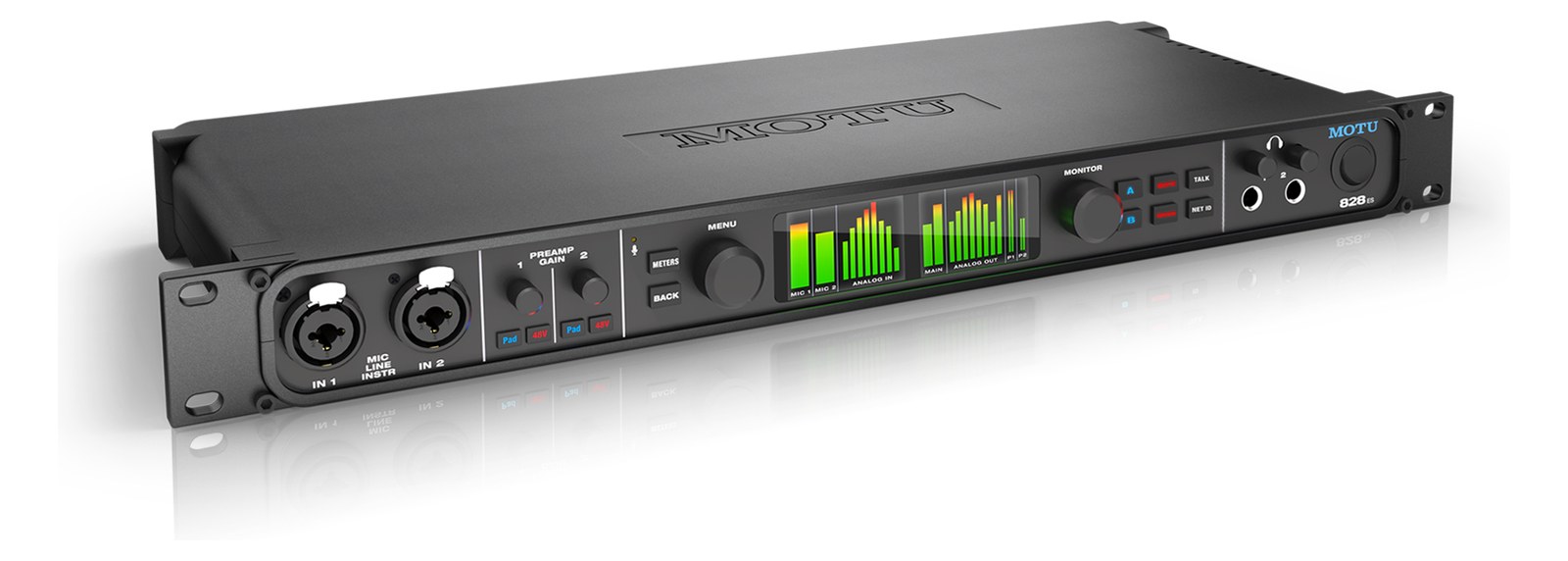
828esThe MOTU 828es is a versatile rack-mount interface that doubles as a word clock source and distribution point, making it useful in rigs where you need both audio I/O and clock management. Its onboard DSP mixer handles routing and monitoring independently of the host computer, and the wide range of connectivity including ADAT, S/PDIF, and word clock makes it a flexible hub. A solid all-in-one option for medium-complexity playback rigs.View gear →
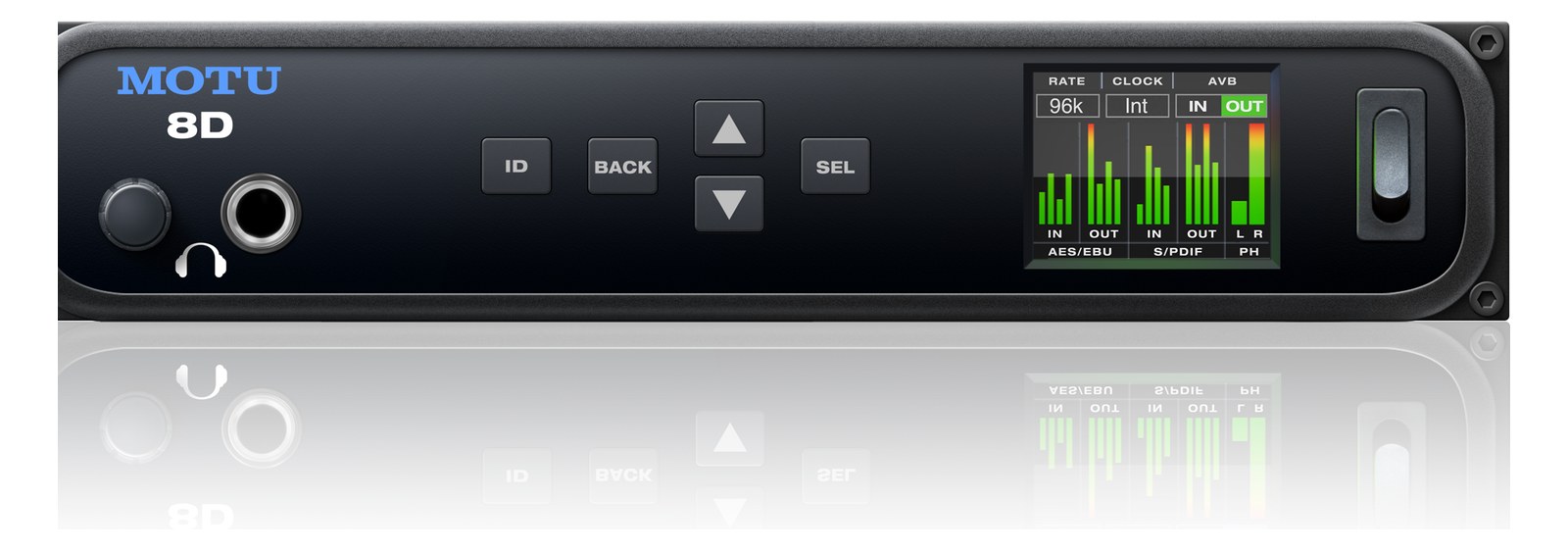
8DThe MOTU 8D is a digital-focused 1U interface providing eight channels of AES3 I/O on four XLR pairs, plus Thunderbolt, USB, and AVB/TSN networking. It bridges AES3 digital gear into modern networked audio systems, making it perfect for connecting AES3-equipped consoles, processors, or legacy digital gear to an AVB network. The 48-input DSP mixer provides flexible internal routing without touching the host computer.View gear →
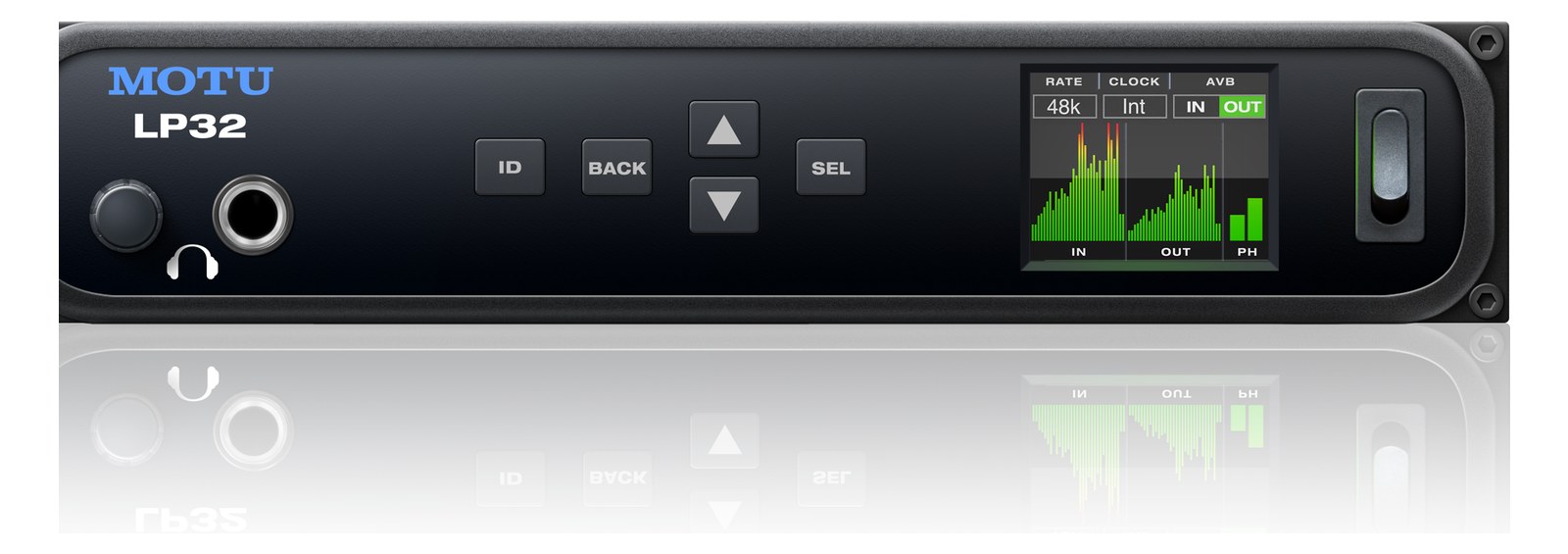
LP32The MOTU LP32 provides 32 channels of line-level analog I/O on four DB25 connectors, making it the highest channel-count analog interface in MOTU's lineup. With Thunderbolt, USB, and AVB/TSN networking, it is designed for large-format rigs where you need to distribute many analog outputs — such as feeding 16 stereo IEM mixes from a single 1U device. The 48-input DSP mixer handles internal routing, and AVB daisy-chaining allows expanding beyond 32 channels.View gear →
06 · Resolve the questions that can change the purchase or build plan.
Planning questions
Short, source-backed answers surface rack fit, power, cabling, and connection details before they become surprises.
How will the MOTU 8A Audio Interface affect rack fit and case depth?
It occupies 1U · half-rack. Its documented depth is 229 mm.
How much power does the MOTU 8A Audio Interface draw?
Typical draw is 25W and documented maximum draw is 35W.
What connections does the MOTU 8A Audio Interface have?
23 documented physical ports, including Analog In 1 (TRS), Analog In 2 (TRS), Analog In 3 (TRS), Analog In 4 (TRS), Analog In 5 (TRS), Analog In 6 (TRS).
Is the MOTU 8A Audio Interface discontinued?
MOTU AVB-era interface gone from major retail 2026-07 — superseded by the 2024+ line (828/16A TB4/848). Kept for owners; used-market staple.
07 · See this unit inside a real rack plan.
Builder preview
Placement is only the start. Builder checks space · depth · weight, power headroom, dependencies, and compatible signal paths around this exact catalog item.Open in Builder