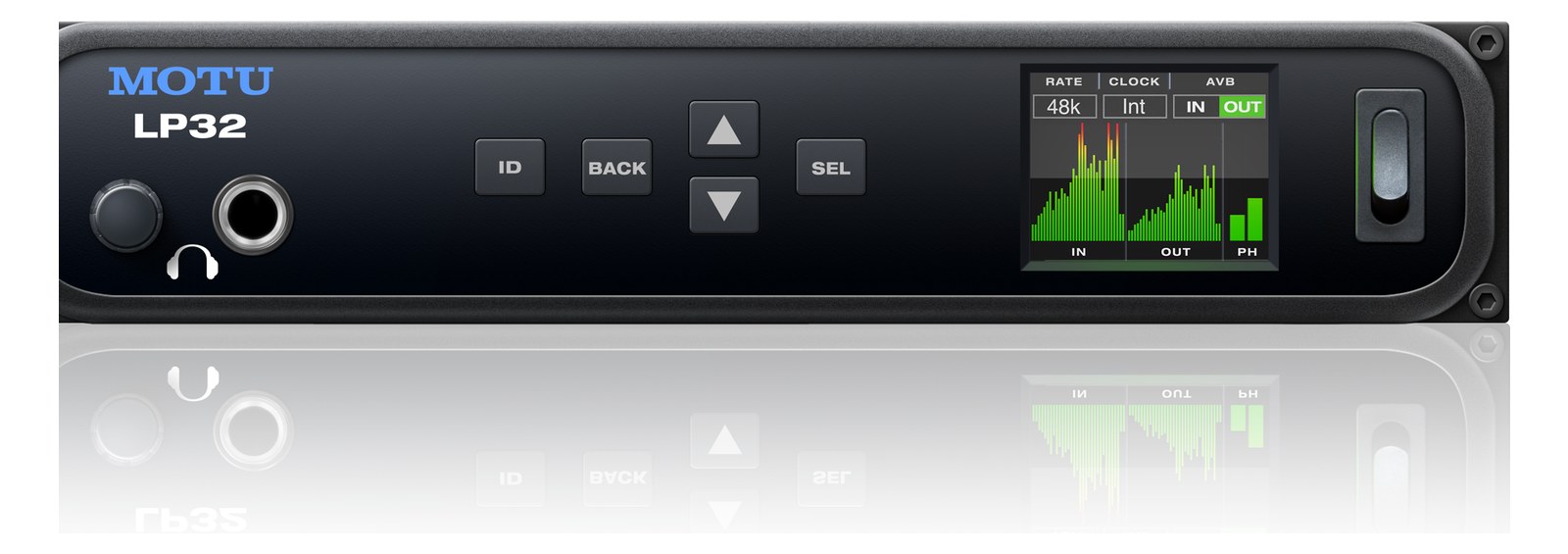
The MOTU LP32 provides 32 channels of line-level analog I/O on four DB25 connectors, making it the highest channel-count analog interface in MOTU's lineup. With Thunderbolt, USB, and AVB/TSN networking, it is designed for large-format rigs where you need to distribute many analog outputs — such as feeding 16 stereo IEM mixes from a single 1U device. The 48-input DSP mixer handles internal routing, and AVB daisy-chaining allows expanding beyond 32 channels.
Discontinued. MOTU AVB-era interface gone from major retail 2026-07 — superseded by the 2024+ line (828/16A TB4/848). Kept for owners; used-market staple.
Photos
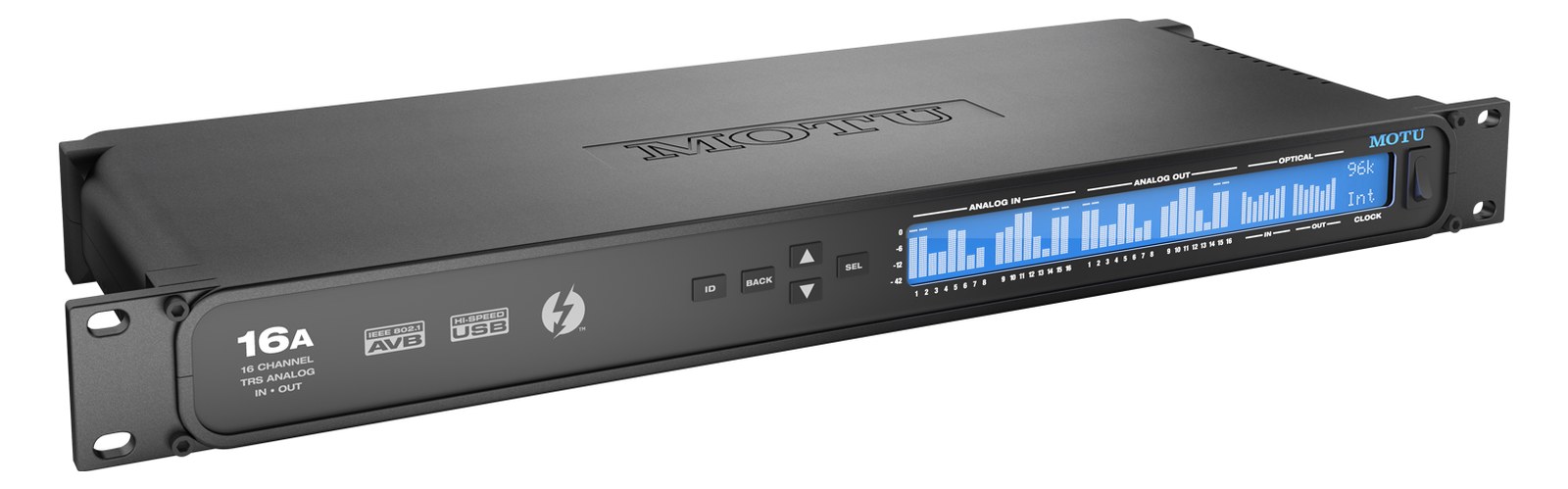
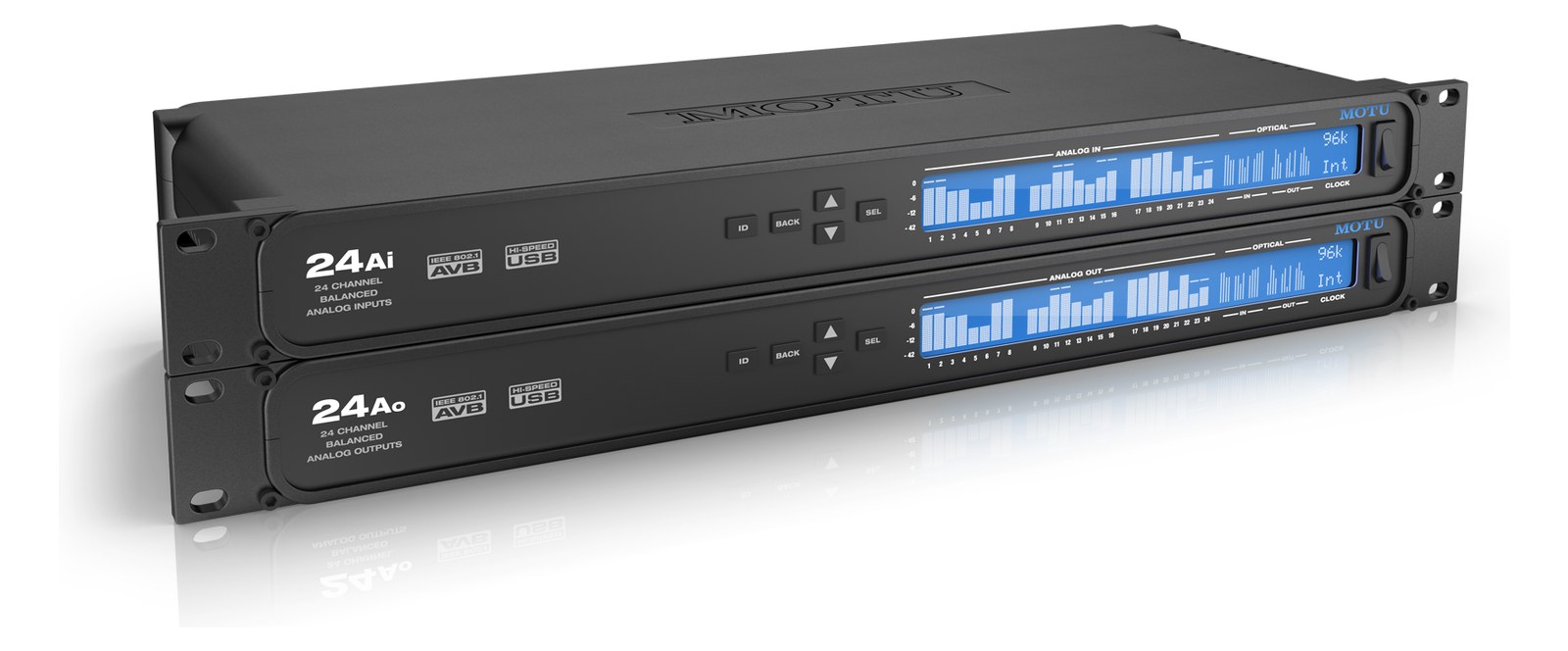
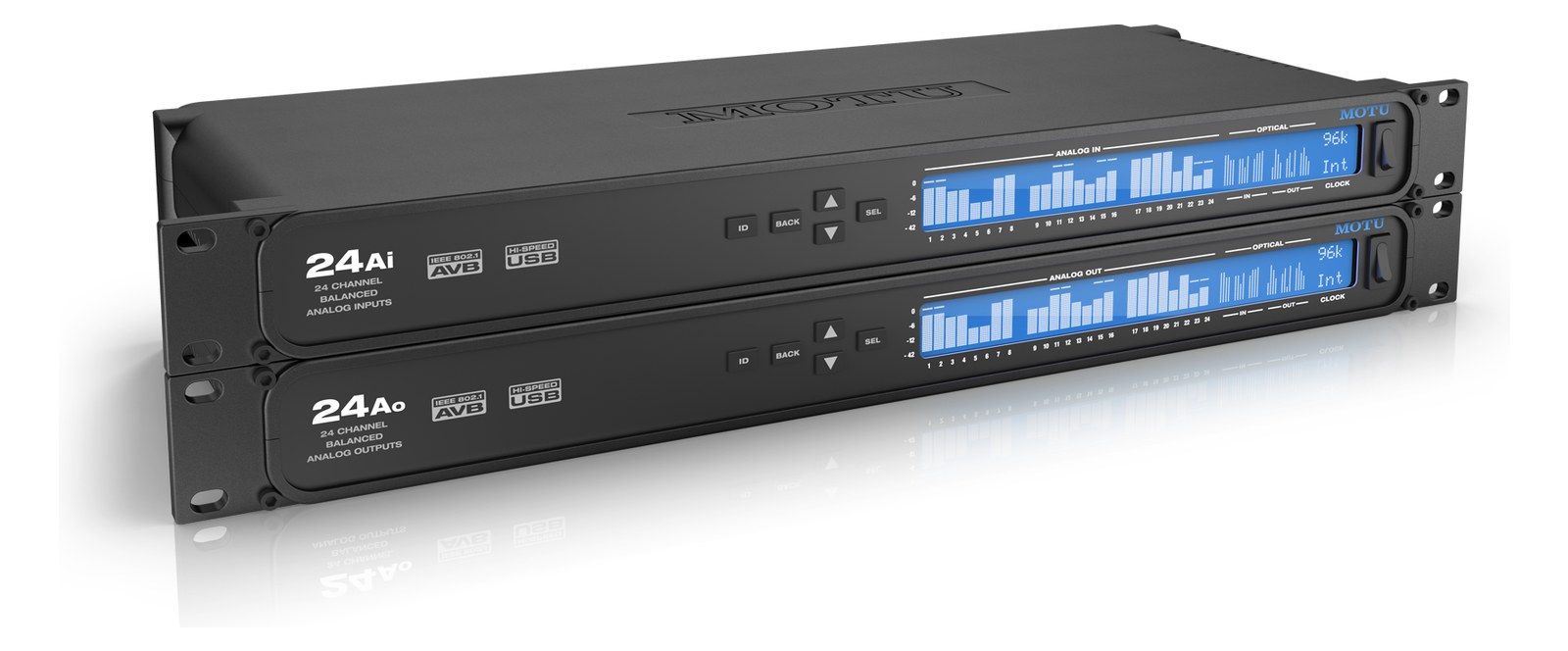
Manufacturer product photography — the drawn faceplate stays true to panel layout; these show the hardware itself.
~$1,495Use retailer rows for current price and stock
01 · What it does—and what that changes in your rig.
Product overview
Start with the payoff, then work through how it functions, where it fits, and the details that change a real build.
The payoff
Audio Interface decisions, organized around the whole rig.
The MOTU LP32 is a 1UThe standard slice of rack height: 1U = 1.75″. A 3U box takes three slices; half-rack gear pairs two units side by side in one. analog workhorse built around one specific promise: 32 channels of line-levelThe strong signal that runs between pieces of gear (about a volt) — hotter than mic level, far below speaker level. I/O in the smallest possible footprint. Four DB25A 25-pin D-shaped connector carrying 8 channels of analog or AES audio in one multicore — the Tascam pinout is the de-facto standard. connectors handle inputs, four handle outputs, and the result is a single rack unit capable of feeding up to 16 stereo IEMIn-Ear Monitor — earpieces that replace floor wedges, feeding each player their own mix. The reason this whole rack exists. mixes simultaneously — or handling the analog returns and outputs for a large playback or monitor rig without stacking multiple half-rack convertersThe circuitry that turns analog audio into digital data and back (A/D and D/A). Converter quality sets a digital rig’s sound ceiling.. Thunderbolt and USB-C connect it to a host computer, while two AVBAudio Video Bridging — open network audio (MOTU, PreSonus) where the switch reserves bandwidth so streams can’t glitch. Milan is its pro profile. network ports let it participate in a networked audio ecosystem or daisy-chain to additional MOTU AVB devices when 32 channels isn't enough.
Documented outputs
55 destination connections
Documented inputs
6Based on documented inputs
Rack space
1UBuilder checks available rail space
MOTU product panel1U · 25W
Function
How it works in the path
At load-in, the DB25A 25-pin D-shaped connector carrying 8 channels of analog or AES audio in one multicore — the Tascam pinout is the de-facto standard. format is a double-edged sword — your snakesA multicore cable bundling many channels into one stage-to-console run. A sub-snake collects one corner of the stage into a drop box. and breakoutA cable that splits one multichannel connector (like a DB25) into individual plugs — the octopus that turns 8 channels into 8 XLRs. cables need to be pre-built and labeled, because there's nothing to trace on the face of this box once it's racked. That discipline pays off at show time: a fully cabled LP32 is rock-solid, with no individual XLRThe standard 3-pin locking connector for mics and balanced line signals — pin 1 is the shield, pins 2 and 3 carry the balanced pair. connectors to work loose mid-set. At 25W nominal draw and a 35W ceiling, it sits comfortably on a single outlet without dominating your power budget. Word clockThe shared heartbeat keeping every digital box sampling in lockstep. One device leads, the rest follow — or you get clicks and pops. I/O via BNCThe twist-lock coax connector used for word clock and antenna runs — it locks, so it can’t be pulled out mid-show. means it integrates cleanly as a clock source or slave in any rig where sample-accurate sync matters — critical when it's sharing a system with a digital console or other convertersThe circuitry that turns analog audio into digital data and back (A/D and D/A). Converter quality sets a digital rig’s sound ceiling..
Best fit
Where it earns its place in the rack
This interface belongs in a serious IEMIn-Ear Monitor — earpieces that replace floor wedges, feeding each player their own mix. The reason this whole rack exists. or playback rig where channel count is the constraint and you've already committed to a DB25A 25-pin D-shaped connector carrying 8 channels of analog or AES audio in one multicore — the Tascam pinout is the de-facto standard. infrastructure. If you're running eight or fewer mixes, you're paying for headroomThe margin between your normal level and where things clip — headroom is what absorbs the snare hit you didn’t see coming. you won't use and adding cable complexity you don't need — something like a smaller MOTU or RME interface will serve you better. Similarly, if your workflow is entirely DanteThe most common audio-over-network standard: dozens of channels of uncompressed digital audio down one ordinary Ethernet cable between Dante boxes. or MADIA pro digital format carrying 64 channels on one coax or optical cable. Point-to-point — one sender, one receiver, no network required., the LP32's AVBAudio Video Bridging — open network audio (MOTU, PreSonus) where the switch reserves bandwidth so streams can’t glitch. Milan is its pro profile. networking won't bridge natively to those formats without additional hardware. But for engineers who live in the analog-dense, computer-hosted world of large IEM rigs and need everything organized into clean, dense connectors, this is a very compelling 1UThe standard slice of rack height: 1U = 1.75″. A 3U box takes three slices; half-rack gear pairs two units side by side in one. answer.
In the rack
Details worth deciding before load-in.
Pre-build and permanently label all four input and four output DB25A 25-pin D-shaped connector carrying 8 channels of analog or AES audio in one multicore — the Tascam pinout is the de-facto standard.snakesA multicore cable bundling many channels into one stage-to-console run. A sub-snake collects one corner of the stage into a drop box. before the first show — mid-gig troubleshooting on an unlabeled DB25 bundle is a nightmare you don't want.
Use the word clockThe shared heartbeat keeping every digital box sampling in lockstep. One device leads, the rest follow — or you get clicks and pops. output to drive any other convertersThe circuitry that turns analog audio into digital data and back (A/D and D/A). Converter quality sets a digital rig’s sound ceiling. in the rack rather than letting multiple devices free-run; the LP32 makes a capable master clock, and it eliminates subtle sample-rate drift issues in dense analog rigs.
If you're chaining a second MOTU AVBAudio Video Bridging — open network audio (MOTU, PreSonus) where the switch reserves bandwidth so streams can’t glitch. Milan is its pro profile. device for expanded channel count, connect the two AVB ports in series and configure routing in MOTU's web interface before load-in — the daisy-chain topology needs to be planned at the desk, not discovered at the venue.
At 229mm deep, it fits most standard road racks without issue, but verify your rack's internal depth if you're running a shallow gigging case — leave enough room behind the unit for the DB25A 25-pin D-shaped connector carrying 8 channels of analog or AES audio in one multicore — the Tascam pinout is the de-facto standard. connector hoods, which add meaningful depth on a fully-loaded rear panel.
02 · Know the whole path before you buy.
Signal path
Learn the route as a block diagram: source, product function, transport, and destination. Select any block to see what enters, what changes, and what leaves.
Interactive block diagramAuto-looping · hover, focus, or tap to hold a stage
Port-type signalProduct functionSystem boundary
Follow one signal from source to destination
Each block answers the same three questions: what arrives, what changes here, and what leaves.
01 · Source · selected
db25 + bnc
RJ45
db25 + bnc
01 · Source
6 documented inputs
db25 + bnc
Arrives as
6 documented inputs
Connector
db25 + bnc
Signal
analog audio
03 · What this product asks of the rest of the system.
Compatibility
Treat connector names as the start of the check—not the answer. These are the boundaries that determine a complete working path.
Best fit · Audio Interface
Use it when 1U and 229 mm of depth fit the case.
Plan the companion path
Complete the path with upstream and downstream gear that matches connector, direction, signal type, protocol, and wiring standard.
Connector boundary
Documented connectors: db25, RJ45, thunderbolt, usb c. Match connector, direction, and signal type—not shape alone.
04 · Every connector, grouped by job.
I/O ports
Switch the product view and the documented port inventory updates with it—hardware and data stay side by side.
Every connector, grouped by job.
Switch panels to keep the hardware view and the documented port list in sync.
Front panelRear panel
All documented ports for MOTU LP32 Audio Interface
Port
Panel
Connector
Direction
Signal
Channels
Analog In 1-8 (DB25)
rear
db25
input
analog audio
—
Analog In 9-16 (DB25)
rear
db25
input
analog audio
—
Analog In 17-24 (DB25)
rear
db25
input
analog audio
—
Analog In 25-32 (DB25)
rear
db25
input
analog audio
—
Analog Out 1-8 (DB25)
rear
db25
output
analog audio
—
Analog Out 9-16 (DB25)
rear
db25
output
analog audio
—
Analog Out 17-24 (DB25)
rear
db25
output
analog audio
—
Analog Out 25-32 (DB25)
rear
db25
output
analog audio
—
AVB Network 1 (RJ45)
rear
RJ45
bidirectional
digital audio
—
AVB Network 2 (RJ45)
rear
RJ45
bidirectional
digital audio
—
Thunderbolt
rear
thunderbolt
bidirectional
data
—
USB-C
rear
usb c
bidirectional
data
—
Word Clock In (BNC)
rear
bnc
input
digital audio
—
Word Clock Out (BNC)
rear
bnc
output
digital audio
—
Power (IEC)
rear
IEC C14
input
power
—
Showing 15 of 15 documented physical ports. Scroll to review the remaining rows.
05 · Compare the decision, not just the price.
Alternatives
The rows are organized around fit, power, I/O, and system role so a cheaper unit cannot hide a more expensive workflow.
LP32The MOTU LP32 provides 32 channels of line-level analog I/O on four DB25 connectors, making it the highest channel-count analog interface in MOTU's lineup. With Thunderbolt, USB, and AVB/TSN networking, it is designed for large-format rigs where you need to distribute many analog outputs — such as feeding 16 stereo IEM mixes from a single 1U device. The 48-input DSP mixer handles internal routing, and AVB daisy-chaining allows expanding beyond 32 channels.View gear →
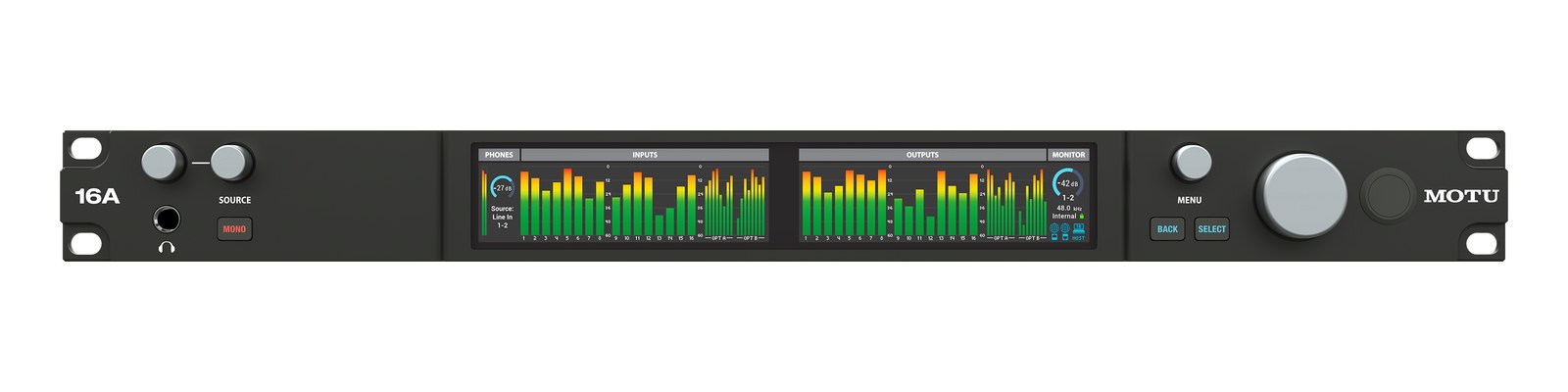
16A TB4The Thunderbolt 4 generation of the MOTU 16A keeps the format playback rigs loved — sixteen balanced line ins and outs in 1U — and moves the computer link to TB4/USB4 with AVB networking still on board. Stems out to a monitor console, returns back in, and network audio when the rig grows. Successor to the AVB-era 16A at a lower price than the original ever sold for.View gear →
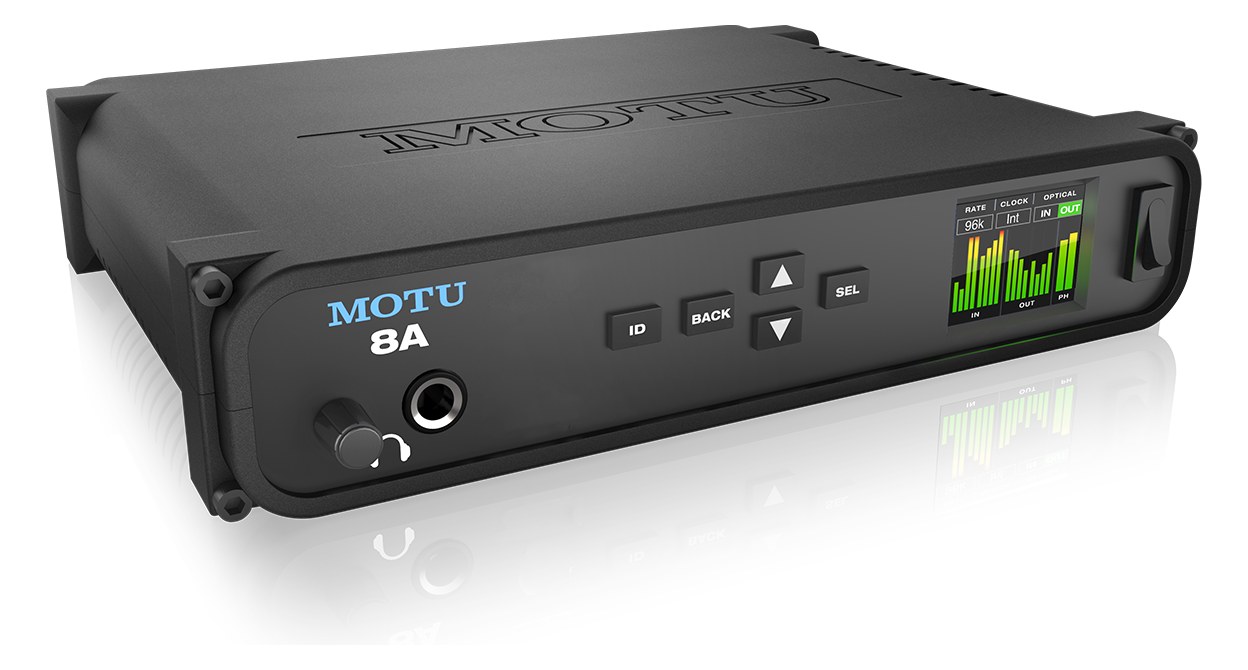
8AThe MOTU 8A provides eight balanced TRS analog inputs and eight balanced TRS analog outputs in a half-rack enclosure. Thunderbolt, USB 3, AVB/TSN and ADAT optical connect it to hosts and networked rigs, while the front headphone output and color LCD provide local monitoring and metering.View gear →
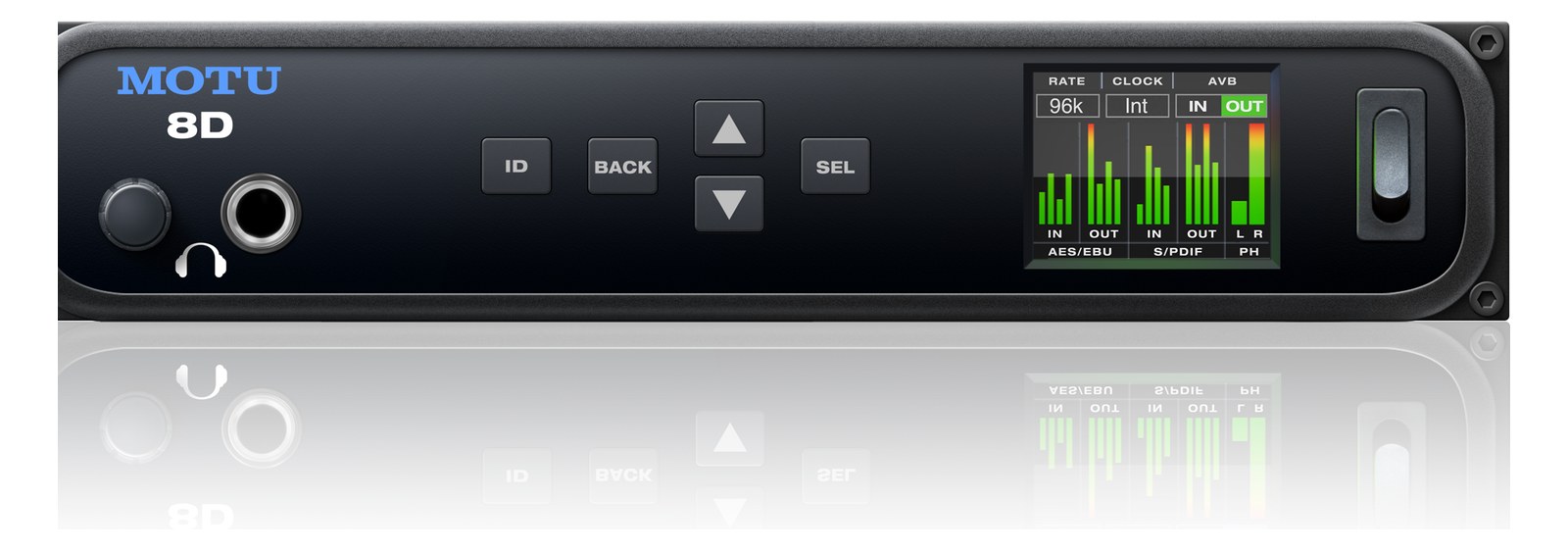
8DThe MOTU 8D is a digital-focused 1U interface providing eight channels of AES3 I/O on four XLR pairs, plus Thunderbolt, USB, and AVB/TSN networking. It bridges AES3 digital gear into modern networked audio systems, making it perfect for connecting AES3-equipped consoles, processors, or legacy digital gear to an AVB network. The 48-input DSP mixer provides flexible internal routing without touching the host computer.View gear →
06 · Resolve the questions that can change the purchase or build plan.
Planning questions
Short, source-backed answers surface rack fit, power, cabling, and connection details before they become surprises.
How will the MOTU LP32 Audio Interface affect rack fit and case depth?
It occupies 1U. Its documented depth is 229 mm.
How much power does the MOTU LP32 Audio Interface draw?
Typical draw is 25W and documented maximum draw is 35W.
What connections does the MOTU LP32 Audio Interface have?
15 documented physical ports, including Analog In 1-8 (DB25), Analog In 9-16 (DB25), Analog In 17-24 (DB25), Analog In 25-32 (DB25), Analog Out 1-8 (DB25), Analog Out 9-16 (DB25).
Is the MOTU LP32 Audio Interface discontinued?
MOTU AVB-era interface gone from major retail 2026-07 — superseded by the 2024+ line (828/16A TB4/848). Kept for owners; used-market staple.
07 · See this unit inside a real rack plan.
Builder preview
Placement is only the start. Builder checks space · depth · weight, power headroom, dependencies, and compatible signal paths around this exact catalog item.Open in Builder