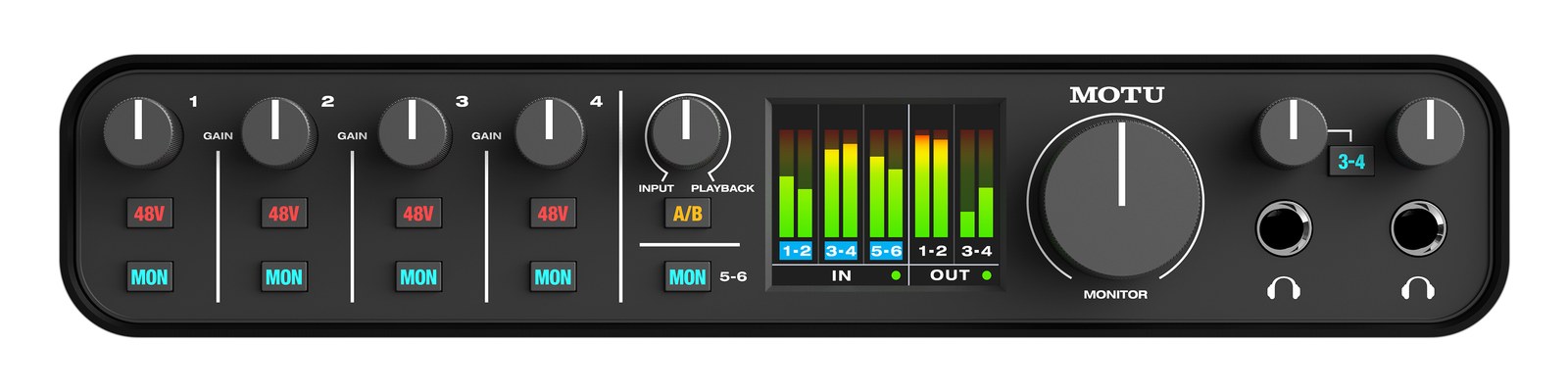
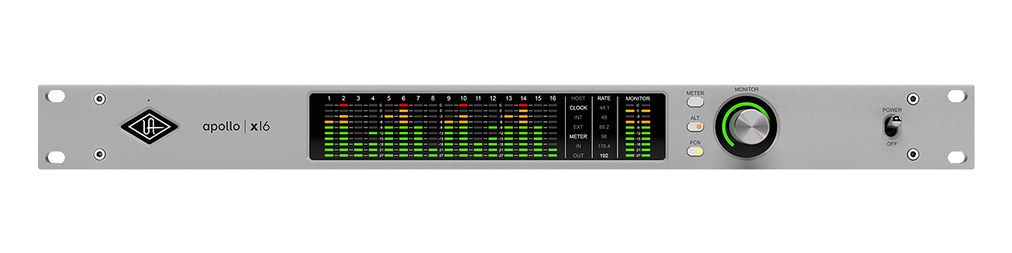
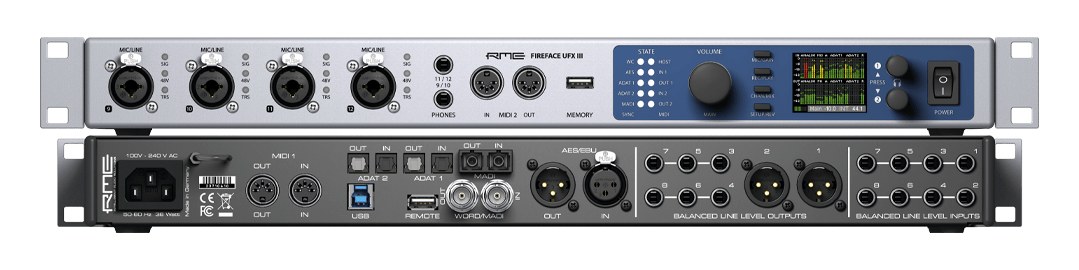
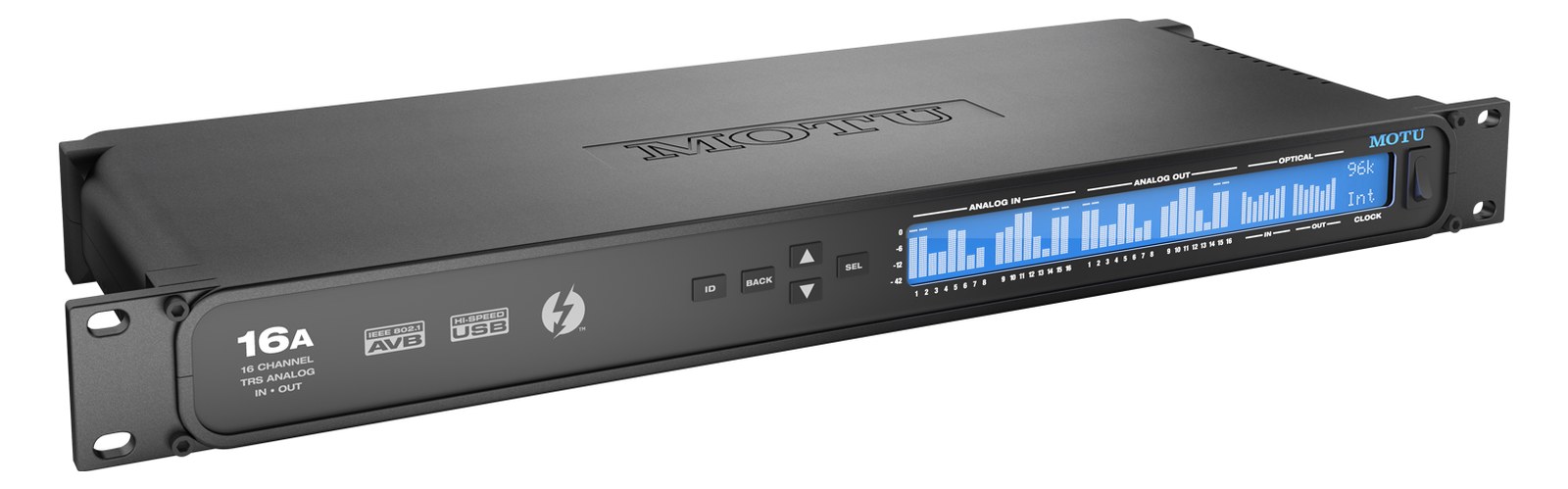
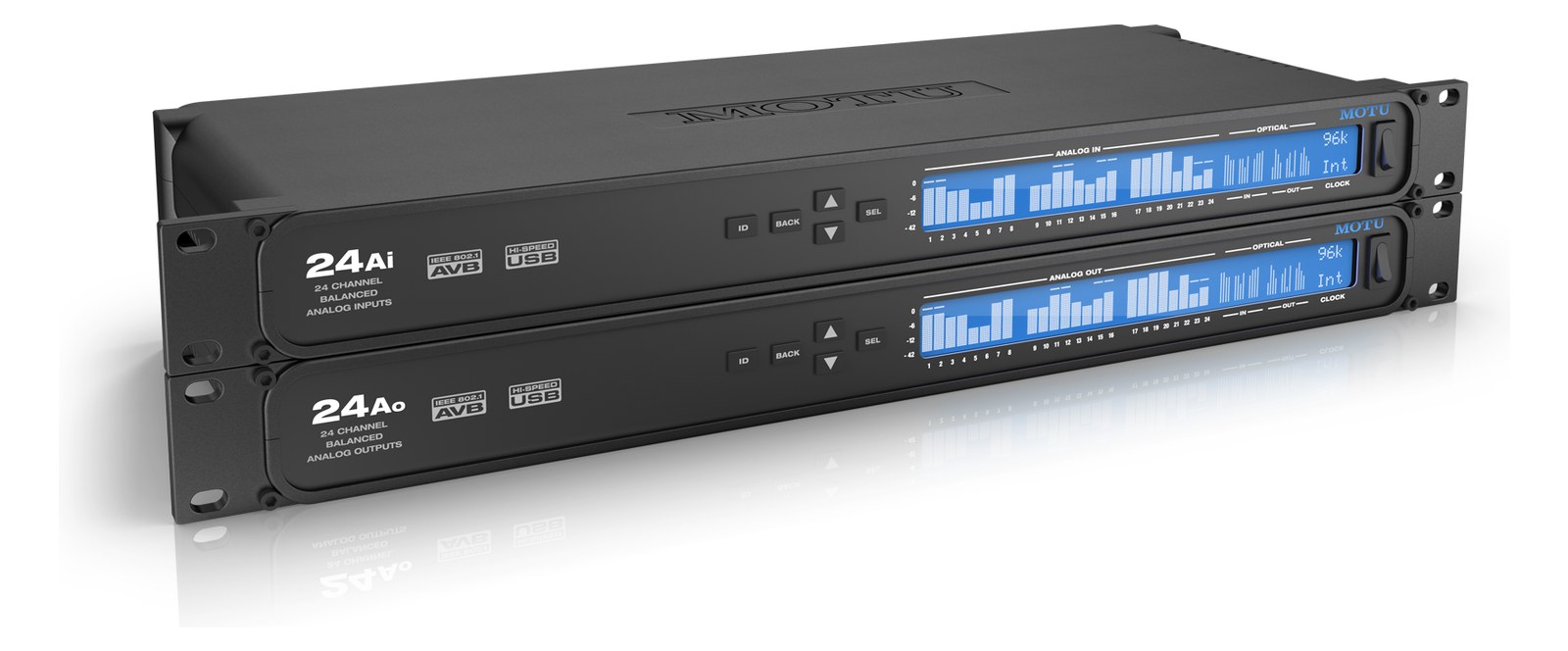
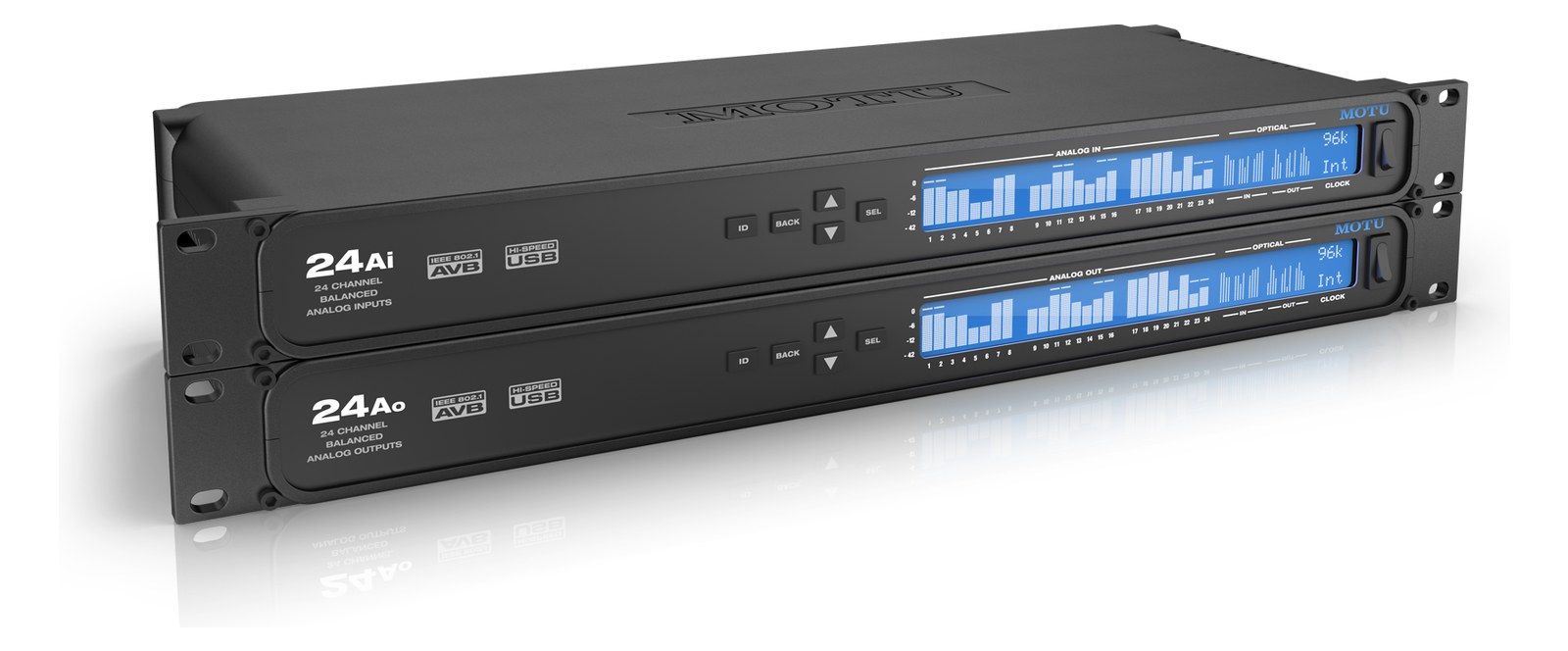
The MOTU M6 expands on the M4 with added MIDI I/O and a second headphone output, making it useful for rigs that need to drive MIDI-controlled devices alongside audio playback. The ESS Sabre32 DAC provides the same pristine conversion quality, and the additional outputs give more routing flexibility for monitor sends or click tracks. A solid desktop interface for medium playback rigs.
~$450Use retailer rows for current price and stock
01 · What it does—and what that changes in your rig.
Product overview
Start with the payoff, then work through how it functions, where it fits, and the details that change a real build.
The payoff
Audio Interface decisions, organized around the whole rig.
The MOTU M6 is a desktop USB-C audio interface that slots into the playback and IEMIn-Ear Monitor — earpieces that replace floor wedges, feeding each player their own mix. The reason this whole rack exists.-feed tier of a small-to-medium rig. Its job is converting your computer's audio streams into clean analog outputs — monitor feeds, click trackThe metronome in the band’s ears keeping everyone locked to tempo — essential once backing tracks or timecode join the show. splits, backing track busesA path where multiple channels sum into one signal — mixes, groups, and mains are all buses. A 25-bus console can build 25 blends at once. — while also handling MIDI I/O for triggering or syncing external gear. The second headphone output is the meaningful step up from the M4: two engineers or musicians can monitor a mix directly off the box without a headphone amp in the chain, which matters when you're keeping a rig compact.
Documented outputs
77 destination connections
Documented inputs
5Based on documented inputs
Rack space
Outside rackPlan a shelf, tray, or stage position
Photo: MOTUOutside rack · 5W
Function
How it works in the path
Four analog outputs gives you real routing flexibility — main stereo busA path where multiple channels sum into one signal — mixes, groups, and mains are all buses. A 25-bus console can build 25 blends at once. to the transmitter rack, click to the drummer's in-ear mix, and still a pair of headphone outs for sanity checks at the interface itself. The ESS Sabre32 DACDigital-to-Analog Converter — the chip that turns digital audio back into the analog signal headphones and amps need. conversion is genuinely clean at this price point. At 0.8 kg and 5–10 W draw, it's essentially invisible on a power strip and won't tax a small UPSUninterruptible Power Supply — a battery that rides the rig through brownouts and generator hiccups so computers never reboot mid-song.. What you have to account for is the form factor: the M6 is a desktop unit, so it needs a rack shelf, which costs you 1UThe standard slice of rack height: 1U = 1.75″. A 3U box takes three slices; half-rack gear pairs two units side by side in one. of real estate. Plan for that shelf in your rack build.
Best fit
Where it earns its place in the system
This is the right call for a one- or two-person touring playback rig where the operator wants MIDI control of external devices — a looper, a patch-change target, a click router — alongside clean audio outputs, and doesn't need more than four simultaneous analog sends. If your show requires six or more independent analog outputs, or if you need the interface to double as a front-end for recording live inputs at more than two channels, you'll outgrow the M6 quickly and should look at something with more I/O. But for a clean, light, low-draw playback core, it earns its shelf space.
Mount it on a shallow 1UThe standard slice of rack height: 1U = 1.75″. A 3U box takes three slices; half-rack gear pairs two units side by side in one. rack shelf and use hook-and-loop to secure it front and back — the M6 is light enough to slide around on a shelf during transport if it's not fastened down.
Run your MIDI cable to its destination before the show and test patch changes at soundcheck; the MIDI I/O is the reason you chose this over the M4, so verify it's doing its job while you still have time to troubleshoot.
Use Line Outs 3 and 4 for your click and cue feeds rather than the monitor outs — the monitor outs have a hardware volume knob that can get bumped; the line outs are fixed level and safer for feeds you can't afford to have accidentally attenuated.
With only 5 W typical draw, the M6 will run comfortably off busA path where multiple channels sum into one signal — mixes, groups, and mains are all buses. A 25-bus console can build 25 blends at once. power from most modern laptops, but use the dedicated USB-C power supply if your laptop is also running playback software under load — you don't want audio dropoutsA brief audio gap when the radio link fails — the thing diversity, distros, and coordination all exist to prevent. caused by the computer throttling USB power.
02 · Know the whole path before you buy.
Signal path
Learn the route as a block diagram: source, product function, transport, and destination. Select any block to see what enters, what changes, and what leaves.
Interactive block diagramAuto-looping · hover, focus, or tap to hold a stage
Port-type signalProduct functionSystem boundary
Follow one signal from source to destination
Each block answers the same three questions: what arrives, what changes here, and what leaves.
01 · Source · selected
XLR female + ¼-inch TRS
¼-inch TRS + midi din5
01 · Source
5 documented inputs
XLR female + ¼-inch TRS
Arrives as
5 documented inputs
Connector
XLR female + ¼-inch TRS
Signal
analog audio
03 · What this product asks of the rest of the system.
Compatibility
Treat connector names as the start of the check—not the answer. These are the boundaries that determine a complete working path.
Best fit · Audio Interface
Use it as audio interface tracked outside rack rails; follow the manufacturer’s mounting and form-factor guidance.
Companion gear required
Plan Penn Elcom 1U Half-Rack Shelf before treating this path as complete.
Connector boundary
Documented connectors: XLR female, ¼-inch TRS, usb c, midi din5. Match connector, direction, and signal type—not shape alone.
04 · Every connector, grouped by job.
I/O ports
Switch the product view and the documented port inventory updates with it—hardware and data stay side by side.
Every connector, grouped by job.
Switch panels to keep the hardware view and the documented port list in sync.
Front panelRear panel
All documented ports for MOTU M6 Audio Interface
Port
Panel
Connector
Direction
Signal
Channels
Mic/Line In 1 (XLR/TRS)
rear
XLR female
input
analog audio
—
Mic/Line In 2 (XLR/TRS)
rear
XLR female
input
analog audio
—
Line In 3 (TRS)
rear
¼-inch TRS
input
analog audio
—
Line In 4 (TRS)
rear
¼-inch TRS
input
analog audio
—
Monitor Out L (TRS)
rear
¼-inch TRS
output
analog audio
—
Monitor Out R (TRS)
rear
¼-inch TRS
output
analog audio
—
Line Out 3 (TRS)
rear
¼-inch TRS
output
analog audio
—
Line Out 4 (TRS)
rear
¼-inch TRS
output
analog audio
—
Headphone Out 1 (TRS)
rear
¼-inch TRS
output
analog audio
—
Headphone Out 2 (TRS)
rear
¼-inch TRS
output
analog audio
—
USB-C
rear
usb c
bidirectional
data
—
MIDI In
rear
midi din5
input
data
—
MIDI Out
rear
midi din5
output
data
—
Showing 13 of 13 documented physical ports. Scroll to review the remaining rows.
05 · Compare the decision, not just the price.
Alternatives
The rows are organized around fit, power, I/O, and system role so a cheaper unit cannot hide a more expensive workflow.
M6The MOTU M6 expands on the M4 with added MIDI I/O and a second headphone output, making it useful for rigs that need to drive MIDI-controlled devices alongside audio playback. The ESS Sabre32 DAC provides the same pristine conversion quality, and the additional outputs give more routing flexibility for monitor sends or click tracks. A solid desktop interface for medium playback rigs.View gear →
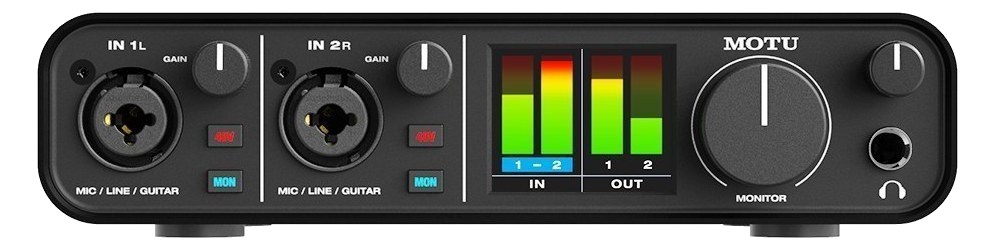
M2The MOTU M2 is a compact 2-in/2-out USB-C interface featuring the same ESS Sabre32 DAC technology found in MOTU's flagship models, delivering studio-grade conversion at a budget price. Its ultra-low latency and bus-powered design make it an excellent backup interface for live rigs or a dedicated headphone monitoring output. The large LCD level meter and simple layout keep things fast on stage.View gear →
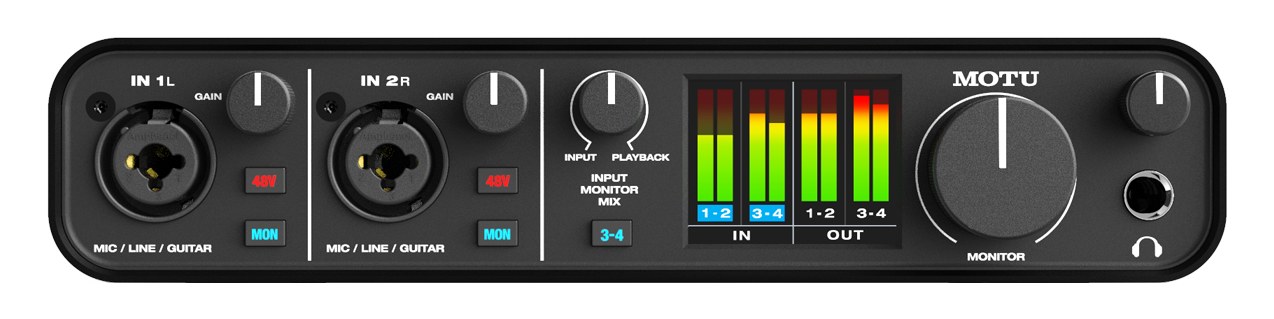
M4The MOTU M4 punches well above its price class with best-in-class conversion quality and an ESS Sabre DAC that rivals interfaces costing three times as much. Its compact desktop form factor makes it easy to tuck into a rack drawer or mount on a shelf, and the loopback feature is handy for virtual soundcheck routing. A great option for budget playback rigs or as a backup interface.View gear →
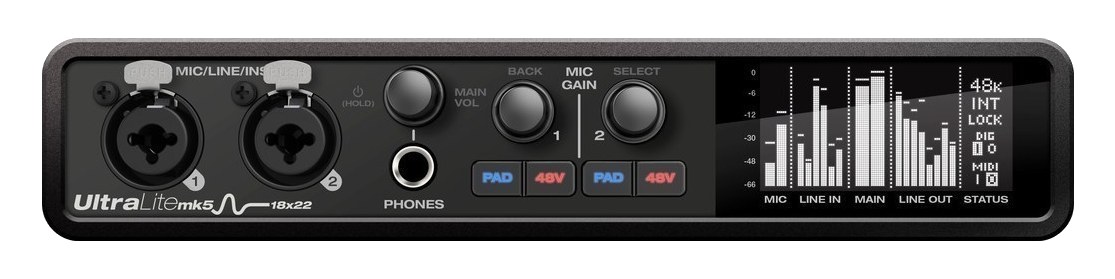
UltraLite mk5The MOTU UltraLite mk5 packs a massive 18x22 I/O count into a half-rack chassis, making it one of the most port-dense interfaces at its size. With two mic pres, six line outputs, S/PDIF, and a full 48-input DSP mixer, it handles complex monitoring setups without a computer. The half-rack form factor lets you pair it with another half-rack device to save space, and the USB-C bus-power option means one less cable in simple setups. A touring favorite for compact playback rigs.View gear →
06 · Resolve the questions that can change the purchase or build plan.
Planning questions
Short, source-backed answers surface rack fit, power, cabling, and connection details before they become surprises.
Where does the MOTU M6 Audio Interface live in a complete rig?
The catalog assigns it no rack units. Builder tracks it as non-rack gear; follow the manufacturer’s mounting, case, and form-factor guidance.
How much power does the MOTU M6 Audio Interface draw?
Typical draw is 5W and documented maximum draw is 10W.
What connections does the MOTU M6 Audio Interface have?
13 documented physical ports, including Mic/Line In 1 (XLR/TRS), Mic/Line In 2 (XLR/TRS), Line In 3 (TRS), Line In 4 (TRS), Monitor Out L (TRS), Monitor Out R (TRS).
07 · See this gear inside a complete system plan.
Builder preview
Builder keeps non-rack gear in the same bill of materials, budget, dependency, and connection plan as the rack-mounted system around it.Open in Builder