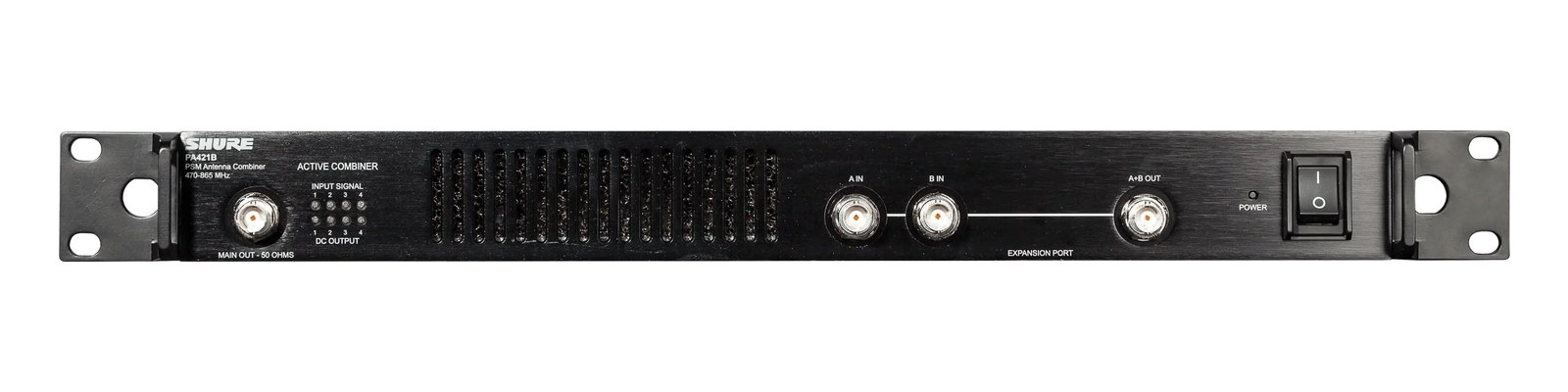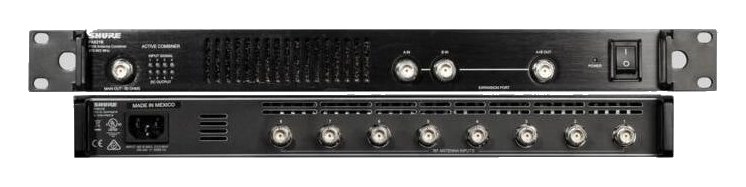

RF Venue COMBINE6 HDR IEM Combiner
RF Venue·Model COMBINE6 HDR·rf-venue-combine6-hdr
Photos
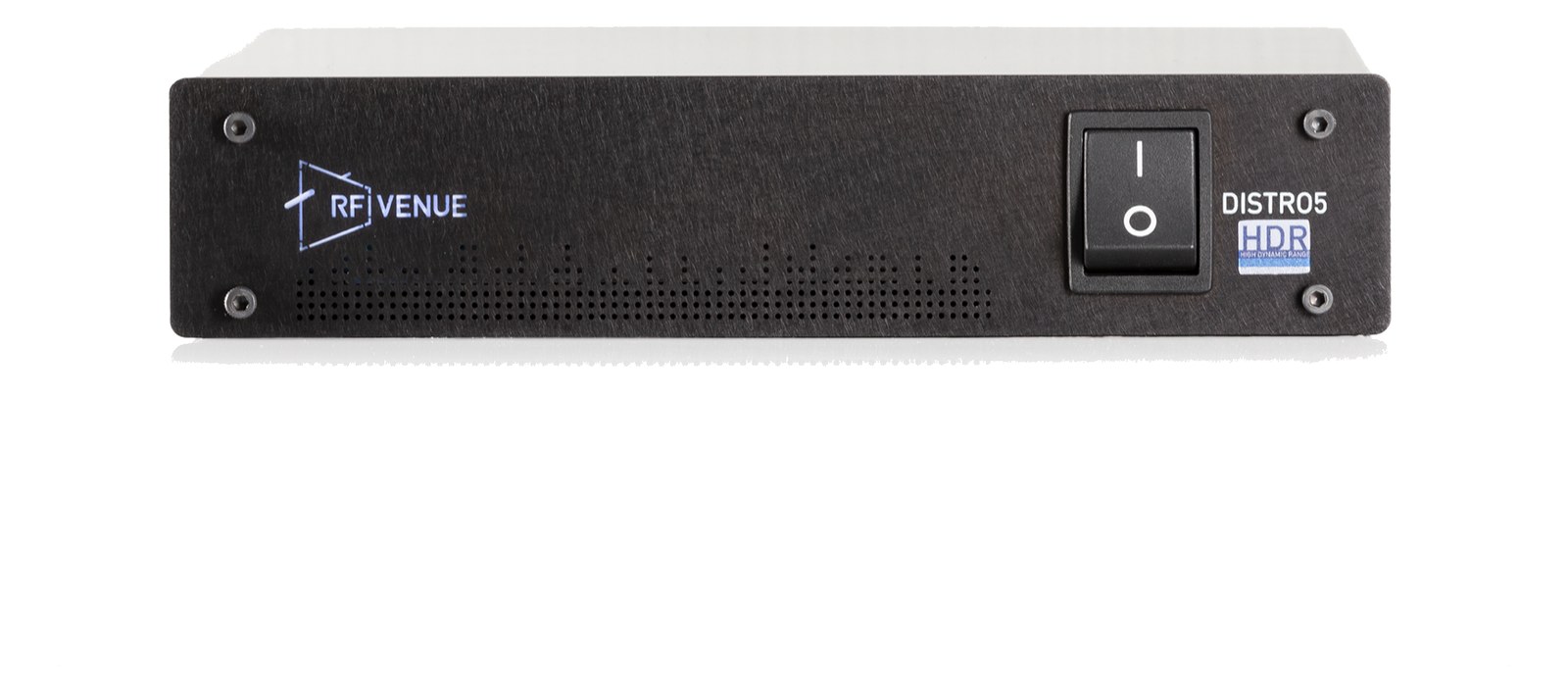
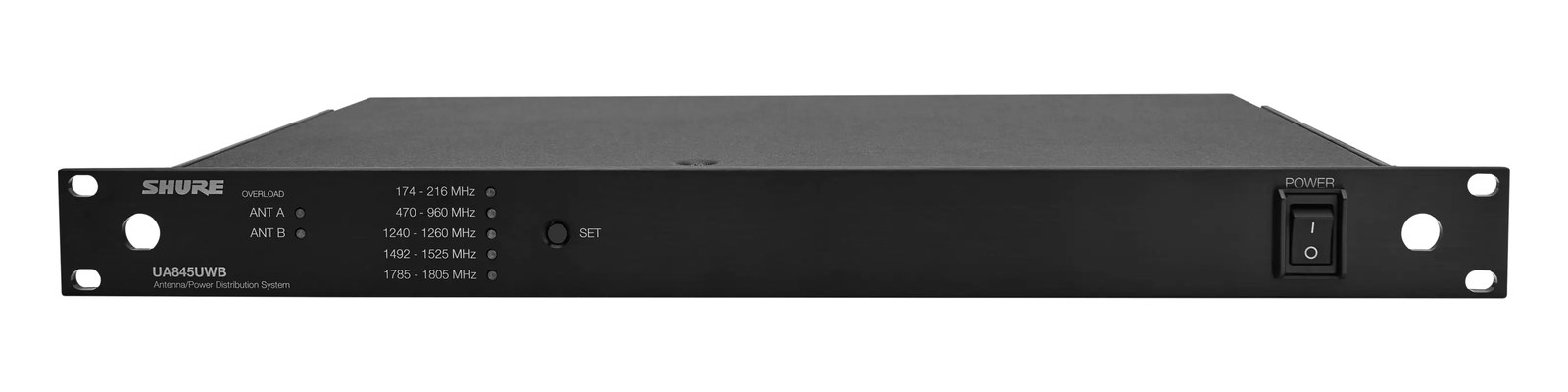
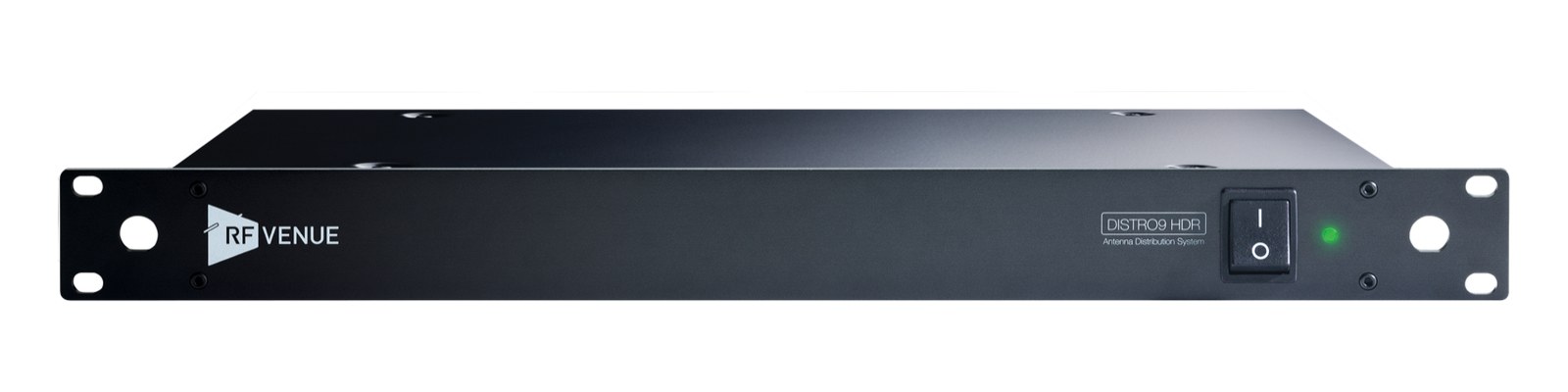
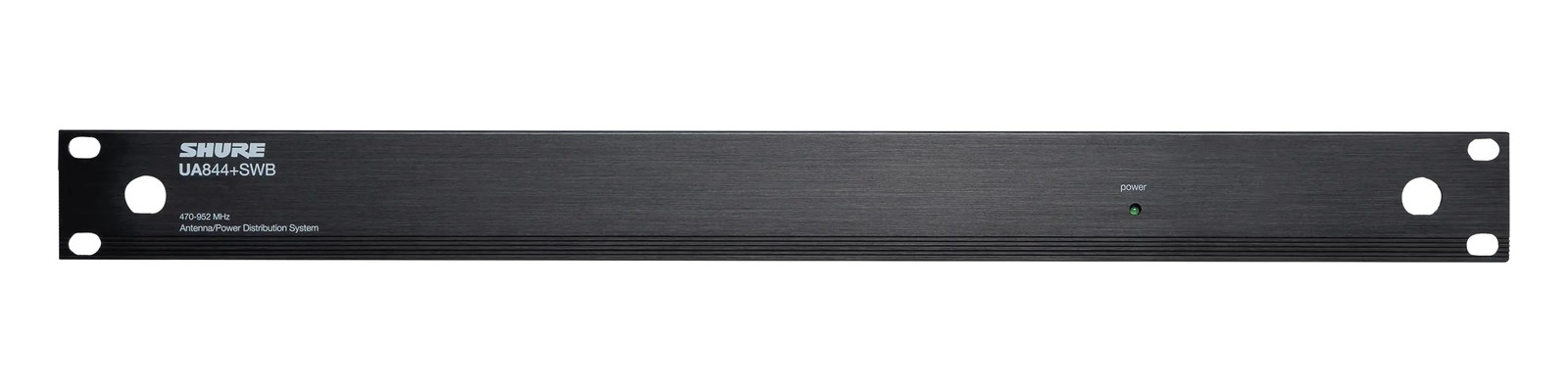
Manufacturer product photography — the drawn faceplate above stays true to panel layout; these show the hardware itself.
About the RF Venue COMBINE6 HDR
The RFRadio Frequency — the wireless part of wireless. RF planning is why big rigs scan, coordinate, and combine antennas instead of hoping. Venue COMBINE6 HDR squeezes a six-input IEMIn-Ear Monitor — earpieces that replace floor wedges, feeding each player their own mix. The reason this whole rack exists. transmitter combinerThe transmit-side twin of a distro: merges several IEM transmitters into one antenna without letting them intermodulate. into half a rack space, with high dynamic rangeThe span between a device’s noise floor and its clipping point — the room between the quietest and loudest sounds it can pass. RF stages built for the crowded UHFThe TV-band radio range (roughly 470–608 MHz in the US) where serious wireless mics and IEMs live — better behaved than crowded 2.4 GHz. landscape. Passive RF in/out expansion ports chain a second unit for larger monitor rigs, and the single antenna output feeds a CP Beam or helicalA directional antenna (paddle, LPDA, helical) aimed at the stage — focuses coverage where the performers are and rejects RF from elsewhere. for clean transmit coverage. A dense, current-generation alternative to the classic 4:1 combiners.
The COMBINE6 HDR answers a specific and common problem in monitor worldThe side-stage domain of the monitor engineer — console, IEM racks, and everything feeding the band’s ears instead of the audience.: you have six IEMIn-Ear Monitor — earpieces that replace floor wedges, feeding each player their own mix. The reason this whole rack exists. transmitters, one good antenna position, and no interest in running six separate coax runs to the hang point. It takes six BNCThe twist-lock coax connector used for word clock and antenna runs — it locks, so it can’t be pulled out mid-show. transmitter outputs, combines them through high dynamic rangeThe span between a device’s noise floor and its clipping point — the room between the quietest and loudest sounds it can pass. RFRadio Frequency — the wireless part of wireless. RF planning is why big rigs scan, coordinate, and combine antennas instead of hoping. stages, and sends a single combined signal to one antenna — typically a directional CP Beam or helicalA directional antenna (paddle, LPDA, helical) aimed at the stage — focuses coverage where the performers are and rejects RF from elsewhere. aimed at the stage. That half-rackThe standard slice of rack height: 1U = 1.75″. A 3U box takes three slices; half-rack gear pairs two units side by side in one. footprint means it pairs neatly with a second unit or a small patch panel without consuming a full 1U on its own, which matters when your IEM rack is already fighting for space.
The HDR designation is the detail worth understanding before you buy. In dense RFRadio Frequency — the wireless part of wireless. RF planning is why big rigs scan, coordinate, and combine antennas instead of hoping. environments — festival stages, arenas, any situation where you're sharing UHFThe TV-band radio range (roughly 470–608 MHz in the US) where serious wireless mics and IEMs live — better behaved than crowded 2.4 GHz. spectrum with other productions — standard combining stages can compress or intermodulate when hit with strong out-of-band signals. The high dynamic rangeThe span between a device’s noise floor and its clipping point — the room between the quietest and loudest sounds it can pass. front end is built to handle that without degrading your transmitted signal. The expansion ports are equally practical: run a second COMBINE6 HDR for up to twelve transmitters through a single antenna path, connected passively with no additional active hardware. At 8 watts nominal draw in a shallow 150mm chassis, it integrates cleanly into any IEMIn-Ear Monitor — earpieces that replace floor wedges, feeding each player their own mix. The reason this whole rack exists. rack without thermal or depth surprises.
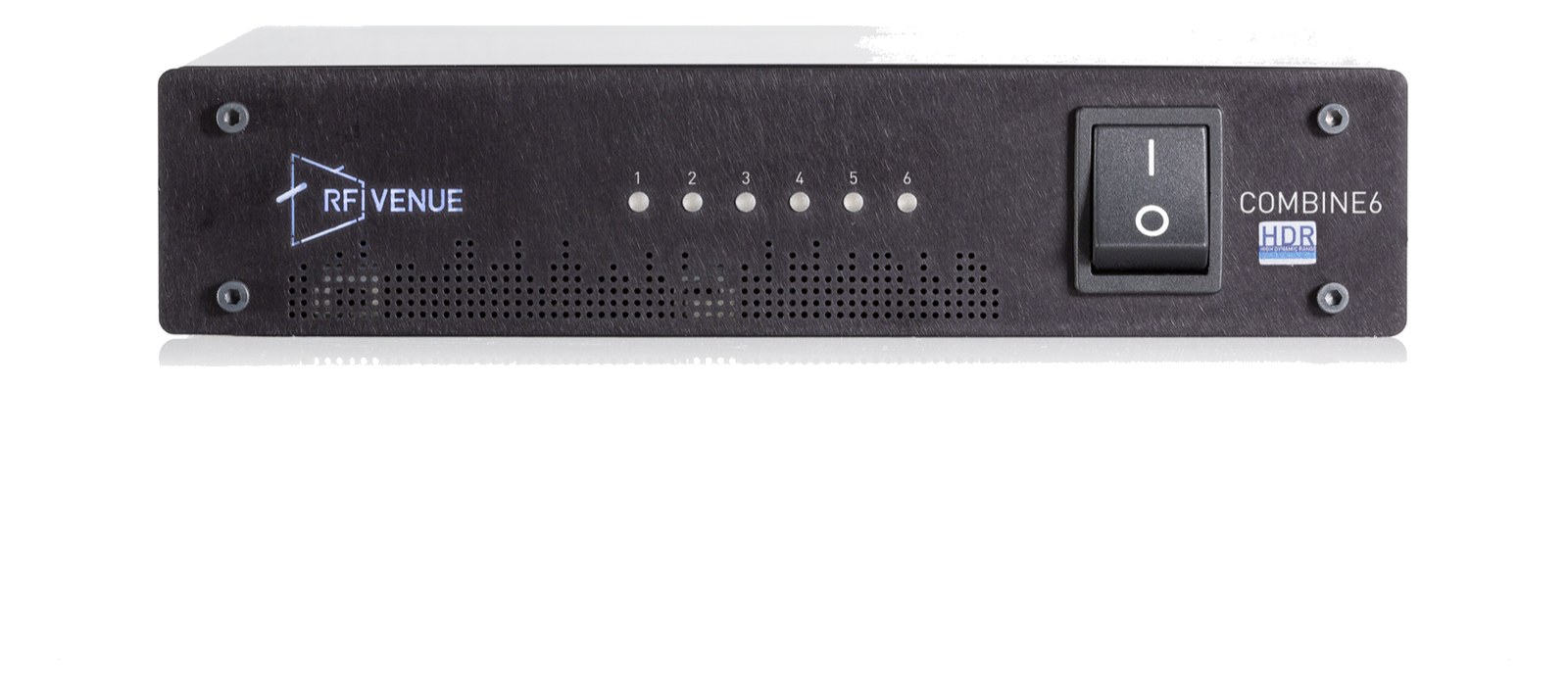
This is the right tool if you're running four to six IEMIn-Ear Monitor — earpieces that replace floor wedges, feeding each player their own mix. The reason this whole rack exists. transmitters regularly and want to centralize your antenna placement — touring monitor engineers, corporate production houses with fixed-format rigs, and anyone who has fought cable management on a multi-transmitter hang will immediately understand the value. If you're only running two or three transmitters, a simpler 4-input combinerThe transmit-side twin of a distro: merges several IEM transmitters into one antenna without letting them intermodulate. costs less and covers the need. If you're pushing beyond six channels on a single rig, plan for that second unit from the start and use the expansion ports as intended rather than treating it as an afterthought.
In the rack
- Mount both halves of a two-unit chain in adjacent half-rackThe standard slice of rack height: 1U = 1.75″. A 3U box takes three slices; half-rack gear pairs two units side by side in one. slots and run the RFRadio Frequency — the wireless part of wireless. RF planning is why big rigs scan, coordinate, and combine antennas instead of hoping. Expansion Out of the first directly into the RF Expansion In of the second — keep that jumper cable as short as possible to minimize insertion loss before the signal reaches the antenna.
- The single Antenna Out assumes you're feeding one directional antennaA directional antenna (paddle, LPDA, helical) aimed at the stage — focuses coverage where the performers are and rejects RF from elsewhere.. If your stage geometry requires coverage from two sides, you'll need an active antenna distributionOne pair of antennas feeding many receivers through an amplified splitter — replaces the forest of whips and keeps RF levels consistent. amplifier downstream — the COMBINE6 HDR is a combinerThe transmit-side twin of a distro: merges several IEM transmitters into one antenna without letting them intermodulate., not a splitter, and that port is not designed to feed multiple antennas passively.
- Label each TX In port at patch with the transmitter frequency alongside the channel name. When a transmitter needs to be swapped mid-show, whoever is touching the rack can verify they're patching the right frequency without pulling up a channel list.
- Keep the unit away from the bottom of a rack stacked directly above a high-heat device. At 12 watts max draw it runs cool itself, but RFRadio Frequency — the wireless part of wireless. RF planning is why big rigs scan, coordinate, and combine antennas instead of hoping. stages are sensitive to ambient heat that can drift performance over a long show day.
Half-rackThe standard slice of rack height: 1U = 1.75″. A 3U box takes three slices; half-rack gear pairs two units side by side in one. 6:1 IEMIn-Ear Monitor — earpieces that replace floor wedges, feeding each player their own mix. The reason this whole rack exists. transmitter combinerThe transmit-side twin of a distro: merges several IEM transmitters into one antenna without letting them intermodulate. with passive RFRadio Frequency — the wireless part of wireless. RF planning is why big rigs scan, coordinate, and combine antennas instead of hoping. expansion ports.
I/O Ports (11)
| Port | Connector | Direction | Signal | Channels |
|---|---|---|---|---|
| TX 1 In | BNC | input | antenna | — |
| TX 2 In | BNC | input | antenna | — |
| TX 3 In | BNC | input | antenna | — |
| TX 4 In | BNC | input | antenna | — |
| TX 5 In | BNC | input | antenna | — |
| TX 6 In | BNC | input | antenna | — |
| Link In 1 | BNC | input | antenna | — |
| Link In 2 | BNC | input | antenna | — |
| Link Out | BNC | output | antenna | — |
| Antenna Out | BNC | output | antenna | — |
- DC In (12V 3A) (DC BARREL)
Deciding between two?
Rack space, watts, weight and every connector, side by side.
Related gear


Related articles
Guides from our library that cover planning around antenna distro gear.
What an IEM rig actually is, the components that go into one, and how to plan your first one without overspending or blowing a circuit.
Why your wireless mics and IEMs need a frequency plan, what intermodulation means in practice, and how to coordinate channels for a clean show.
When you need a combiner vs a distro, active vs passive, cable choice and length math, and how to scale a 4-pack rig into an 8 or 12-pack without intermod nightmares.
How to build an IEM rack: choosing case size and depth, ordering gear by weight and heat, power sequencing rules, wiring practice, and a pre-show checklist.