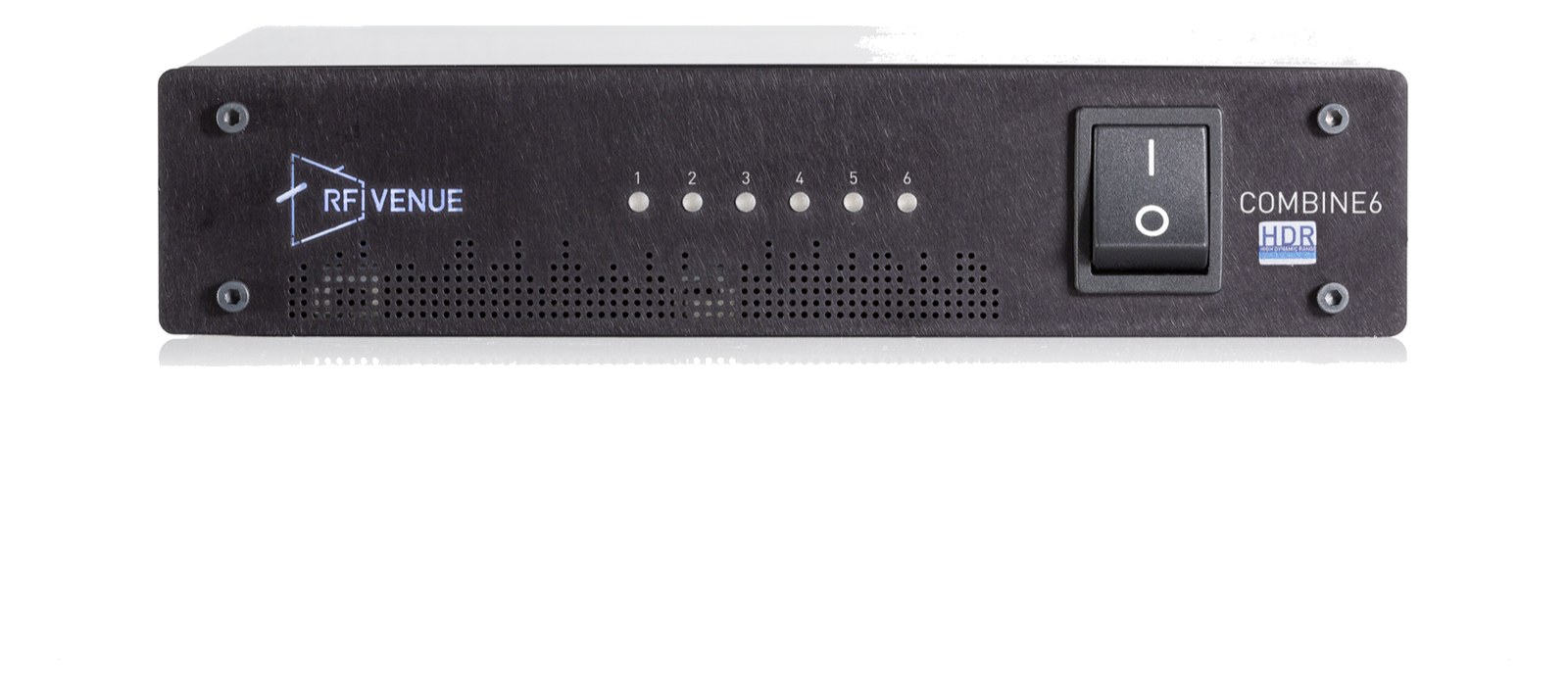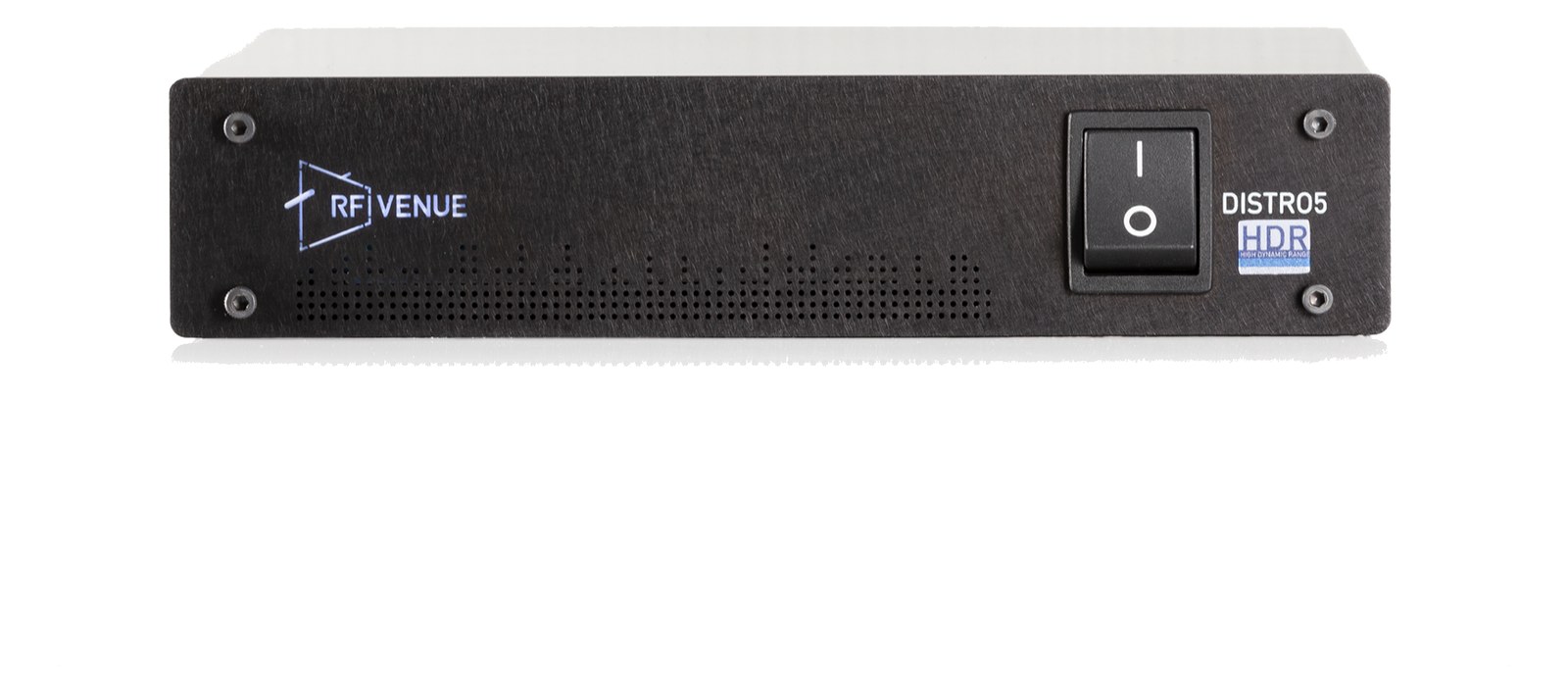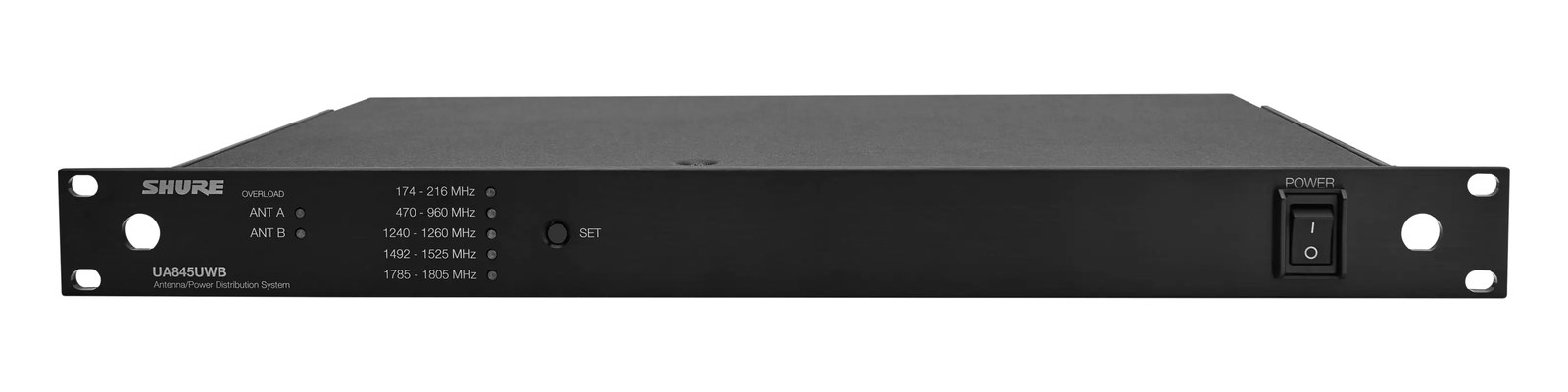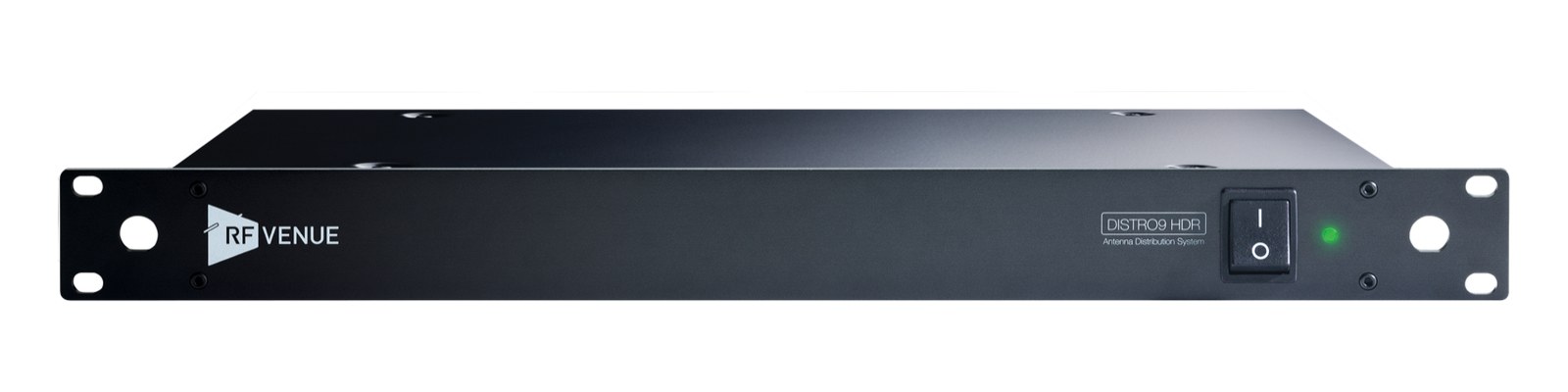

RF Venue DISTRO4 Antenna Distro
RF Venue·Model DISTRO4·rf-venue-distro4
Photos
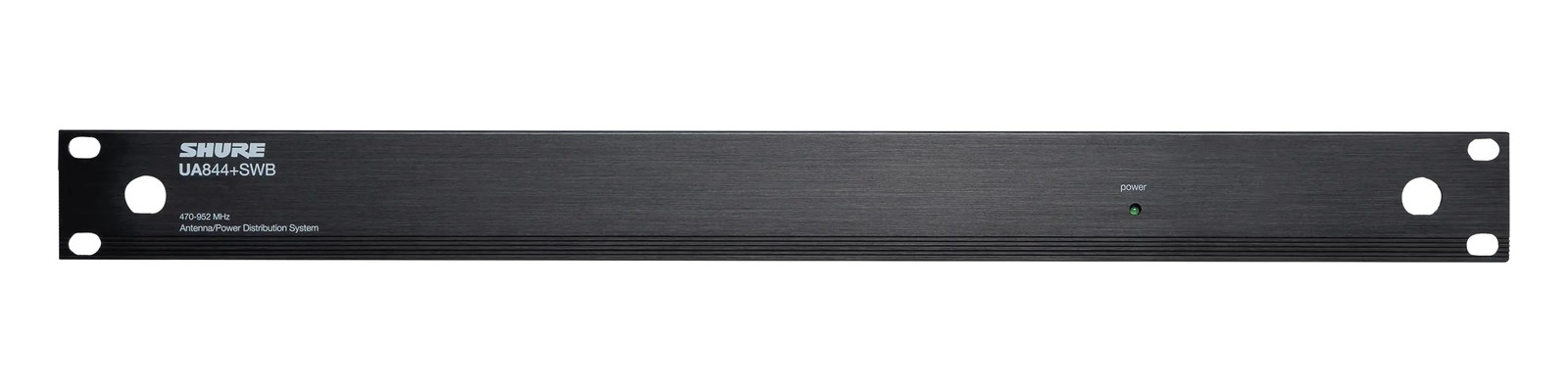
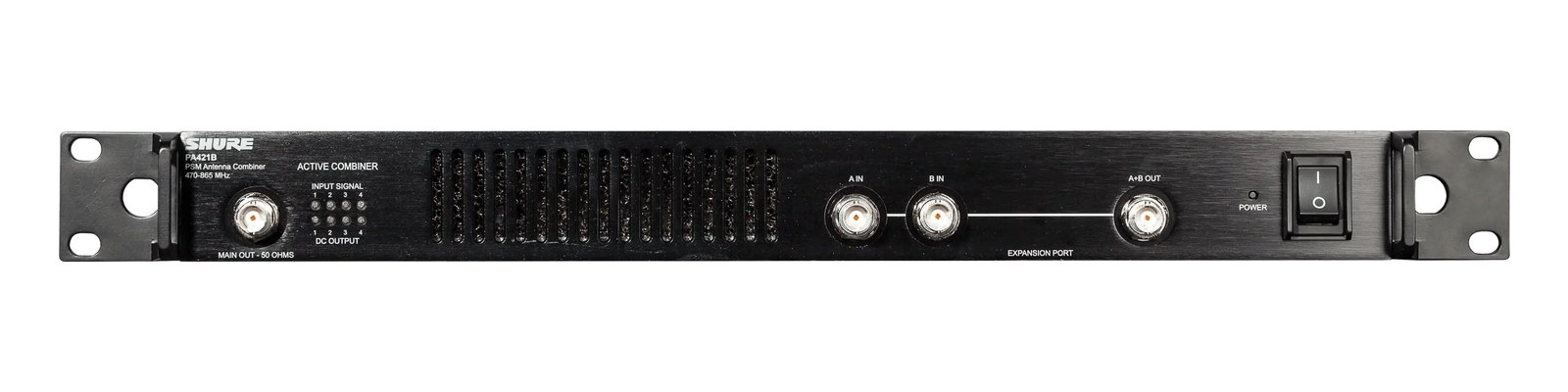
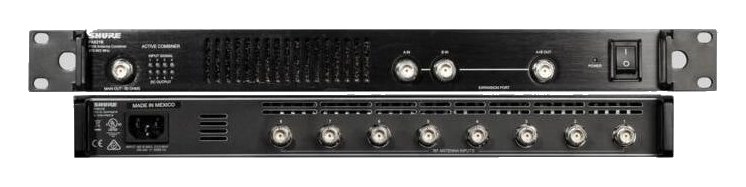
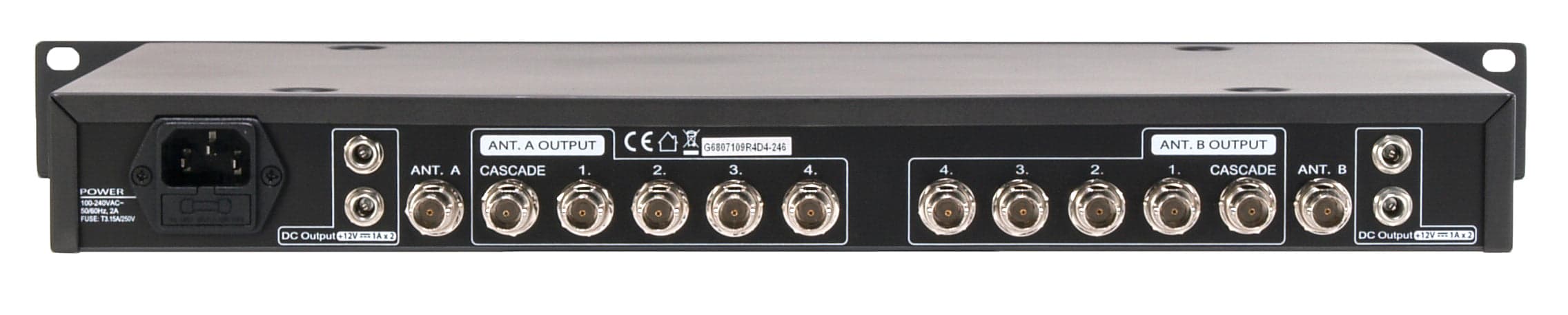
Manufacturer product photography — the drawn faceplate above stays true to panel layout; these show the hardware itself.
About the RF Venue DISTRO4
The RFRadio Frequency — the wireless part of wireless. RF planning is why big rigs scan, coordinate, and combine antennas instead of hoping. Venue DISTRO4 is a full-width 1UThe standard slice of rack height: 1U = 1.75″. A 3U box takes three slices; half-rack gear pairs two units side by side in one. antenna distributionOne pair of antennas feeding many receivers through an amplified splitter — replaces the forest of whips and keeps RF levels consistent. system with four diversityA receiver with two antennas and two radio sections that continuously picks the stronger one — the difference between a dropout and a show. receiver feeds plus cascade outputs. It provides active gainHow much the preamp amplifies the incoming signal. Too low and you’re hunting through hiss; too high and peaks clip. to compensate for splitting losses and an internal supply for receiver power, keeping a multi-channel wireless rack consolidated in one chassis.
The DISTRO4 solves the receive-side version of the antenna problem: four wireless mic or guitar receivers all want the same pair of antennas, and stacking whipsThe stock quarter-wave stick antenna that screws straight onto a receiver — fine for a channel or two in a small room. on each receiver builds a wall of intermodulating metal inside your rack. This half-rackThe standard slice of rack height: 1U = 1.75″. A 3U box takes three slices; half-rack gear pairs two units side by side in one. unit takes one antenna pair in on BNCThe twist-lock coax connector used for word clock and antenna runs — it locks, so it can’t be pulled out mid-show. and distributes it to four receivers, with the amplification set up to keep the noise figure honest rather than to win a gainHow much the preamp amplifies the incoming signal. Too low and you’re hunting through hiss; too high and peaks clip. spec-sheet contest.
The half-rackThe standard slice of rack height: 1U = 1.75″. A 3U box takes three slices; half-rack gear pairs two units side by side in one. format is the tell for who it's for: bands and worship rigs running four to eight wireless channels who need distroOne pair of antennas feeding many receivers through an amplified splitter — replaces the forest of whips and keeps RF levels consistent. to fit next to a COMBINE4 or a receiver in the same 1U space. Pair the antenna inputs with a proper remoted antenna — a diversityA receiver with two antennas and two radio sections that continuously picks the stronger one — the difference between a dropout and a show. fin on a mic stand beats rack-mounted paddlesA directional antenna (paddle, LPDA, helical) aimed at the stage — focuses coverage where the performers are and rejects RF from elsewhere. in almost every room — and the DISTRO4 disappears into the signal chain, which is exactly what good RFRadio Frequency — the wireless part of wireless. RF planning is why big rigs scan, coordinate, and combine antennas instead of hoping. plumbing should do.

Planning note: distrosOne pair of antennas feeding many receivers through an amplified splitter — replaces the forest of whips and keeps RF levels consistent. cascade. Growing past four receivers means either the eight-way big brother or feeding a second distro from the first — decide which trajectory your channel count is on before you buy, because the second option spends a rack unitThe standard slice of rack height: 1U = 1.75″. A 3U box takes three slices; half-rack gear pairs two units side by side in one. and a cable run the first avoids.
In the rack
- Remote the antennas out of the rack — a fin on a stand at head height transforms reception.
- Half-rackThe standard slice of rack height: 1U = 1.75″. A 3U box takes three slices; half-rack gear pairs two units side by side in one.: it shares a 1U space with a COMBINE4 for a tidy full-width RFRadio Frequency — the wireless part of wireless. RF planning is why big rigs scan, coordinate, and combine antennas instead of hoping. row.
- Label the BNCThe twist-lock coax connector used for word clock and antenna runs — it locks, so it can’t be pulled out mid-show. jumpers by receiver — four identical black cables at teardown say otherwise.
4-way wideband antenna distributionOne pair of antennas feeding many receivers through an amplified splitter — replaces the forest of whips and keeps RF levels consistent. system. Full-width 1UThe standard slice of rack height: 1U = 1.75″. A 3U box takes three slices; half-rack gear pairs two units side by side in one. chassis (480 x 45 x 250 mm).
I/O Ports (17)
| Port | Connector | Direction | Signal | Channels |
|---|---|---|---|---|
| Antenna In A | BNC | input | antenna | — |
| Antenna In B | BNC | input | antenna | — |
| Ant A Out 1 | BNC | output | antenna | — |
| Ant A Out 2 | BNC | output | antenna | — |
| Ant A Out 3 | BNC | output | antenna | — |
| Ant A Out 4 | BNC | output | antenna | — |
| Ant B Out 1 | BNC | output | antenna | — |
| Ant B Out 2 | BNC | output | antenna | — |
| Ant B Out 3 | BNC | output | antenna | — |
| Ant B Out 4 | BNC | output | antenna | — |
| Cascade Out A | BNC | output | antenna | — |
| Cascade Out B | BNC | output | antenna | — |
- Power (IEC) (IEC C14)
- DC Out 1 (12V) (DC BARREL)
- DC Out 2 (12V) (DC BARREL)
- DC Out 3 (12V) (DC BARREL)
- DC Out 4 (12V) (DC BARREL)
Deciding between two?
Rack space, watts, weight and every connector, side by side.
Related gear


Related articles
Guides from our library that cover planning around antenna distro gear.
What an IEM rig actually is, the components that go into one, and how to plan your first one without overspending or blowing a circuit.
Why your wireless mics and IEMs need a frequency plan, what intermodulation means in practice, and how to coordinate channels for a clean show.
When you need a combiner vs a distro, active vs passive, cable choice and length math, and how to scale a 4-pack rig into an 8 or 12-pack without intermod nightmares.
How to build an IEM rack: choosing case size and depth, ordering gear by weight and heat, power sequencing rules, wiring practice, and a pre-show checklist.