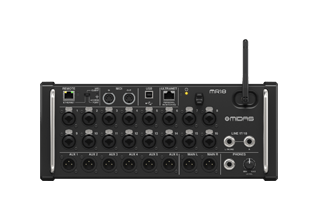

Yamaha TF-Rack
Yamaha·Model TF-Rack·yamaha-tf-rack
Photos
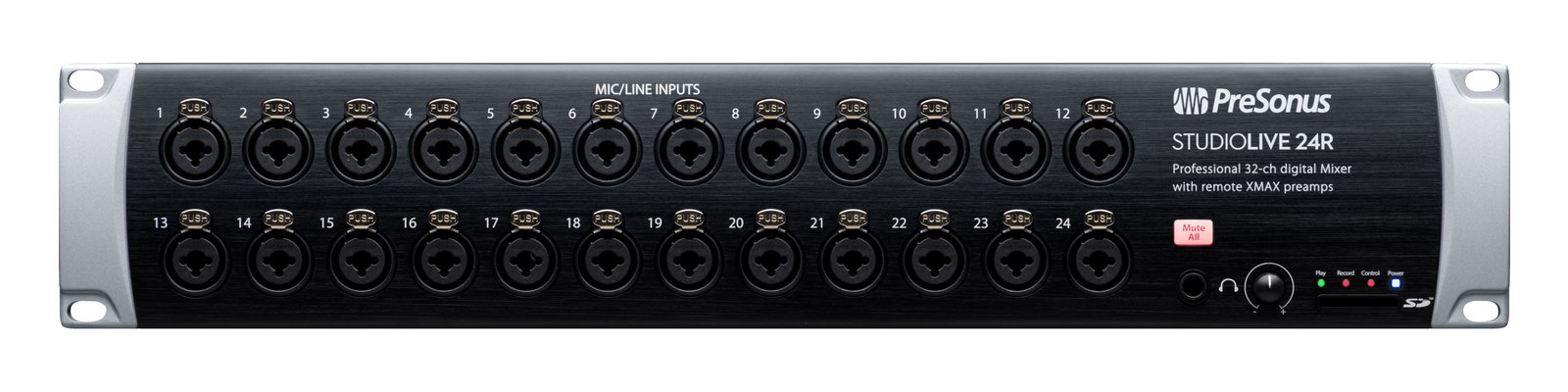
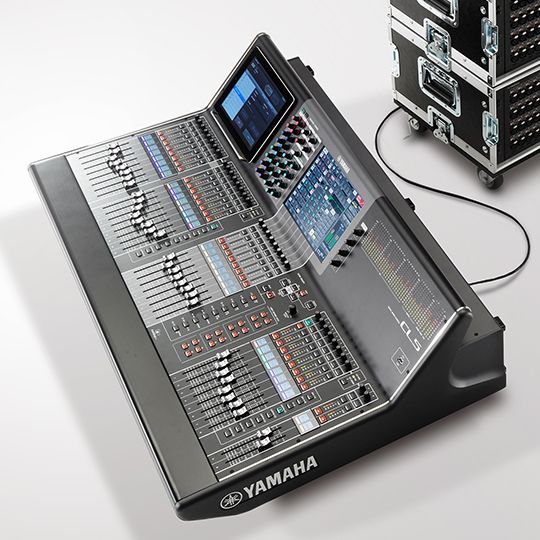
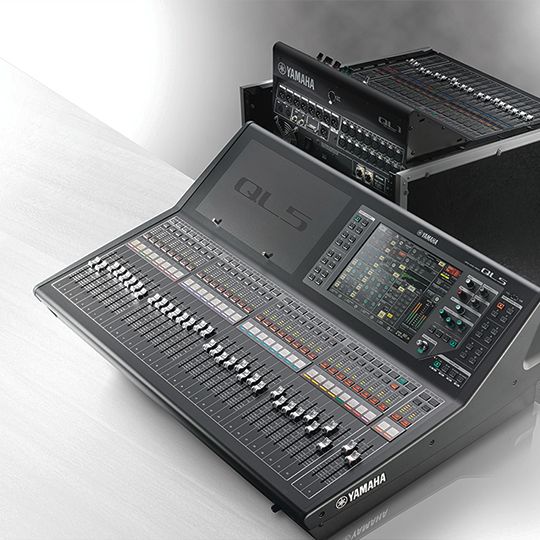
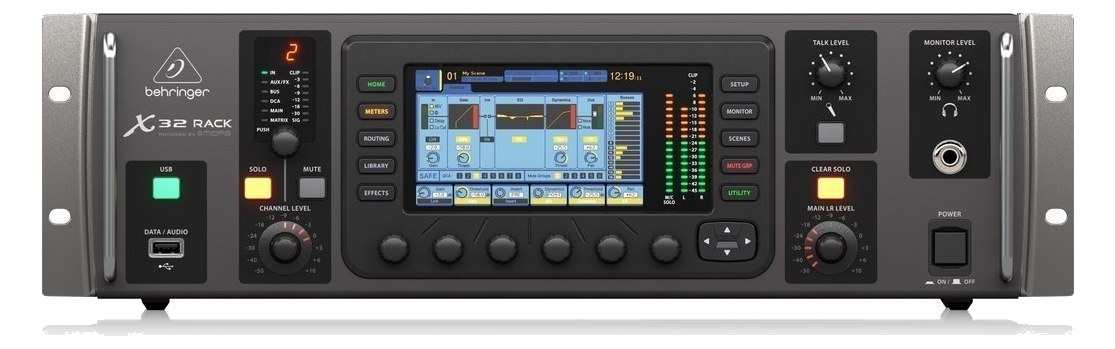
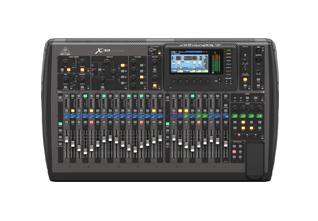
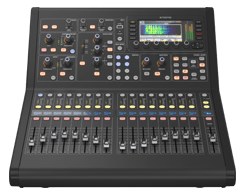
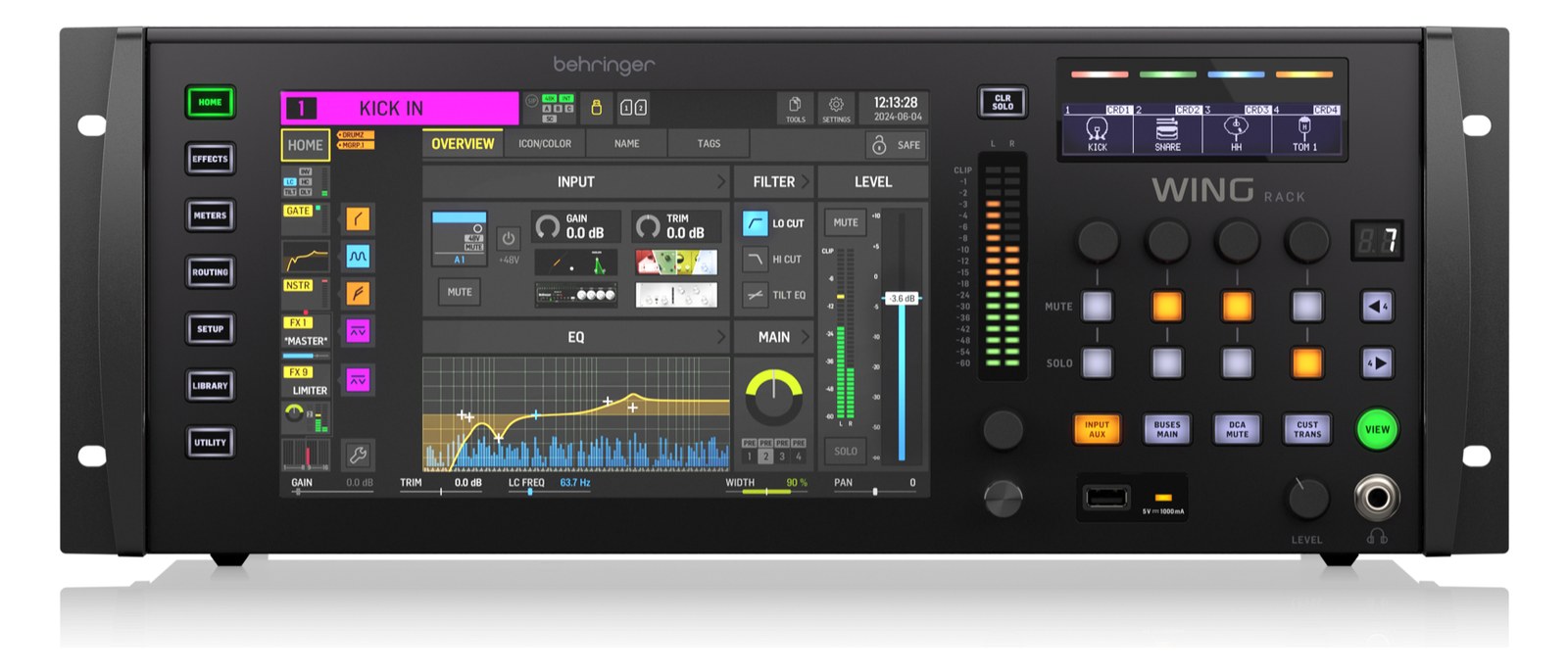
Manufacturer product photography — the drawn faceplate above stays true to panel layout; these show the hardware itself.
About the Yamaha TF-Rack
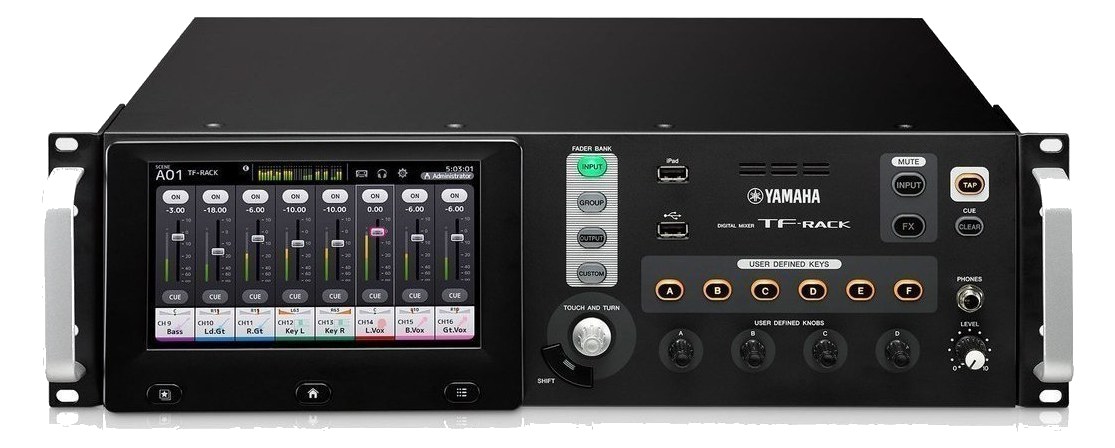
The Yamaha TF-Rack carries the TF series touchscreen workflow into a 3UThe standard slice of rack height: 1U = 1.75″. A 3U box takes three slices; half-rack gear pairs two units side by side in one. rack: forty processing channels, sixteen recallable preampsThe gain stage that lifts a mic’s tiny signal up to line level — the first thing a signal hits, and a big part of how a console sounds., and an expansion slot for the NY64-D DanteThe most common audio-over-network standard: dozens of channels of uncompressed digital audio down one ordinary Ethernet cable between Dante boxes. card. TF StageMix control and one-knob compressors keep it approachable for bands mixing their own ears, with Yamaha reliability underneath. The rack twin of the TF1/TF3 desks.
The TF-Rack takes Yamaha's TF-series console engine — the one behind the TF1 and TF3 desks — and squeezes it into 3UThe standard slice of rack height: 1U = 1.75″. A 3U box takes three slices; half-rack gear pairs two units side by side in one. of rack space with a built-in touchscreen for direct control. In a live rig, that positions it as a self-contained monitor or IEMIn-Ear Monitor — earpieces that replace floor wedges, feeding each player their own mix. The reason this whole rack exists. mixing brain: sixteen recallable mic preampsThe gain stage that lifts a mic’s tiny signal up to line level — the first thing a signal hits, and a big part of how a console sounds. on combo inputs, sixteen XLRThe standard 3-pin locking connector for mics and balanced line signals — pin 1 is the shield, pins 2 and 3 carry the balanced pair. outputs for auxAn auxiliary mix output — each aux is its own independent blend of the channels, typically one per monitor mix or effects send. and mix sends, forty channels of processing, and a network jack that lets the band control their own ears via the TF StageMix iPad app without a dedicated monitor engineer standing at a separate console. It is a real mixer in a rack box, not a stage boxThe I/O endpoint on stage: mics plug in there and one digital line (AES50, Dante) carries everything to the console. The snake, digitized. with delusions.
At load-in, the 300mm depth is the number to watch — shallower rack bags will fight you here, though it sits fine in any standard touring road rack. The 4.5 kg weight is genuinely light for what it does, which matters when this is one of several units in an IEMIn-Ear Monitor — earpieces that replace floor wedges, feeding each player their own mix. The reason this whole rack exists. rack that already has a power conditionerFilters venue AC, clamps surges, and gives the rack one tidy inlet. Not a voltage regulator and not a battery — just cleaner power. and a few transmitter bays. The NY64-D expansion slot is worth planning around from day one: if your production runs DanteThe most common audio-over-network standard: dozens of channels of uncompressed digital audio down one ordinary Ethernet cable between Dante boxes., drop the card in and you gainHow much the preamp amplifies the incoming signal. Too low and you’re hunting through hiss; too high and peaks clip. 64-channel network audio I/O, which turns the TF-Rack into a proper networked stage rack node. Without it, USB handles up to 34x34 channels to a DAWDigital Audio Workstation — the recording and playback software (Logic, Ableton Live, Pro Tools) at the center of a computer rig. or playback machine, which covers most band-world use cases cleanly. Forty watts nominal draw keeps it friendly to a standard 15A circuit even in a dense rack.
This unit earns its place in a working band's IEMIn-Ear Monitor — earpieces that replace floor wedges, feeding each player their own mix. The reason this whole rack exists. rig or a small-to-medium corporate production where the budget doesn't support a dedicated monitor engineer and the band genuinely needs to self-mix. The one-knob compressors and StageMix workflow are real advantages for non-engineers. Where it is not the answer: if you need more than sixteen physical inputs from the stage without adding DanteThe most common audio-over-network standard: dozens of channels of uncompressed digital audio down one ordinary Ethernet cable between Dante boxes., or if your FOHFront Of House — the main mix the audience hears, and the console position out in the room where it gets mixed. engineer expects a console-class effects library and deep parametricAn EQ where you dial the exact frequency, width, and cut or boost — surgical control next to a graphic’s fixed sliders. routing, a dedicated digital console or a more I/O-dense rack processor will serve better. It is also not a substitute for a proper IEM transmitter rack — it provides the mix, not the RFRadio Frequency — the wireless part of wireless. RF planning is why big rigs scan, coordinate, and combine antennas instead of hoping..
In the rack
- Reserve a DanteThe most common audio-over-network standard: dozens of channels of uncompressed digital audio down one ordinary Ethernet cable between Dante boxes. card slot budget from the start — the NY64-D dramatically changes how the unit integrates with larger productions, and retrofitting it mid-tour means a firmware check and a reconfiguration session you don't want on a show day.
- Map your sixteen Omni outputs deliberately before the first rehearsal: auxAn auxiliary mix output — each aux is its own independent blend of the channels, typically one per monitor mix or effects send. 1-8 to IEMIn-Ear Monitor — earpieces that replace floor wedges, feeding each player their own mix. The reason this whole rack exists. mixes, aux 9-12 to wedgeA floor monitor speaker angled up at the performer — the thing IEMs replace, and the thing you fall back on when they die. sends, and a stereo main to FOHFront Of House — the main mix the audience hears, and the console position out in the room where it gets mixed. is a common layout that still leaves you outputs in reserve for a click feed or broadcast tap.
- Keep the touchscreen accessible — this isn't a set-and-forget black box. Position it at the front of the rack drawer or on a shallow shelf so a band member or crew can reach it at stage level during line checkThe quick pre-show pass confirming every input reaches the console, one line at a time. Not a soundcheck — just does it work. without pulling the whole rack out.
- If artists are using StageMix, put the mixer and the iPad access point on an isolated network segment. Shared green-room Wi-Fi and StageMix on the same router is a reliable way to lose mix control at the worst possible moment.
40-ch TF engine in 3UThe standard slice of rack height: 1U = 1.75″. A 3U box takes three slices; half-rack gear pairs two units side by side in one. with touchscreen, 16 preampsThe gain stage that lifts a mic’s tiny signal up to line level — the first thing a signal hits, and a big part of how a console sounds., NY64-D slot.
I/O Ports (5)
| Port | Connector | Direction | Signal | Channels |
|---|---|---|---|---|
| Mic/Line 1-16 | COMBO XLR TRS | input | analog audio | 16 |
| Omni Out 1-16 | XLR MALE | output | analog audio | 16 |
| USB (34x34) | USB B | bidirectional | data | — |
| Network | RJ45 | bidirectional | data | — |
- Power (IEC C14)
Deciding between two?
Rack space, watts, weight and every connector, side by side.
Related gear


Related articles
Guides from our library that cover planning around digital mixer gear.
A walking tour of the signal path from microphone to in-ear monitor, with what every box in the rack actually does to the audio along the way.
Why sealed IEMs make you feel disconnected from the room — and exactly how to put the audience back into your mix with one or two well-placed mics.
Step-by-step: linking aux buses into stereo pairs, pre-fader vs post-fader, routing buses to Ultranet vs physical XLRs vs AES50, and adding a bus-level limiter.
A practical comparison of the three audio-over-network protocols you’ll encounter in a rack rig, with guidance on when each one is the right pick.