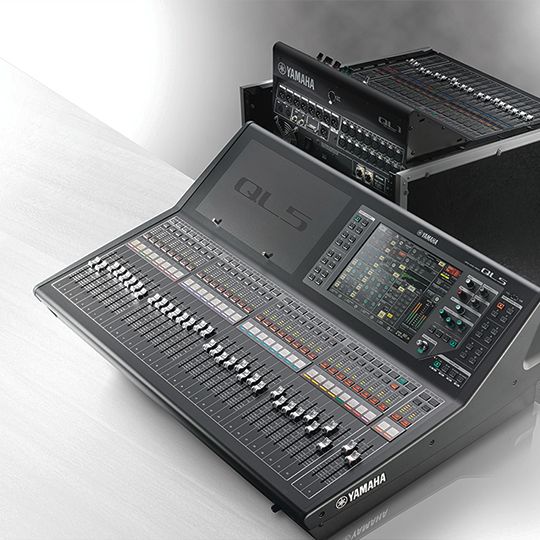
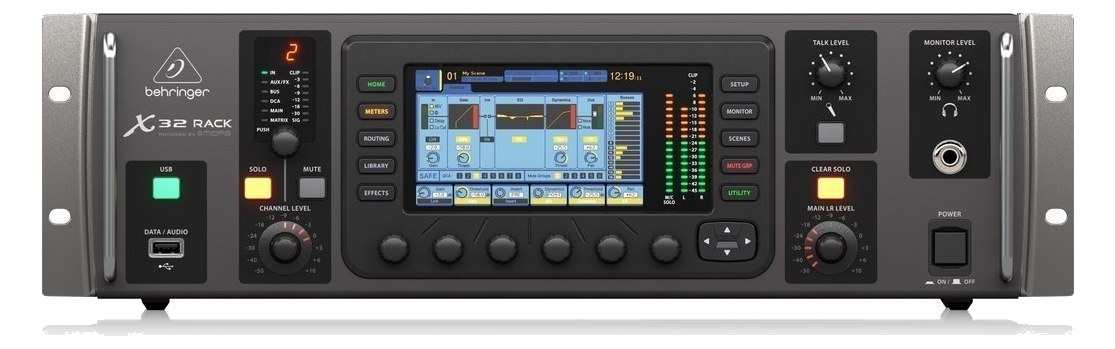
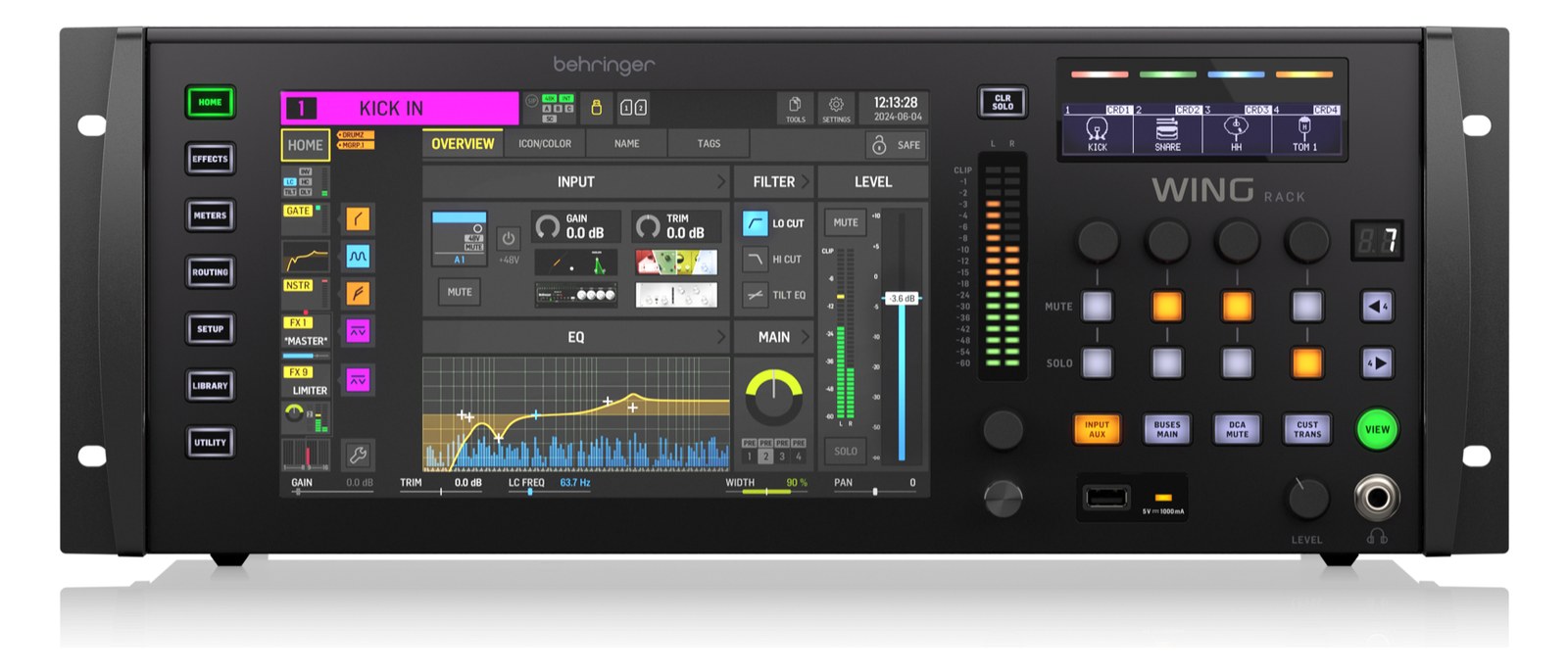
The Yamaha QL5 is the larger of Yamaha's QL-series digital consoles, a long-running staple of touring and theater rigs. It runs on the QL/CL ecosystem with Dante built-in, and pairs naturally with Yamaha Rio and Tio stage boxes. A common front-of-house console for mid-size and large productions.
~$16,999Use retailer rows for current price and stock
01 · What it does—and what that changes in your rig.
Product overview
Start with the payoff, then work through how it functions, where it fits, and the details that change a real build.
The payoff
Digital Mixer decisions, organized around the whole rig.
The QL5 is Yamaha's larger QL-series console, and it lives at front-of-houseFront Of House — the main mix the audience hears, and the console position out in the room where it gets mixed. — not in a rack. It's a 64-input digital desk that anchors mid-size and large touring and theater productions, sitting squarely in the QL/CL ecosystem alongside Yamaha's Rio and Tio stage boxesThe I/O endpoint on stage: mics plug in there and one digital line (AES50, Dante) carries everything to the console. The snake, digitized.. If you're building out a DanteThe most common audio-over-network standard: dozens of channels of uncompressed digital audio down one ordinary Ethernet cable between Dante boxes.-native audio network for a touring show, a theatrical run, or a fixed installation where FOH needs serious horsepower without stepping up to the full CL series, this is the console that conversation tends to land on.
Documented outputs
99 destination connections
Documented inputs
10Based on documented inputs
Rack space
Outside rackPlan a shelf, tray, or stage position
Yamaha product panelOutside rack · 200W
Function
How it works in the path
The two EtherConAn Ethernet plug inside a rugged XLR-style locking shell — tour-grade network connections that can’t be yanked loose.DanteThe most common audio-over-network standard: dozens of channels of uncompressed digital audio down one ordinary Ethernet cable between Dante boxes. ports — primary and secondary — carry 64 channels each, which means your stage boxThe I/O endpoint on stage: mics plug in there and one digital line (AES50, Dante) carries everything to the console. The snake, digitized. connectivity, monitor splitsFeeding one mic to two consoles at once (FOH + monitors, or a record rig) through a splitter — both get the identical source., and recording feeds can all live on the network with proper redundancyA second copy of anything critical — supply, computer, network path — already running so one failure can’t stop the show. in place. The eight local analog mic inputs give you a fallback or a convenient patch point for local sources at the console, and the eight Omni outputs let you drive amplifiers, delay stacks, or processing directly without requiring a separate analog output box. At 200 watts nominal draw and 627mm deep, this desk needs a real table and a real power circuit — plan your cable runs and weight distribution on the FOHFront Of House — the main mix the audience hears, and the console position out in the room where it gets mixed. riser accordingly at load-in.
Best fit
Where it earns its place in the system
If you're running a mid-size touring rig or a theater house where Yamaha gear is already in the ecosystem, the QL5 is a proven fit and operators will hit the ground running. If your show is smaller and 64 inputs is more console than your riderThe document attached to a booking that lists what the band needs — inputs, monitors, power, backline (and the green-room snacks). requires, the QL1 covers the same ecosystem at a lower channel count and price point. If you're building a pure IEMIn-Ear Monitor — earpieces that replace floor wedges, feeding each player their own mix. The reason this whole rack exists. or monitor rig and need a console to live in a rack rather than on a tabletop, this isn't the tool — look at a rack-mounted DSPDigital Signal Processing — the number-crunching that does EQ, compression, and effects inside a box. More DSP means more processing at once. or a smaller dedicated monitor desk instead.
In the rack
Details worth deciding before load-in.
Use the DanteThe most common audio-over-network standard: dozens of channels of uncompressed digital audio down one ordinary Ethernet cable between Dante boxes. Secondary port as a live redundantA second copy of anything critical — supply, computer, network path — already running so one failure can’t stop the show. mirror of your Primary network — if a switch goes down mid-show, the console fails over without a dropoutA brief audio gap when the radio link fails — the thing diversity, distros, and coordination all exist to prevent., and that insurance is worth the extra cable run every time.
The eight Omni outputs are fully assignable, so map your main LR, subs, and nearest delay to them at patch time — it keeps your analog output story clean without needing an additional breakoutA cable that splits one multichannel connector (like a DB25) into individual plugs — the octopus that turns 8 channels into 8 XLRs. box at a straightforward FOHFront Of House — the main mix the audience hears, and the console position out in the room where it gets mixed. position.
At 24 kg and 627mm deep, confirm your FOHFront Of House — the main mix the audience hears, and the console position out in the room where it gets mixed. riser or table depth before the truck unloads — a shallow folding table is a liability with this console on it.
Keep the control Ethernet port on its own isolated VLANVirtual LAN — slicing one physical switch into separate isolated networks, like keeping Dante away from lighting and guest WiFi. away from the DanteThe most common audio-over-network standard: dozens of channels of uncompressed digital audio down one ordinary Ethernet cable between Dante boxes. network — mixing control traffic with audio traffic on the same segment is a troubleshooting headache you don't want at show time.
02 · Know the whole path before you buy.
Signal path
Learn the route as a block diagram: source, product function, transport, and destination. Select any block to see what enters, what changes, and what leaves.
Interactive block diagramAuto-looping · hover, focus, or tap to hold a stage
Port-type signalProduct functionSystem boundary
Follow one signal from source to destination
Each block answers the same three questions: what arrives, what changes here, and what leaves.
01 · Source · selected
aes3 xlr + XLR female
etherCON + aes3 xlr
aes3 xlr + XLR male
01 · Source
10 documented inputs
aes3 xlr + XLR female
Arrives as
10 documented inputs
Connector
aes3 xlr + XLR female
Signal
digital audio
03 · What this product asks of the rest of the system.
Compatibility
Treat connector names as the start of the check—not the answer. These are the boundaries that determine a complete working path.
Best fit · Digital Mixer
Use it as digital mixer tracked outside rack rails; follow the manufacturer’s mounting and form-factor guidance.
Plan the companion path
Complete the path with upstream and downstream gear that matches connector, direction, signal type, protocol, and wiring standard.
Protocol boundary
This product declares DANTE; matching plugs alone do not make other protocols compatible.
04 · Every connector, grouped by job.
I/O ports
Switch the product view and the documented port inventory updates with it—hardware and data stay side by side.
Every connector, grouped by job.
Switch panels to keep the hardware view and the documented port list in sync.
Front panelRear panel
All documented ports for Yamaha QL5 Digital Mixer
Port
Panel
Connector
Direction
Signal
Channels
Dante Primary
rear
etherCON
bidirectional
digital audio
64
Dante Secondary
rear
etherCON
bidirectional
digital audio
64
AES3 In
rear
aes3 xlr
input
digital audio
—
AES3 Out
rear
aes3 xlr
output
digital audio
—
Local Mic In 1
rear
XLR female
input
analog audio
—
Local Mic In 2
rear
XLR female
input
analog audio
—
Local Mic In 3
rear
XLR female
input
analog audio
—
Local Mic In 4
rear
XLR female
input
analog audio
—
Local Mic In 5
rear
XLR female
input
analog audio
—
Local Mic In 6
rear
XLR female
input
analog audio
—
Local Mic In 7
rear
XLR female
input
analog audio
—
Local Mic In 8
rear
XLR female
input
analog audio
—
Omni Out 1
rear
XLR male
output
analog audio
—
Omni Out 2
rear
XLR male
output
analog audio
—
Omni Out 3
rear
XLR male
output
analog audio
—
Omni Out 4
rear
XLR male
output
analog audio
—
Omni Out 5
rear
XLR male
output
analog audio
—
Omni Out 6
rear
XLR male
output
analog audio
—
Omni Out 7
rear
XLR male
output
analog audio
—
Omni Out 8
rear
XLR male
output
analog audio
—
Ethernet (control)
rear
RJ45
bidirectional
data
—
Power (IEC)
rear
IEC C14
input
power
—
Showing 22 of 22 documented physical ports. Scroll to review the remaining rows.
05 · Compare the decision, not just the price.
Alternatives
The rows are organized around fit, power, I/O, and system role so a cheaper unit cannot hide a more expensive workflow.
QL5The Yamaha QL5 is the larger of Yamaha's QL-series digital consoles, a long-running staple of touring and theater rigs. It runs on the QL/CL ecosystem with Dante built-in, and pairs naturally with Yamaha Rio and Tio stage boxes. A common front-of-house console for mid-size and large productions.View gear →
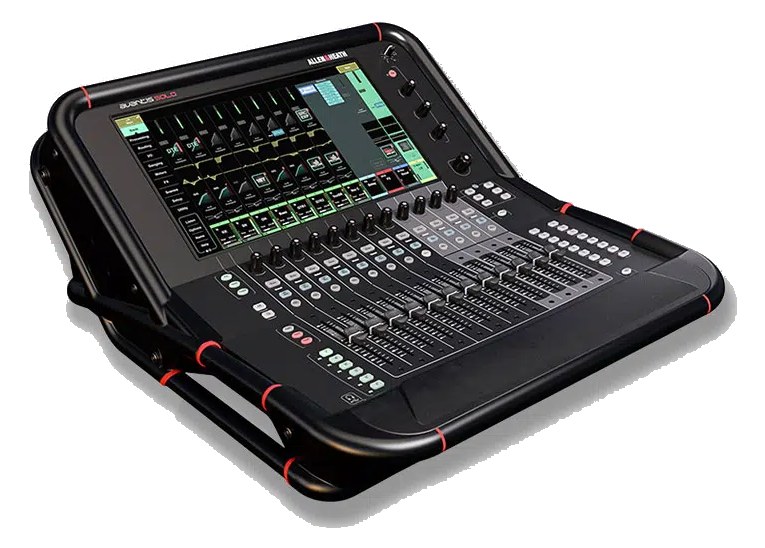
AvantisThe Allen & Heath Avantis is a 64-channel digital console that combines the SQ-series mix engine with a gigaACE network connection to A&H's DT and DX stage boxes. Two large touchscreens give it a console feel that punches well above its price tier — a popular pick for venues stepping up from an SQ.View gear →
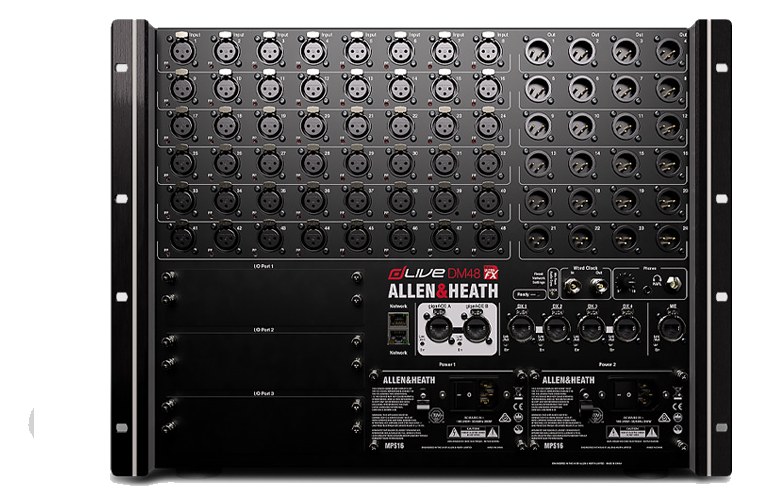
dLive DM48The dLive DM48 is the touring-grade mixrack at the heart of a dLive system — 64 channels of XCVI processing, 64 mic preamps, 32 XLR outputs, and dual gigaACE control links to the surface. Onboard slot accepts Dante, MADI, Waves SoundGrid, or AES67 expansion cards for inter-rig integration. The dLive name has earned trust on touring + theater + worship-large rigs by combining low-latency processing with build quality that survives years of fly dates.View gear →
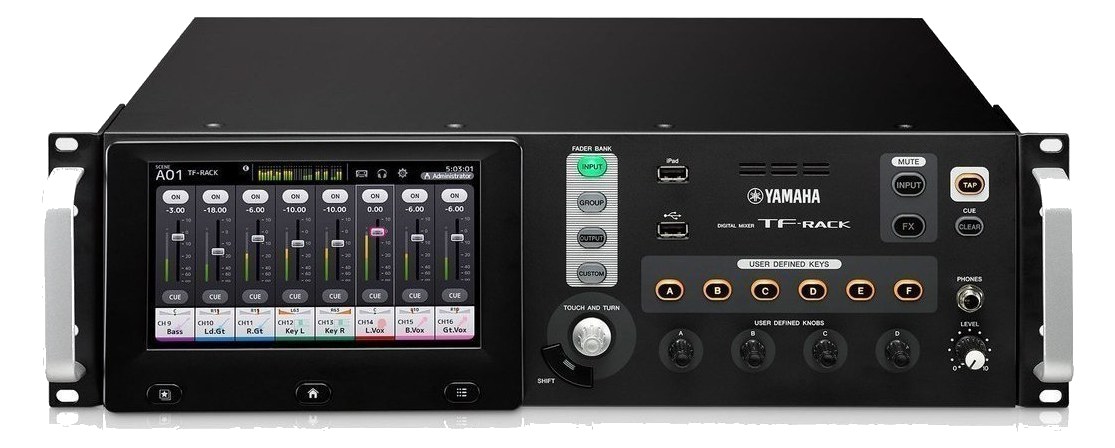
TF-RackThe Yamaha TF-Rack carries the TF series touchscreen workflow into a 3U rack: forty processing channels, sixteen recallable preamps, and an expansion slot for the NY64-D Dante card. TF StageMix control and one-knob compressors keep it approachable for bands mixing their own ears, with Yamaha reliability underneath. The rack twin of the TF1/TF3 desks.View gear →
06 · Resolve the questions that can change the purchase or build plan.
Planning questions
Short, source-backed answers surface rack fit, power, cabling, and connection details before they become surprises.
Where does the Yamaha QL5 Digital Mixer live in a complete rig?
The catalog assigns it no rack units. Builder tracks it as non-rack gear; follow the manufacturer’s mounting, case, and form-factor guidance.
How much power does the Yamaha QL5 Digital Mixer draw?
Typical draw is 200W and documented maximum draw is 250W.
What connections does the Yamaha QL5 Digital Mixer have?
22 documented physical ports, including Dante Primary, Dante Secondary, AES3 In, AES3 Out, Local Mic In 1, Local Mic In 2.
Is the Yamaha QL5 Digital Mixer discontinued?
CL/QL series production ended March 2025 (Yamaha official; DM7 succeeds). Kept for owners.
07 · See this gear inside a complete system plan.
Builder preview
Builder keeps non-rack gear in the same bill of materials, budget, dependency, and connection plan as the rack-mounted system around it.Open in Builder