
Digital Mixer

Yamaha CL5 Digital Mixer

Yamaha·Model CL5·yamaha-cl5

Discontinued CL/QL series production ended March 2025 (Yamaha official; DM7/Rivage succeed). Kept for owners — still everywhere on tours.

Photos

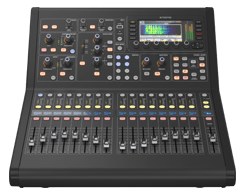
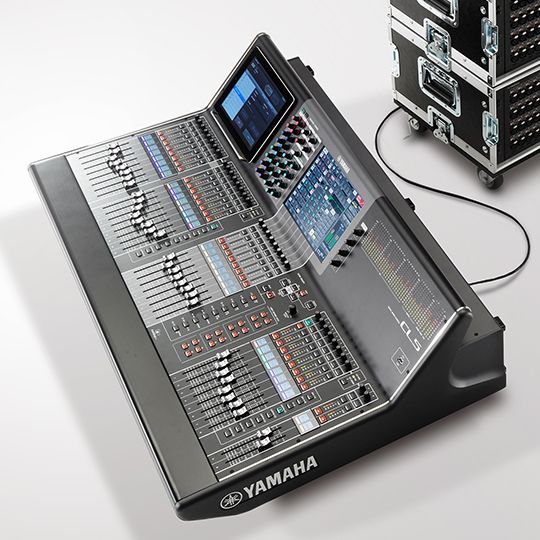
Manufacturer product photography — the drawn faceplate above stays true to panel layout; these show the hardware itself.

Photo: YamahaClick to zoom

About the Yamaha CL5

The Yamaha CL5 is the flagship of Yamaha's CL series and a workhorse on touring riders and theater installs. 72 mix channels, full Dante integration, and Yamaha's long-trusted reliability make it a default pick for productions that need a big-board console with a stable software ecosystem.

The CL5 is Yamaha's largest CL-series console and the board that ends up on riders when a touring production needs to stop arguing about gear. It handles 72 mix channels, sits at the center of a Dante network, and carries enough bus structure to run a serious FOH position, a monitor world, or both in a split configuration. This is not a compact-show tool — it is a flagship desk for productions large enough to justify one, and its presence on a rider communicates clearly to the venue or rental house what level of show they are receiving.

The dual EtherCON Dante ports — primary and secondary — are the real backbone here, each carrying 64 channels bidirectionally, which means your I/O infrastructure lives on the network rather than in a snake. Eight local mic preamps and eight Omni outputs give you enough hardwired connectivity to survive a Dante failure or patch a simple show without touching the network at all. At 230 watts nominal draw with a 280-watt ceiling, plan your power distribution accordingly — a dedicated 20-amp circuit is the minimum starting point. The 667mm depth and 36kg weight mean this goes on a road-case surface or a proper console stand, not into a standard rack bay.
If you are running a national tour, a large theatrical production, or a festival where the desk needs to be familiar to any engineer who walks up to it, the CL5 earns its place without much debate. If your show fits comfortably on 48 inputs and a smaller footprint, Yamaha's own CL3 or CL1 may serve you better at a lower price point and reduced weight. The CL5 is also not the right answer if your production is still building out its Dante infrastructure — you will be paying for network I/O capacity you cannot yet use.

In the rack

  • Patch your Dante secondary network to a physically separate switch from the primary — the redundant port saves you nothing if both paths share the same single point of failure.
  • Use the eight Omni outputs for your most critical feeds (broadcast mix, record feed, hearing loop) so those signals can survive a network hiccup without a console scene change.
  • Keep a saved 'minimal show' scene on a USB drive taped to the case — eight local inputs and eight Omni outs can get you through a support act or a technical emergency without any rack gear online.
  • Budget a dedicated 20A circuit and confirm cable run length before load-in; at 280 watts worst-case draw, sharing a circuit with stage power or lighting dimmers is a problem waiting to surface mid-show.

72-input flagship CL console.

I/O Ports (22)

PortConnectorDirectionSignalChannels
Dante PrimaryETHERCONbidirectionaldigital audio64
Dante SecondaryETHERCONbidirectionaldigital audio64
AES3 InAES3 XLRinputdigital audio
AES3 OutAES3 XLRoutputdigital audio
Local Mic In 1XLR FEMALEinputanalog audio
Local Mic In 2XLR FEMALEinputanalog audio
Local Mic In 3XLR FEMALEinputanalog audio
Local Mic In 4XLR FEMALEinputanalog audio
Local Mic In 5XLR FEMALEinputanalog audio
Local Mic In 6XLR FEMALEinputanalog audio
Local Mic In 7XLR FEMALEinputanalog audio
Local Mic In 8XLR FEMALEinputanalog audio
Omni Out 1XLR MALEoutputanalog audio
Omni Out 2XLR MALEoutputanalog audio
Omni Out 3XLR MALEoutputanalog audio
Omni Out 4XLR MALEoutputanalog audio
Omni Out 5XLR MALEoutputanalog audio
Omni Out 6XLR MALEoutputanalog audio
Omni Out 7XLR MALEoutputanalog audio
Omni Out 8XLR MALEoutputanalog audio
Ethernet (control)RJ45bidirectionaldata
Power
  • Power (IEC) (IEC C14)

Deciding between two?

Rack space, watts, weight and every connector, side by side.

Related gear

Related articles

Guides from our library that cover planning around digital mixer gear.