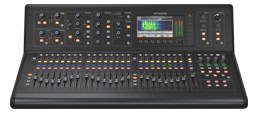
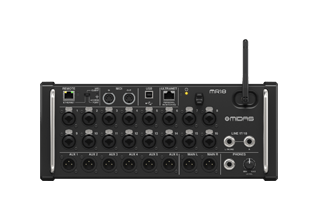
The Allen & Heath SQ-Rack puts the full 48-channel SQ processing core in a rack format: sixteen local preamps, SLink for remote stage boxes, and an option-card slot for Dante, Waves, or MADI. It mixes monitors from SQ-MixPad with the same XCVI engine as the SQ-5/6/7 desks. The 2024+ answer for pro IEM racks that outgrew tablet-mixer land.
~$2,999Use retailer rows for current price and stock
01 · What it does—and what that changes in your rig.
Product overview
Start with the payoff, then work through how it functions, where it fits, and the details that change a real build.
The payoff
Digital Mixer decisions, organized around the whole rig.
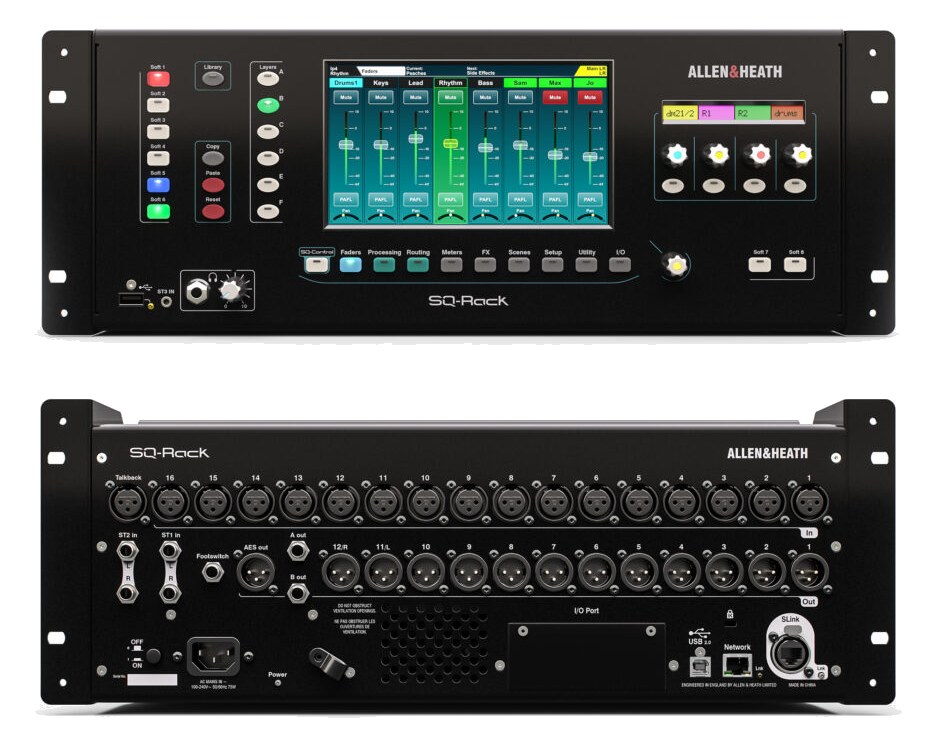
The SQ-Rack is Allen & Heath's answer to a specific problem: you've graduated from a tablet-controlled personal mixer or a compact digital desk, your show's routing complexity has real teeth, and you still need everything to fit in a 3UThe standard slice of rack height: 1U = 1.75″. A 3U box takes three slices; half-rack gear pairs two units side by side in one. rack that a single person can carry. It drops the full SQ processing core — the same XCVI FPGA engine powering the SQ-5, SQ-6, and SQ-7 consoles — into a rackmount chassis with no screen and no faders. Control happens from a tablet running SQ-MixPad, from a connected SQ desk acting as a surface, or from a DAWDigital Audio Workstation — the recording and playback software (Logic, Ableton Live, Pro Tools) at the center of a computer rig. over the 32×32 USB interface. This is a proper console's brain in a road case, not a toy.
Documented outputs
1616 destination connections
Documented inputs
24Based on documented inputs
Rack space
4UBuilder checks available rail space
Photo: Allen & Heath4U · 40W
Function
How it works in the path
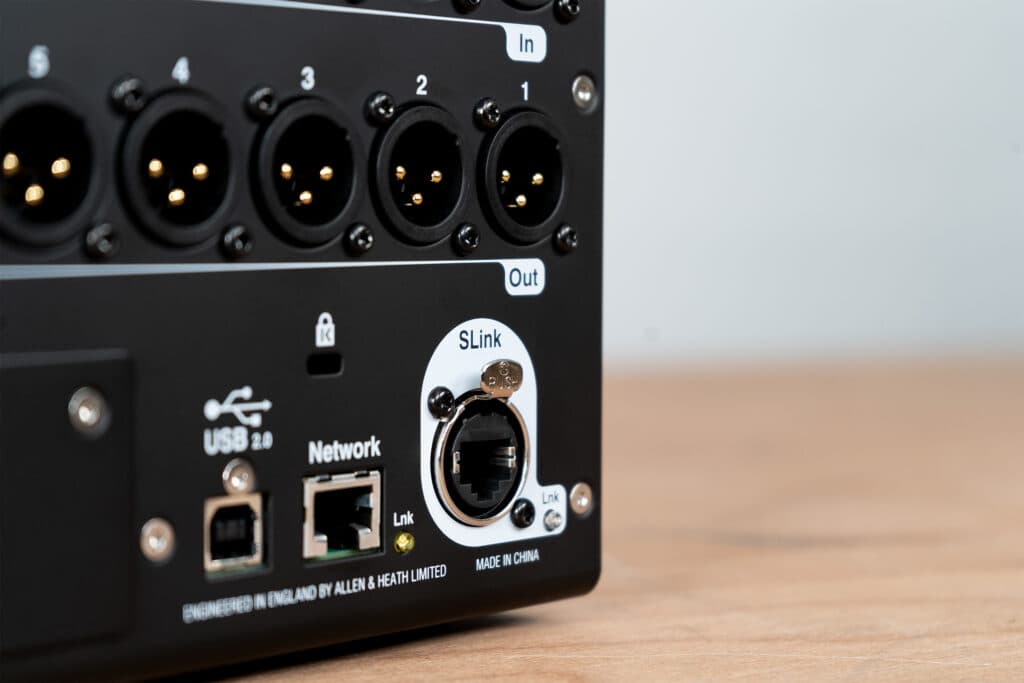
Sixteen local combo preampsThe gain stage that lifts a mic’s tiny signal up to line level — the first thing a signal hits, and a big part of how a console sounds. and twelve XLRThe standard 3-pin locking connector for mics and balanced line signals — pin 1 is the shield, pins 2 and 3 carry the balanced pair. outputs cover a straightforward IEMIn-Ear Monitor — earpieces that replace floor wedges, feeding each player their own mix. The reason this whole rack exists. or monitor rig without touching any expanders, and SLink opens up 128 channels of bidirectional digital audio over a single EtherConAn Ethernet plug inside a rugged XLR-style locking shell — tour-grade network connections that can’t be yanked loose. cable to an AR-series stageboxThe I/O endpoint on stage: mics plug in there and one digital line (AES50, Dante) carries everything to the console. The snake, digitized. when you need more. The option-card slot matters: drop in a DanteThe most common audio-over-network standard: dozens of channels of uncompressed digital audio down one ordinary Ethernet cable between Dante boxes. card and this box becomes a networked node in a larger audio-over-IP system; a MADIA pro digital format carrying 64 channels on one coax or optical cable. Point-to-point — one sender, one receiver, no network required. card and you're talking to a Pro Tools rig or a broadcast chain. At 40 watts nominal draw in a 3UThe standard slice of rack height: 1U = 1.75″. A 3U box takes three slices; half-rack gear pairs two units side by side in one. frame, it's efficient enough to share a conditioner shelf without grief. The 96kHz engine is real — you're not giving up sample rateHow many times per second audio is measured when digitized — 48 kHz is the live standard; 96 kHz measures twice as often. for the compact format.
Best fit
Where it earns its place in the rack
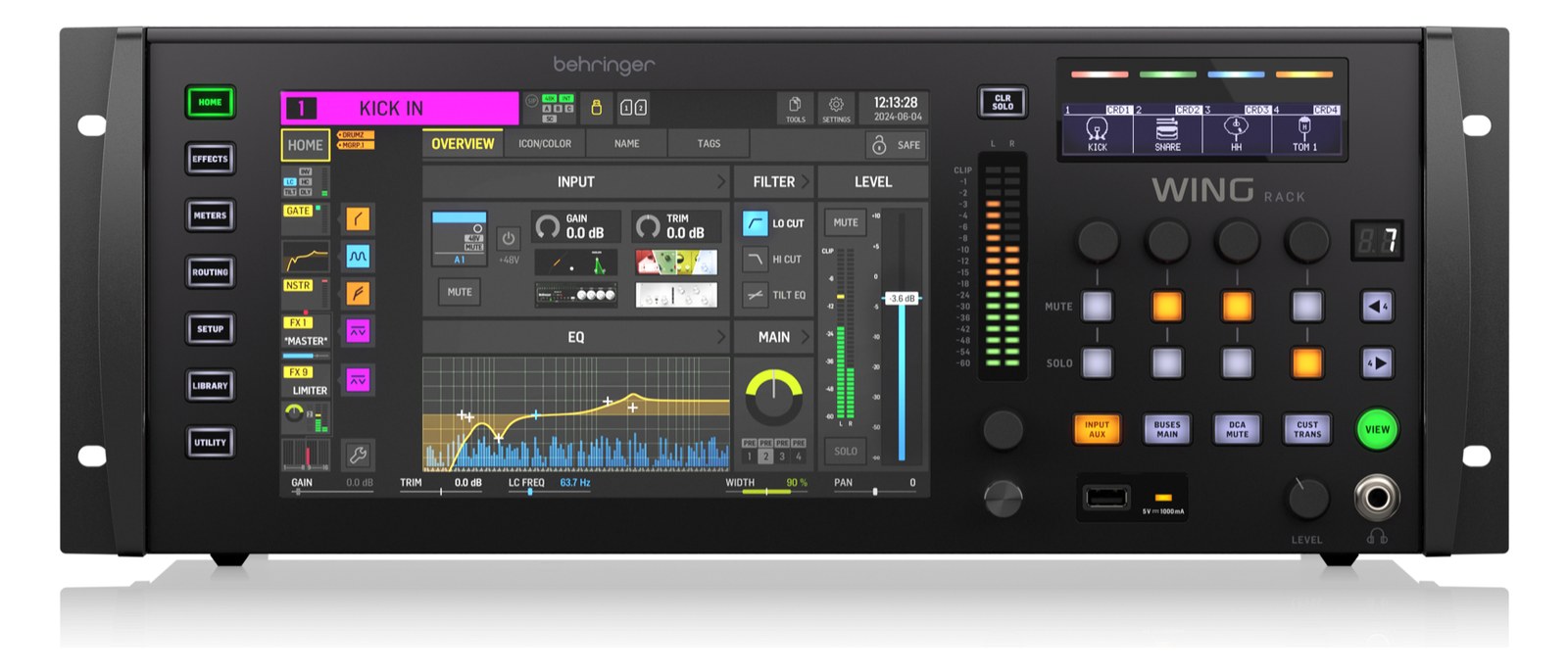
Pick the SQ-Rack if you're running an IEMIn-Ear Monitor — earpieces that replace floor wedges, feeding each player their own mix. The reason this whole rack exists. rig for a regional or touring act where show files, consistent gainHow much the preamp amplifies the incoming signal. Too low and you’re hunting through hiss; too high and peaks clip. structure, and recall matter more than saving a few hundred dollars, and where the gig is too large for a personal mixer but doesn't justify a full console at the monitor position. It earns its $2,999 price against the Behringer Wing Rack or a standalone digital stageboxThe I/O endpoint on stage: mics plug in there and one digital line (AES50, Dante) carries everything to the console. The snake, digitized. only if you're actually using the processing depth and the option slot — if you're running eight inputs and six mixes, simpler and cheaper tools exist. The lack of physical faders is a genuine workflow consideration: in a fast changeover or a panic moment, software-only control adds a step, so have your SQ-MixPad scene management tight before doors.
In the rack
Details worth deciding before load-in.
Pre-build your show file with channel names, gate and compression defaults, and mix routing before load-in — the SQ-Rack's value is in recall, so treat every show file like a template you're refining, not starting from scratch.
Run SLink to an AR2412 or AR84 stageboxThe I/O endpoint on stage: mics plug in there and one digital line (AES50, Dante) carries everything to the console. The snake, digitized. at the stage lip and keep all your local preampsThe gain stage that lifts a mic’s tiny signal up to line level — the first thing a signal hits, and a big part of how a console sounds. free for console-adjacent sources like playback, commsProduction intercom — the wired or wireless party line connecting FOH, monitors, stage managers, and lighting during a show., or a local vocal mic at the rack — this splits your signal path cleanly and keeps long analog runs off the stage.
If you're using the option card slot for DanteThe most common audio-over-network standard: dozens of channels of uncompressed digital audio down one ordinary Ethernet cable between Dante boxes., assign a dedicated gigabit switch port with QoSQuality of Service — switch settings that let time-critical packets (like Dante’s clock) jump the queue ahead of bulk traffic. prioritized for audio traffic; sharing the network port casually with general backstage WiFi infrastructure will cause you problems mid-show.
At 300mm deep and 4.5kg, it fits a shallow 4UThe standard slice of rack height: 1U = 1.75″. A 3U box takes three slices; half-rack gear pairs two units side by side in one. section of a standard truck case with room above for a small patch bayA panel of front-facing jacks wired to everything behind it — re-route any signal with a short cable instead of climbing behind the rack. — plan the rack build around it rather than shoehorning it in last.
02 · Know the whole path before you buy.
Signal path
Learn the route as a block diagram: source, product function, transport, and destination. Select any block to see what enters, what changes, and what leaves.
Interactive block diagramAuto-looping · hover, focus, or tap to hold a stage
Port-type signalProduct functionSystem boundary
Follow one signal from source to destination
Each block answers the same three questions: what arrives, what changes here, and what leaves.
01 · Source · selected
XLR female + IEC C14
etherCON + RJ45
XLR male + ¼-inch TRS
01 · Source
24 documented inputs
XLR female + IEC C14
Arrives as
24 documented inputs
Connector
XLR female + IEC C14
Signal
analog audio
03 · What this product asks of the rest of the system.
Compatibility
Treat connector names as the start of the check—not the answer. These are the boundaries that determine a complete working path.
Best fit · Digital Mixer
Use it when 4U and 214 mm of depth fit the case.
Plan the companion path
Complete the path with upstream and downstream gear that matches connector, direction, signal type, protocol, and wiring standard.
Protocol boundary
This product declares SLINK; matching plugs alone do not make other protocols compatible.
04 · Every connector, grouped by job.
I/O ports
Switch the product view and the documented port inventory updates with it—hardware and data stay side by side.
Every connector, grouped by job.
Switch panels to keep the hardware view and the documented port list in sync.
Front panelRear panel
All documented ports for Allen & Heath SQ-Rack
Port
Panel
Connector
Direction
Signal
Channels
INPUT 1
rear
XLR female
input
analog audio
—
INPUT 2
rear
XLR female
input
analog audio
—
INPUT 3
rear
XLR female
input
analog audio
—
INPUT 4
rear
XLR female
input
analog audio
—
INPUT 5
rear
XLR female
input
analog audio
—
INPUT 6
rear
XLR female
input
analog audio
—
INPUT 7
rear
XLR female
input
analog audio
—
INPUT 8
rear
XLR female
input
analog audio
—
INPUT 9
rear
XLR female
input
analog audio
—
INPUT 10
rear
XLR female
input
analog audio
—
INPUT 11
rear
XLR female
input
analog audio
—
INPUT 12
rear
XLR female
input
analog audio
—
INPUT 13
rear
XLR female
input
analog audio
—
INPUT 14
rear
XLR female
input
analog audio
—
INPUT 15
rear
XLR female
input
analog audio
—
INPUT 16
rear
XLR female
input
analog audio
—
OUTPUT 1
rear
XLR male
output
analog audio
—
OUTPUT 2
rear
XLR male
output
analog audio
—
OUTPUT 3
rear
XLR male
output
analog audio
—
OUTPUT 4
rear
XLR male
output
analog audio
—
OUTPUT 5
rear
XLR male
output
analog audio
—
OUTPUT 6
rear
XLR male
output
analog audio
—
OUTPUT 7
rear
XLR male
output
analog audio
—
OUTPUT 8
rear
XLR male
output
analog audio
—
OUTPUT 9
rear
XLR male
output
analog audio
—
OUTPUT 10
rear
XLR male
output
analog audio
—
OUTPUT 11
rear
XLR male
output
analog audio
—
OUTPUT 12
rear
XLR male
output
analog audio
—
SLINK
rear
etherCON
bidirectional
digital audio
128
NETWORK
rear
RJ45
bidirectional
data
—
USB-B
rear
usb b
bidirectional
data
—
AC MAINS IN
rear
IEC C14
input
power
—
A OUT
rear
¼-inch TRS
output
analog audio
—
AES OUT
rear
aes3 xlr
output
digital audio
—
B OUT
rear
¼-inch TRS
output
analog audio
—
FOOTSWITCH
rear
¼-inch TRS
input
analog audio
—
PHONES
front
¼-inch TRS
output
analog audio
—
ST1 IN L
rear
¼-inch TRS
input
analog audio
—
ST1 IN R
rear
¼-inch TRS
input
analog audio
—
ST2 IN L
rear
¼-inch TRS
input
analog audio
—
ST2 IN R
rear
¼-inch TRS
input
analog audio
—
ST3 IN
front
trs eighth
input
analog audio
—
TALKBACK
rear
XLR female
input
analog audio
—
USB-A
front
usb a
bidirectional
data
—
Showing 44 of 44 documented physical ports. Scroll to review the remaining rows.
05 · Compare the decision, not just the price.
Alternatives
The rows are organized around fit, power, I/O, and system role so a cheaper unit cannot hide a more expensive workflow.
SQ-RackThe Allen & Heath SQ-Rack puts the full 48-channel SQ processing core in a rack format: sixteen local preamps, SLink for remote stage boxes, and an option-card slot for Dante, Waves, or MADI. It mixes monitors from SQ-MixPad with the same XCVI engine as the SQ-5/6/7 desks. The 2024+ answer for pro IEM racks that outgrew tablet-mixer land.View gear →
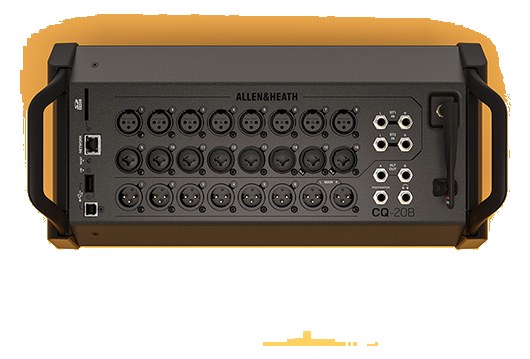
CQ-20BThe Allen & Heath CQ-20B squeezes 96kHz mixing, sixteen preamps, onboard SD multitrack, and Wi-Fi/Bluetooth control into a compact box that racks in 2U with its kit. Gain assistant and auto-mixing make it the current favorite for self-mixed IEM bands who want A&H sound without an engineer. The modern answer to the XR18 generation.View gear →
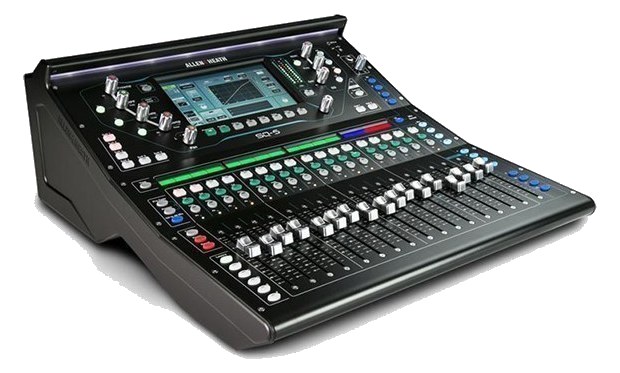
SQ-5The Allen & Heath SQ-5 is a professional-grade digital mixer with 48 channels, 36 buses, and an intuitive touchscreen interface that handles complex IEM mixing workflows with ease. Its SLink digital audio bus supports up to 128 channels of I/O expansion via remote stage boxes, and built-in DEEP processing provides high-quality dynamics and effects. While it requires a shelf to rack-mount, its processing power and sound quality put it a tier above budget rack mixers.View gear →
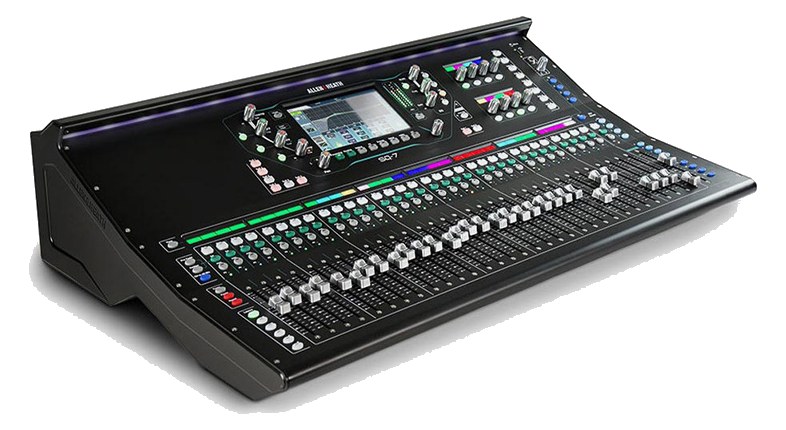
SQ-7The Allen & Heath SQ-7 is the largest of the SQ-series consoles, with 32 motorized faders and the same 48-channel mix engine as its smaller siblings. SLink lets it connect to a wide range of A&H stage boxes (DX168, GX series) over a single shielded Cat5e per link. A staple in regional theaters, churches, and small touring rigs.View gear →
Placement is only the start. Builder checks space · depth · weight, power headroom, dependencies, and compatible signal paths around this exact catalog item.Open in Builder