
Allen & Heath SQ-5 Digital Mixer
Allen & Heath·Model SQ-5·allen-heath-sq5
Photos
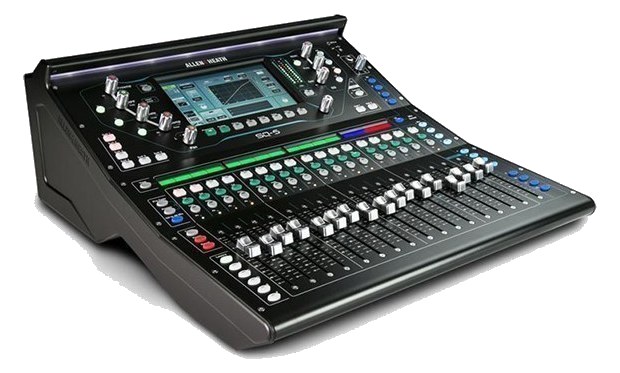
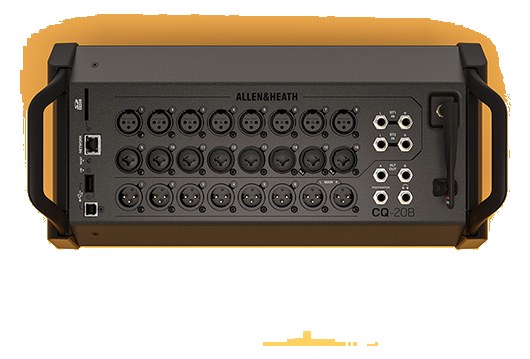
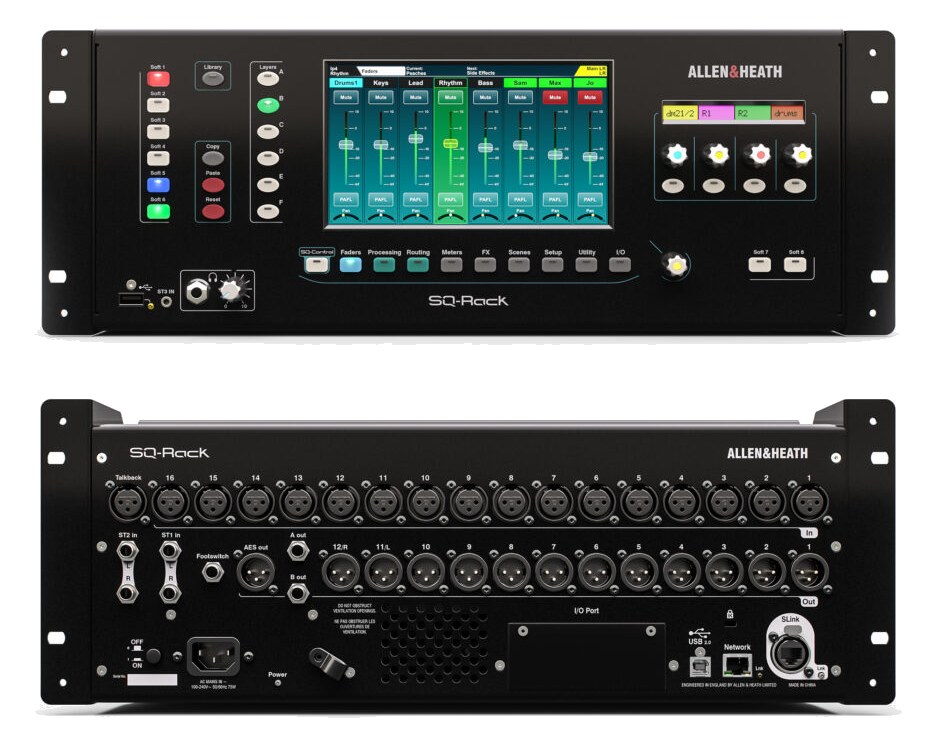
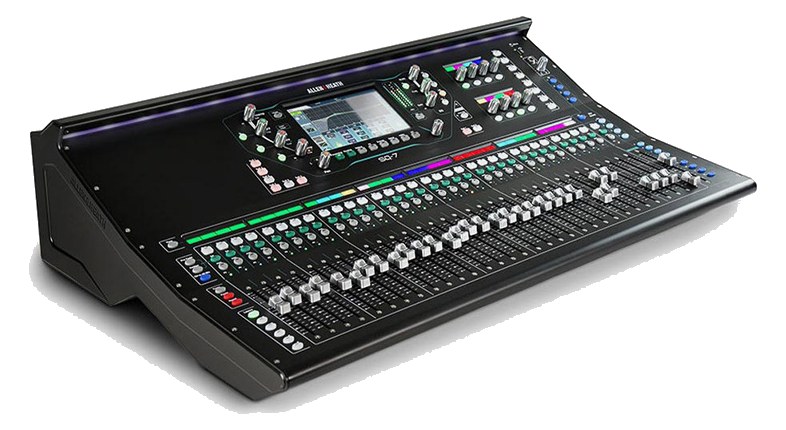
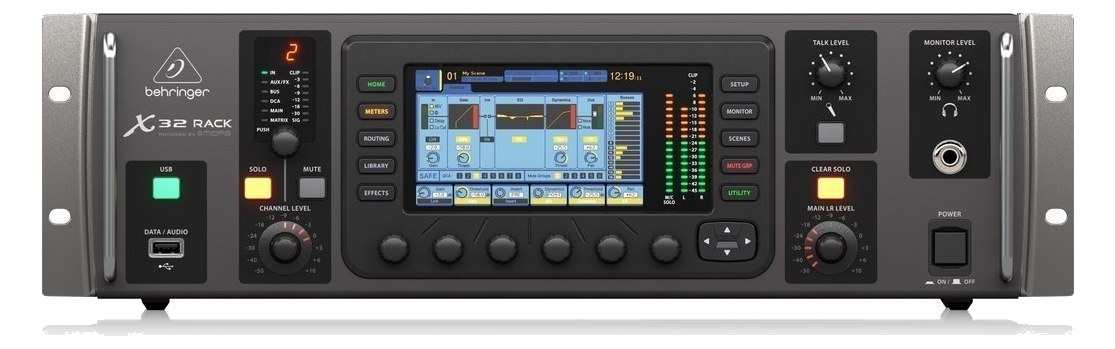
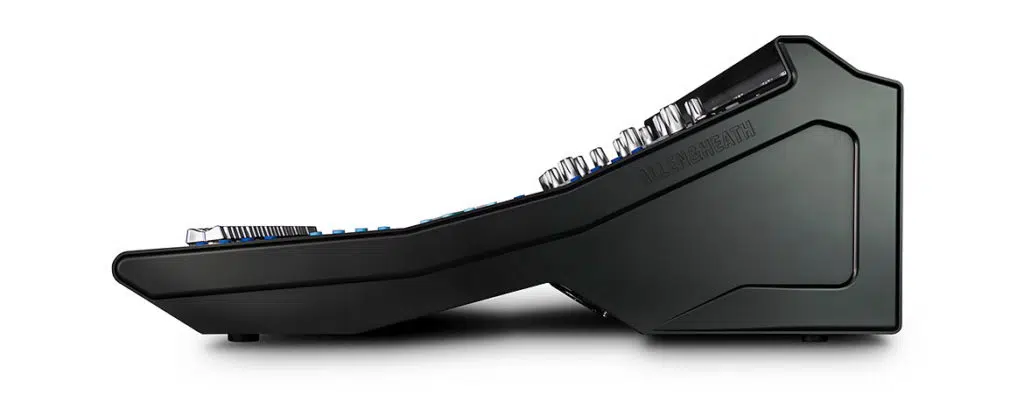
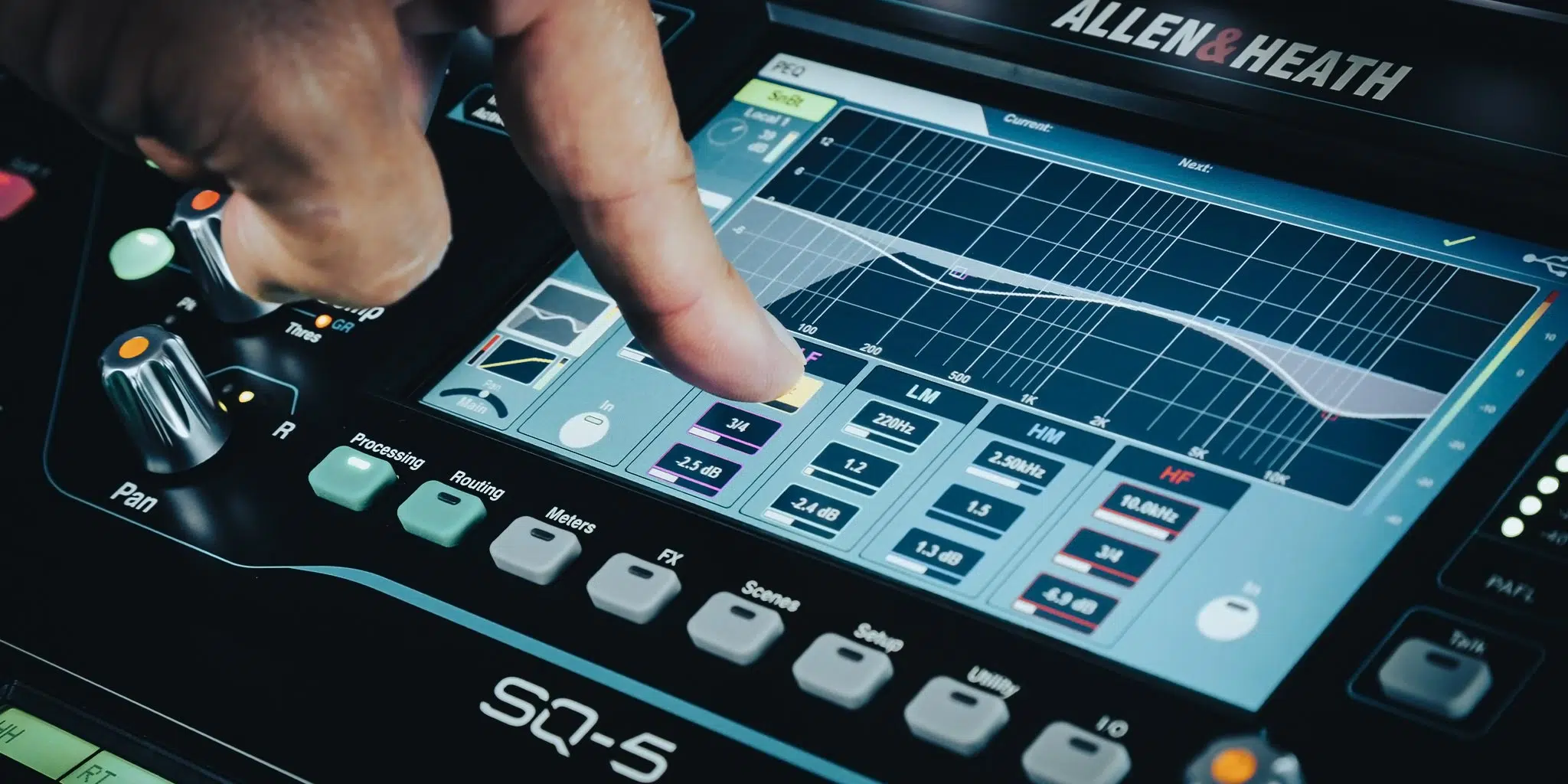
Manufacturer product photography — the drawn faceplate above stays true to panel layout; these show the hardware itself.
About the Allen & Heath SQ-5
The Allen & Heath SQ-5 is a professional-grade digital mixer with 48 channels, 36 busesA path where multiple channels sum into one signal — mixes, groups, and mains are all buses. A 25-bus console can build 25 blends at once., and an intuitive touchscreen interface that handles complex IEMIn-Ear Monitor — earpieces that replace floor wedges, feeding each player their own mix. The reason this whole rack exists. mixing workflows with ease. Its SLink digital audio bus supports up to 128 channels of I/O expansion via remote stage boxesThe I/O endpoint on stage: mics plug in there and one digital line (AES50, Dante) carries everything to the console. The snake, digitized., and built-in DEEP processing provides high-quality dynamics and effects. While it requires a shelf to rack-mount, its processing power and sound quality put it a tier above budget rack mixers.
The SQ-5 is the small-format console that refuses to mix like one: 48 channels and 36 busesA path where multiple channels sum into one signal — mixes, groups, and mains are all buses. A 25-bus console can build 25 blends at once. on a 96kHz FPGA engine, with latencyThe delay between sound entering and leaving a digital system. IEM rigs fight to keep the whole chain down to a few milliseconds. low enough that stacking it in an IEMIn-Ear Monitor — earpieces that replace floor wedges, feeding each player their own mix. The reason this whole rack exists. chain doesn't smear the timing performers feel through their ears. For worship rooms and self-mixing bands it hits the middle of the Venn diagram — professional bus architecture, a touchscreen workflow volunteers can learn, and a footprint one person carries.
The SLink port is the rig-design centerpiece: 64 channels each way over one Cat5eStandard network cable grades. In an audio rig one cheap Cat5e run can replace a 48-channel copper snake; AES50 wants it shielded. to A&H's stage boxesThe I/O endpoint on stage: mics plug in there and one digital line (AES50, Dante) carries everything to the console. The snake, digitized. and expanders, which is how the console's onboard preampsThe gain stage that lifts a mic’s tiny signal up to line level — the first thing a signal hits, and a big part of how a console sounds. grow into a full stage without a snakeA multicore cable bundling many channels into one stage-to-console run. A sub-snake collects one corner of the stage into a drop box. trunkThe main multichannel run between stage and console — one fat multicore (or one Cat5e, these days) carrying everything at once.. The same ecosystem feeds ME-series personal mixers downstream, and the USB-B port records 32×32 for virtual soundcheckPlaying a recorded show back through the console as if the band were on stage — dial in mixes before anyone plugs in.. It's a surface console rather than a rack brain — plan a case and a doghouse, not rack rails — with the 80–100W draw and the mix position real estate that implies.
Comparison shoppers land here between an X32-family rig and a dLive budget: the SQ sits deliberately between them — cleaner engine and ecosystem than the former, a fraction of the latter's price, with deep-show automation as the main thing you'd still be missing.
In the rack
- One SLink run to a stage expander carries the whole stage — keep the spare Cat5eStandard network cable grades. In an audio rig one cheap Cat5e run can replace a 48-channel copper snake; AES50 wants it shielded. rule here too.
- Feed ME-500/ME-1 personal mixers from the same ecosystem for a one-vendor monitor path.
- Virtual soundcheckPlaying a recorded show back through the console as if the band were on stage — dial in mixes before anyone plugs in. over USB-B is the volunteer-training superpower — record Sunday, rehearse Tuesday.
48-channel / 36-bus digital mixer with touchscreen. Not rack-mountable without shelf.
I/O Ports (7)
| Port | Connector | Direction | Signal | Channels |
|---|---|---|---|---|
| Local In 1 (XLR) | XLR FEMALE | input | analog audio | — |
| Local In 2 (XLR) | XLR FEMALE | input | analog audio | — |
| Local Out 1 (XLR) | XLR MALE | output | analog audio | — |
| Local Out 2 (XLR) | XLR MALE | output | analog audio | — |
| SLink | ETHERCON | bidirectional | digital audio | 64 |
| USB-B | USB B | bidirectional | data | — |
- Power (IEC) (IEC C14)
Deciding between two?
Rack space, watts, weight and every connector, side by side.
Related gear


Related articles
Guides from our library that cover planning around digital mixer gear.
A walking tour of the signal path from microphone to in-ear monitor, with what every box in the rack actually does to the audio along the way.
Why sealed IEMs make you feel disconnected from the room — and exactly how to put the audience back into your mix with one or two well-placed mics.
Step-by-step: linking aux buses into stereo pairs, pre-fader vs post-fader, routing buses to Ultranet vs physical XLRs vs AES50, and adding a bus-level limiter.
A practical comparison of the three audio-over-network protocols you’ll encounter in a rack rig, with guidance on when each one is the right pick.