
Allen & Heath SQ-7 Digital Mixer
Allen & Heath·Model SQ-7·allen-heath-sq7
Photos
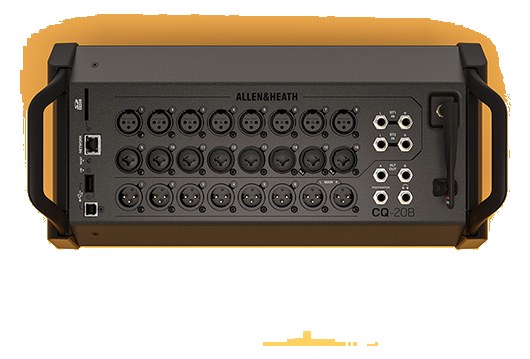
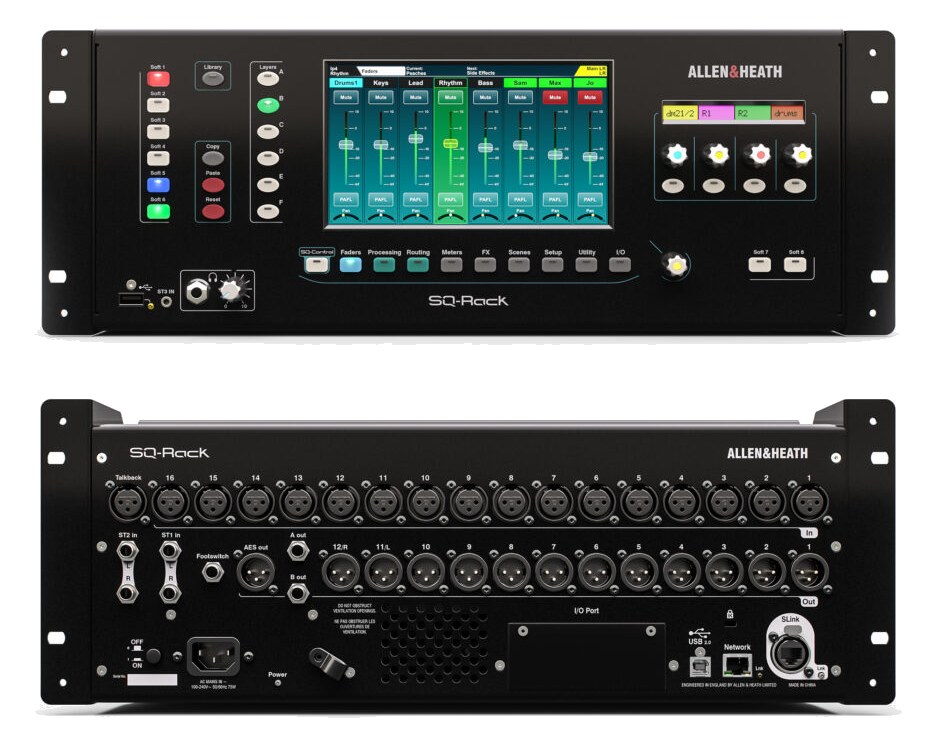
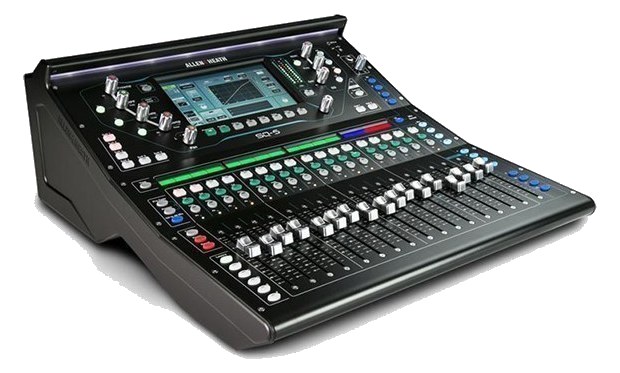
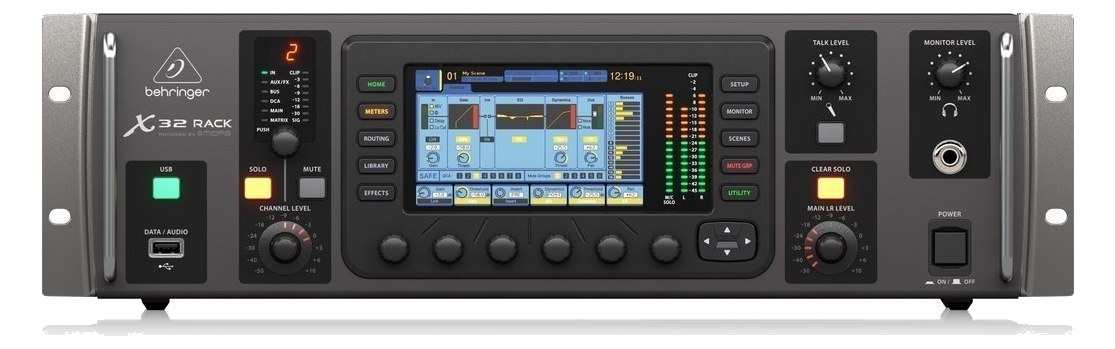
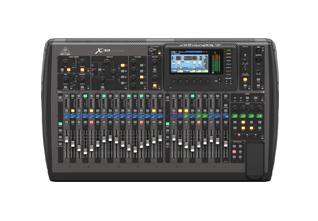
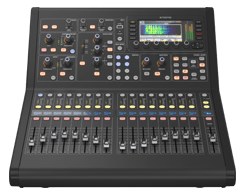
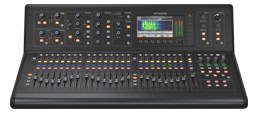
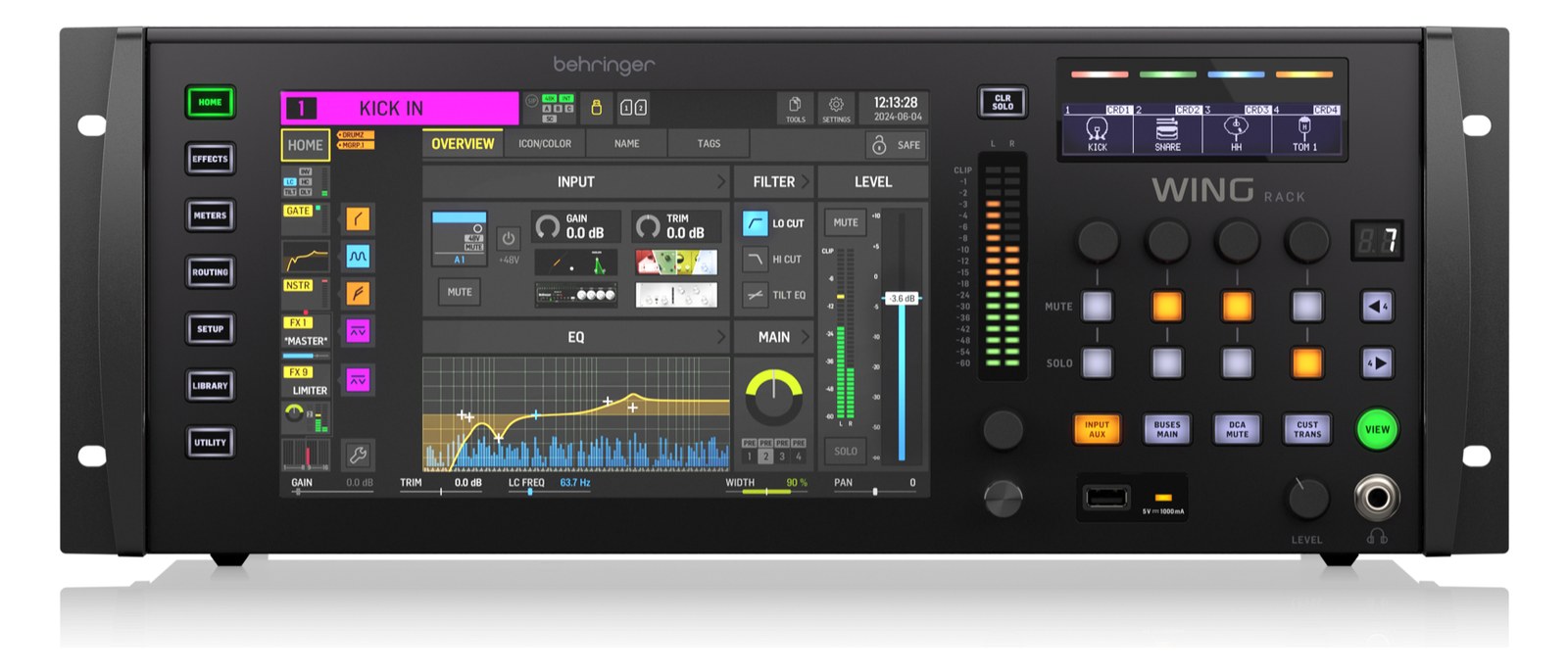
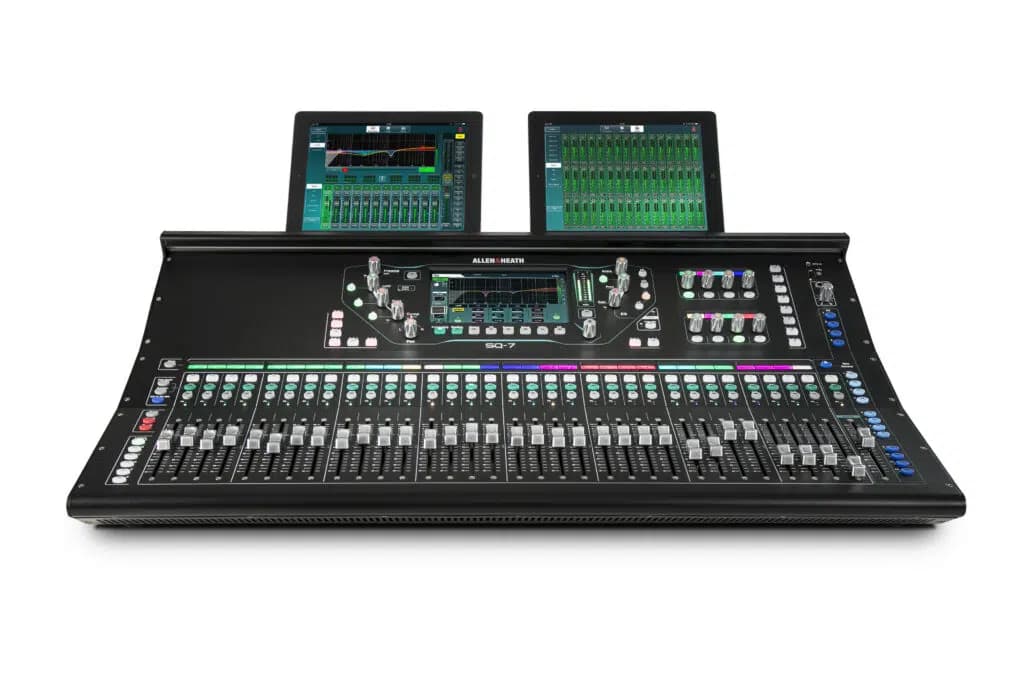
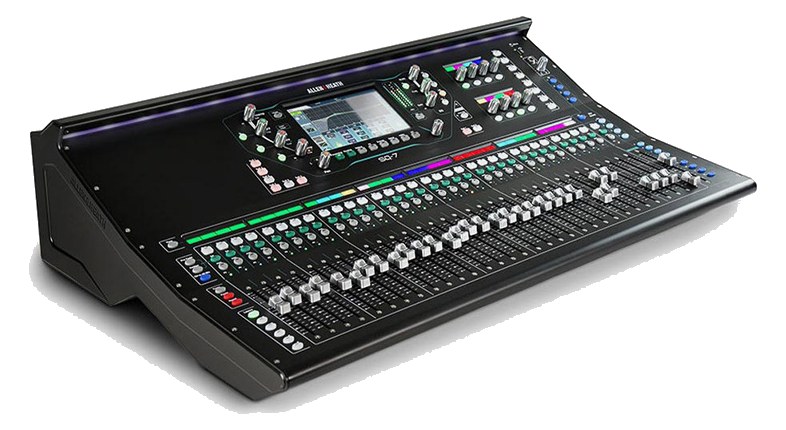
Manufacturer product photography — the drawn faceplate above stays true to panel layout; these show the hardware itself.
About the Allen & Heath SQ-7
The Allen & Heath SQ-7 is the largest of the SQ-series consoles, with 32 motorized faders and the same 48-channel mix engine as its smaller siblings. SLink lets it connect to a wide range of A&H stage boxesThe I/O endpoint on stage: mics plug in there and one digital line (AES50, Dante) carries everything to the console. The snake, digitized. (DX168, GX series) over a single shielded Cat5eStandard network cable grades. In an audio rig one cheap Cat5e run can replace a 48-channel copper snake; AES50 wants it shielded. per link. A staple in regional theaters, churches, and small touring rigs.
The SQ-7 is Allen & Heath's flagship in the SQ line — the same 48-channel XCVI core engine that runs the smaller SQ-5 and SQ-6, but stretched across 32 motorized faders so you're touching more of your mix without banking. It's a surface-plus-engine-in-one unit, not a rack brain, which means it lives at front-of-houseFront Of House — the main mix the audience hears, and the console position out in the room where it gets mixed. or monitor worldThe side-stage domain of the monitor engineer — console, IEM racks, and everything feeding the band’s ears instead of the audience. as the console itself. Sixteen local mic inputs and eight local analog outputs are built in, so a stripped-down gig can go up with nothing but the desk. The SLink ports are where it opens up — two independent 64-channel EtherCONAn Ethernet plug inside a rugged XLR-style locking shell — tour-grade network connections that can’t be yanked loose. connections that feed into A&H's ecosystem of DX and GX stage boxesThe I/O endpoint on stage: mics plug in there and one digital line (AES50, Dante) carries everything to the console. The snake, digitized..
At 18 kg and 530 mm deep, the SQ-7 is a real piece of furniture. It doesn't rack-mount in a traditional sense — rackUnits is 0 — so plan for a console stand, a rolling cart, or a dedicated FOHFront Of House — the main mix the audience hears, and the console position out in the room where it gets mixed. shelf. Power draw sits at 120 W nominal with a 150 W max, which is modest for a desk this capable and won't stress a standard 15 A circuit. The two SLink ports are the practical backbone: run one to your stage boxThe I/O endpoint on stage: mics plug in there and one digital line (AES50, Dante) carries everything to the console. The snake, digitized. for inputs, use the second to feed a monitor engineer's personal mix station or a digital split to another console, all over a single shielded Cat5eStandard network cable grades. In an audio rig one cheap Cat5e run can replace a 48-channel copper snake; AES50 wants it shielded. cable per link. That keeps your analog snakeA multicore cable bundling many channels into one stage-to-console run. A sub-snake collects one corner of the stage into a drop box. footprint at zero on longer cable runs.
The SQ-7 is the right call for a monitor engineer who needs fader-per-mix density without going to a dedicated IEMIn-Ear Monitor — earpieces that replace floor wedges, feeding each player their own mix. The reason this whole rack exists. rack controller, or for a production that wants one desk to handle FOHFront Of House — the main mix the audience hears, and the console position out in the room where it gets mixed. and IEM sends in a compact touring package. If you're running more than two SLink devices simultaneously or need DanteThe most common audio-over-network standard: dozens of channels of uncompressed digital audio down one ordinary Ethernet cable between Dante boxes./MADIA pro digital format carrying 64 channels on one coax or optical cable. Point-to-point — one sender, one receiver, no network required. natively without a card, look at A&H's dLive or Avantis families. Smaller rooms or engineers who genuinely won't use more than 24 faders at once should consider the SQ-6 and save the weight and cost. But if 32 faders and the SQ workflow are your target, this is the ceiling of that platform.
In the rack
- Run SLink A to your primary stage boxThe I/O endpoint on stage: mics plug in there and one digital line (AES50, Dante) carries everything to the console. The snake, digitized. and SLink B to a second DX168 or a split feed for a dedicated monitor console — you get a full digital split without a passive splitter or analog snakeA multicore cable bundling many channels into one stage-to-console run. A sub-snake collects one corner of the stage into a drop box. anywhere in the chain.
- The 16 local inputs on the back panel are useful for a self-contained monitor rig: plug IEMIn-Ear Monitor — earpieces that replace floor wedges, feeding each player their own mix. The reason this whole rack exists. transmitters directly into local outputs 1–8 and keep your stage boxThe I/O endpoint on stage: mics plug in there and one digital line (AES50, Dante) carries everything to the console. The snake, digitized. bandwidth entirely for inputs.
- Use the Ethernet control port with A&H's MixPad or SQ4You apps for a dedicated tablet monitor for artists — it costs nothing extra and removes the 'can I turn up my guitar' conversation from your show.
- Budget for a road case with a recessed lid: at 530 mm deep, standard console lids from off-brand cases often don't clear the meter bridge — verify internal dimensions before you order.
48-channel, 32-fader SQ console.
I/O Ports (30)
| Port | Connector | Direction | Signal | Channels |
|---|---|---|---|---|
| SLink A | ETHERCON | bidirectional | digital audio | 64 |
| SLink B | ETHERCON | bidirectional | digital audio | 64 |
| Local Mic In 1 | XLR FEMALE | input | analog audio | — |
| Local Mic In 2 | XLR FEMALE | input | analog audio | — |
| Local Mic In 3 | XLR FEMALE | input | analog audio | — |
| Local Mic In 4 | XLR FEMALE | input | analog audio | — |
| Local Mic In 5 | XLR FEMALE | input | analog audio | — |
| Local Mic In 6 | XLR FEMALE | input | analog audio | — |
| Local Mic In 7 | XLR FEMALE | input | analog audio | — |
| Local Mic In 8 | XLR FEMALE | input | analog audio | — |
| Local Mic In 9 | XLR FEMALE | input | analog audio | — |
| Local Mic In 10 | XLR FEMALE | input | analog audio | — |
| Local Mic In 11 | XLR FEMALE | input | analog audio | — |
| Local Mic In 12 | XLR FEMALE | input | analog audio | — |
| Local Mic In 13 | XLR FEMALE | input | analog audio | — |
| Local Mic In 14 | XLR FEMALE | input | analog audio | — |
| Local Mic In 15 | XLR FEMALE | input | analog audio | — |
| Local Mic In 16 | XLR FEMALE | input | analog audio | — |
| Local Out 1 | XLR MALE | output | analog audio | — |
| Local Out 2 | XLR MALE | output | analog audio | — |
| Local Out 3 | XLR MALE | output | analog audio | — |
| Local Out 4 | XLR MALE | output | analog audio | — |
| Local Out 5 | XLR MALE | output | analog audio | — |
| Local Out 6 | XLR MALE | output | analog audio | — |
| Local Out 7 | XLR MALE | output | analog audio | — |
| Local Out 8 | XLR MALE | output | analog audio | — |
| AES3 Out | AES3 XLR | output | digital audio | — |
| USB (recording) | USB B | bidirectional | data | — |
| Ethernet (control) | RJ45 | bidirectional | data | — |
- Power (IEC) (IEC C14)
Deciding between two?
Rack space, watts, weight and every connector, side by side.
Related gear


Related articles
Guides from our library that cover planning around digital mixer gear.
A walking tour of the signal path from microphone to in-ear monitor, with what every box in the rack actually does to the audio along the way.
Why sealed IEMs make you feel disconnected from the room — and exactly how to put the audience back into your mix with one or two well-placed mics.
Step-by-step: linking aux buses into stereo pairs, pre-fader vs post-fader, routing buses to Ultranet vs physical XLRs vs AES50, and adding a bus-level limiter.
A practical comparison of the three audio-over-network protocols you’ll encounter in a rack rig, with guidance on when each one is the right pick.