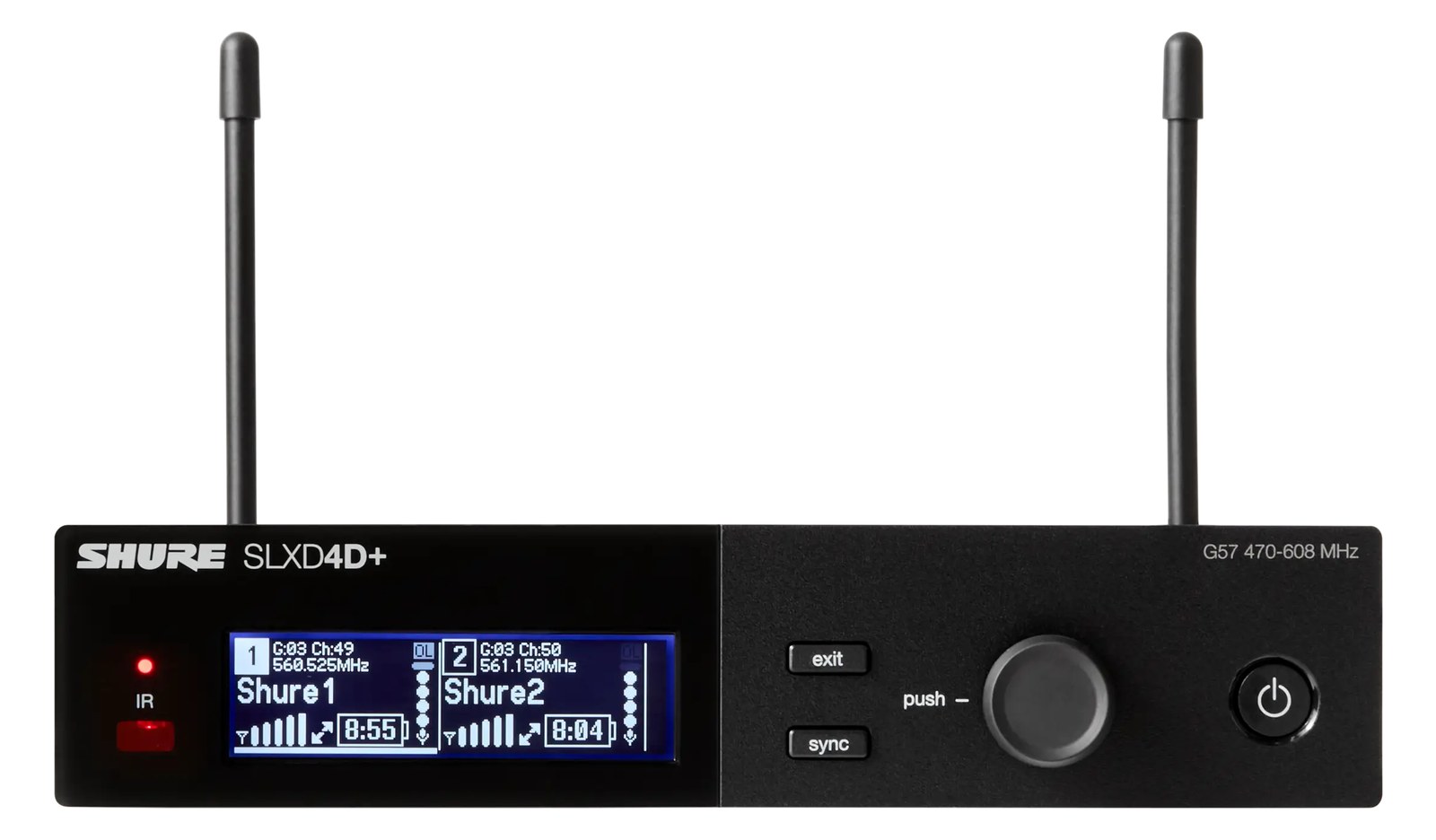

Shure ULXD4Q Quad Wireless Mic Receiver
Shure·Model ULXD4Q·shure-ulxd4q-mic-g50
Photos
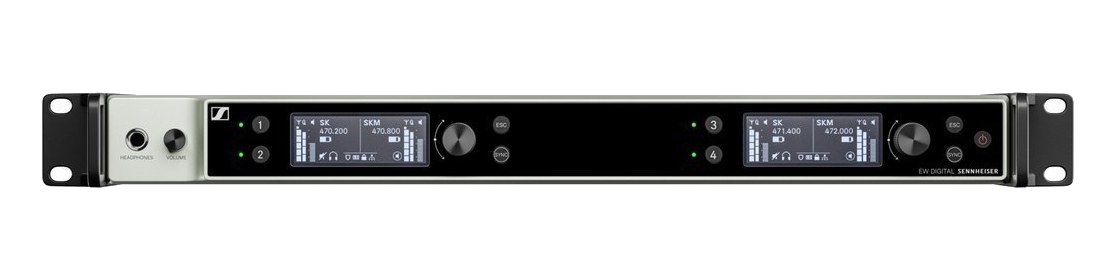
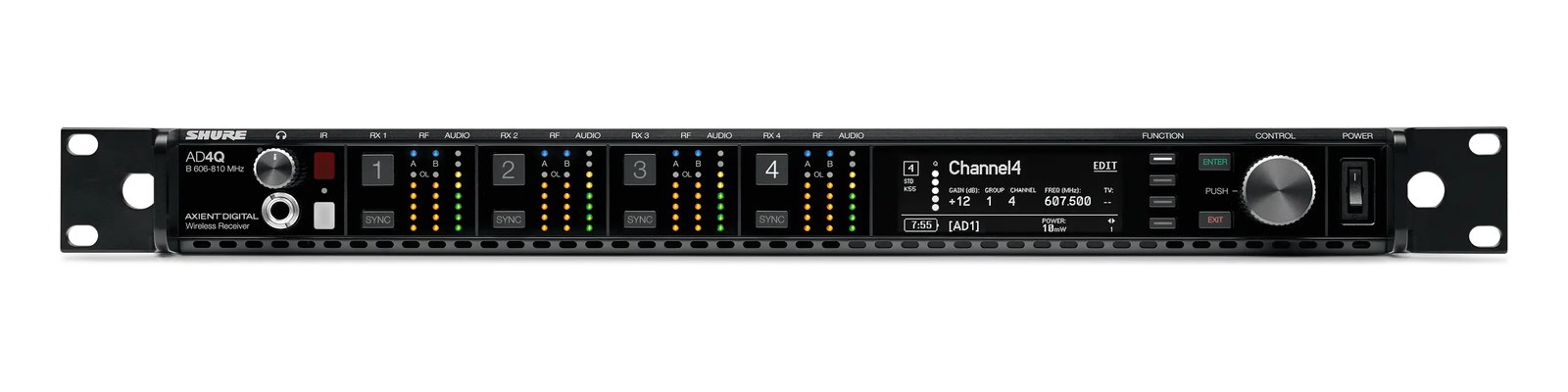
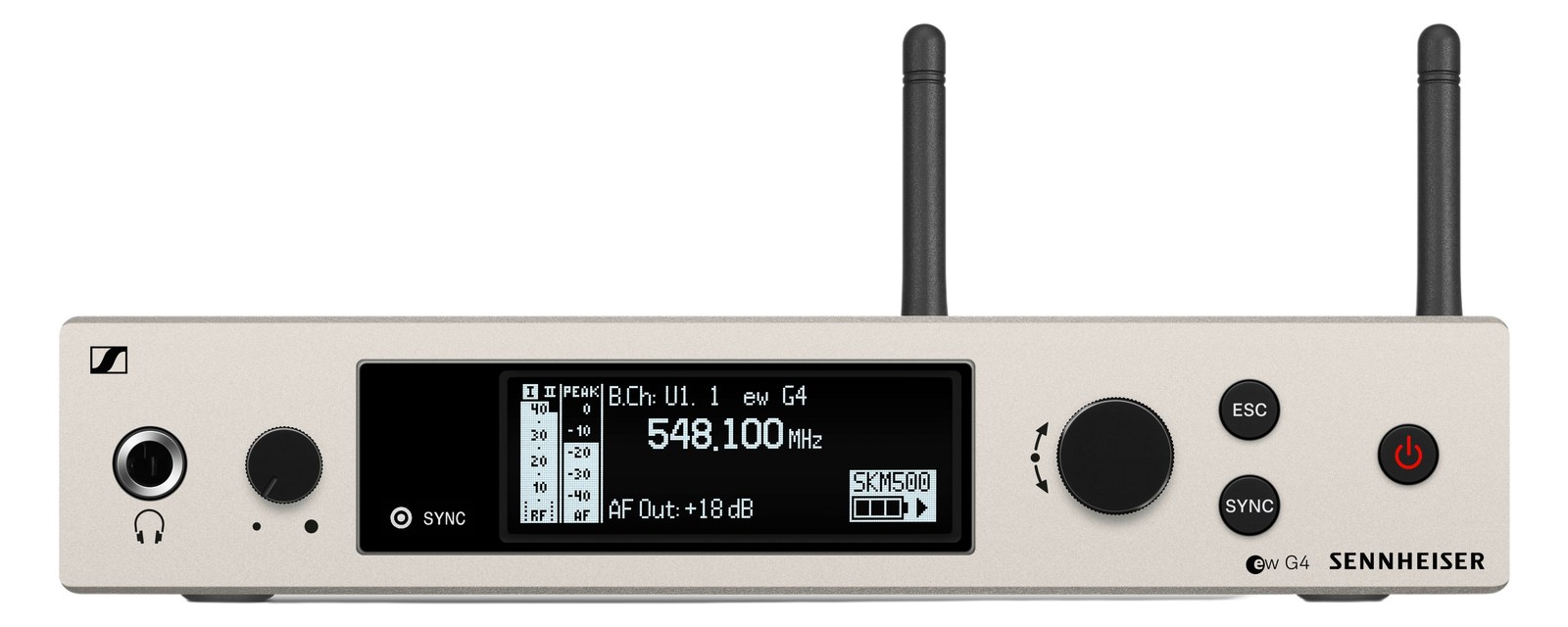
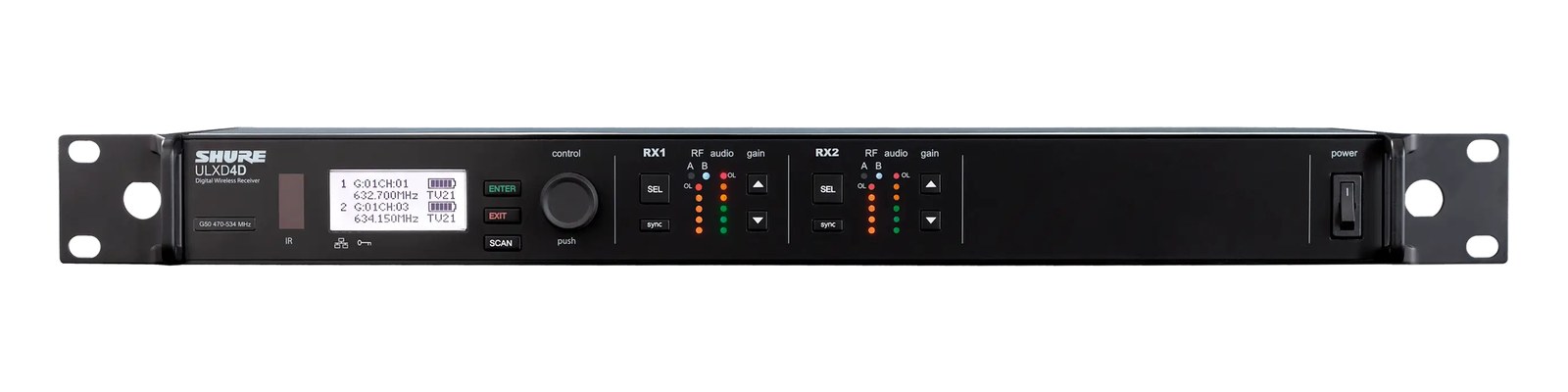
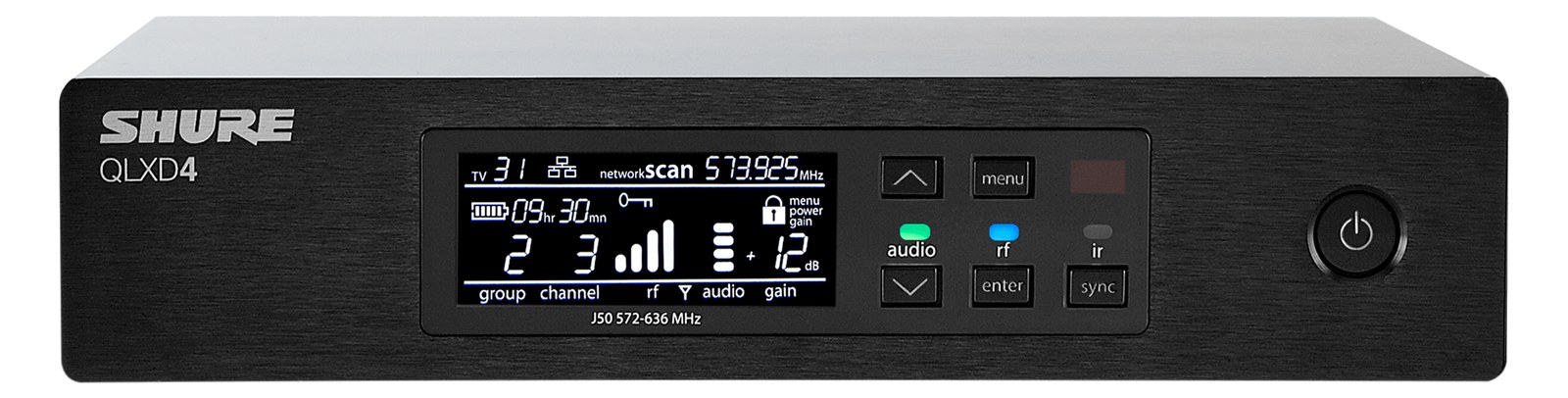
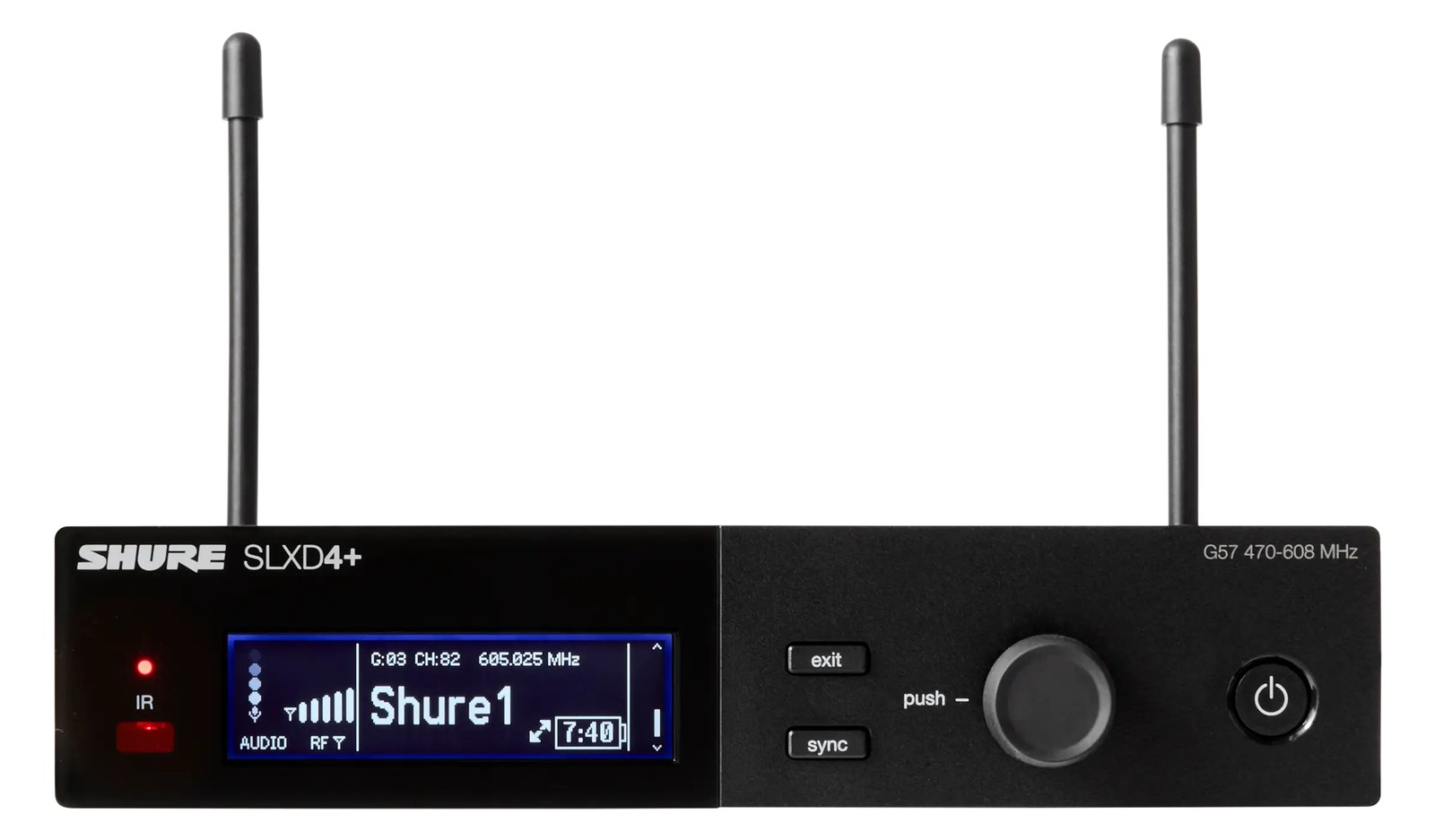
Manufacturer product photography — the drawn faceplate above stays true to panel layout; these show the hardware itself.
About the Shure ULXD4Q
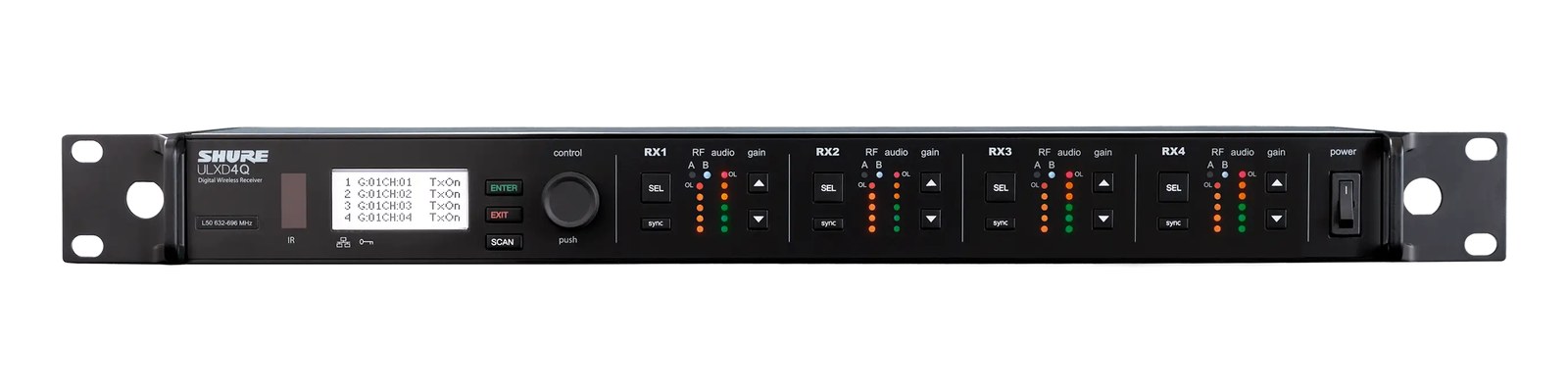
The ULXD4Q is the most space-efficient ULX-D receiver, fitting four wireless mic channels into a single 1UThe standard slice of rack height: 1U = 1.75″. A 3U box takes three slices; half-rack gear pairs two units side by side in one. rack space with native DanteThe most common audio-over-network standard: dozens of channels of uncompressed digital audio down one ordinary Ethernet cable between Dante boxes. output. For productions running eight or more wireless mics, the quad receiver dramatically reduces rack space and simplifies antenna distributionOne pair of antennas feeding many receivers through an amplified splitter — replaces the forest of whips and keeps RF levels consistent.. The built-in Dante output means all four channels go directly onto your audio network from one device, making it ideal for dense wireless deployments in touring and installed sound.
The ULXD4Q is Shure's answer to the rack space problem that every touring engineer knows intimately: you need eight, ten, twelve wireless channels, and the receiver farm is already eating half your rack before you've mounted a single power conditionerFilters venue AC, clamps surges, and gives the rack one tidy inlet. Not a voltage regulator and not a battery — just cleaner power.. Four channels of ULX-D in a single 1UThe standard slice of rack height: 1U = 1.75″. A 3U box takes three slices; half-rack gear pairs two units side by side in one. gets you into serious wireless density without the sprawl. Each channel gets its own discrete XLRThe standard 3-pin locking connector for mics and balanced line signals — pin 1 is the shield, pins 2 and 3 carry the balanced pair. output, and the single EtherConAn Ethernet plug inside a rugged XLR-style locking shell — tour-grade network connections that can’t be yanked loose. port carries all four channels as a DanteThe most common audio-over-network standard: dozens of channels of uncompressed digital audio down one ordinary Ethernet cable between Dante boxes. stream simultaneously — so this unit can feed both your analog console and your network in one shot. That's the core value proposition, and it's a real one.
At 25 watts nominal draw across all four channels, the ULXD4Q is easy on power budgets — budget roughly 30 watts at peak to be safe, but you're not going to stress a standard rack PDU even with four of these in a row. The shallow 220mm depth means it fits comfortably in a standard shallow tour rack without fighting your antenna cabling. The two BNCThe twist-lock coax connector used for word clock and antenna runs — it locks, so it can’t be pulled out mid-show. antenna inputs are shared across all four channels, which means your antenna distributionOne pair of antennas feeding many receivers through an amplified splitter — replaces the forest of whips and keeps RF levels consistent. system needs to be sized accordingly — one pair of antennas per quad unit, not per channel. On a twelve-channel rig running three ULXD4Qs, that's three antenna pairs minimum, ideally fed from a quality active distro like a Shure UA845 or similar.
This receiver belongs in rigs where wireless channel count is high and rack space is genuinely constrained — touring productions, festival packages, broadcast trucks, or any install where you're regularly running six or more handheld and body-pack sources. The native DanteThe most common audio-over-network standard: dozens of channels of uncompressed digital audio down one ordinary Ethernet cable between Dante boxes. output earns its keep the moment you're running a networked console or a separate IEMIn-Ear Monitor — earpieces that replace floor wedges, feeding each player their own mix. The reason this whole rack exists. and playback network, because you're not burning analog inputs on a stage boxThe I/O endpoint on stage: mics plug in there and one digital line (AES50, Dante) carries everything to the console. The snake, digitized. for channels that can live on the network. If you only need two channels of wireless and have no Dante infrastructure, the price point here is hard to justify — a pair of single-channel or dual receivers will serve you better. But for the engineer building a high-density wireless rack with a Dante backbone, the ULXD4Q is the efficient choice.
In the rack
- Plan your antenna distributionOne pair of antennas feeding many receivers through an amplified splitter — replaces the forest of whips and keeps RF levels consistent. before you plan your receiver slots — each ULXD4Q shares one antenna pair across all four channels, so a twelve-channel rig needs three dedicated antenna runs from your distro, not twelve.
- Use the DanteThe most common audio-over-network standard: dozens of channels of uncompressed digital audio down one ordinary Ethernet cable between Dante boxes. output to feed a secondary recording or broadcast feed without consuming any additional analog outputs — set the analog XLRsThe standard 3-pin locking connector for mics and balanced line signals — pin 1 is the shield, pins 2 and 3 carry the balanced pair. for your console and let the network handle everything else.
- If you're stacking multiple ULXD4Qs, keep the EtherConAn Ethernet plug inside a rugged XLR-style locking shell — tour-grade network connections that can’t be yanked loose. daisy-chain or switch configuration mapped out before load-in; Shure's Wireless WorkbenchShure’s free RF-management software — scans the airwaves, calculates compatible frequencies, and monitors every receiver from a laptop. will scan and find units automatically, but you want your channel assignments and frequencies locked in the file before you hit the venue.
- At 220mm depth, this unit sits well in a shallow rack, but leave at least a half-rackThe standard slice of rack height: 1U = 1.75″. A 3U box takes three slices; half-rack gear pairs two units side by side in one.-unit of airflow above or below if adjacent gear runs hot — the chassis does generate some warmth across a full show.
ULX-D quad-channel wireless receiver. Four channels in 1UThe standard slice of rack height: 1U = 1.75″. A 3U box takes three slices; half-rack gear pairs two units side by side in one. with DanteThe most common audio-over-network standard: dozens of channels of uncompressed digital audio down one ordinary Ethernet cable between Dante boxes..
I/O Ports (11)
| Port | Connector | Direction | Signal | Channels |
|---|---|---|---|---|
| XLR Out 1 | XLR MALE | output | analog audio | — |
| XLR Out 2 | XLR MALE | output | analog audio | — |
| XLR Out 3 | XLR MALE | output | analog audio | — |
| XLR Out 4 | XLR MALE | output | analog audio | — |
| Antenna A | BNC | input | antenna | — |
| Antenna B | BNC | input | antenna | — |
| Antenna A Cascade Out | BNC | output | antenna | — |
| Antenna B Cascade Out | BNC | output | antenna | — |
| Dante/Ethernet Primary | DANTE RJ45 | bidirectional | digital audio | 4 |
| Dante/Ethernet Secondary | DANTE RJ45 | bidirectional | digital audio | 4 |
- Power (IEC) (IEC C14)
Deciding between two?
Rack space, watts, weight and every connector, side by side.
Related gear


Related articles
Guides from our library that cover planning around wireless mic gear.
Why sealed IEMs make you feel disconnected from the room — and exactly how to put the audience back into your mix with one or two well-placed mics.
Why your wireless mics and IEMs need a frequency plan, what intermodulation means in practice, and how to coordinate channels for a clean show.
When you need a combiner vs a distro, active vs passive, cable choice and length math, and how to scale a 4-pack rig into an 8 or 12-pack without intermod nightmares.